
| Islamic | Islamic Pro | Islamic Pro Plus | |
|---|---|---|---|
| Instrument | Commission/Sharia Per Lot | Commission/Sharia Per Lot | Commission/Sharia Per Lot |
| CAC40 | -18 | -17 | -16.5 |
| DAX40 | -20 | -19 | -18 |
| DOW30 | -42 | -40 | -39.4 |
| NIKKEI | -7 | -7 | -7 |
| SMI | -39 | -38 | -37.2 |
| SPX500 | -47 | -46 | -45.4 |
| STOXX50 | -12 | -11 | -10.1 |
| FTSE100 | -20 | -19 | 18 |
| MIB40 | -42 | -41 | -40.5 |
| TADAWUL | -7 | -6 | -5 |
sharia commodities
| Islamic | Islamic Pro | Islamic Pro Plus | |
|---|---|---|---|
| Instrument | Commission/Sharia Per Lot | Commission/Sharia Per Lot | Commission/Sharia Per Lot |
| COFFE | -48 | -46 | -45.8 |
| COPP | -8 | -7 | -6.2 |
| CORN | -6 | -5 | -4.2 |
| COTT2 | -2 | -2 | -1.5 |
| SBEAN | -13 | -12 | -11.8 |
| PLAT | -21 | -20 | -19.5 |
| RBOB | -16 | -15 | -14.9 |
| PALLAD | -31 | -30 | -29.7 |
| SUG11 | -4 | -4 | -3.1 |
| WHEAT | -7 | -7 | -6.2 |
| NGAS | -86 | -84 | -82.5 |
| XAUUSD | -92 | -87 | -85 |
| XAGUSD | -42 | -37 | -35 |
| ALUMINUM | -27 | -23 | -21 |
| ZINC | -78 | -74 | -72 |
| USOIL | -20 | -16 | -14 |
| BRENTOIL | -25 | -21 | -19 |
sharia currencies
| Islamic | Islamic Pro | Islamic Pro Plus | |
|---|---|---|---|
| Instrument | Commission/Sharia Per Lot | Commission/Sharia Per Lot | Commission/Sharia Per Lot |
| AUDCAD | -4 | -3 | -3 |
| AUDCHF | -5 | -4 | -4 |
| AUDJPY | -3 | -2 | -2 |
| AUDNZD | -4 | -3 | -3 |
| AUDUSD | -5 | -4 | -4 |
| CADCHF | -6 | -5 | -5 |
| CADJPY | -5 | -4 | -4 |
| CHFJPY | -9 | -8 | -8 |
| EURAUD | -5 | -4 | -4 |
| EURCAD | -5 | -4 | -4 |
| EURCHF | -9 | -8 | -8 |
| EURDKK | -5 | -4 | -4 |
| EURGBP | -5 | -4 | -4 |
| EURHUF | -5 | -4 | -4 |
| EURJPY | -5 | -4 | -4 |
| EURNOK | -5 | -4 | -4 |
| EURNZD | -7 | -6 | -6 |
| EURPLN | -6 | -6 | -6 |
| EURSEK | -5 | -4 | -4 |
| EURTRY | -45 | -45 | -45 |
| EURUSD | -5 | -4 | -4 |
| GBPAUD | -5 | -4 | -4 |
| GBPCAD | -3 | -3 | -3 |
| GBPCHF | -9 | -8 | -8 |
| GBPJPY | -5 | -4 | -4 |
| GBPNZD | -5 | -4 | -4 |
| GBPUSD | -5 | -3 | -3 |
| NZDCAD | -5 | -4 | -4 |
| NZDCHF | -9 | -8 | -8 |
| NZDJPY | -5 | -5 | -4.5 |
| NZDUSD | -5 | -4 | -4 |
| USDCAD | -5 | -4 | -4 |
| USDCHF | -9 | -8 | -8 |
| USDDKK | -5 | -4 | -4 |
| USDHUF | -5 | -4 | -4 |
| USDJPY | -5 | -4 | -4 |
| USDMXN | -23 | -22 | -21.5 |
| USDNOK | -5 | -4 | -4 |
| USDPLN | -5 | -4 | -4 |
| USDSEK | -5 | -4 | -4 |
| USDSGD | -5 | -4 | -4 |
| USDTRY | -45 | -45 | -45 |
| GBPTRY | -45 | -45 | -45 |
Tesla: Past, Present, and Future – A Journey with Evest

Tesla: Past, Present, and Future – A Journey with Evest: Tesla is not just an electric car company but a symbol of progress and innovation in modern technology.
Founded on the inspiration of the famous scientist Nikola Tesla,
the company quickly became a market leader, leaving its mark on the investment history.
This article takes you on a journey through Tesla’s past, present, and future,
showing you how to join this investment adventure with Evest.
Whether you are interested in trading or simply want to learn more about Tesla’s performance over time,
Evest provides you with all the tools and supports you need to start your journey in the investment world.
Content
Trading Means Evest
The Relationship Between Nikola Tesla and Tesla
Tesla: Past, Present, and Future
Trading Tesla Stock with Evest
Take the Leap with Evest
Trading Means Evest
Tesla is not just a name in the world of electric vehicles; it’s a symbol of innovation and transformation.
Named after the brilliant inventor Nikola Tesla,
the company has grown from a bold idea to a leader in the electric car market.
This article explores the connection between Nikola Tesla and the company,
Tesla’s remarkable financial journey and how you can trade Tesla stock easily with Evest.
The Relationship Between Nikola Tesla and Tesla
Tesla was named in honor of Nikola Tesla,
a pioneer in electricity and energy who was known for his groundbreaking work in alternating current and electric motors.
Though Nikola Tesla did not directly contribute to car design,
his inventions have inspired the modern technologies Tesla uses today,
including electric motors and future innovations like wireless charging.
The legacy of Nikola Tesla lives on through the brand, driving the company’s commitment
to push the boundaries of what’s possible in technology and sustainability.
Tesla: Past, Present, and Future
Tesla’s financial journey has been marked by impressive growth and significant challenges.
In 2018, Tesla faced a high debt-to-equity (D/E) ratio of 4.76,
with over $23 billion in debt against about $6 billion in equity.
This put the company under pressure to improve its financial health.
Fast forward to the end of 2023, and Tesla has made remarkable progress,
reducing its D/E ratio to just 0.68, reflecting a much healthier financial structure.
Despite some hurdles, including a reported profit of $1.48 billion in the second quarter of 2024,
which marked a 45% decline compared to the previous year, Tesla remains a powerhouse in the market.
The company’s resilience and ability to adapt have been key to its continued success,
and it remains one of the most popular and exciting stocks for investors.
Trading Tesla Stock with Evest
If you’re looking to invest in one of the most dynamic companies in the world,
Evest offers a unique opportunity to trade Tesla stock with multiple benefits:
- Easy and Secure Platform: Gain convenient access to Tesla stocks through an intuitive and user-friendly platform.
- Flexible Leverage: Start investing with small amounts and enjoy the potential for greater returns with flexible leverage options.
- Commission-Free Trading: Trade Tesla stock without worrying about commission fees—enjoy 0% commission on stocks.
- Advanced Analysis and Tools: Utilize sophisticated tools and analysis to make well-informed investment decisions, enhancing your trading experience.
Take the Leap with Evest
Trading Tesla stock with Evest isn’t just about investing
it’s about being part of a revolutionary journey that spans past, present, and future innovations.
Whether you’re a seasoned investor or just starting,
Evest makes trading simple, secure, and commission-free.
Trade Tesla Now and Experience the Difference with Evest!
Join Evest today and discover how easy and rewarding investing in Tesla stock can be.
Tesla: Past, Present, and Future – A Journey with Evest
Futures Contracts: What Are They

Futures Contracts: What Are They, Their Types, and How Are They Traded?
Futures contracts are financial agreements that oblige two parties to buy or sell a specific asset at a predetermined future date and price.
These contracts are commonly used to hedge against price fluctuations or to speculate on future price movements.
The assets traded via futures contracts include commodities like oil and gold and financial assets like indices and stocks.
Topic
How Are Futures Contracts Traded
Types of Futures Contracts
Futures contracts vary based on the type of asset they deal with and are generally divided into two main categories:
- Commodity Futures: These include physical commodities like oil, gold, silver, agricultural products, and more.
- Financial Futures involve financial instruments such as stock indices, currencies, and interest rates.
How Are Futures Contracts Traded
Futures contracts are traded on regulated financial exchanges,
where traders are required to deposit an initial margin,
which is a percentage of the contract’s value.
The trading process depends on investors’ expectations of future price movements.
They can earn profits by buying and selling contracts at the right time.
Benefits and Risks of Trading Futures Contracts
Trading futures contracts comes with several benefits and risks.
One key benefit is that it allows investors to hedge against future price fluctuations,
especially in industries that rely on commodities.
Additionally, futures can be used as a tool for speculation, offering the potential for quick profits.
However, futures contracts also carry significant risks due to price volatility,
which can lead to substantial losses if investment decisions are not made wisely.
Furthermore, futures require a certain level of market knowledge, making them unsuitable for inexperienced investors.
Conclusion
Futures contracts are an essential financial tool in the markets,
Providing opportunities for both hedging and speculating on price movements,
It is necessary to note that investors must be aware of the associated risks
and make decisions based on thorough market research and future trends.
In addition, when used correctly, futures contracts can be a powerful way to enhance investment strategies,
Yet caution must always be exercised due to the potential risks involved.
The New CEO of HSBC Plans a Comprehensive Restructuring

The New CEO of HSBC Plans a Comprehensive Restructuring
George El-Hedari, the new CEO of HSBC, is planning to implement the largest restructuring the bank has seen in a decade,
including the divestment of non-core businesses and
cost-cutting measures to address the challenges posed by declining global interest rates.
El-Hedari is focusing on strengthening the bank’s presence in Asia,
emphasizing that expansion in this region will be a key pillar of the bank’s future growth strategy.
Content
George El-Hedari Adopts an Ambitious Plan to Restructure the Bank and Streamline Expenses
El-Hedari Focuses on Asia as a Strategic Hub
Conclusion
George El-Hedari Adopts an Ambitious Plan to Restructure the Bank and Streamline Expenses
George El-Hedari, the new CEO of HSBC, is preparing to execute the most significant restructuring the bank has seen in more than a decade,
just weeks after assuming his new role. El-Hedari aims to enhance the bank’s efficiency by divesting non-core operations and redirecting resources to achieve substantial cost savings.
Under the pressure of declining interest rates from central banks around the world,
which are negatively impacting major banks’ revenues, El-Hedari faces the enormous challenge of cutting around $2 billion to ease the strain on the bank’s budget, according to Bloomberg Intelligence estimates.
These measures are essential to ensure the bank continues to generate profits in the current economic environment.
Investors and analysts are looking to El-Hedari to reveal further details of his plans in the coming months,
including the potential redistribution of investments and workforce reductions in certain sectors,
in order to maintain the bank’s efficiency ratio, which is a key measure of financial performance.
El-Hedari Focuses on Asia as a Strategic Hub
Although El-Hedari started his tenure as CEO at the bank’s headquarters in London,
his first official visit was to Hong Kong, underscoring the strategic importance of the Asian market in the bank’s future plans.
El-Hedari chose to start in Asia to strengthen relations with a market that accounts for a significant portion of HSBC’s revenue.
During his tour in Hong Kong, he visited one of the bank’s branches and met with local officials and the wealth management team.
El-Hedari, who spent the last few years learning Mandarin, emphasized the importance of enhancing operational efficiency across all departments, pointing out that cost-cutting should be smart and sustainable, rather than simply reducing expenses.
HSBC has long been expanding its presence in Asia, but El-Hedari seems determined to make the region the focal point of the bank’s future growth, focusing on delivering innovative financial services tailored specifically to this market.
Conclusion
Challenges and Opportunities for Growth
George El-Hedari faces significant challenges as he leads a bank as large as HSBC in an unstable economic environment.
His ambitious restructuring and cost-cutting plans are bold moves aimed at improving the bank’s financial performance and ensuring its sustainability in the long run.
While striving to meet these goals, El-Hedari is likely to encounter internal resistance from some employees due to the sweeping changes he is planning, including potential workforce reductions and the reorganization of certain departments.
However, investors are betting that El-Hedari’s experience within the bank will enable him to implement these reforms effectively and strike a balance between cutting costs and driving growth.
El-Hedari has a golden opportunity to reshape HSBC and make it more adaptable to economic changes,
especially with his focus on Asian markets, which remain a key source of revenue.
The coming months will be crucial in determining the success of his ambitious strategy.
The New CEO of HSBC Plans a Comprehensive Restructuring
What are long-term investments

What are long-term investments, and which are the best?
Long-term investments aim to achieve steady and sustainable returns over many years,
with less volatility than short-term investments.
Some of the best options for long-term investment include stocks, real estate, and diversified investment funds.
Topic
The Importance of Diversification
The Concept of Long-Term Investments
Long-term investments aim to generate financial returns over a period usually ranging from five to ten years or more.
These investments tend to be less volatile than short-term investments and are suitable for individuals looking for steady and continuous capital growth over the long term.
Long-term investments can include stocks, bonds, real estate, and diversified investment funds.
The Best Types of Long-Term Investments
- Stocks: Buying shares in strong, growing companies is one of the best options for long-term investment.
These companies usually have strong financial performance over the years. - Real estate: Real estate offers more stability as it increases in value over time and
can generate steady income through rent or profits from property sales. - Mutual funds: Diversified investment funds are excellent tools for long-term investment because
They provide investors with a broader risk distribution across various stocks or assets.
The Importance of Diversification in Long-Term Investments
One important aspect that long-term investors must consider is the necessity of diversifying their investment portfolios.
By spreading capital across different types of investments, investors can reduce risk and achieve sustainable long-term growth.
Conclusion
In conclusion, long-term investments are an ideal choice for individuals seeking financial stability
and sustainable capital growth over the years.
By choosing the right investments and diversifying the portfolio,
Investors can reduce risks and increase their chances of financial success in the long run.
Asian Stocks Rise Driven by the Technology Sector

Asian Stocks Rise Driven by the Technology Sector
Asian stocks saw a significant rise today, driven by gains in the technology sector, with Nvidia shares jumping 8.2%.
Markets are expecting a potential interest rate cut from the Federal Reserve,
while speculation grows over central bank moves and their impact on the global economy.
Topic
Currency and Commodity Movements
Strong Gains
On Thursday, Asian stocks made notable gains, led by a tech-driven rally that began on Wall Street and spread across the region. Stock indices in Japan and South Korea rose, as the yen weakened to its lowest level against the dollar since December. The MSCI Asia-Pacific Index reached its highest level in nearly a month, while the region’s tech index climbed more than 2%. Nvidia shares surged 8.2% in overnight trading, fueling the market rally, while Chinese stocks also saw gains in early trading.
Market Expectations
Markets currently expect the Federal Reserve to cut interest rates by 25 basis points during its meeting next week, with the possibility of a larger 50 basis point cut. As the central bank begins lowering borrowing costs, attention will shift to the pace of future monetary easing. Meanwhile, U.S. Treasury yields remained stable, with the 10-year yield at 3.67%, while yields in Australia and New Zealand edged slightly higher.
U.S. Inflation and Its Impact
A report from the U.S. Bureau of Labor Statistics on Wednesday showed that the core Consumer Price Index (CPI), which excludes food and energy costs, rose 0.3% from the previous month, marking the highest increase in four months. This rise could influence the central bank’s decision on rate cuts. Seema Shah from Principal Asset Management commented that the report could be used by hawkish Federal Reserve members to advocate for a cautious approach to inflation.
Currency and Commodity Movements
The U.S. dollar index stabilized after falling the previous day, while oil continued to post gains, supported by the impact of Hurricane Francine, which hit key oil-producing regions in the Gulf of Mexico. This event caused some traders to halt bearish bets on oil, boosting price stability.
Yen Movements
The Japanese yen edged higher following remarks from Bank of Japan board member Naoki Tamura, who suggested raising the benchmark interest rate to at least 1% by the end of the forecast period. Meanwhile, economic data showed that Japan’s Producer Price Index rose less than expected in August. Investors are also watching for key economic data in Asia, including producer prices in Hong Kong, inflation and industrial output in India, and the interest rate decision in Pakistan.
Future Outlook
Investors are closely monitoring expected rate cuts from the Federal Reserve, which could signal a soft landing for the economy or potentially mark the start of a more severe downturn. With over 140 basis points of rate cuts anticipated by January, speculation continues about the Fed’s next steps and their impact on global markets.
Corporate News
In corporate developments, OpenAI is in talks to raise $6.5 billion in funding, which could push its valuation to $150 billion. Meanwhile, Nvidia CEO Jensen Huang noted that limited product availability has frustrated some customers, creating tensions in the market.
Asian Stocks Rise Driven by the Technology Sector
What is the Dow Jones Index?
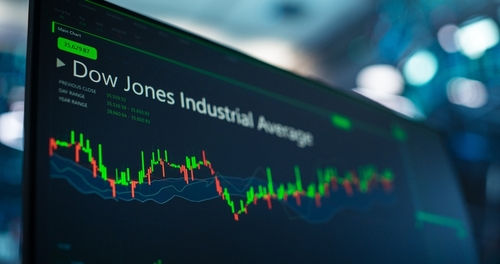
What is the Dow Jones Index?
The Dow Jones Industrial Average is one of the world’s oldest and most well-known stock market indices.
Often referred to as the “DJIA” or simply the “Dow,”
it reflects the performance of a group of the largest American companies.
This article will explore what It is, how it works, and its significance in financial markets.
Topic
What is the Dow Jones Index
How Does the Dow Jones Work
The Importance of the Dow Jones Index
Conclusion
What is the Dow Jones Index
It was established in 1896 by Charles Dow and Edward Jones
to measure the performance of the largest industrial companies in the United States.
While it originally focused on the industrial sector, today,
it includes a diverse range of companies from various sectors, such as technology, finance, and retail.
The index is composed of 30 major companies and reflects the overall performance of the U.S. economy through these companies.
How Does the Dow Jones Work
It operates using a method known as “price-weighted.”
This means that higher-priced stocks have a greater influence on the index than those with lower prices.
Although this method differs from many other indices that are based on a company’s market capitalization,
it is still an effective way to track general market trends.
The companies included in the index are carefully selected to ensure they provide a balanced representation of the American economy.
The Importance of the Dow Jones Index
It is not only a tool for measuring the performance of the U.S. stock market,
but it is also a key indicator of the health of the American economy.
When the index rises, it is considered a sign of economic strength, and when it falls,
it may signal economic slowdown or market uncertainty.
Investors worldwide use It as a benchmark to evaluate
the performance of their portfolios and make informed investment decisions.
Conclusion
It remains one of the most prominent indices in global markets,
reflecting the performance of some of the most powerful American companies.
Understanding how it works and its significance can help investors make smarter financial decisions.
U.S. Stocks Rise Amid a Buying Frenzy After a Sell-Off

U.S. Stocks Rise Amid a Buying Frenzy After a Sell-Off: A new wave of buying U.S. stocks at lower prices has driven a rebound following a sell-off triggered by economic concerns.
Traders are awaiting inflation data this week to indicate the potential size of the Federal Reserve’s interest rate cuts.
Content
Slight Movements in Treasury Bonds
The Role of Soft and Hard Landing
Anticipation of the Consumer Price Index Report
Rise of Major Companies
All major sectors within the S&P 500 index rose by about 1%. According to Bespoke Investment Group,
this increase followed the worst start to September since market data recording began in 1953.
Tesla and Nvidia led the gains among major companies.
Meanwhile, Apple launched its latest iPhone 16, which CEO Tim Cook stated
was designed to fully leverage artificial intelligence, but its stock fell by 1.8%.
Tom Essaye of The Sevens Report commented, “We often see technical buying when prices drop,” adding,
“Economic growth is undoubtedly losing momentum, but a soft landing remains more likely than a hard one.
This week, the focus returns to inflation.”
Slight Movements in Treasury Bonds
Treasury bonds saw slight movements, with the probability of a half-point rate cut
at the Federal Reserve’s September meeting, dropping 20% from 50% last week.
According to a survey by the Federal Reserve Bank of New York published on Monday,
inflation expectations in the U.S. remained stable while fears of a default increased.
The S&P 500 hovered near the 5,460-point level, while the Nasdaq 100 rose by 0.8%,
and the Dow Jones Industrial Average added 1.1%.
Boeing shares rose amid optimism that a labor agreement would prevent a strike.
At the same time, Google, a subsidiary of Alphabet,
returned to court to face allegations by the Justice Department that it was manipulating the digital advertising market.
Oracle is expected to announce its results later today, Monday.
A Risky Situation
Ten-year Treasury yields remained stable at 3.7%.
The dollar rose, and Bitcoinsurpassed the $56,000 mark.
Craig Johnson of Piper Sandler stated,
“Stock investors are navigating a risky situation between optimism
over potential Fed rate cuts and fears of recession and the political landscape.”
He added, “Technical analysis of common market averages suggests
that last week’s weakness was merely a pullback within a long-term upward trend.”
On the other hand, according to RBC Capital Markets strategists,
U.S. stocks may remain volatile.
They could see further declines in the near term amid risks associated with seasonality,
sentiment, and the upcoming presidential election.
A team of strategists led by Lori Calvasina wrote in a note that
“any additional damage would remain within the range of a 10% pullback.”
They added that if hard landing fears escalate,
the risk of a decline linked to growth concerns in the range of 14%-20% “would also increase.”
Signals from the Labor Market
With labor market data indicating a slowdown rather than an imminent recession,
HSBC strategists led by Max Kettner said they are increasing their additional positions
in U.S. stocks based on expectations of resilient earnings in the third quarter.
On Monday, Savita Subramanian, an equity and quantitative strategy analyst at Bank of America,
stated that heightened short-, medium-, and long-term volatility
would make investment-grade stocks and yields more attractive than their growth counterparts.
She added, “Better the tortoise (quality and yields) than the hare (growth and revaluation),”
noting that utility stock yields equate to Nasdaq yields “over the long term.”
She also mentioned that utilities have outperformed technology stocks this year.
According to Citigroup strategists, last week’s sell-off
in U.S. stocks made the main indices more vulnerable to further declines.
A team led by Chris Montagu said that the broad-based stock sell-off,
especially in the S&P 500 index, signals a shift in risk appetite towards a more directly negative tilt.
The strategists noted that the closing of buy-and-sell operations
by hedge funds in the index left total investment exposure at half its previous peak in mid-July.
Hedge funds continued to reduce their positions in U.S. stocks,
with the S&P 500 experiencing its biggest weekly decline since March 2023.
Global Stock Sell-Off
Global stocks saw net sales for the eighth consecutive week, led by North America,
according to a report from Goldman Sachs Group’s prime brokerage desk for the week ending September 6.
This trend, which broadly began in May, has continued as funds liquidated positions
significantly to gain additional liquidity in anticipation of potential volatility surrounding the U.S. presidential elections.
Konstantinos Venetis of TS Lombard stated, “Slowdowns do not necessarily mean a recession,
and market corrections are not necessarily harbingers of a bear market.”
He added, “But increasing uncertainty on both the economic (growth)
and political (U.S. elections) fronts put additional pressure on near-term optimists.”
Venetis pointed out that while the U.S. Federal Reserve is ready to cut rates,
the question remains whether “precautionary cuts” will be too limited and too late.
He added, “The risk is that growth concerns gain their own momentum,
putting more pressure on the stock market, which already appears technically weak.”
The Role of Soft and Hard Landing
Seema Shah of Principal Asset Management believes that history indicates
the Fed’s success in achieving a soft landing versus a hard landing,
which will play a crucial role in determining the course of U.S. stocks.
For example, in 1985 and 1995, rate cuts supported strong stock gains while avoiding a recession.
In contrast, in 2001 and 2007, even aggressive easing was not enough
to prevent severe market declines amid economic slowdowns.
Shah said, “Today, markets remain cautiously optimistic,
reflecting hopes that rate cuts will avoid a recession.”
However, she warned, “If economic conditions deteriorate sharply,
recession fears could outweigh the benefits of rate cuts.
History shows that rate cuts are not the enemy themselves;
investors should focus on the economic context in which they occur.”
Anticipation of the Consumer Price Index Report
According to economists surveyed by Bloomberg,
a government report expected on Wednesday will show that the Consumer Price Index (CPI)
rose by 2.6% in August compared to the previous year.
This would be the lowest increase since 2021.
Under the traditional blackout period before the September 17-18 meeting,
Fed officials will not provide significant new guidance.
Chris Low of FHN Financial stated, “Inflation is important.”
He added, “Weaker numbers might encourage the Fed to cut rates by half a percentage point,
while any higher figures could limit the rate cut to a quarter point.
However, even if inflation moderates and prompts some participants to push for a larger cut,
we expect the Fed to settle on a quarter-point cut as an initial step,
with the option to move faster in future meetings if the data supports it.”
U.S. Stocks Rise Amid a Buying Frenzy After a Sell-Off