Precious Metals Trading for Smart Investors

In the dynamic world of financial markets, investors are constantly searching for stable, long-term assets that protect their wealth against uncertainty. Among the most trusted options, Precious Metals—like gold, silver, platinum, and palladium—have maintained their significance for centuries. They not only act as hedges against inflation and currency devaluation but also offer diversification opportunities for investors aiming to balance their portfolios.

In this detailed guide, we’ll explore everything you need to know about Precious Metals—from their types, industrial applications, and historical importance, to trading strategies and risk management. Whether you’re a beginner or a seasoned trader, understanding how to approach the precious metals market strategically can lead to consistent and rewarding results.

What Are Precious Metals?

Precious Metals are rare metallic elements with high economic value, primarily due to their scarcity, durability, and diverse industrial uses. The most precious metals include gold, silver, platinum, and palladium. Historically, they’ve been used as currency, jewellery, and investment assets, and today they also play crucial roles in industries like electronics, medicine, and renewable energy.

Why Have Precious Metals Held Value Throughout History?

Throughout human civilisation, Precious Metals have symbolised wealth, stability, and power. Gold, for instance, was once the global currency standard because of its rarity and resistance to corrosion. Silver’s dual use in industry and investment made it indispensable. Even in the modern digital age, metals retain value because they represent tangible assets—unlike paper money, which can lose value due to inflation.

Moreover, during times of global crisis or currency fluctuations, investors often turn to Precious Metals as “safe havens.” They maintain purchasing power even when markets crash. At Evest, traders can easily access global metals like gold and silver through an intuitive, secure precious metals trading platform, designed to make investing simple yet powerful.

Types of Precious Metals

Understanding their characteristics helps investors diversify portfolios and preserve long-term value.

Gold: The Timeless Standard of Wealth

Gold remains the ultimate store of value. Its global appeal and universal recognition make it the foundation of most investment portfolios. Global demand, currency trends, and macroeconomic policies influence gold prices. On Evest, traders can speculate on gold’s price movements through cfd trading , futures, or spot trading—all with precision tools to enhance
risk management and maximise returns.

Silver: The Versatile Metal for Industry and Investment

Silver serves as both an industrial metal and an investment asset. It is heavily used in electronics, solar panels, and medical equipment. The metal’s high conductivity and affordability make it essential for technology-driven industries. Investing in silver can provide exposure to both industrial growth and safe-haven demand, making it a unique component in a balanced portfolio.

Platinum: Rarity and High Industrial Demand

Platinum is rarer than gold and has strong industrial demand, particularly in the automotive and jewellery sectors. Its supply is limited, primarily sourced from a few global mining regions. Traders using Evest can benefit from platinum’s price volatility through short-term trading or hold positions as a long-term investment.

Palladium and Rhodium: Emerging Investment Metals

While less known to retail investors, palladium and rhodium have recently gained popularity due to their crucial role in emission control technologies and clean energy production. These emerging metals present high-growth potential for those willing to explore beyond traditional assets.

Industrial and Technological Uses of Precious Metals

Their unique properties make them essential components in electronics, medicine, and advanced manufacturing.

Electronics, Automotive, and Renewable Energy Sectors

Precious Metals are indispensable to modern technology. Gold and silver are essential for electronics due to their superior conductivity and resistance to corrosion. Platinum and palladium are critical in catalytic converters for vehicle emission control. With the rise of electric vehicles and green technologies, demand for these metals continues to rise.

Jewellery and Luxury Manufacturing

The jewellery industry has always been a dominant consumer of Precious Metals. Gold, silver, and platinum symbolise luxury, beauty, and social status. Even during economic downturns, global demand for jewellery remains strong, making these metals stable long-term assets.

Medical and Aerospace Applications

Gold’s biocompatibility makes it ideal for medical implants and equipment, while silver’s antibacterial properties are used in wound care and water purification. In aerospace, Precious Metals ensure high performance and durability in extreme conditions.

Why Do Investors Turn to Precious Metals as Safe Havens?

Precious metals have long been considered a trusted refuge during times of economic uncertainty. Investors turn to them as a stable store of value amid market volatility.

Diversifying Portfolios with Metals

Diversification is a fundamental risk management principle. By including Precious Metals in a portfolio, investors reduce exposure to equities and currencies, mitigating losses during financial crises.

Long-Term Performance of Gold and Silver

Historically, gold and silver have outperformed most fiat currencies during inflationary periods. They not only preserve wealth but can also deliver strong returns when traditional assets decline. Evest enables investors to benefit from these metals’ performance through modern trading instruments.

By offering CFDs and other flexible investment options, Evest ensures traders can access the precious metals market efficiently—without dealing with physical storage or logistical challenges.

How to Trade Metals on Commodity Exchanges?

Trading metals on commodity exchanges offers investors a gateway to global markets. It’s a dynamic arena where prices reflect supply, demand, and international economic trends.

Spot vs Futures Trading

Spot trading involves buying or selling a metal for immediate delivery, while futures contracts are agreements to trade at a future date and a predetermined price. Spot markets are ideal for investors seeking direct exposure, while futures suit those focused on price speculation.

CFDs and Online Metal Trading Platforms

Contracts for Difference (CFDs) allow traders to speculate on metal price movements without owning the physical asset. Evest’s precious metals trading platform provides access to gold, silver, and platinum CFDs with competitive spreads and real-time analytics—perfect for traders looking for flexibility, speed, and precision.

Factors Influencing Precious Metal Prices

A complex mix of global forces shapes precious metal prices. Understanding these factors helps investors navigate market shifts and make informed decisions.

Global Economic Conditions and Inflation

During inflationary periods, investors flock to metals like gold and silver, which hold value better than paper assets.

Currency Fluctuations (Especially USD Strength)

Since most Precious Metals are priced in USD, any change in the dollar’s strength directly affects metal prices. A weaker USD typically pushes prices higher, benefiting investors.

Geopolitical Instability and Central Bank Policies

Global tensions, wars, and central bank decisions drive market sentiment and demand for safe-haven assets.

Supply and Mining Constraints

Mining costs, environmental policies, and limited reserves affect the availability and pricing of the most precious metals.

Risks of Investing in Precious Metals

While Precious Metals offer stability, they are not risk-free. Price volatility, storage costs, and liquidity issues can impact returns. Understanding What Is Risk Management? Helps investors mitigate these challenges. On Evest, traders can manage risk effectively using advanced tools such as automated stop-losses, portfolio diversification, and leverage controls.

Evest also provides educational resources to help investors master risk management trading, empowering them to make strategic, informed decisions.

How to Start Investing in Precious Metals?

Starting your investment journey is straightforward with Evest:

  1. Register for a free account – Simple sign-up with robust security verification.
  2. Access global markets – Trade gold, silver, platinum, and more from one account.
  3. Choose your strategy – Long-term holding or short-term speculative trading.
  4. Use built-in risk tools – Protect your investments with real-time analytics and risk management solutions.

With Evest, you can begin trading immediately with professional-grade insights and a user-friendly interface.

Evest Services

Evest offers a comprehensive range of trading services designed to empower investors. It provides a seamless experience across global markets with advanced online trading tools and support.

Commission-Free Stock Trading

Evest allows clients to trade global stocks with zero commission, making it an attractive choice for investors who want to access international markets with minimum costs.

CFD Trading

The platform provides access to a wide range of financial assets through Contracts for Difference (CFDs), including stocks, forex, indices, commodities, and cryptocurrencies. This gives traders great flexibility to diversify their strategies.

WebTrader Platform

Evest offers a WebTrader platform that works directly from the browser without the need to download extra software. It features a user-friendly interface with real-time charts and analysis tools to help investors make better trading decisions.

Copy Trading

With the copy trading service, beginners or passive investors can automatically copy the trades of professional traders. This allows users to benefit from the experience of experts and potentially generate steady profits.

Demo Account

Evest provides a free demo account where traders can practice with virtual funds. This service is beneficial for beginners to learn trading basics and test strategies without risking real money.

Islamic Trading Accounts

Evest offers Islamic (Swap-Free) accounts that are free from interest charges, making them compliant with Shariah law and suitable for Muslim traders.

Smart Analytics Tool (Evest Analytics)

The platform integrates AI-powered analytics tools that deliver accurate market insights and instant alerts, helping traders to identify investment opportunities at the right time.

Mobile Trading App

Evest provides a modern mobile application for iOS and Android, enabling users to trade anywhere, anytime, with the same tools and features available on the web platform.

Multiple Deposit & Withdrawal Options

Evest supports various payment methods for deposits and withdrawals, including:

  • Credit and debit cards
  • E-wallets
  • Bank transfers

This ensures flexible and convenient financial transactions for traders worldwide.

In Conclusion

Precious Metals remain among the most trusted and valuable assets for wealth preservation and growth. Their historical significance, industrial demand, and role as safe-haven investments make them indispensable in a balanced portfolio.

Through Evest, investors can explore global opportunities in gold, silver, platinum, and other metals using an advanced, regulated, and transparent precious metals trading platform. Whether you’re an experienced investor or a beginner looking to diversify, Evest offers the perfect gateway to access the thriving precious metals market.

Trade smarter, manage risk effectively, and secure your financial future with Evest—where savvy investors grow.

FAQs

Which precious metals are best for investment?

Gold and silver remain the most stable, while platinum and palladium offer high growth potential due to industrial demand.

How can I trade or invest in precious metals?

Through platforms like Evest, you can trade metals using CFDs or invest long-term via spot and futures contracts.

What factors affect precious metal prices?

Global inflation, currency strength, geopolitical tensions, and supply-demand dynamics.

Is it better to buy physical or digital metals?

Digital trading via Evest offers greater liquidity, lower costs, and ease of access compared to physical metals.

Risk Management Strategies for Traders

In the fast-paced world of online trading, success is not determined only by identifying profitable opportunities but also by effectively protecting your capital from unexpected losses. That’s where Risk Management comes into play. For traders, mastering Risk Management isn’t just an option—it’s a necessity. Whether you are an experienced investor or a beginner stepping into the world of trading, managing risks efficiently can be the key difference between consistent profits and financial ruin.

This comprehensive guide will walk you through everything you need to know about Risk Management, its principles, tools, and the best practices for modern traders. Whether you trade forex, stocks, commodities, or indices, understanding risk management trading strategies will help you build a disciplined and profitable trading mindset.

What Is Risk Management in Trading?

So, what is risk management when it comes to trading? In simple terms, Risk Management refers to identifying, assessing, and mitigating the potential financial losses that can occur in the trading process. Every trade involves uncertainty, and the objective of risk management in trading is to control how much you could lose while aiming for potential profit.

Professional traders don’t rely solely on predictions or luck. Instead, they focus on structuring trades in a way that even when they lose, the losses are small and manageable. Evest’s advanced online trading platform supports traders with automated risk controls, margin alerts, and portfolio diversification tools that make risk management trading more straightforward and more intuitive.

Through proper risk management, traders can maintain emotional stability and avoid decisions driven by fear or greed. It’s about staying in the game for the long run rather than chasing short-term gains.

Why Is Risk Management Essential for Every Trader?

Every successful trader knows that Risk Management is not optional—it’s a cornerstone of sustainable trading. Without a proper risk management process, even the most experienced trader can face devastating losses during volatile market movements.

At Evest, we constantly remind traders that preservation of capital always comes before profit-making. The most successful investors are those who survive the market cycles and maintain long-term consistency. Risk Management helps achieve exactly that by ensuring your portfolio remains resilient in both bull and bear markets.

Here’s why it’s so vital:

  • Prevents significant losses: A single bad trade shouldn’t wipe out your trading capital.
  • Builds discipline: It keeps you from emotional trading and overexposure.
  • Ensures consistent growth: With effective risk management strategies, small, steady gains compound over time.
  • Enhances confidence: Knowing your losses are limited gives you mental stability to trade rationally.

Evest offers robust risk management services, helping traders define exposure limits, manage leverage, and diversify portfolios effectively.

Understanding Trading Risk

It helps traders make informed decisions and protect their investments from unexpected market movements.

The Nature of Financial Market Volatility

Financial markets are inherently volatile. Prices fluctuate due to global economic factors, political events, and investor sentiment. For traders, understanding that volatility is a part of the game is the first step toward developing sound risk management strategies.

Evest provides real-time market analytics, volatility indicators, and professional insights that allow traders to anticipate and adapt to rapid market movements.

Familiar Sources of Risk in Trading

Risks can emerge from various sources, including:

  • Market movements: Unpredictable price changes can lead to rapid gains or losses.
  • Leverage: While it amplifies potential returns, it can also magnify losses.
  • Liquidity issues: In illiquid markets, executing trades at desired prices can be complex.
  • Systemic events: Economic crises, natural disasters, or policy shifts can trigger market-wide reactions.

Psychological and Emotional Risks in Decision-Making

Emotions are one of the biggest enemies of successful trading. Fear and greed often lead traders to abandon strategies or overreact to short-term events. Evest offers trading education and built-in analytics that help traders make data-driven decisions, minimising emotional interference.

Core Principles of Risk Management

The core principles of risk management form the foundation of every successful trading and investment strategy.

Capital Preservation and Position Sizing

The foundation of effective Risk Management is capital preservation. Never risk more than a small percentage of your total capital on a single trade. Evest’s trading platform includes position size calculators and margin alerts, helping traders maintain optimal exposure.

Risk-to-Reward Ratio Explained

A good trade setup should always have a favourable risk-to-reward ratio—for example, risking $1 to earn $3. By maintaining this ratio, even if only half of your trades succeed, you’ll still grow your account over time.

Importance of Consistency and Discipline

Consistency is what separates professional traders from amateurs. By following a structured risk management process, you can achieve stable long-term results instead of fluctuating profits and losses. Evest encourages traders to stick to their plan through analytical dashboards and progress-tracking features.

Types of Risks Traders Face

Traders encounter various types of risks that can significantly impact their performance and returns.

Market Risk

The possibility that market prices will move against your position.

Leverage and Margin Risk

Using leverage increases both potential returns and potential losses. Evest helps you set appropriate leverage limits according to your risk profile.

Liquidity Risk

Occurs when you can’t exit a trade at your desired price due to low market activity.

Counterparty Risk

Relates to the reliability of brokers and financial institutions. Evest, being a regulated and transparent trading platform, ensures client fund safety and segregation.

Emotional and Behavioural Risk

Trading psychology can lead to poor decision-making if not managed. Evest’s educational materials support traders in developing emotional resilience.

How to Measure and Quantify Risk?

Quantifying risk is vital. Traders use various tools like standard deviation, beta coefficients, and Value at Risk (VaR) to estimate potential loss. Evest provides built-in analytical features that help traders understand exposure and volatility in real time, making risk management trading measurable and actionable.

Position Sizing and Leverage Management

Position sizing and leverage management are vital aspects of maintaining control in trading.

How to Size Trades Correctly?

Position sizing determines how much capital you allocate to each trade. Proper sizing prevents catastrophic losses. With Evest, traders can use margin calculators and automatic stop settings for optimal control.

Setting Leverage Limits Based on Experience

Beginners should start with lower leverage, gradually increasing it as they gain experience. Evest offers flexible leverage options designed to match different trading levels.

Balancing Portfolio Exposure

Diversification across different assets helps reduce total portfolio risk. Evest enables trading across multiple markets—forex, stocks, indices, commodities, and more—allowing traders to balance their exposure easily.

Stop-Loss and Take-Profit Strategies

They allow traders to plan exits effectively and maintain discipline in volatile market conditions.

Setting Effective Stop-Loss Orders

A stop-loss order automatically closes a trade when losses reach a certain level. This is one of the most potent risk management strategies available.

Using Trailing Stops for Dynamic Protection

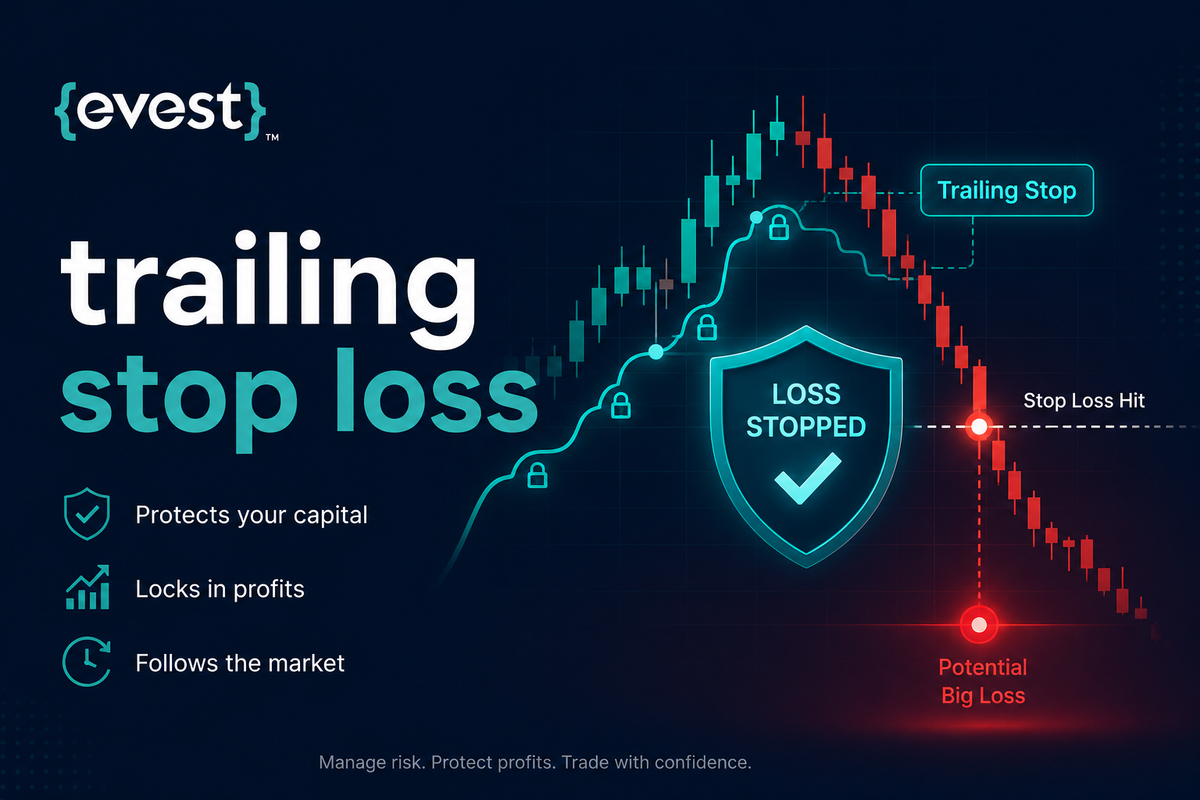
Trailing stops move automatically as profits increase, locking in gains while allowing for potential growth.

Aligning Profit Targets with Risk Levels

Consistency between risk and reward targets ensures your trades align with your long-term plan. Evest’s platform allows users to predefine these parameters for every position.

Diversification as a Risk Management Tool

Diversification is one of the oldest and most effective risk management solutions. By spreading investments across asset classes, industries, or regions, traders can cushion their portfolio from sudden shocks in one specific market.
With Evest, diversification becomes simple—you can trade global markets from one platform, managing everything from forex to crypto in a single account.

The Role of Technical and Fundamental Analysis

The role of technical and fundamental analysis is central to making informed trading and investment decisions.

Using Analysis to Minimise Uncertainty

Technical analysis focuses on charts and patterns, while fundamental analysis examines economic indicators and company performance. Combining both provides a clearer picture of risk and opportunity.

Combining Data-Driven and Macroeconomic Insights

At Evest, traders can access both live technical indicators and up-to-date market research, blending analytical depth with global context to make smarter risk-aware decisions.

Evest Services

Evest Services stands out as a modern platform designed to enhance the online trading experience.

Commission-Free Stock Trading

Evest allows clients to trade global stocks with zero commission, making it an attractive choice for investors who want to access international Trading markets with minimum costs.

CFD Trading

The platform provides access to a wide range of financial assets through Contracts for Difference (CFDs), including stocks, forex, indices, commodities, and cryptocurrencies. This gives traders great flexibility to diversify their strategies.

WebTrader Platform

Evest offers a WebTrader platform that works directly from the browser without the need to download extra software. It features a user-friendly interface with real-time charts and analysis tools to help investors make better trading decisions.

Copy Trading

With the copy trading service, beginners or passive investors can automatically copy the trades of professional traders. This allows users to benefit from the experience of experts and potentially generate steady profits.

Demo Account

Evest provides a free demo trading account where traders can practice with virtual funds. This service is beneficial for beginners to learn trading basics and test strategies without risking real money.

Islamic Trading Accounts

Evest offers Islamic (Swap-Free) accounts that are free from interest charges, making them compliant with Shariah law and suitable for Muslim traders.

Smart Analytics Tool (Evest Analytics)

The platform integrates AI-powered analytics tools that deliver accurate market insights and instant alerts, helping traders to identify investment opportunities at the right time.

Mobile Trading App

Evest provides a modern mobile application for iOS and Android, enabling users to trade anywhere, anytime, with the same tools and features available on the web platform.

Multiple Deposit & Withdrawal Options

Evest supports various payment methods for deposits and withdrawals, including:

  • Credit and debit cards
  • E-wallets
  • Bank transfers

This ensures flexible and convenient financial transactions for traders worldwide.

In Conclusion

Risk Management is not just a trading technique—it’s a philosophy that defines successful traders. Without it, even the most accurate strategies can collapse under market pressure. By integrating risk management strategies, traders ensure longevity, consistency, and profitability.

At Evest, our mission is to make professional-grade tools and insights accessible to every trader. Whether you’re refining your trading plan or starting fresh, Evest equips you with the resources needed to master Risk Management and achieve financial independence.

FAQs

What is risk management for trading?

It is the process of identifying, measuring, and controlling potential trading losses to protect your capital.

What is the 2% rule in trading?

It suggests that a trader should risk no more than 2% of their total capital on any single trade.

What is the 3-5-7 rule in trading?

It helps diversify investments: 3 asset classes, five industries, seven securities—spreading risk efficiently.

What are the four types of market risk?

They include market risk, credit risk, liquidity risk, and operational risk.

SPX Trading Hours: SPX Option Overview

When it comes to trading financial instruments like the S&P 500 Index, understanding the SPX trading hours is essential for both professional and beginner investors. The timing of trades can have a major influence on strategy, liquidity, and profitability. Whether you are trading SPX options, futures, or simply tracking the broader index, knowing the exact SPX trading hours helps you make well-timed decisions, minimize risks, and optimize performance.

Platforms such as Evest provide investors with access to real-time market data and online trading tools that make navigating these timings easier and more efficient. By understanding when the SPX market hours begin and end—and what happens during extended sessions—you gain a competitive edge.

Why does knowing trading hours matter for investors?

Trading hours are more than just a schedule—they define when liquidity peaks, when price volatility spikes, and when opportunities are most abundant. Investors who understand SPX trading hours can position themselves strategically to capture favourable price movements and avoid unexpected risks.

The U.S. stock market, which hosts SPX and S&P futures, operates within a structured time frame that affects every trade’s efficiency. If a trader places an order outside these periods, it may not execute until the market reopens, which could lead to slippage or missed opportunities.

Knowing the SPX options trading hours and SPX futures trading hours also allows investors to synchronize with global events, such as economic reports or geopolitical news. Since SPX represents the S&P 500—a benchmark for the global economy—its reactions to data releases often dictate worldwide market sentiment.

Evest’s trading platform ensures that investors can track SPX opening hours and closing times accurately, enabling them to make well-informed trades and take advantage of both regular and extended sessions.

What Is SPX?

SPX refers to the S&P 500 Index, one of the most widely recognized benchmarks for the U.S. equity market. It represents 500 of the largest publicly traded companies listed on major U.S. exchanges. Unlike the S&P 500 ETF (SPY), SPX is a cash-settled index that does not involve ownership of underlying shares.

Traders and institutional investors use SPX for various purposes:

  • Hedging portfolio risk
  • Speculating on market direction
  • Measuring market sentiment and volatility

Understanding SPX trading hours is crucial because SPX instruments—like options and futures—follow different schedules. For instance, SPX futures trading hours extend beyond regular market sessions, allowing investors to react to overnight developments in global markets.

SPX is more than just a number—it’s the pulse of the U.S. economy. Through Evest, traders can access real-time SPX data, analyze trends, and execute trades with precision, regardless of whether they’re trading during the regular session or extended hours.

Regular SPX Trading Hours

Regular SPX trading hours play a key role in understanding market behaviour and planning effective trading strategies. They provide traders with a clear window to engage during peak market activity.

Standard market hours for SPX trading

The SPX trading hours typically align with the regular trading session of the U.S. stock market, which operates Monday through Friday from 9:30 a.m. to 4:00 p.m. Eastern Time (ET). During this period, traders experience the highest liquidity and narrowest bid-ask spreads, making it the most active time for trading.

Understanding these hours is critical for day traders and institutional investors who rely on short-term movements. Most of the day’s volume occurs in the first and last hour of trading, commonly known as the “power hours.”

Exchanges where SPX is traded

SPX is traded primarily through the Chicago Board Options Exchange (CBOE), which manages both index options and futures. Additionally, SPX futures trading hours take place on the CME Group (Chicago Mercantile Exchange) via electronic trading platforms.

Evest provides traders access to both SPX index data and related derivatives, ensuring a complete understanding of market dynamics during every stage of trading.

Extended and After-Hours Trading

Extended and after-hours trading offers investors additional opportunities to react to market developments beyond the regular session. It provides a wider window for executing trades when markets are typically less active.

Pre-market and after-hours sessions explained.

Beyond regular SPX trading hours, investors can trade during pre-market (4:00 a.m.–9:30 a.m. ET) and after-hours sessions (4:00 p.m.–8:00 p.m. ET). These extended sessions allow traders to respond to global news, earnings announcements, and overnight economic developments.

Although liquidity is lower during these periods, SPX futures trading hours often remain active, providing insights into how markets might open the following day. Platforms like Evest display these pre-market movements, helping traders anticipate early price trends.

How do trading volume and volatility differ?

During extended sessions, trading volume tends to decline, and bid-ask spreads widen due to reduced participation. This can make trades riskier, but also more rewarding for those able to anticipate price movements.

For example, if a major geopolitical event occurs after regular SPX market hours, futures prices may react instantly—offering traders early signals before the next day’s SPX opening hours.

SPX Options Trading Hours

SPX options trading hours give traders access to flexible opportunities to manage risk and capitalize on market movements. They provide a structured timeframe that supports strategic options trading.

Trading schedule for SPX options

SPX options are among the most actively traded derivatives in the world. The SPX option trading hours generally extend from 9:30 a.m. to 4:15 p.m. ET for standard options. However, the CBOE also offers SPXW options (weekly expirations), which can be traded during extended hours depending on contract specifications.

Unlike ETFs, SPX options are cash-settled, meaning no physical delivery of shares occurs upon expiration. This makes them particularly attractive for institutional investors looking to hedge or speculate on index movements.

Key differences between cash-settled SPX options and ETF options

  1. Settlement method: SPX options settle in cash, while SPY ETF options involve share delivery.
  2. Tax advantages: Some traders prefer SPX options due to favourable tax treatment under U.S. Section 1256.
  3. Trading hours: SPX options trading hours are slightly longer than those of SPY, giving traders additional flexibility.

Using Evest, investors can analyze SPX options pricing, track expiration calendars, and develop strategies that leverage these extended trading times.

Best Times to Trade SPX

The best times to trade SPX often align with periods of strong market activity and clearer price movements. Choosing the right timing can help traders make more confident and efficient decisions.

Most active trading hours

The most active SPX trading hours occur during the first hour after the market opens and the last hour before it closes. These periods see the highest trading volume and the greatest price movements, offering abundant opportunities for day traders.

Traders often refer to the SPX opening hours as the “golden hour,” where the market digests overnight developments and sets the day’s direction. Similarly, the final hour reflects last-minute institutional positioning and profit-taking.

How do economic announcements and global markets affect timing?

Economic reports such as non-farm payrolls, inflation data, and Federal Reserve announcements often cause significant market movements. Since many of these releases happen before regular S&P trading hours, the SPX futures trading hours provide early clues on how the cash index will react.

Platforms like Evest empower traders to monitor global news alongside SPX charts, enabling well-timed trades that align with major market catalysts.

Holiday and Weekend Schedule

The holiday and weekend schedule outlines when SPX trading pauses, helping traders plan around market closures. Knowing these dates ensures smoother preparation and avoids unexpected interruptions.

List of U.S. market holidays

The SPX follows the same holiday calendar as major U.S. exchanges, remaining closed on days such as:

  • New Year’s Day
  • Martin Luther King Jr. Day
  • Presidents’ Day
  • Good Friday
  • Memorial Day
  • Independence Day
  • Labor Day
  • Thanksgiving Day
  • Christmas Day

Impact of shortened trading days

Certain holidays, such as the day after Thanksgiving or Christmas Eve, feature shortened sessions, typically closing at 1:00 p.m. ET. Understanding these adjustments ensures traders plan around limited liquidity and lower participation.

For global traders using Evest, monitoring the SPX market hours and holiday schedules prevents order delays or unintentional exposure during inactive periods.

How Trading Hours Affect Strategy?

The timing of trades directly impacts execution quality, spread costs, and risk management. For example, trading during the most active SPX index trading hours increases liquidity, reducing slippage and enhancing accuracy.

Traders who prefer volatility might focus on early SPX opening hours, while those seeking stability may prefer mid-day periods. On the other hand, long-term investors can use SPX option trading hours to adjust hedges or rebalance portfolios after critical announcements.

By combining market knowledge with Evest’s analytical tools, traders can develop personalized strategies that align with their goals, trading style, and risk tolerance.

Evest Services

Evest provides investors with a modern trading platform that combines technology, accessibility, and support. It enables seamless participation in global markets with confidence and ease.

Commission-Free Stock Trading

Evest allows clients to make stock trading with zero commission, making it an attractive choice for investors who want to access international markets with minimum costs.

CFD Trading

The platform provides access to a wide range of financial assets through Contracts for Difference (CFDs), including stocks, forex, indices, commodities, and cryptocurrencies. This gives traders great flexibility to diversify their strategies.

WebTrader Platform

Evest offers a WebTrader platform that works directly from the browser without the need to download extra software. It features a user-friendly interface with real-time charts and analysis tools to help investors make better trading decisions.

Copy Trading

With the copy trading service, beginners or passive investors can automatically copy the trades of professional traders. This allows users to benefit from the experience of experts and potentially generate steady profits.

Demo Account

Evest provides a free demo account where traders can practice with virtual funds. This service is beneficial for beginners to learn trading basics and test strategies without risking real money.

Islamic Trading Accounts

Evest offers Islamic (Swap-Free) accounts that are free from interest charges, making them compliant with Shariah law and suitable for Muslim traders.

Smart Analytics Tool (Evest Analytics)

The platform integrates AI-powered analytics tools that deliver accurate market insights and instant alerts, helping traders to identify investment opportunities at the right time.

Mobile Trading App

Evest provides a modern mobile application for iOS and Android, enabling users to trade anywhere, anytime, with the same tools and features available on the web platform.

Multiple Deposit & Withdrawal Options

Evest supports various payment methods for deposits and withdrawals, including:

  • Credit and debit cards
  • E-wallets
  • Bank transfers

This ensures flexible and convenient financial transactions for traders worldwide.

In Conclusion

Understanding SPX trading hours is a cornerstone of successful index trading. The S&P 500 is the heartbeat of the U.S. economy, and timing your trades correctly ensures that you capitalize on market momentum while minimizing risk.

From regular sessions to SPX futures trading hours and SPX options trading hours, knowing when to trade—and when not to—gives you an edge in a fast-moving financial landscape.

With Evest, investors gain real-time access to SPX data, tools for technical analysis, and 24/7 market insights to enhance their strategies.

FAQs

What time does SPX trade?

Regular SPX trading hours run from 9:30 a.m. to 4:00 p.m. ET, aligning with the U.S. stock market schedule.

Is the S&P 500 traded 24 hours?

While the cash index isn’t, S&P futures trading hours on the CME allow trading nearly 24 hours a day, offering global market accessibility.

Can you trade SPX options 24 hours?

No, SPX option trading hours typically end at 4:15 p.m. ET, though after-hours activity may occur for certain contracts.

What time is SPX?

The SPX market hours refer to active trading periods when the S&P 500 index and related derivatives are available for trading through exchanges like CBOE and CME.

Opening Price and Closing Price in the Stock Market

In the world of investing, few numbers are as crucial to traders as the opening price and closing price of a stock. These two figures not only define a trading session but also serve as important indicators of market sentiment, volatility, and investor behaviour. Understanding the opening price and closing price is fundamental for anyone looking to trade effectively or interpret stock market data accurately.

When a new trading day begins, every stock starts at a specific value—its opening price—and when the day ends, it finishes with a closing price. These two values are not random; they result from the balance of buying and selling activities, economic news, and overall investor sentiment. 

Why do traders monitor opening and closing prices?

Monitoring the opening price and closing price helps traders understand how the market reacts to new information, such as financial reports, geopolitical developments, or corporate announcements. These two prices represent key turning points that reflect investor psychology within a single trading day.

For instance, if a company releases strong earnings after the market closes, the next day’s opening price might surge as investors react positively. Conversely, disappointing news might push the open price lower. By the end of the trading day, the closing price will show where the market finally settled after the day’s fluctuations.

Professional traders and online trading platform like Evest analyze these values for multiple reasons:

  • Market sentiment: Comparing the opening price and closing price reveals whether buyers or sellers dominated the session.
  • Volatility tracking: Large differences between open and close prices indicate volatility, useful for day traders.
  • Technical analysis: The open price and close price are key components of candlestick charts, which help traders predict future movements.
  • Portfolio evaluation: The closing price determines a portfolio’s end-of-day value.

Ultimately, understanding why traders care about these numbers helps investors see the broader market narrative—who is winning the battle between optimism and caution.

What Is the Opening Price?

The opening price of a stock is the first price at which it trades when the market opens for the day. It is not a fixed or arbitrary value; rather, it’s determined by pre-market activity and the balance between demand and supply before official trading begins.

So, what is the stock opening price in practical terms? It represents the consensus between buyers and sellers when the market bell rings. For example, if many investors want to buy a particular stock overnight, the opening price may be higher than the previous day’s closing price.

Factors influencing the opening price

Several elements influence how the opening price is determined:

  1. After-hours trading: Investors often trade after the market closes, and these trades affect the next day’s opening price.
  2. Economic and company news: Announcements about earnings, interest rates, or major business decisions can cause significant pre-market demand changes.
  3. Market sentiment: Investor optimism or fear before market open sets the tone for how the opening price will behave.
  4. Global market trends: Events in international trading markets often ripple into local exchanges, affecting the initial stock valuation.

Understanding the open price meaning allows traders to interpret market conditions right at the start of trading. On Evest, traders can easily track pre-market data and prepare strategies accordingly.

What Is the Closing Price?

The closing price is the final price at which a stock is traded during regular market hours. This value represents the equilibrium point where buyers and sellers agree to transact before the market shuts down for the day.

While the opening price sets the tone, the closing price tells the day’s story—summarizing how investors responded to various influences throughout trading hours. For long-term investors, fund managers, and analysts, the closing price is often more important, as it’s used in portfolio valuation, chart analysis, and index calculations.

Factors influencing the closing price

  1. End-of-day trading activity: Many traders close their positions near market close, affecting the final price.
  2. Market orders: Institutional investors often execute large buy or sell orders that can shift the closing price.
  3. News released during the day: Developments that occur before market close influence last-minute investor sentiment.
  4. Market auctions: Some exchanges conduct closing auctions to determine the final price accurately.

The closing price is the benchmark for evaluating a stock’s performance that day. It’s the value most financial media report when they summarize market movements.

Difference Between Opening Price and Closing Price

The difference between the opening price and the closing price shows how the market has moved within a trading session. A higher closing price than the opening price indicates a bullish day (more buying interest), while a lower closing price reflects bearish sentiment (more selling pressure).

Traders use this difference to evaluate stock strength, momentum, and volatility.

Comparison of how each reflects market sentiment

  • Opening price: Represents expectations and initial reactions to overnight developments.
  • Closing price: Reflects actual investor confidence and settlement after a day of trading.

A stock that opens low but closes high shows recovery and positive momentum—something traders on Evest often look for when building daily strategies.

Examples using stock charts

Consider a hypothetical example: IBM stock opens at $150 and closes at $155. The 5-point increase between the opening price and closing price suggests bullish strength and investor optimism.

Technical charts—such as candlesticks—visually represent this difference, helping traders understand daily market psychology.

By analyzing such movements, traders identify trends, potential reversals, and optimal buy/sell points. Evest provides interactive charting tools that make such analysis straightforward and insightful.

How are Opening and Closing Prices Determined?

Real-time market forces determine both prices, but follow slightly different mechanisms.

Role of supply, demand, and pre-market trading

Before the market opens, traders and institutions place orders based on new information. This pre-market demand influences the opening price. When the number of buy orders exceeds sell orders, the open price increases. Conversely, excess selling lowers it.

Market closing auctions and end-of-day trades

At the end of trading hours, exchanges often conduct closing auctions to determine the closing price. These auctions match buy and sell orders in real time to establish a fair market value.

This mechanism ensures transparency and minimizes manipulation, providing a reliable reference point for investors using platforms like Evest.

How do traders use these prices in decision-making?

Traders rely heavily on the opening price and closing price for their strategies. These prices act as trading signals for potential entry and exit points, allowing traders to predict short-term trends.

  1. Trend analysis: If the closing price is higher than the opening price, traders may assume bullish momentum and prepare buy orders for the next session.
  2. Support and resistance levels: The open price and close price often act as benchmarks for technical analysis.
  3. Price gaps: A major difference between closing and next day’s opening prices may indicate upcoming volatility.
  4. Performance tracking: Day traders on Evest closely monitor daily opening and closing prices to evaluate strategy success.

By combining this data with other indicators like moving averages or RSI, traders develop precise trading plans.

Evest Services

Evest provides investors with a modern trading platform that combines technology, accessibility, and support. It enables seamless participation in global markets with confidence and ease.

Commission-Free Stock Trading

Evest allows clients to trade global stocks with zero commission, making it an attractive choice for investors who want to access international markets with minimum costs.

CFD Trading

The platform provides access to a wide range of financial assets through Contracts for Difference (cfd trading), including stocks, forex, indices, commodities, and cryptocurrencies. This gives traders great flexibility to diversify their strategies.

WebTrader Platform

Evest offers a WebTrader platform that works directly from the browser without the need to download extra software. It features a user-friendly interface with real-time charts and analysis tools to help investors make better trading decisions.

Copy Trading

With the copy trading service, beginners or passive investors can automatically copy the trades of professional traders. This allows users to benefit from the experience of experts and potentially generate steady profits.

Demo Account

Evest provides a free demo account where traders can practice with virtual funds. This service is beneficial for beginners to learn trading basics and test strategies without risking real money.

Islamic Trading Accounts

Evest offers Islamic (Swap-Free) accounts that are free from interest charges, making them compliant with Shariah law and suitable for Muslim traders.

Smart Analytics Tool (Evest Analytics)

The platform integrates AI-powered analytics tools that deliver accurate market insights and instant alerts, helping traders to identify investment opportunities at the right time.

Mobile Trading App

Evest provides a modern Mobile Trading application for iOS and Android, enabling users to trade anywhere, anytime, with the same tools and features available on the web platform.

Multiple Deposit & Withdrawal Options

Evest supports various payment methods for deposits and withdrawals, including:

  • Credit and debit cards
  • E-wallets
  • Bank transfers

This ensures flexible and convenient financial transactions for traders worldwide.

In Conclusion

Understanding the opening price and closing price is essential for anyone involved in the stock market. These figures provide deep insights into daily market trends, investor psychology, and trading opportunities.

The opening price signals the market’s initial direction, shaped by overnight events, while the closing price confirms how investors actually reacted during the day. For traders using Evest, mastering these concepts is key to making smart investment decisions.

Whether you’re analyzing short-term fluctuations or planning long-term investments, knowing how to interpret the opening price and closing price gives you a decisive edge.

FAQs

What are the opening and closing prices in the stock market?

The opening price is the first trade price of a stock when the market opens, while the closing price is the last price at which it trades before the market closes.

What do open price and close price mean in stocks?

The open price and close price show where a stock starts and ends during a trading day, revealing whether it gained or lost value.

Is it better to buy stocks at opening or closing?

It depends on the strategy. The opening price can be volatile due to overnight news, while the closing price often reflects a more stable market consensus.

What is the closing price of stocks?

The closing price is the final price at which a stock is traded during regular market hours, and it’s used for valuation, charts, and performance tracking.

How To Buy IBM Stock | IBM Shares

In today’s digital era, where technology drives nearly every sector of the economy, investors are increasingly drawn to the tech industry for its consistent innovation and long-term potential. Among the tech giants that have stood the test of time, IBM—International Business Machines Corporation—remains one of the most recognized and respected names in global technology. Many investors want to know how to buy IBM stock, as they see it as a solid investment opportunity with strong historical performance and promising prospects in cloud computing, artificial intelligence, and enterprise solutions.

Why are investors interested in IBM stock?

IBM has been a global leader in technology and business innovation for over a century. While some newer tech firms dominate headlines, IBM continues to play a critical role in enterprise computing, cloud infrastructure, and artificial intelligence. Investors who explore how to buy IBM stock often find that IBM offers both stability and long-term value.

IBM’s stock symbol and exchange

IBM is publicly traded on the New York Stock Exchange (NYSE) under the ticker symbol “IBM.” When you decide to buy IBM stock, this ticker is what you’ll search for in your brokerage platform. The IBM stock price fluctuates daily based on market demand, economic conditions, and company performance.

So, why exactly do investors remain attracted to IBM?

  1. Consistent Dividend Payments: IBM has a long history of paying dividends, which appeals to investors who want regular income alongside capital growth.
  2. Strong Enterprise Partnerships: IBM’s partnerships in cloud computing, artificial intelligence (AI), and hybrid solutions strengthen its long-term potential.
  3. Innovation in Emerging Technologies: Through its investments in AI with Watson and cloud solutions, IBM continues to redefine its position in the tech world.
  4. Stability in Market Volatility: Many consider IBM a blue-chip stock—ideal for conservative investors who prefer stability over speculation.

Ultimately, those who want to understand how to buy IBM stock recognize that it represents a blend of innovation, resilience, and dependable returns—qualities that make it a popular choice for portfolios worldwide.

How to Buy IBM Stock?

If you’re wondering how to buy IBM stock, the process is straightforward once you understand the steps involved. Platforms like Evest make it easy for investors to open an account and purchase IBM shares in a secure environment. Let’s walk through each step of the process.

Step 1: Choose a reliable brokerage platform

Before you can buy IBM stock, you’ll need to choose a reputable brokerage platform that offers access to the New York Stock Exchange (NYSE). A platform like Evest is ideal for this purpose—it’s user-friendly, offers multiple asset types, and provides educational resources for investors.

When evaluating brokers, look for:

  • Competitive trading fees
  • Easy deposit and withdrawal options
  • Availability of IBM shares
  • Transparent pricing and market access

Choosing a trusted platform is the foundation of learning how to buy IBM stock safely and efficiently.

Step 2: Create and verify your account

After selecting a broker, you’ll need to register. The process involves filling out your details, verifying your identity, and sometimes uploading documents for security compliance.

On Evest, this is a seamless process, ensuring that your account meets all regulatory standards.

Step 3: Fund your trading account

Before you can buy IBM shares, you’ll need to deposit funds into your account. Most platforms—including Evest—support multiple funding methods such as bank transfers, credit/debit cards, or digital wallets.

Step 4: Search for IBM (ticker: IBM)

Once your account is funded, use the platform’s search bar to locate IBM by typing the ticker symbol “IBM.” You’ll see the IBM stock price, company profile, and market trends.

Step 5: Decide how many shares to buy

Your next step is deciding the number of IBM shares you want to purchase. Consider your investment goals, budget, and diversification strategy. Some investors prefer buying fractional shares—especially beginners learning how to buy IBM stock—to minimize exposure while gaining market experience.

Step 6: Execute your order (market or limit)

Finally, you can place your order.

  • Market Order: Buys IBM stock at the current market price.
  • Limit Order: Lets you set a preferred price at which you want to buy.

Once executed, congratulations—you’ve successfully learned how to buy IBM stock and officially become an IBM shareholder.

Where to Buy IBM Stock?

While there are several online trading platforms available, Evest stands out for its accessibility, transparency, and modern trading tools. With Evest, investors can not only buy IBM stock but also manage diversified portfolios across different sectors and markets.

Some benefits of using Evest to buy IBM shares include:

  • Global Accessibility: Trade from anywhere, anytime.
  • Comprehensive Market Insights: Stay updated with real-time price data and analysis on IBM stock price movements.
  • Low Fees: Competitive pricing helps investors retain more profits.
  • Beginner-Friendly Interface: Ideal for those who are just learning how to buy IBM stock for the first time.

With its easy-to-use platform and educational tools, Evest empowers investors to trade IBM and other major global stocks confidently.

Investment Strategies for IBM Stock

Once you’ve figured out how to buy IBM stock, it’s time to explore investment strategies that can maximize returns.

Long-term investing vs. short-term trading

Long-term investors tend to hold IBM shares for several years, benefiting from dividends and compounding growth. IBM’s consistent dividend policy makes it a great fit for long-term portfolios.

On the other hand, short-term traders may capitalize on daily or weekly price movements in the IBM stock price using market analysis tools on Evest.

Dividend reinvestment and portfolio diversification

Investors can choose to reinvest dividends to accumulate more IBM shares over time. This approach enhances compounding returns and builds wealth steadily.

Additionally, diversification across multiple tech companies, along with IBM, helps reduce risk. Understanding these principles helps every investor make better decisions after learning how to buy IBM stock effectively.

Risks and Considerations

No investment is without risk, and it’s important to evaluate potential challenges before you buy IBM stock.

Market volatility and tech sector exposure

While IBM is considered stable, the broader tech sector can experience fluctuations. Economic uncertainty, competition, and innovation cycles all affect IBM’s stock price movements.

Importance of research before investing

Before buying IBM shares, study the company’s financial reports, analyst forecasts, and market performance. Evest offers insights and tools to help traders make data-driven decisions. Understanding these factors helps reduce risk, especially for beginners learning how to buy IBM stock responsibly.

How to Monitor Your Investment?

Investing doesn’t end with buying. It’s crucial to track your performance after you buy IBM stock.

Tracking performance

Platforms like Evest provide real-time tracking tools, allowing you to monitor the IBM share price, dividends, and overall portfolio performance.

When to buy more or sell?

Investors often buy additional shares when the market dips or sell when they’ve reached their target profit. The decision depends on your financial goals and risk tolerance. Regular evaluation ensures you’re maximizing your returns on IBM stock.

Evest Services

Evest provides investors with a modern online trading platform that combines technology, accessibility, and support. It enables seamless participation in global markets with confidence and ease.

Commission-Free Stock Trading

Evest allows clients to trade global stocks with zero commission, making it an attractive choice for investors who want to access international markets with minimum costs.

CFD Trading

The platform provides access to a wide range of financial assets through Contracts for Difference (CFDs), including stocks, forex, indices, commodities, and cryptocurrencies. This gives traders great flexibility to diversify their strategies.

WebTrader Platform

Evest offers a WebTrader platform that works directly from the browser without the need to download extra software. It features a user-friendly interface with real-time charts and analysis tools to help investors make better trading decisions.

Copy Trading

With the copy trading service, beginners or passive investors can automatically copy the trades of professional traders. This allows users to benefit from the experience of experts and potentially generate steady profits.

Demo Account

Evest provides a free demo account where traders can practice with virtual funds. This service is beneficial for beginners to learn trading basics and test strategies without risking real money.

Islamic Trading Accounts

Evest offers Islamic (Swap-Free) accounts that are free from interest charges, making them compliant with Shariah law and suitable for Muslim traders.

Smart Analytics Tool (Evest Analytics)

The platform integrates AI-powered analytics tools that deliver accurate market insights and instant alerts, helping traders to identify investment opportunities at the right time.

Mobile Trading App

Evest provides a modern Mobile Trading application for iOS and Android, enabling users to trade anywhere, anytime, with the same tools and features available on the web platform.

Multiple Deposit & Withdrawal Options

Evest supports various payment methods for deposits and withdrawals, including:

  • Credit and debit cards
  • E-wallets
  • Bank transfers

This ensures flexible and convenient financial transactions for traders worldwide.

In Conclusion

Learning how to buy IBM stock opens the door to investing in one of the world’s most influential technology companies. IBM’s stability, dividends, and innovation-driven growth make it a strong candidate for long-term investors.

By using a reliable platform like Evest, investors gain access to transparent trading, powerful analytics, and easy management of their IBM shares. Whether you’re a beginner or an experienced trader, buying IBM stock through Evest offers flexibility, convenience, and global market exposure.

Invest wisely, monitor performance, and stay informed—the key ingredients to making the most of your IBM investment journey.

FAQs

Can I buy IBM stock directly?

Yes, but most investors prefer using a trusted platform like Evest for convenience, safety, and competitive fees.

Which is the best stock to buy under $100?

There are many options, but before investing, research company fundamentals and market trends. Use Evest's tools for data-backed decisions.

How can beginners buy IBM stock online?

Beginners can easily start by signing up on Evest, funding their account, and searching for IBM in the trading section.

Is IBM stock a good long-term investment?

Many analysts consider IBM stock a strong long-term choice due to its steady dividends and enterprise technology leadership. However, always assess your personal risk before investing.

Open Investment Accounts for Better Returns

In today’s fast-paced financial world, building wealth requires more than just saving—it demands smart investing. Whether you’re planning for retirement, your child’s education, or simply looking to grow your savings, opening Investment Accounts is the first and most crucial step. These accounts give investors access to a range of opportunities across global Trading markets, enabling them to earn potentially higher returns compared to traditional savings accounts.

In this detailed guide, we’ll explore what Investment Accounts are, how they work, the different types available, and how you can open one with Evest to start your journey toward financial growth and freedom.

What is an Investment Account?

An Investment Account is a financial account that allows individuals to buy, hold, and manage various investment assets such as stocks, bonds, exchange-traded funds (ETFs), mutual funds, and other instruments. These accounts act as a gateway between you and the financial markets, enabling you to participate in wealth creation.

Why Investment Accounts are Essential for Building Wealth

Unlike standard savings accounts, Investment Accounts have the potential to generate higher returns through market exposure. Over time, investments can grow through compounding, dividends, and capital appreciation.

online trading Platforms like Evest simplify this process by providing access to global markets, low trading fees, and advanced analysis tools. Whether you’re looking for investment accounts with high interest or those suitable for beginners, Evest offers flexible options that suit every investor’s profile.

By making your money work for you, Investment Accounts help transform short-term savings into long-term prosperity.

How Investment Accounts Work?

An Investment Account operates through a partnership between the investor and a broker, like Evest, who provides the technology and access to financial markets.

The Relationship Between Brokers and Investors

Brokers act as intermediaries who execute trades on behalf of investors. At Evest, this relationship is built on transparency and trust. You receive complete control of your investments while benefiting from professional-grade tools that enhance decision-making.

How Returns and Risks Are Managed

Returns in Investment Accounts come from interest, dividends, and market gains. However, all investments carry risk. Evest provides real-time data, risk management tools, and educational materials to help users make informed decisions and manage volatility effectively.

The Role of Diversification

Diversifying across asset classes—such as equities, bonds, and commodities—reduces risk. Evest makes diversification easy by allowing users to access multiple markets through one account.

Types of Investment Accounts

Investors can choose from various account types depending on their goals and circumstances.

Individual Investment Accounts

These are personal accounts owned by one individual. Evest offers full flexibility, allowing you to tailor your investment strategy according to your risk appetite.

Joint Investment Accounts

Joint accounts are shared between two or more people, commonly used by couples or business partners.

Retirement Investment Accounts (IRA, 401(k), etc.)

These accounts are designed for long-term savings and provide tax advantages. While traditional IRAs and 401(k)s are common in the U.S., Evest also supports global investors seeking similar structured plans.

Education Investment Accounts (529 Plans)

Used for saving toward education expenses, these accounts grow tax-free if used for educational purposes.

Managed vs Self-Directed Investment Accounts

Financial experts professionally handle managed accounts, while self-directed accounts allow you to make your own trades. Evest supports both, empowering beginners and professionals alike.

Choosing the Right Investment Account

Selecting the correct account depends on your financial objectives and investment timeline.

Factors to Consider: Goals, Time Horizon, and Risk Tolerance

Define your purpose—whether it’s short-term income or long-term wealth creation. Evest’s advisors and automated tools help you match your profile to the best plan.

Comparing Short-Term vs Long-Term Investment Accounts

Short-term accounts prioritize liquidity, while long-term accounts aim for compounding and growth. Evest offers both, making it ideal for all investor types.

Tax Implications of Different Account Types

Taxes can significantly impact returns. Understanding which types of Investment Accounts are tax-advantaged is essential. Evest provides educational resources to help clients make informed, tax-efficient choices.

Investment Options Within Accounts

Each Investment Account offers access to different financial instruments.

Stocks and ETFs

These are popular for growth-focused investors. Evest offers a wide range of global equities and ETFs with low commissions.

Bonds and Mutual Funds

For those seeking stability, bonds and funds offer consistent income with moderate risk.

Real Estate and REITs

Investors can gain exposure to property markets through Real Estate Investment Trusts (REITs), which Evest makes accessible digitally.

Commodities and Alternative Investments

Evest enables access to commodity trading like oil, gold, and silver, allowing users to diversify their portfolios beyond traditional assets.

How to Open an Investment Account?

Opening an investment account is the first step toward building a solid financial future: 

Steps to Set Up an Account

Opening Investment Accounts with Evest is quick and seamless:

  1. Visit www.evest.com
  2. Choose your account type
  3. Complete your online registration

Required Documentation and Verification

Submit identity proof and verification documents as per regulatory guidelines.

Funding and Linking Bank Accounts

Evest allows easy deposits and withdrawals through multiple payment methods, ensuring smooth transactions.

Benefits of Having an Investment Account

Having an investment account opens the door to a world of financial opportunities and growth potential: 

Compound Growth and Long-Term Returns

Evest helps investors maximize compounding by reinvesting profits automatically.

Access to Multiple Asset Classes

You can trade stocks, commodities, and forex from one platform.

Professional Management Options

For those preferring expert assistance, Evest offers managed portfolios tailored to your financial objectives.

Risks Associated with Investment Accounts

Understanding the risks associated with investment accounts is essential for making informed financial decisions.

Market Volatility

All investments carry risk. Evest mitigates this by offering analytics, news updates, and customizable alerts.

Inflation and Interest Rate Risk

Rising inflation can erode returns, but diversifying across asset types can help protect capital.

Management Fees and Hidden Costs

Evest is transparent about fees, ensuring investors always know what they’re paying for.

Taxation and Investment Accounts

Understanding how taxes apply helps investors plan smarter and optimize their financial outcomes.

Tax-Deferred vs Taxable Accounts

Some Investment Accounts allow you to delay taxes until withdrawal, maximizing growth potential.

Capital Gains and Dividend Taxes

Evest provides detailed reporting tools to help investors track gains and understand their tax liabilities.

Strategies for Tax-Efficient Investing

By selecting long-term holdings and tax-advantaged instruments, you can enhance your after-tax returns effectively.

How to Manage and Monitor Your Investment Account?

Managing and monitoring your investment account is key to maintaining financial stability and growth.

Portfolio Rebalancing and Diversification

Evest’s portfolio management tools make it easy to maintain optimal asset allocation.

Tracking Performance with Analytics Tools

Monitor returns, performance, and historical trends in real time using Evest’s intelligent dashboards.

When to Adjust Your Investment Strategy

Markets evolve—so should your approach. Evest’s expert insights help investors identify the correct times to rebalance or shift focus.

Investment Accounts for Beginners

Investment accounts for beginners provide a simple way to start building wealth and understanding financial markets.

Low-Cost Options for New Investors

Evest offers zero-commission trading and low minimum deposits—perfect for investment accounts for beginners.

Common Mistakes to Avoid

New investors often fail to diversify or overtrade. Evest’s education centre teaches how to avoid these errors.

Learning Resources and Tools

Through webinars, e-books, and tutorials, Evest ensures every trader grows with knowledge and confidence.

Advanced Investment Account Strategies

Advanced investment account strategies are designed for investors seeking higher returns and portfolio optimization.

Using Margin Accounts and Leverage

Experienced traders can amplify profits through leveraged trading, available securely through Evest.

Tax-Loss Harvesting

Offsetting losses against gains can reduce tax liabilities—an advanced yet effective strategy.

Long-Term Wealth-Building Techniques

Evest promotes consistent, disciplined investing with a focus on diversification, patience, and reinvestment.

Evest Services

Evest Services offers a comprehensive platform for modern traders and investors worldwide: 

Commission-Free Stock Trading

Evest allows clients to trade global stocks with zero commission, making it an attractive choice for investors who want to access international markets with minimum costs.

CFD Trading

The platform provides access to a wide range of financial assets through Contracts for Difference (CFD trading), including stocks, forex, indices, commodities, and cryptocurrencies. This gives traders great flexibility to diversify their strategies.

WebTrader Platform

Evest offers a WebTrader platform that works directly from the browser without the need to download extra software. It features a user-friendly interface with real-time charts and analysis tools to help investors make better trading decisions.

Copy Trading

With the copy trading service, beginners or passive investors can automatically copy the trades of professional traders. This allows users to benefit from the experience of experts and potentially generate steady profits.

Demo Account

Evest provides a free demo account where traders can practice with virtual funds. This service is beneficial for beginners to learn trading basics and test strategies without risking real money.

Islamic Trading Accounts

Evest offers Islamic (Swap-Free) accounts that are free from interest charges, making them compliant with Shariah law and suitable for Muslim traders.

Smart Analytics Tool (Evest Analytics)

The platform integrates AI-powered analytics tools that deliver accurate market insights and instant alerts, helping traders to identify investment opportunities at the right time.

Mobile Trading App

Evest provides a modern mobile application for iOS and Android, enabling users to trade anywhere, anytime, with the same tools and features available on the web platform.

Multiple Deposit & Withdrawal Options

Evest supports various payment methods for deposits and withdrawals, including:

  • Credit and debit cards
  • E-wallets
  • Bank transfers

This ensures flexible and convenient financial transactions for traders worldwide.

In Conclusion

Opening Investment Accounts is one of the most effective ways to build lasting wealth. With Evest, investors gain access to a world-class trading ecosystem that combines technology, education, and global market access.

Whether you’re exploring types of Investment Accounts, looking for investment accounts with high interest, or starting your first investment accounts for minors, Evest delivers the perfect combination of flexibility and reliability.

FAQs

What are the different types of investment accounts?

They include individual, joint, retirement, and education accounts.

How do I open an investment account?

Visit Evest, complete registration, and verify your details online.

What is the best investment account for beginners?

Evest offers beginner-friendly accounts with zero commission and low entry barriers.

Are investment accounts safe and regulated?

Yes, Evest complies with global financial regulations and provides secure trading environments.

How are investment accounts taxed?

It depends on your region and account type; Evest provides detailed tax reporting.

What’s the difference between managed and self-directed accounts?

Experts handle managed accounts, while self-directed accounts allow full control to the investor.

Trading Hours for Global Financial Markets

In today’s fast-moving financial landscape, understanding Trading Hours is crucial for anyone who wishes to succeed in the markets. The world of trading operates across various time zones and markets, and each has its own distinct rhythm. Whether you are a forex trader in Asia, a stock investor in Europe, or a commodity trader in America, knowing when to trade can make all the difference.

At Evest, we understand how timing plays a key role in every profitable trading decision. Our platform offers real-time market data, global access to multiple asset classes, and seamless execution during all active Trading Hours. By helping traders stay connected to markets around the clock, Evest ensures that you never miss a trading opportunity.

What are Trading Hours?

Trading Hours refer to the specific periods when a financial market is open for buying and selling assets such as stocks, commodities, futures, and currencies. Each market—be it the stock trading hours, futures market trading hours, or cryptocurrency markets—has defined operating times that align with the region’s business hours.

For instance, the New York Stock Exchange (NYSE) typically operates from 9:30 AM to 4:00 PM EST, while the London Stock Exchange (LSE) runs from 8:00 AM to 4:30 PM GMT. Forex markets, on the other hand, operate almost continuously throughout the week, overlapping across global regions.

With Evest, traders gain access to these diverse market sessions through one powerful platform. Whether it’s equities, commodities, or forex, Evest provides flexibility to trade across multiple Trading Hours without geographical barriers.

Understanding these trading windows allows investors to plan better, trade efficiently, and capitalize on global market movements—something Evest simplifies through advanced charting tools, real-time alerts, and comprehensive educational resources.

How Trading Sessions Impact Global Market Movements?

Trading sessions determine liquidity, volatility, and price movements across global markets. During active Trading Hours, when multiple markets overlap, trading volume tends to surge, leading to sharper price movements and greater profit opportunities.

For example, when the London and New York sessions overlap, the forex market experiences its highest volatility. Similarly, the opening of the Asian session often sets the tone for the trading day, particularly in commodities and currencies.

Evest provides traders with insights into these overlapping sessions, helping them identify when to expect higher volatility and optimal liquidity. By leveraging Evest’s real-time analytics, traders can align their trading strategies to the most active Trading Hours, ensuring maximum efficiency and profitability.

Understanding the global clock is not just about knowing when markets open or close—it’s about recognizing when the best trading opportunities emerge.

Understanding Global Market Sessions

Understanding global market sessions is essential for traders aiming to optimize their strategies: 

Overview of the Four Major Trading Sessions

The global financial markets operate through four major trading sessions: Sydney, Tokyo, London, and New York. Each session represents a different part of the world and has unique characteristics in terms of trading volume and volatility.

The Sydney session begins the trading week, followed by Tokyo, then London, and finally New York, creating a continuous 24-hour trading cycle from Monday to Friday.

Asian, European, and American Market Overlaps

Overlaps between these sessions are the most liquid times to trade. For instance, when the European and American sessions coincide, traders see significant activity across forex, commodities, and indices. Evest provides global access to these active periods through a single platform, allowing traders to engage whenever the market presents opportunities.

The 24-hour Nature of Forex Trading

The forex market never truly sleeps, offering traders the flexibility to trade any time during global Trading Hours. Through Evest’s intuitive interface, investors can take advantage of market movements around the clock with tools designed for fast execution and advanced analytics.

Stock Market Trading Hours

Knowing stock market trading hours is crucial for planning effective investment strategies.

Opening and Closing Times for Major Exchanges

Each stock exchange has fixed trading hours and stock market schedules:

  • NYSE: 9:30 AM – 4:00 PM EST
  • NASDAQ: 9:30 AM – 4:00 PM EST
  • LSE: 8:00 AM – 4:30 PM GMT
  • Tokyo Stock Exchange: 9:00 AM – 3:00 PM JST

How Time Zones Affect Trading Activity?

Because of varying time zones, trading opportunities shift throughout the day. Traders on Evest can view all active sessions and access multiple exchanges globally. This allows seamless diversification and cross-market investment.

After-Hours and Pre-Market Trading Explained

After-hours trading occurs outside official market times and can be accessed through online brokers like Evest, providing flexibility to react to economic data or earnings reports as they’re released.

Forex Trading Hours

Understanding Forex trading hours helps traders identify the most active and profitable market periods: 

Breakdown of Major Forex Sessions

The forex market operates in four main Trading Hours zones:

  • Sydney: 10 PM – 7 AM GMT
  • Tokyo: 12 AM – 9 AM GMT
  • London: 8 AM – 5 PM GMT
  • New York: 1 PM – 10 PM GMT

Peak Trading Times for Major Currency Pairs

When sessions overlap, such as London and New York, liquidity is highest for major currency pairs like EUR/USD and GBP/USD.

Best Times to Trade Forex for Higher Liquidity

Evest’s platform shows live liquidity indicators, helping traders enter at the best times for tight spreads and faster execution.

Commodities and Energy Market Hours

Commodities and energy market hours play a vital role in shaping global trade and investment activity: 

Trading Hours for Gold, Oil, and Other Commodities

Commodities such as gold, silver, and crude oil have distinct trading hours and futures schedules depending on the exchange.

How Do Futures Markets Differ from Spot Trading Hours?

Unlike spot trading, futures market trading hours depend on contract types and global exchanges. Evest provides data for both, ensuring traders have a complete overview.

Through Evest, investors can access real-time commodity prices and online trading tools to make informed trading decisions 24/7.

Cryptocurrency Trading Hours

Cryptocurrency trading hours differ from traditional markets, offering unique accessibility: 

24/7 Nature of Crypto Markets

Cryptocurrencies like Bitcoin and Ethereum trade continuously—no weekends or holidays.

Impact of Weekend Trading Volatility

Weekend activity often brings unexpected movements; Evest’s monitoring tools allow traders to track these and act quickly.

Evest’s integrated crypto interface ensures traders stay in control during all Trading Hours.

How Trading Hours Affect Market Volatility?

Markets are most volatile when Trading Hours overlap or when significant news breaks. Evest’s data-driven alerts notify traders of market surges, allowing them to position themselves strategically for maximum gain.

Volatility is opportunity—Evest helps traders identify and harness it effectively.

Daylight Saving Time Adjustments

DST shifts can alter Trading Hours, especially between regions like Europe and the US. Evest automatically updates these schedules, keeping your trading calendar accurate.

This automation ensures traders always know when to act, avoiding costly timing errors.

Tools to Track Trading Hours

Evest provides advanced market clocks, global session trackers, and custom alerts, helping traders stay aware of active periods.

By integrating global Trading Hours into its user dashboard, Evest simplifies time management for both novice and professional traders.

Tips for Maximizing Profit During Trading Hours

Maximizing profit during trading hours requires strategic planning and market awareness: 

Identifying Optimal Entry and Exit Times

Use overlapping sessions for the highest liquidity.

Avoiding Low-Volume Trading Periods

Evest’s intelligent analytics help identify quiet periods with minimal opportunity.

Adapting Strategies to Market Sessions

Evest’s educational hub teaches users how to align strategies with global Trading Hours for better performance.

Risks of Ignoring Trading Hours

Ignoring market schedules can lead to poor execution, high spreads, or missed opportunities.

Evest minimizes this risk by offering global access and precise timing tools that keep traders aligned with live markets.

Evest Services

Evest Services provides a modern approach to online trading and investment: 

Commission-Free Stock Trading

Evest allows clients to trade global stocks with zero commission, making it an attractive choice for investors who want to access international markets with minimum costs.

CFD Trading

The platform provides access to a wide range of financial assets through Contracts for Difference (CFDs), including stocks, forex, indices, commodities, and cryptocurrencies. This gives traders great flexibility to diversify their strategies.

WebTrader Platform

Evest offers a WebTrader platform that works directly from the browser without the need to download extra software. It features a user-friendly interface with real-time charts and analysis tools to help investors make better trading decisions.

Copy Trading

With the copy trading service, beginners or passive investors can automatically copy the trades of professional traders. This allows users to benefit from the experience of experts and potentially generate steady profits.

Demo Account

Evest provides a free demo account where traders can practice with virtual funds. This service is beneficial for beginners to learn trading basics and test strategies without risking real money.

Islamic Trading Accounts

Evest offers Islamic (Swap-Free) accounts that are free from interest charges, making them compliant with Shariah law and suitable for Muslim traders.

Smart Analytics Tool (Evest Analytics)

The platform integrates AI-powered analytics tools that deliver accurate market insights and instant alerts, helping traders to identify investment opportunities at the right time.

Mobile Trading App

Evest provides a modern mobile application for iOS and Android, enabling users to trade anywhere, anytime, with the same tools and features available on the web platform.

Multiple Deposit & Withdrawal Options

Evest supports various payment methods for deposits and withdrawals, including:

  • Credit and debit cards
  • E-wallets
  • Bank transfers

This ensures flexible and convenient financial transactions for traders worldwide.

In Conclusion

Mastering Trading Hours is fundamental to trading success. Whether you trade stocks, forex, commodities, or crypto, timing determines profitability.

Evest stands as the ultimate partner for traders who value precision, efficiency, and global access. With powerful tools, transparent execution, and education-driven insights, Evest empowers investors to trade confidently across all markets and sessions.

Join Evest today and take control of your trading schedule—anytime, anywhere.

FAQs

How do daylight saving changes impact trading schedules?

DST can shift opening and closing times; Evest automatically adjusts to maintain accuracy.

What happens during pre-market and after-hours trading?

These are extended sessions offering more flexibility but often come with higher volatility.

How can traders use trading hours to maximize profits?

By focusing on overlapping sessions with higher liquidity and volatility.

What are the trading hours for the New York Stock Exchange?

From 9:30 AM to 4:00 PM EST.

How do trading sessions differ across regions?

Each session reflects local time and economic activity—Asia starts the day, Europe adds volume, and the US drives final momentum.

Best Oil Trading Platform for Smart Investors

Oil remains one of the most potent and traded commodities in the global economy. From influencing geopolitical relations to driving financial markets, oil has always been a cornerstone of worldwide trade and investment. For modern traders, the evolution of digital technology has transformed how oil trading operates — shifting from traditional exchanges to innovative Oil Trading Platforms that make participation accessible, efficient, and highly profitable.

In this comprehensive guide, we’ll explore how Evest’s Oil Trading Platform works, its features, and why it’s the top choice for traders seeking consistency, transparency, and profitability.

What is an Oil Trading Platform?

An Oil Trading Platform is a digital interface that allows traders to buy and sell oil and oil-based contracts, such as futures, CFDs (Contracts for Difference), and ETFs. It acts as a bridge between global commodity markets and investors, enabling them to speculate on oil price movements in real-time.

Oil trading has evolved from open-pit shouting exchanges to fully digital systems where traders can execute transactions from anywhere in the world. The online trading platform simplifies complex market data into clear insights, empowering traders to make informed decisions based on live charts, global news, and technical indicators.

Evest’s Oil Trading Platform is designed with modern investors in mind. It delivers an intuitive interface that allows seamless execution, real-time updates, and analytical tools that help traders monitor price trends and forecast movements effectively.

With Evest, traders gain access to multiple types of oil assets — from Brent Crude and WTI to energy-based ETFs — making it not just an oil-specific system, but a complete commodity trading platform that meets professional standards.

In essence, Evest redefines what an Oil Trading Platform should be: fast, intelligent, transparent, and adaptable to every investor’s needs.

Why Did Digital Platforms Revolutionize Oil Trading?

The shift from traditional trading floors to digital platforms completely changed how investors engage with oil markets. Before this transition, oil trading was dominated by large institutions and brokers who handled massive contracts. However, with the rise of technology-driven platforms like Evest, oil trading has become accessible to anyone with an internet connection.

Here’s how digitalization revolutionized the process:

Accessibility for Everyone:

Traders can now open and manage oil positions directly from their devices — without needing intermediaries. Evest allows retail investors to access global oil markets 24/7.

Speed and Efficiency:

Orders are executed in milliseconds. This speed is crucial in oil markets, where prices can shift dramatically due to geopolitical events or supply disruptions.

Data Transparency:

Digital platforms like Evest offer transparent pricing, live data, and advanced analysis, eliminating hidden spreads or manipulative pricing that once plagued traditional trading systems.

Educational Empowerment:

Through Evest’s training tools and resources, even beginners can learn how to navigate oil trading markets confidently.

By embracing digital transformation, Evest’s Oil Trading Platform gives traders complete control over their strategies — turning complex global market movements into clear, actionable opportunities.

Understanding Oil Trading

Oil trading is a dynamic financial activity that involves speculating on the price of oil — one of the world’s most volatile and valuable commodities.

Basics of Oil as a Commodity

Oil is the lifeblood of modern economies. It fuels industries, transportation, and even global politics. Because of its central role, fluctuations in oil prices create massive trading opportunities. Evest’s Oil Trading Platform enables traders to take advantage of both rising and falling prices through flexible tools like CFDs, giving them the chance to profit in any market condition.

How Are Oil Prices Determined?

Oil prices depend on multiple factors — global demand, production cuts by OPEC, geopolitical tensions, and even weather conditions. Economic data like inflation and interest rates can also influence oil’s value. Evest’s platform offers live updates and global news integration, ensuring traders always stay informed.

The Difference Between Brent and WTI Crude

Two main oil benchmarks dominate the global market: Brent Crude and West Texas Intermediate (WTI).

  • Brent Crude: Extracted from the North Sea, it serves as the global benchmark.
  • WTI Crude: Produced in the United States, it’s known for its light, sweet quality.

Through Evest’s crude oil trading platform, investors can trade both benchmarks seamlessly, benefiting from global market diversification.

Types of Oil Trading Platforms

Not all oil trading systems are equal. Evest stands out because it integrates multiple types of trading models into one robust ecosystem.

CFD Trading Platforms

CFDs allow traders to speculate on oil price changes without owning the underlying asset. Evest’s Oil Trading Platform supports CFD trading with flexible leverage, tight spreads, and no hidden fees — giving traders complete control over their risk and capital.

Futures and Commodity Exchanges

For those who prefer structured contracts, futures markets remain key. Through Evest, traders can learn how to trade oil futures with expert guidance, access to live charts, and professional insights.

Online Brokerages for Oil Trading

Unlike typical brokerages that charge high commissions, Evest provides commission-free trading on oil CFDs, offering a fair and transparent environment for all traders.
In summary, whether you trade CFDs, futures, or commodities, Evest’s platform combines the best of all worlds — making it the best oil trading platform for savvy investors.

Key Features of a Good Oil Trading Platform

The quality of an Oil Trading Platform determines a trader’s success. Evest incorporates every essential feature that modern traders demand.

Real-Time Market Data

Oil prices can move within seconds, and Evest ensures you’re always up-to-date with real-time data feeds, global news, and live charts.

Analytical and Charting Tools

Evest provides advanced charting tools that help analyze price trends, identify patterns, and predict future movements. Whether you’re using MACD, RSI, or Fibonacci retracements, all indicators are integrated seamlessly.

User Interface and Mobile Accessibility

Evest’s user-friendly interface ensures effortless navigation. Its mobile app allows traders to manage positions on the go, providing complete control from anywhere.

Security and Regulation

Security is non-negotiable. Evest is fully regulated and compliant with international standards, ensuring funds and data remain safe at all times.

These attributes make Evest’s platform not only efficient but also secure — essential qualities for the best crude oil trading platform in today’s market.

How to Start Trading Oil?

Starting with Evest’s Oil Trading Platform is a smooth, guided process that ensures every trader is equipped with the tools and knowledge to succeed.

Setting Up and Funding Your Account

Registering with Evest takes minutes. Create an account, verify your identity, and fund it through multiple payment options — from bank transfers to e-wallets.

Choosing a Trading Strategy

Evest offers educational resources and expert tutorials to help users design strategies that fit their goals — whether short-term or long-term.

Understanding Leverage and Margin

Leverage amplifies potential returns but must be managed responsibly. Evest provides clear margin policies and built-in calculators to help traders plan every position carefully.

This seamless onboarding experience ensures traders focus on performance, not complications.

Trading Strategies for Oil Markets

Oil markets are complex — but with the right strategies, success is achievable. Evest’s Oil Trading Platform empowers users with data, tools, and insights to refine their tactics.

Fundamental Analysis: Supply and Demand

Understanding the balance between supply and demand is essential. Evest provides access to OPEC announcements, global inventories, and energy reports that guide fundamental decisions.

Technical Analysis and Chart Patterns

Technical traders rely on price charts to forecast movements. Evest’s advanced platform supports trend analysis, candlestick formations, and automated alerts for quick action.

Risk Management for Volatile Markets

Evest emphasizes risk control. With tools like stop-loss and take-profit orders, traders protect their capital while maintaining discipline in high-volatility conditions.

Evest’s educational resources also teach traders how to manage emotions and stick to calculated decisions — a hallmark of professional trading.

Risks and Challenges in Oil Trading

While profitable, oil trading carries risks. Evest’s transparency helps traders face these challenges wisely.

Market Volatility and Leverage Risks

Oil prices can react sharply to geopolitical crises or production cuts. Evest equips users with alerts and newsfeeds to respond swiftly.

Political and Economic Influences

Global politics, sanctions, and inflation can shift prices overnight. Evest integrates global news analysis directly into the trading interface, giving traders the insights they need to act instantly.

Common Trading Mistakes to Avoid

Overtrading, ignoring risk limits, or reacting emotionally can lead to losses. Evest’s platform offers guidance, analytics, and educational tools to prevent these mistakes.

By combining advanced technology and human intelligence, Evest’s Oil Trading Platform ensures traders navigate these risks with confidence.

Future of Oil Trading Platforms

The future of oil trading is digital — powered by AI, automation, and blockchain. Evest is already ahead, integrating artificial intelligence for real-time market forecasting and predictive analytics.

As the world transitions toward cleaner energy, the oil market remains crucial but more data-driven. Evest adapts by offering multi-asset diversification and more innovative trading features, ensuring traders stay competitive in evolving markets.

With its forward-thinking innovation and customer-centric vision, Evest continues to set the global benchmark for the best oil trading platform experience.

Evest Services

Evest Services stands as a trusted name in the world of online trading and investment.

Commission-Free Stock Trading

Evest allows clients to make stock trading with zero commission, making it an attractive choice for investors who want to access international markets with minimum costs.

CFD Trading

The platform provides access to a wide range of financial assets through Contracts for Difference (CFDs), including stocks, forex, indices, commodities, and cryptocurrencies. This gives traders great flexibility to diversify their strategies.

WebTrader Platform

Evest offers a WebTrader platform that works directly from the browser without the need to download extra software. It features a user-friendly interface with real-time charts and analysis tools to help investors make better trading decisions.

Copy Trading

With the copy trading service, beginners or passive investors can automatically copy the trades of professional traders. This allows users to benefit from the experience of experts and potentially generate steady profits.

Demo Account

Evest provides a free demo trading account where traders can practice with virtual funds. This service is beneficial for beginners to learn trading basics and test strategies without risking real money.

Islamic Trading Accounts

Evest offers Islamic (Swap-Free) accounts that are free from interest charges, making them compliant with Shariah law and suitable for Muslim traders.

Smart Analytics Tool (Evest Analytics)

The platform integrates AI-powered analytics tools that deliver accurate market insights and instant alerts, helping traders to identify investment opportunities at the right time.

Mobile Trading App

Evest provides a modern mobile application for iOS and Android, enabling users to trade anywhere, anytime, with the same tools and features available on the web platform.

Multiple Deposit & Withdrawal Options

Evest supports various payment methods for deposits and withdrawals, including:

  • Credit and debit cards
  • E-wallets
  • Bank transfers

This ensures flexible and convenient financial transactions for traders worldwide.

In Conclusion

In the world of commodities, oil remains a king — and trading it successfully requires precision, timing, and the right tools. Evest combines all these elements into a single, seamless platform that empowers traders at every level.

By offering superior analytics, real-time updates, and industry-leading technology, Evest isn’t just an Oil Trading Platform — it’s your trusted gateway to the energy markets of the future.

For investors looking for transparency, performance, and innovation, Evest stands as the ultimate destination for oil trading excellence.

FAQs

How can I trade in oil?

You can trade oil through CFDs, futures, or ETFs on Evest’s Oil Trading Platform, which provides access to global benchmarks like Brent and WTI.

Can I trade oil on MT5?

Yes. Evest’s platform integrates seamlessly with MT5, allowing traders to execute oil trades with advanced charting and real-time data.

How can I buy oil stocks?

Evest enables users to invest in oil company shares or trade oil derivatives directly from their dashboard — with zero hidden commissions.

What oil is best to invest in?

Both Brent and WTI are highly traded. Evest provides access to both, helping traders choose based on global market trends and performance.

Gold Trading Signals for Accurate Market Entry

In today’s fast-paced trading environment, investors seek tools that help them make precise and profitable decisions. Among the most valuable assets to trade, gold stands out as a timeless investment that consistently attracts traders looking for security and opportunity. However, timing is everything in the gold market — and that’s where Gold Signals come in. These signals are vital tools that alert traders when to enter or exit positions, helping them maximize profits while minimizing risks.

In this comprehensive guide, we’ll explore what Gold Signals are, how they work, their benefits, potential risks, and how Evest provides a superior experience through innovative tools, accuracy, and real-time trading solutions.

What Gold Signals Are?

Gold Signals are trading alerts that guide investors on when to buy or sell gold, often based on in-depth market analysis and algorithmic calculations. These signals are essential for traders who wish to capitalize on the volatility of gold prices without constantly monitoring charts and market data.

Importance of Gold Signals in Trading

Gold is not just a commodity; it’s a financial refuge in uncertain times. Traders look to gold to hedge against inflation, currency fluctuations, and geopolitical risks. However, the gold market moves fast, and identifying entry and exit points can be challenging. That’s where Evest’s Gold Signals step in — offering traders instant alerts that simplify decision-making.

Using Gold Signals, traders can act promptly on market opportunities without needing advanced charting knowledge or spending hours analyzing technical trading indicators. Evest provides these signals through its platform, ensuring real-time accuracy and consistency.

Unlike general gold signals forex providers, Evest combines human expertise with AI-based analytics, ensuring traders receive only the most accurate gold signals available. This accuracy helps reduce guesswork, empowering users to focus on strategy and results.

By leveraging Evest’s Gold Signals, traders gain a competitive edge in the gold market, accessing a service trusted for reliability, precision, and professionalism.

How Gold Signals Work?

Understanding how Gold Signals function is key to making them work for you. At their core, these signals combine technical indicators, historical patterns, and market sentiment to produce actionable trading recommendations.

Explanation of Buy/Sell Alerts

Each Gold Signal typically indicates whether to buy or sell gold, along with key information like the entry price, target price, and stop-loss level. For example, a buy signal might appear when gold’s price breaks above a resistance level, signalling upward momentum.

Sources of Signals: Technical and Fundamental Analysis

Reliable Gold Signals rely on both technical and fundamental analyses. Technical analysis studies chart patterns, moving averages, and oscillators, while fundamental analysis looks at economic data, interest rates, and global events that influence gold prices.

Evest integrates both methods using automated algorithms and professional traders to ensure well-balanced, highly accurate insights. This dual approach ensures that traders receive the best gold signals that reflect real market conditions.

How Traders Receive Gold Signals

Evest delivers Gold Signals seamlessly through its web platform, mobile app, and email notifications. Traders can also integrate with platforms like MetaTrader for enhanced performance. Whether you’re trading on your computer or smartphone, Evest ensures you never miss a profitable opportunity — thanks to its real-time signal alerts that guide every trading move with precision.

Types of Gold Signals

The trading community relies on various types of signals to suit different trading styles. Evest caters to all traders by providing both free and premium options, ensuring access to reliable data for every level of investor.

Free vs. Paid Gold Signals

Free signals often provide basic information but may lack detailed analysis. In contrast, Evest’s paid Gold Signals offer expert-backed insights, high accuracy rates, and real-time updates — providing unmatched value to serious traders.

Short-Term and Long-Term Trading Signals

Evest offers both short-term intraday trading signals and long-term position trading alerts. Short-term signals help day traders take advantage of quick market moves, while long-term ones guide investors who prefer holding gold positions over days or weeks.

Signals Based on Technical Indicators

Evest’s Gold Signals often derive from a blend of moving averages, RSI, MACD, Fibonacci retracements, and trendline breakouts — ensuring that every signal is data-driven and strategic.

Automated vs. Manual Gold Signals

Evest’s advanced trading algorithms generate automated signals, while manual signals come from in-house market analysts who review data for extra accuracy. This hybrid approach ensures that traders benefit from both machine precision and human expertise, creating super gold signals that outperform average forecasts.

Benefits of Using Gold Signals

The use of Gold Signals brings numerous benefits, especially when you’re using a trusted platform like Evest.

Save Time on Market Research

Instead of spending hours studying charts, traders can focus on executing their strategies. Evest’s Gold Signals save time by providing precise recommendations instantly.

Improve Accuracy in Trade Execution

Evest’s signal accuracy is one of its biggest strengths. The system ensures minimal error and real-time delivery, helping users make well-timed trades.

Access Expert Insights and Analysis

Subscribers gain access to research conducted by professional analysts who track global market movements, giving Evest users a unique advantage over competitors.

Build Trading Confidence

By relying on consistent and accurate gold signals, traders build confidence in their trading strategies, reducing emotional bias and hesitation.

With Evest’s best forex gold signals, traders experience a more streamlined, educational, and profitable approach to gold trading.

Risks and Limitations of Gold Signals

Even though Gold Signals are powerful tools, they still come with risks that traders should understand — especially in volatile markets.

Unreliable Providers and False Signals

Not all providers are trustworthy. Some offer false promises without real analysis. Evest eliminates this risk by maintaining transparency, sharing signal performance data, and relying on certified analysts and AI models.

Market Volatility and Delayed Responses

Gold markets move quickly, and even the best signals can face slippage if traders delay execution. That’s why Evest’s real-time alerts are crucial—they’re fast, reliable, and backed by high-speed systems.

Over-Reliance on Automated Systems

Automation can simplify trading, but total dependence can be risky. Evest encourages traders to combine signal data with personal judgment for better results.

By understanding these risks, traders can use Evest’s Gold Signals more effectively and responsibly.

How to Use Gold Signals Effectively?

Evest doesn’t just provide signals; it educates users on how to apply them strategically.

Integrating Signals into Personal Strategy

A trader’s personal goals and risk tolerance should always align with how signals are used. Evest provides tutorials and trading education to help users tailor signals to their strategies.

Setting Risk Management Parameters

Each signal includes stop-loss levels to control potential losses. Evest emphasizes disciplined risk management and responsible trading.

Balancing Technical and Emotional Discipline

Even with accurate gold signals, emotional control is vital. Evest’s platform supports traders with insights and dashboards that encourage logical decision-making over impulsive actions.

The Role of Technology in Gold Signals

Technology is the backbone of modern trading — and Evest is at the forefront of this transformation.

AI and Algorithmic Signal Generation

Evest’s AI systems process thousands of data points per second, generating forex gold signals that reflect real-time market dynamics.

Automated Trading and Predictive Analytics

Through machine learning, Evest’s platform predicts future trends with high precision, empowering users to stay ahead of market movements.

The Future of Gold Signals in Smart Trading

Evest continues to innovate, ensuring that its Gold Signals evolve with technology — offering smarter, faster, and more profitable trading opportunities than ever before.

Evest Services

Evest Services offers innovative solutions for investment and wealth management, tailored to meet the needs of investors at all levels.

Commission-Free Stock Trading

Evest allows clients to trade global stocks with zero commission, making it an attractive choice for investors who want to access international markets with minimum costs.

CFD Trading

The platform offers access to a diverse range of financial assets through Contracts for Difference (CFDs), including stocks, Forex, indices, commodities, and cryptocurrencies. This gives traders great flexibility to diversify their strategies.

WebTrader Platform

Evest offers a WebTrader platform that works directly from the browser without the need to download extra software. It features a user-friendly interface with real-time charts and analysis tools to help investors make better trading decisions.

Copy Trading

With the copy trading service, beginners or passive investors can automatically copy the trades of professional traders. This allows users to benefit from the experience of experts and potentially generate steady profits.

Demo Account

Evest offers a free demo account, allowing traders to practice with virtual funds. This service is beneficial for beginners to learn trading basics and test strategies without risking real money.

Islamic Trading Accounts

Evest offers Islamic (Swap-Free) accounts that are free from interest charges, making them compliant with Shariah law and suitable for Muslim traders.

Smart Analytics Tool (Evest Analytics)

The platform integrates AI-powered analytics tools that deliver accurate market insights and instant alerts, helping traders to identify investment opportunities at the right time.

Mobile Trading App

Evest provides a modern mobile application for iOS and Android, enabling users to trade anywhere, anytime, with the same tools and features available on the web platform.

Multiple Deposit & Withdrawal Options

Evest supports various payment methods for deposits and withdrawals, including:

  • Credit and debit cards
  • E-wallets
  • Bank transfers

This ensures flexible and convenient financial transactions for traders worldwide.

Contact Methods with Evest

  • Phone: 

UAE : +971-521-733-716

Saudi Arabia: +966-115-112-675

  • Contact Us section on the website: You can fill out the inquiry form to submit your questions or issues.
  • Email and website support: Details are available in the Contact Us section.

Through the mobile application, which provides a communication interface and support tools within the app itself.

In Conclusion

Evest stands as a leader in gold trading innovation. Its Gold Signals provide traders with the perfect blend of technology, accuracy, and expert analysis. Whether you’re interested in short-term profits or long-term investment strategies, Evest’s system offers the tools you need to make confident decisions in real time.

By combining gold signals forex, technical expertise, and intelligent automation, Evest ensures actionable insights for every trade. With a proven record of transparency, speed, and reliability, Evest is not just a broker — it’s your partner in profitable, data-driven trading.

FAQs

Which indicator is best for gold?

The most effective indicators are RSI, MACD, and moving averages — all of which are integrated into Evest’s Gold Signals system for precision and accuracy.

Can ChatGPT give Forex signals?

AI tools like ChatGPT can analyze data, but Evest provides verified, real-time signals backed by professional traders and algorithms.

What is a gold signal in trading?

A Gold Signal is a trading alert that guides traders on when to buy or sell gold, helping them act on profitable market opportunities.

Where can I get gold signals?

You can access the most accurate gold signals directly from Evest’s platform, mobile app, or email notifications.

Which is the best signal in trading?

The best gold signals come from verified platforms like Evest, combining human expertise and advanced technology for consistent results.

What is the gold symbol in trading?

The symbol XAU/USD typically represents gold, and Evest’s Gold Signals help traders navigate its movements efficiently.

Automated Trading: Fast, Emotion-Free Trades

In the dynamic and fast-paced world of online investing, traders are constantly searching for smarter, faster, and more efficient ways to capture market opportunities. The evolution of financial markets has introduced one of the most revolutionary innovations in trading history — Automated Trading. By using technology to analyze market data, identify potential opportunities, and execute trades instantly, automated trading systems are transforming the way investors approach global markets.

This comprehensive guide explores every aspect of Automated Trading — what it is, how it works, its different types, advantages, challenges, and how you can begin your journey toward smart, emotion-free Trading using Evest’s cutting-edge platform.

What is Automated Trading?

Automated Trading refers to the use of computer programs and algorithms that automatically execute trades based on predefined rules and strategies. These systems analyze live market data, make trading decisions, and execute orders without the need for constant human intervention.

With Evest, traders can use automated systems to manage portfolios efficiently, eliminating delays caused by emotions or manual execution errors.

Evolution from manual to algorithmic systems

In the early days of Trading, investors manually placed every order, analyzed charts, and interpreted market trends. This manual process often led to missed opportunities due to human errors, emotional bias, and limited reaction times.

However, with the advent of technology and data-driven analysis, automated trading strategies emerged, revolutionizing how trades were executed. Algorithms could now analyze thousands of data points per second, execute trades instantly, and react to market movements faster than any human could.

Evest adopted these innovations early on, integrating automation tools that empower traders to participate in fast-moving markets efficiently — whether in forex, stocks, or commodities.

The growing role of technology in modern Trading

In the era of artificial intelligence and big data, technology plays a dominant role in the evolution of financial Trading. Platforms like Evest provide traders with advanced automated trading systems that combine technical analysis, AI-driven decision-making, and real-time execution.

This seamless integration of human strategy and machine precision allows for more consistent results, minimal emotional interference, and enhanced profitability — the very essence of modern Automated Trading.

How Automated Trading Works?

To understand Automated Trading, one must look at its inner mechanics — how data is processed, signals are generated, and trades are executed with speed and precision.

The role of algorithms and trading bots

At the core of Automated Trading are algorithms — mathematical models that interpret market data to identify profitable opportunities. These algorithms power trading bots, which execute trades automatically based on rules such as entry and exit points, stop-loss levels, and profit targets.

Evest’s automated trading system allows traders to integrate bots that can monitor multiple markets simultaneously, reacting instantly to price movements.

Key components: strategy, coding, and execution

Every Automated Trading setup requires three essential components:

  1. Strategy: The trading logic or rules that determine when to buy or sell.
  2. Coding: Translating the strategy into an algorithm that can be read by the trading platform.
  3. Execution: Automatically placing and managing trades in real-time without manual input.

Evest simplifies this process by offering a user-friendly platform where strategies can be implemented even without deep coding knowledge — ideal for both experts and automated Trading for beginners.

How are trades triggered automatically?

Automated systems continuously scan markets for conditions that match the predefined strategy. Once a signal is detected — for example, a moving average crossover — the system executes a trade automatically.

Evest’s automated trading strategies ensure orders are executed in milliseconds, ensuring optimal prices and precision timing, even during high volatility.

Types of Automated Trading Systems

There are several categories of Automated Trading systems, each designed to cater to different trading goals and styles.

Algorithmic Trading

Algorithmic Trading uses complex mathematical models to make trading decisions. This is one of the most popular forms of Automated Trading, allowing systems to analyze vast data sets and respond to trends instantly.

High-frequency Trading (HFT)

HFT is a form of Automated Trading where powerful algorithms execute thousands of trades within milliseconds. It relies heavily on speed and data processing to capture small market inefficiencies — something that Evest’s technology-driven infrastructure supports effectively.

Copy Trading and Social Trading.

Through copy trading, investors can automatically replicate the trades of experienced traders. Evest provides easy access to this model, making it suitable for both professionals and automated Trading for beginners who want to learn while earning.

AI-based and machine learning systems

Artificial intelligence and machine learning have brought a new era to Automated Trading of crypto, stocks, and futures. These systems learn from market behaviour and adapt strategies dynamically — a capability Evest integrates to give traders a competitive edge in fast-evolving markets.

Benefits of Automated Trading

Automated Trading offers traders the ability to execute strategies without manual intervention. It helps improve efficiency, reduce emotional decisions, and take advantage of market opportunities quickly.

Speed and efficiency in trade execution

One of the greatest advantages of Automated Trading is speed. Evest’s automated systems execute orders instantly, taking advantage of even the smallest market fluctuations before they disappear.

Elimination of emotional decision-making

Fear and greed are the biggest enemies of traders. With Automated Trading, these emotions are completely removed. The system follows logic, not emotion, ensuring disciplined and consistent Trading.

Backtesting and data-driven strategies

Evest allows traders to test their automated trading strategies using historical data before risking real capital. This ensures strategies are data-backed and optimized for profitability.

24/7 market participation

Unlike human traders, automated trading systems never sleep. Whether it’s automated Trading in crypto markets that operate around the clock or global forex sessions, Evest’s platform ensures your strategy works 24/7.

Risks and Challenges of Automated Trading

Automated Trading carries risks such as technical failures, software glitches, and unexpected market conditions. Traders must understand these challenges to manage exposure and protect their investments effectively.

Technical failures and connectivity issues

Automation depends heavily on technology. Power failures, server downtime, or internet disconnections can disrupt trades. However, Evest minimizes these risks through robust cloud infrastructure and real-time system monitoring.

Over-optimization of trading algorithms

Traders sometimes over-optimize their algorithms to perform well on historical data, but this can lead to poor live performance. Evest provides tools for realistic backtesting to help avoid this pitfall.

Market volatility and flash crashes

While Automated Trading excels in speed, extreme market volatility can cause unexpected outcomes. Evest addresses this by integrating advanced risk management and stop-loss features.

The need for human supervision

Although automation is powerful, human oversight remains essential. Evest encourages traders to regularly monitor and adjust their automated trading strategies for the best results.

Key Tools for Automated Trading

Key tools for automated Trading include algorithmic software, trading bots, and market analysis platforms. These tools help traders execute strategies efficiently and respond to market changes quickly.

Integration with MetaTrader, NinjaTrader, and others

Evest supports seamless integration with major platforms such as MetaTrader and NinjaTrader, providing users with flexibility and access to multiple automated tools.

Cloud-based and AI-driven trading software

Evest also offers cloud-based automated trading systems powered by AI. This ensures traders can access real-time data, adjust algorithms, and monitor trades securely from anywhere in the world.

Developing an Automated Trading Strategy

Creating a winning Automated Trading strategy involves thoughtful planning, technical understanding, and constant improvement.

Defining entry and exit parameters

Evest enables traders to define precise market entry and exit conditions using technical indicators, price levels, and timeframes.

Risk management and position sizing

No strategy is complete without sound risk management. With Evest’s automated Trading, you can set stop losses, profit targets, and dynamic position sizing to protect your investments.

Testing and optimization methods

Backtesting allows traders to test their strategies on historical data. Evest offers advanced simulation tools to refine your automated trading strategies before deploying them in live markets.

AI and Machine Learning in Automated Trading

AI and machine learning play a growing role in automated Trading. They enable systems to analyze vast amounts of data, identify patterns, and make smarter, faster trading decisions.

Predictive analytics and data modelling

AI helps detect market trends and predict price movements with greater accuracy. Evest integrates predictive analytics to strengthen automated trading of stocks and futures performance.

Real-time decision-making using AI

Machine learning algorithms can make split-second trading decisions by analyzing real-time data. Evest’s technology ensures that these decisions are executed flawlessly through automated systems.

The future of intelligent trading systems

With continuous AI evolution, Automated Trading is moving toward full autonomy — where algorithms can learn and adapt instantly. Evest is already advancing this vision with smart automation and continuous system upgrades.

Regulations and Ethics in Automated Trading

Regulations and ethics are crucial in automated Trading to ensure fair and transparent markets. Traders must comply with legal standards and adopt responsible practices to maintain integrity and reduce risks.

Market fairness and compliance

Evest operates under strict international regulatory standards, ensuring that Automated Trading is transparent, ethical, and compliant.

Regulatory frameworks for algorithmic Trading

Governments and financial authorities have introduced regulations to monitor algorithmic Trading. Evest complies fully with these frameworks to maintain fairness in market participation.

Ethical considerations in automation

Ethical Trading means more than just following the law — it means trading responsibly. Evest encourages users to understand their tools, avoid manipulation, and contribute to a balanced trading ecosystem.

Evest Services

Evest offers a comprehensive online trading platform designed to support both novice and experienced traders. It provides advanced tools and resources to help users trade efficiently and make informed decisions.

Commission-Free Stock Trading

Evest allows clients make stock trading with zero commission, making it an attractive choice for investors who want to access international markets with minimum costs.

CFD Trading

The platform provides access to a wide range of financial assets through Contracts for Difference (CFDs), including stocks, forex, indices, commodities, and cryptocurrencies. This gives traders great flexibility to diversify their strategies.

When you trade CFDs, you don’t own the actual asset (like a stock, a cryptocurrency, or a commodity). Instead, you agree with your CFD broker to exchange the difference in the asset’s value between the time the contract is opened and when it is closed.

WebTrader Platform

Evest offers a WebTrader platform that works directly from the browser without the need to download extra software. It features a user-friendly interface with real-time charts and analysis tools to help investors make better trading decisions.

Copy Trading

With the copy trading service, beginners or passive investors can automatically copy the trades of professional traders. This allows users to benefit from the experience of experts and potentially generate steady profits.

Demo Account

Evest provides a free demo account where traders can practice with virtual funds. This service is especially useful for beginners to learn trading basics and test strategies without risking real money.

Islamic Trading Accounts

Evest offers Islamic (Swap-Free) accounts that are free from interest charges, making them compliant with Shariah law and suitable for Muslim traders.

Smart Analytics Tool (Evest Analytics)

The platform integrates AI-powered analytics tools that deliver accurate market insights and instant alerts, helping traders to identify investment opportunities at the right time.

Mobile Trading App

Evest provides a modern mobile application for iOS and Android, enabling users to trade anywhere, anytime, with the same tools and features available on the web platform.

Multiple Deposit & Withdrawal Options

Evest supports various payment methods for deposits and withdrawals, including:

  • Credit and debit cards
  • E-wallets
  • Bank transfers

This ensures flexible and convenient financial transactions for traders worldwide.

In Conclusion

Automated Trading is redefining the global investment landscape — offering traders unmatched speed, precision, and emotional discipline. With platforms like Evest, anyone can leverage powerful algorithms and intelligent tools to trade confidently across forex, crypto, and stock markets.

Whether you are new to automation or a professional trader refining your edge, Evest’s automated trading system empowers you to participate in global markets efficiently and ethically. Experience the future of smart Trading today — where logic outperforms emotion, and technology amplifies opportunity.

Start your journey with Evest and experience Automated Trading that truly works for you.

FAQs

Is automated Trading a good idea?

Yes. It eliminates emotional bias, ensures discipline, and enhances trade efficiency — especially when using a trusted broker like Evest.

What is an automated trade?

It’s a trade executed automatically by a computer program based on predefined conditions without human intervention.

How do I start automated Trading?

Open an account with Evest, select your strategy, and activate your automated trading system.

Can ChatGPT create a trading bot?

ChatGPT can help with coding logic and strategy planning, but brokers like Evest provide full implementation environments for live Trading.

How to begin AI trading?

Join Evest, explore AI-powered tools, set up your strategies, and let the system execute emotion-free trades automatically.