
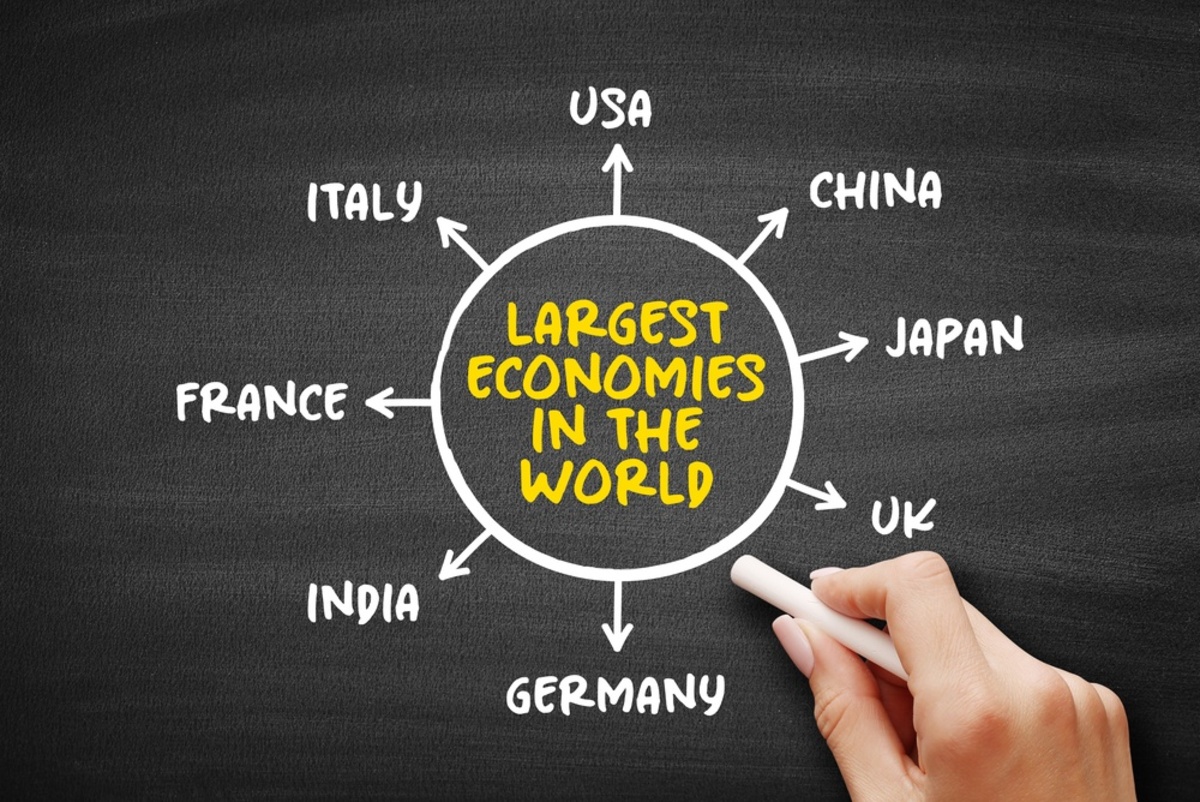
The global economy is shaped by powerful nations that influence trade, investment, technology, and financial markets across the world. Economic strength is often measured by factors such as gross domestic product, industrial output, and financial market stability. The largest economy in the world plays a critical role in determining global economic trends, investor confidence, and international trade policies. Its industries, innovation, and monetary decisions can impact businesses and consumers far beyond its borders. Understanding how major economies operate helps investors and analysts evaluate opportunities and risks in the global market.
Which is the Largest Economy in the World Today?
Determining the largest economy in the world is not as straightforward as it seems. While the US economy has long held the top spot in nominal GDP terms, other metrics like purchasing power parity (PPP) paint a different picture. As of 2026, the largest economy remains a subject of debate among economists, policymakers, and financial analysts. The answer depends on how economic size is measured — whether through nominal GDP, PPP-adjusted figures, or other economic indicators. For a deeper understanding, exploring these metrics is essential, as they reveal how different countries contribute to the global economy.
One of the most critical tools for measuring economic size is GDP, but it comes in multiple forms. Nominal GDP calculates the total value of goods and services produced at current market prices, while PPP-adjusted GDP accounts for differences in the cost of living and currency exchange rates. For instance, China’s economy appears significantly larger when measured by PPP due to its vast population and lower domestic prices. Meanwhile, the US economy consistently ranks at the top in nominal terms, reflecting its dominance in high-value industries like technology, finance, and innovation. To fully grasp which country holds the title of the largest economy in the world, it’s important to examine both perspectives.
How Global Economies Are Measured (GDP, PPP, Nominal GDP)?
Measuring the size of a national economy involves several key metrics, each offering unique insights into economic performance. The most commonly used indicators include nominal GDP, real GDP, and PPP-adjusted GDP. Each method provides a different lens through which to view economic strength, and none is universally superior — rather, they complement one another.
- Nominal GDP represents the total monetary value of all goods and services produced within a country’s borders, calculated at current market prices. This metric is widely used for international comparisons because it reflects actual economic output in a standardized currency, typically USD. The US economy consistently leads in nominal GDP due to its high-value industries and strong domestic consumption. However, nominal GDP does not account for differences in cost of living, which can distort comparisons between countries with varying price levels.
- Real GDP adjusts nominal GDP for inflation, providing a clearer picture of economic growth over time. Unlike nominal GDP, real GDP removes the effects of price changes, making it a more accurate measure of a country’s productive capacity. A country with high inflation might see its nominal GDP rise sharply, but real GDP growth could reveal stagnation or decline — a distinction that is critical for assessing long-term economic trends and sustainability.
- Purchasing Power Parity (PPP) GDP takes into account the relative cost of living and currency exchange rates, adjusting GDP figures to reflect what each currency can actually buy in its domestic market. This metric is particularly useful for comparing economies with significant price differences. China’s PPP-adjusted GDP often surpasses that of the US economy because its large population and lower domestic prices increase its effective purchasing power. However, PPP does not account for exchange rate fluctuations or trade barriers, which can limit its applicability in certain contexts.
The Current Ranking of the World’s Largest Economies
As of 2026, the GDP ranking of the world’s largest economies continues to evolve, reflecting ongoing shifts in global economic power. The US economy remains the undisputed leader in nominal GDP, followed closely by China and India. However, the gap between these countries narrows considerably when considering PPP-adjusted figures, where China often ranks higher due to its massive domestic market and lower cost of living.
Top five economies by nominal GDP (2026 estimates):
- United States: The US economy leads with a nominal GDP exceeding $28 trillion, driven by innovation, strong consumer demand, and a diverse industrial base. Its dominance in technology, finance, and services ensures its continued position as a global economic superpower.
- China: With a nominal GDP of around $17 trillion, China is the second-largest economy. Its rapid industrialization, infrastructure development, and export-driven growth have propelled it to near-parity with the US in certain sectors.
- India: India’s economy has surged in recent years, reaching approximately $4.5 trillion in nominal GDP. Its young workforce, growing middle class, and expanding service sector make it one of the fastest-growing major economies in the world.
- Germany: Europe’s largest economy holds a nominal GDP of roughly $4.5 trillion. Its manufacturing prowess, particularly in automotive and machinery, underpins its significant global influence.
- Japan: With a nominal GDP of about $4.2 trillion, Japan remains a key player in technology, robotics, and the automotive industries. Despite an aging population, its economic resilience keeps it firmly in the top five.
Key Factors That Determine Economic Size
Several factors influence a country’s position in the GDP ranking, shaping its trajectory as a global economic powerhouse. These include population size, technological advancement, resource availability, and government policies.
- Population and Labor Force: A larger population provides a broader workforce and consumer base, which can drive economic growth. Countries like China and India benefit from their massive populations, enabling them to scale industries rapidly. However, population alone isn’t sufficient — productivity and skill levels also play a critical role in translating demographic size into meaningful economic output.
- Technological Innovation: Economies that invest in research and development tend to grow faster and diversify their industries. The US economy leads in tech innovation, with Silicon Valley driving advancements in AI, biotech, and digital services. Innovation fosters high-value exports and attracts global investment, reinforcing long-term economic dominance in ways that compound over time.
- Natural Resources and Infrastructure: Access to natural resources such as oil, minerals, or arable land can accelerate industrialization. Countries like Saudi Arabia and Australia leverage their resources to boost GDP, while robust infrastructure in transportation, energy, and digital networks enhances productivity and trade efficiency across all sectors.
- Government Policies and Stability: Favorable policies such as tax incentives, deregulation, and pro-business reforms attract foreign investment and stimulate growth. Political stability and transparent institutions also reduce risk for businesses, encouraging long-term economic expansion. Conversely, instability deters investment and slows growth significantly.
- Trade and Global Integration: Economies that participate actively in global trade benefit from export revenues and access to foreign markets. The US economy and China both thrive on trade, with their exports shaping trending markets worldwide. Tariffs, trade agreements, and supply chain resilience further influence overall economic size and competitiveness.
- Consumer Demand and Domestic Market: A large domestic market drives internal consumption and sustains economic activity independently of export performance. China’s PPP-adjusted GDP reflects its vast internal demand, while the US economy benefits from high consumer spending on goods and services across virtually every sector.
These factors collectively determine a country’s economic size and its potential to rise in the global GDP ranking. Investors who monitor these structural dynamics through platforms like Evest can better position their portfolios ahead of the economic shifts that inevitably follow changes in these fundamental drivers.
Role of Trade and Globalization
Trade and globalization have reshaped the global economy, enabling countries to specialize in goods and services where they hold a competitive advantage. This interconnectedness has allowed emerging economies to grow rapidly while reinforcing the dominance of established economic superpowers.
- Export-Led Growth: Many of the world’s largest economies rely on exports to fuel their GDP. China has built its economic powerhouse on manufacturing and exporting goods like electronics, machinery, and textiles. Similarly, Germany’s automotive and industrial exports contribute significantly to its GDP ranking. Countries that excel in trade often see faster economic expansion, as export revenues boost domestic production and employment simultaneously.
- Supply Chain Integration: Globalization has produced intricate supply chains where components are produced in different countries before being assembled elsewhere. The US economy benefits from its role as a hub for technology and finance, while countries like Vietnam and Mexico have become key manufacturing hubs for global brands. Disruptions in these chains — such as those caused by the COVID-19 pandemic — can expose deep vulnerabilities in economic stability that affect markets worldwide.
- Foreign Direct Investment (FDI): Capital flows between developed and emerging economies create interdependencies that accelerate growth on both sides. Emerging markets rely on FDI to fund infrastructure and technology adoption, while developed economies gain access to lower-cost production capacity and rapidly expanding consumer markets in return.
Comparison Between Developed and Emerging Economies
The distinction between developed economies and emerging economies is fundamental to understanding global economic dynamics. While developed nations like the US economy, Germany, and Japan dominate in nominal GDP and technological innovation, emerging markets such as China, India, and Brazil are rapidly closing the gap. These differences shape economic growth trajectories, investment opportunities, and geopolitical influence — all of which are closely monitored by investors using platforms like Evest to build globally diversified portfolios.
Developed and emerging economies play a major role in shaping the global financial system, each contributing through different strengths, growth patterns, and investment opportunities. While developed nations lead in technology and financial stability, emerging markets offer rapid growth potential and expanding consumer demand.
| Aspect | Developed Economies | Emerging Economies |
| Economic Structure | High-income economies with advanced infrastructure and stable institutions. | Rapidly industrializing economies with expanding middle classes. |
| Main Growth Drivers | Technology, finance, innovation, and high-value exports. | Industrialization, urbanization, and foreign investment. |
| Technological Development | Strong investment in R&D, AI, biotechnology, and renewable energy. | Growing adoption of technology and digital transformation. |
| Financial Markets | Home to major stock exchanges like the NYSE and NASDAQ. | Developing financial markets with increasing global participation. |
| Human Development | High literacy rates, healthcare quality, and life expectancy. | Improving education and healthcare, but still facing development gaps. |
| Trade Performance | Often maintain trade surpluses through advanced manufacturing exports. | Focus on exports, manufacturing, agriculture, and raw materials. |
| Top Economies (2026 GDP) | US, China, Germany, Japan, United Kingdom. | India, Brazil, Russia, Indonesia, Mexico. |
| Population Trends | Aging populations and slower workforce growth. | Young and growing populations support labor markets. |
| Investment Appeal | Stability, liquidity, and lower investment risk. | Higher growth potential with greater market volatility. |
| Major Challenges | Rising inequality, aging demographics, and slower growth. | Political instability, infrastructure gaps, and external debt risks. |
| Global Economic Role | Lead innovation, finance, and global capital markets. | Support manufacturing, labor supply, and consumer market expansion. |
| Trade & Investment Relations | Outsource production while focusing on design and innovation. | Attract foreign investment and manufacturing operations. |
Impact of the Largest Economy on Global Markets
The largest economy in the world — whether measured by nominal GDP or PPP — exerts significant influence over global financial markets, trade flows, and geopolitical stability. The US economy sets trends in currency valuation, interest rates, and commodity prices, while China’s rise in PPP-adjusted GDP reshapes supply chains, manufacturing, and investment strategies worldwide.
1. Currency and Financial Market Effects:
The US economy’s dominance in global finance means the US dollar remains the world’s reserve currency, accounting for over 60% of all foreign exchange reserves. Key impacts include:
- Dollar Strength: A strong USD makes imports cheaper for the US but can strain emerging markets with dollar-denominated debt, as seen repeatedly in Argentina and Turkey.
- Interest Rates: Federal Reserve policies such as rate hikes or cuts ripple globally, affecting borrowing costs in Europe, Asia, and Latin America simultaneously.
- Stock Market Correlations: US stock indices, including the S&P 500 and Nasdaq, often dictate trends in Asian and European markets due to investor sentiment and cross-border capital flows.
How China’s Economy Influences Markets:
- Renminbi (RMB) Role: As China’s PPP-adjusted GDP grows, the RMB is gradually gaining traction as an international currency, particularly in trade with Africa and Asia.
- Commodity Prices: China’s demand for oil, metals, and agricultural products drives global commodity markets, most notably copper and soybeans.
- Tech and Manufacturing: Chinese tech giants,s including Alibaba and Huawei, alongside China’s vast manufacturing output, affect global supply chains across electronics and automotive production.
2. Trade and Supply Chain Dominance:
The largest economy shapes global trade policies and supply chain resilience in ways that affect every sector and every market:
- US Trade Policies: Tariffs and trade agreements such as USMCA redirect supply chains, benefiting or penalizing specific industries depending on their geographic exposure.
- China’s Manufacturing Hub: Over 70% of the world’s rare earth minerals and electronics components are produced in China, making it indispensable for the global tech and automotive sectors.
- Emerging Market Alternatives: Countries like Vietnam and Mexico have become alternatives to Chinese manufacturing, though their capacity remains limited compared to China’s scale.
The US-China Trade War of 2018–2020 illustrates precisely how market-moving the actions of the world’s largest economies can be. The imposition of tariffs led to supply chain diversification as companies relocated production to India, Vietnam, and Mexico. Global inflation pressures emerged as trade disruptions increased consumer goods costs, and stock markets fluctuated sharply based on negotiation outcomes — the kind of macro event that Evest users track in real time to inform their investment decisions.
3. Geopolitical and Investment Implications:
The economic might of the largest economy translates directly into geopolitical leverage on the world stage:
- US Influence: The US economy’s financial dominance allows it to impose sanctions on Russia and Iran that ripple through global markets well beyond the directly targeted countries.
- China’s Belt and Road Initiative: Infrastructure projects across Asia, Africa, and Europe create long-term economic dependencies, positioning China as a rival to US-led institutions like the IMF and World Bank.
- Emerging Market Investments: Investors flock to high-growth emerging economies like India and Indonesia for yield, but political risks, including capital controls and policy shifts, can introduce significant volatility.
Sector-specific impacts of the two largest economies on global markets:
| Sector | US Economy’s Influence | China’s Influence |
| Technology | Silicon Valley leads in AI, semiconductors, and software | Huawei, Alibaba, and Tencent dominate e-commerce and fintech |
| Energy | US shale oil and gas influence global oil prices | China’s demand drives oil and coal markets |
| Automotive | Tesla and Ford set global electric vehicle trends | BYD and Geely lead in EV production and exports |
| Agriculture | US soybeans and corn are key global exports | China’s pork and rice production affects global food prices |
4. Risk and Stability Considerations:
While the largest economy provides a degree of global stability, its policies can simultaneously introduce systemic risks that reverberate across markets worldwide:
- US Economic Slowdowns: Recessions in the US economy often trigger global downturns due to its deep interconnectedness with financial markets on every continent.
- China’s Debt Levels: Local government debt and real estate bubbles — as illustrated by the Evergrande crisis — pose systemic risks to global financial stability that extend well beyond China’s borders.
- Currency Wars: Competitive devaluations between the USD and RMB can disrupt trade and investment flows, creating sustained uncertainty across global markets.
For investors seeking to navigate these complex and interconnected dynamics, Evest platform offers the real-time data, analytical tools, and market insights needed to make informed decisions in an era where the economic policies of the world’s largest economies can reshape global markets with extraordinary speed.
FAQs
How does the largest economy in the world affect global markets?
The largest economy in the world strongly influences global trade, investment flows, and financial market performance. Changes in interest rates, inflation, or economic growth in major economies can impact stock markets, currencies, and commodity prices worldwide. Global investors closely monitor these economies because their policies often shape international economic trends.
Can an emerging economy become the largest economy in the world?
Yes, an emerging economy can become the largest economy in the world if it maintains strong economic growth, industrial expansion, and technological development over time. Countries with large populations, growing middle classes, and rising productivity have significant long-term potential. However, achieving this status also requires political stability, advanced infrastructure, and strong financial systems.
What industries drive the largest economy in the world?
The largest economies are usually driven by industries such as technology, finance, manufacturing, healthcare, and energy. In countries like the United States, sectors such as artificial intelligence, banking, and digital services contribute significantly to economic growth. Manufacturing, exports, and innovation also play a major role in strengthening global economic leadership.