
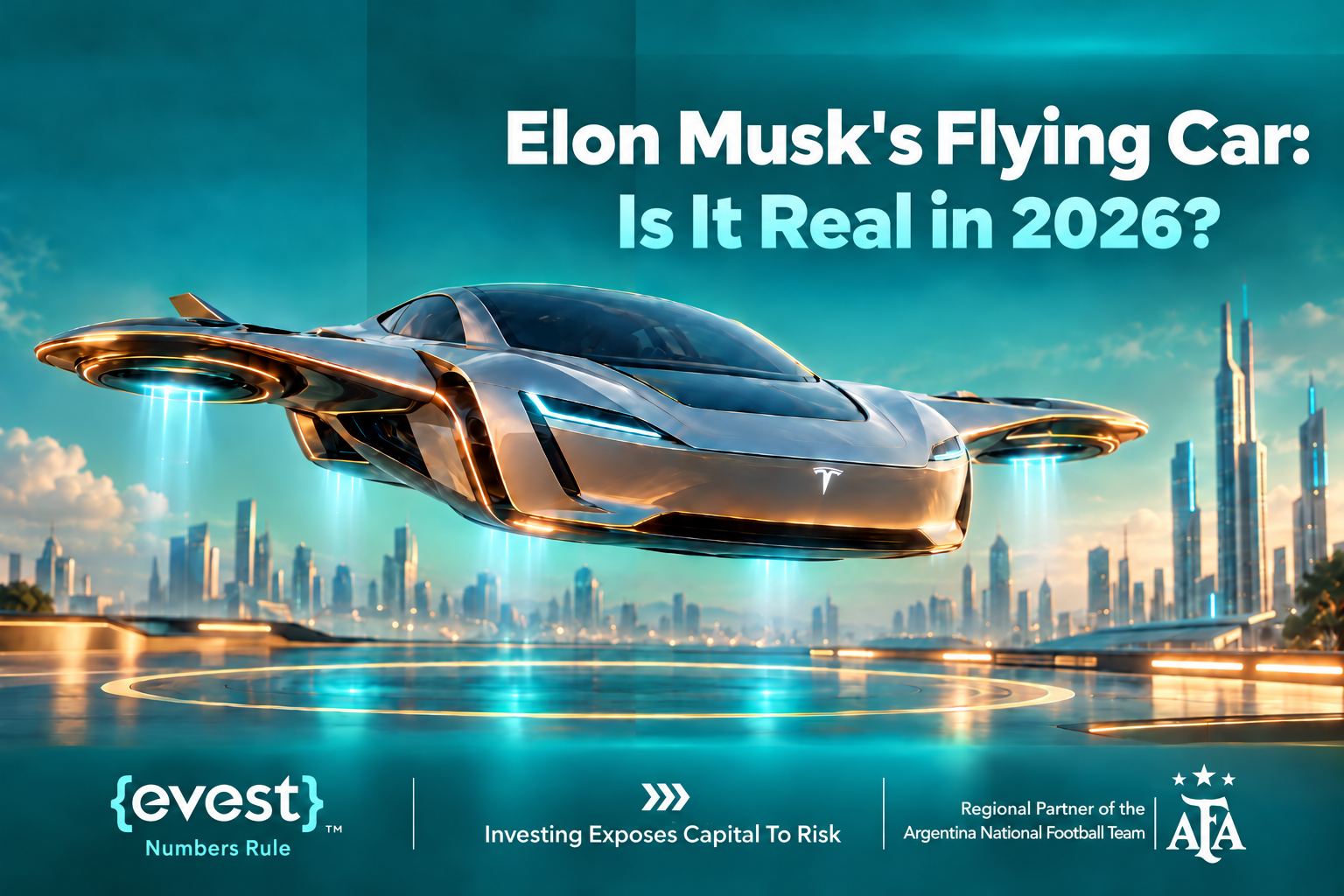
Imagine driving a high-performance sports car that suddenly lifts off the ground and performs aerial maneuvers similar to those seen in science fiction movies. This futuristic vision has moved closer to reality after Tesla unveiled the next generation of its Roadster on October 15, 2026. During an extraordinary demonstration, the vehicle showcased its ability to jump into the air and control its movements using technologies developed in collaboration with SpaceX.
The Elon Musk flying car has attracted worldwide attention, particularly following the announcement of specifications that go beyond the capabilities of conventional electric vehicles. However, despite these technological developments, questions remain about whether the car can legally operate on public roads, how far it can actually fly, and when it might become available to consumers.
Tesla se prepara para una semana extraordinaria
La atención de los inversores se centra esta semana en Tesla, ante la expectativa de dos acontecimientos importantes que podrían afectar al rendimiento de sus acciones y aumentar su volatilidad: la presentación de la nueva generación del deportivo Roadster, junto con el anuncio de los resultados financieros de la compañía correspondientes al tercer trimestre de 2026, el miércoles 21 de octubre, después del cierre del mercado bursátil estadounidense.
Esta semana llega en un momento delicado para las acciones, ya que Tesla cotiza actualmente bajo presión tras una caída notable desde principios de año, en medio de preocupaciones por la desaceleración del crecimiento de las ventas mundiales de vehículos eléctricos y la intensificación de la competencia de los fabricantes chinos, encabezados por BYD. El mercado de opciones ha descontado un movimiento esperado de las acciones de aproximadamente entre el 7 % y el 8 % durante el día siguiente al anuncio, lo que refleja el nivel de incertidumbre entre los operadores.
Tesla Prepares for an Extraordinary Week
Investors are turning their attention to Tesla this week as they await two important events that could affect the stock’s performance and increase its volatility: the unveiling of the new generation of the Roadster sports car, alongside the announcement of the company’s financial results for the third quarter of 2026 on Wednesday, October 21, after the U.S. stock market closes.
This week comes at a sensitive time for the stock, as Tesla is currently trading under pressure following a notable decline since the beginning of the year, amid concerns about slowing growth in global electric vehicle sales and intensifying competition from Chinese manufacturers, led by BYD. The options market has priced in an expected stock movement of around 7–8% on the day following the announcement, reflecting the level of uncertainty among traders.
What Is Elon Musk’s Flying Car?
The vehicle is known as the Tesla Roadster 2, the next generation of the electric sports car Tesla first announced in 2017. Its launch was subsequently delayed for several years due to challenges associated with development and production.
On October 15, 2026, Elon Musk presented a new prototype at a SpaceX facility in Texas, where the vehicle performed a series of impressive stunts, including driving upside down, launching into the air, and landing safely.
The project combines electric vehicle technology with engineering expertise from the aerospace industry, giving the Roadster capabilities that distinguish it from conventional sports cars.
How Does the Tesla Flying Car Work?
The vehicle relies on a compressed-air propulsion system developed in collaboration with SpaceX. This technology generates additional thrust, allowing the car to perform maneuvers that would be difficult to achieve using conventional motors and wheels alone.
The main technologies include:
- Compressed-Air Thrusters: Generate additional thrust that helps propel the vehicle into the air.
- Directional Control System: Helps control the car’s movement during brief aerial maneuvers.
- Suction System: Allows the vehicle to maintain contact with surfaces and perform stunts such as driving upside down.
- Electric Powertrain: Provides acceleration and high-performance driving capabilities on roads.
Despite the successful demonstration, Tesla has not yet proven that the Roadster can sustain continuous flight like an aircraft. Instead, the demonstration focused on brief jumps and aerial maneuvers.
Specifications of Elon Musk’s New Flying Car
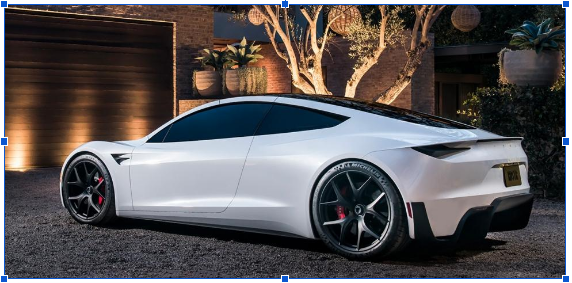
Tesla aims to introduce a high-performance electric vehicle that exceeds conventional acceleration limits while incorporating aerial capabilities inspired by aerospace technology.
According to the specifications announced during the latest unveiling, the vehicle’s key features include:
- Acceleration: From 0 to approximately 60 mph (96.6 km/h) in less than one second, according to Tesla’s reported figures.
- Top Speed: More than 230 mph (370 km/h), based on the announced specifications.
- Propulsion System: An electric powertrain supported by compressed-air thrusters.
- Interior: A sports-oriented design intended to accommodate a limited number of passengers.
- Aerial Capabilities: Short jumps and maneuvers powered by additional thrust.
Some of these specifications remain based on Tesla’s statements and internal demonstrations. Not all of them have been independently verified or tested under commercial operating conditions.
How Much Does the Tesla Flying Car Cost?
Price is among the most frequently discussed aspects of the project, particularly because the new vehicle is not intended for the affordable electric car market. Instead, it targets the luxury sports car segment and consumers interested in advanced automotive technology.
According to reservation details reported by Reuters, different Roadster versions require deposits of $50,000 for one variant and $250,000 for the advanced thrust-equipped version. A special edition is also expected to be available by invitation only.
However, it is important to distinguish between reservation deposits and final purchase prices. Tesla has not yet confirmed the final cost of every version when deliveries begin, and pricing details may change before commercial production.
When Will Elon Musk’s Flying Car Be Released?
According to Elon Musk’s statements during the latest unveiling, Tesla plans to begin producing the next-generation Roadster in 2028, following multiple delays since its initial announcement.
However, the start of production does not necessarily mean the vehicle will immediately become available in every market. Some of its advanced technologies will require regulatory reviews and safety assessments before they can be approved for public road use.
The vehicle’s aerial capabilities also create additional regulatory challenges because automotive and aviation laws differ significantly between countries. As a result, there is currently no guaranteed delivery date for consumer versions equipped with flying capabilities.
Could Tesla’s Flying Car Change the Future of Transportation?
The project could represent an important step in developing future vehicle technologies, but it does not necessarily mean flying cars will replace conventional automobiles within the next few years.
Turning an experimental prototype into a commercially available product involves overcoming several challenges, including passenger safety, high production costs, energy consumption, suitable infrastructure, and regulations governing aerial operations.
Tesla is also not the only company exploring flying vehicle technology. Other projects are developing different approaches to vertical takeoff, landing, and aerial transportation.
The Roadster’s most immediate impact may therefore be accelerating innovation in propulsion and control systems for high-performance vehicles rather than creating an immediate transformation in everyday transportation.
Elon Musk’s flying car demonstrates Tesla’s ambition to move beyond conventional electric vehicle technology by combining sports car performance with aerospace-inspired propulsion systems. Although the latest demonstration revealed capabilities rarely seen in a Roadster, significant challenges remain before such a vehicle could become a practical form of everyday aerial transportation.
Production is currently targeted for 2028, while upcoming tests and regulatory approvals will determine the technology’s future and whether it can eventually reach international markets.
FAQs
Does the Tesla Flying Car Require Jet Fuel?
No, the new Tesla Roadster does not rely on conventional aviation fuel. Instead, it uses electric motors combined with an additional compressed-air propulsion system. This technology generates thrust for short aerial maneuvers without requiring the combustion of traditional aircraft fuel.
How Far Can the Tesla Roadster Travel on a Single Charge?
According to specifications Tesla announced in October 2026, the vehicle has an estimated driving range of approximately 300 miles (483 kilometers) per charge. However, this figure has not been independently verified, and actual range may vary depending on driving conditions and the use of additional propulsion systems.
Can Elon Musk's Flying Car Drive Itself?
Although Tesla has developed autonomous driving technologies for other vehicles, the new Roadster is primarily designed for human drivers. Elon Musk described it as one of Tesla's final driver-focused vehicles, while the aerial maneuvers during the demonstration were performed without a driver inside for safety reasons.
How Many Passengers Can the Tesla Flying Car Carry?
Passenger capacity varies depending on the vehicle's version. The Performance and Thrust variants can accommodate two people, while the Rocket version, designed for advanced aerial maneuvers, features only one seat due to the space required for its propulsion and compressed-air systems. This most advanced version is expected to be available by invitation only.