
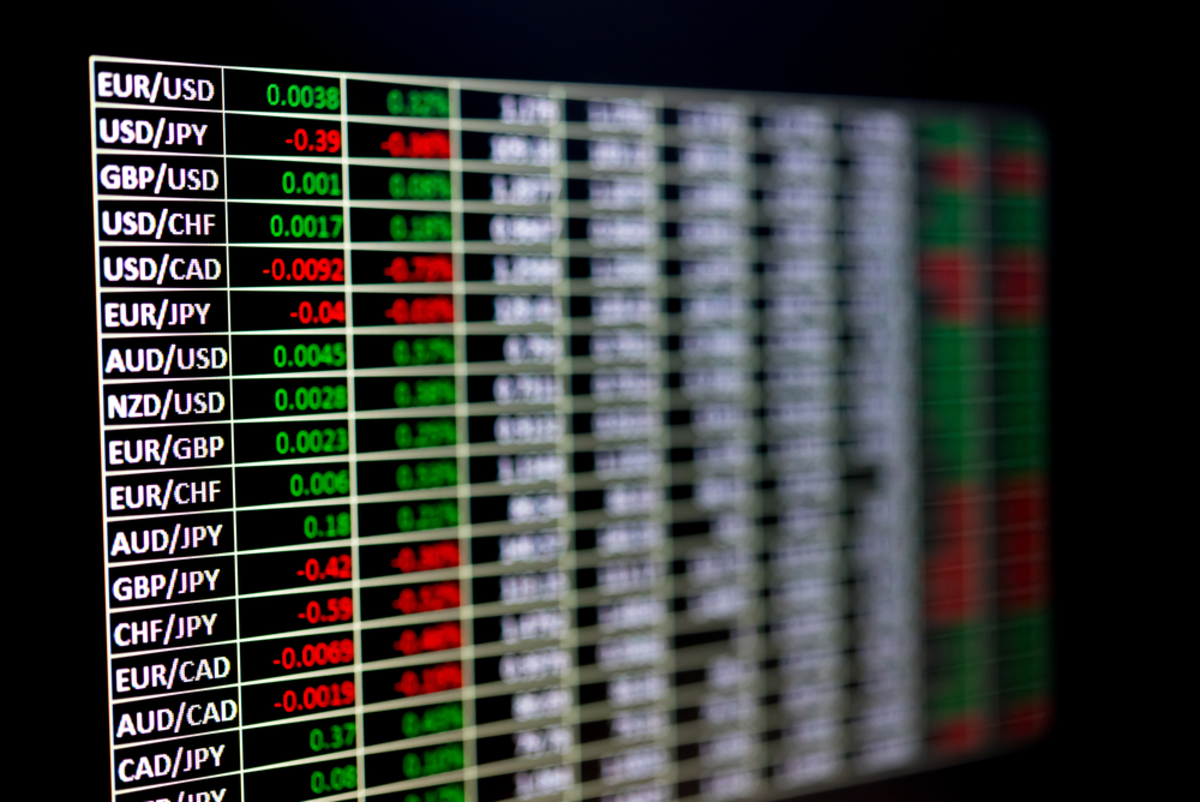
Cross currency pairs represent a sophisticated yet accessible segment of the foreign exchange market, offering traders exposure to economic dynamics beyond the dominance of the US dollar. Unlike major currency pairs, these pairs exclude the USD entirely, allowing investors to capitalize on regional trends, political developments, and interest rate differentials between non-USD currencies. In 2026, understanding cross currency pairs is essential for diversifying portfolios and exploiting unique market opportunities. This guide explores their types, trading strategies, and the key factors driving their volatility, providing actionable insights for both beginners and experienced traders.
Types of Currency Pairs in Forex Trading
In the world of Forex trading, currency pairs are broadly categorized into three types: major pairs, cross currency pairs, and exotic pairs. Each category serves distinct purposes and appeals to different trading strategies.
- Major currency pairs, such as EUR/USD or USD/JPY, dominate the market due to their high liquidity and tight spreads. These pairs are directly tied to the US dollar, making them sensitive to global economic trends and USD strength.
- Cross currency pairs, however, involve currencies that do not include the USD, such as EUR/GBP or EUR/JPY. These pairs reflect the economic relationship between two non-USD currencies, offering exposure to regional economic conditions. For example, EUR/JPY captures the interplay between the Eurozone’s economic policies and Japan’s monetary stability.
- Exotic currency pairs, like USD/TRY or EUR/ZAR, involve currencies from emerging markets. While these pairs offer higher volatility potential, they are typically less liquid and come with wider spreads, making them riskier but potentially more rewarding for traders seeking speculative opportunities.
How Cross Currency Pairs Differ from Major Pairs?
Cross currency pairs differ from major pairs in several critical ways, primarily due to their indirect relationship with the USD and the economic fundamentals of the currencies involved.
- Base and Quote Currency Dynamics: In cross currency pairs, both currencies are non-USD. For instance, in EUR/GBP, the euro is the base currency, and the British pound is the quote currency. This structure means the pair’s movement is influenced by the economic policies and conditions of both the Eurozone and the UK, rather than just one major economy tied to the USD.
- Liquidity and Volatility: Major pairs like EUR/USD benefit from high liquidity, resulting in tighter spreads and lower transaction costs. Cross currency pairs, however, often exhibit higher volatility due to their indirect relationship with the USD and the economic disparities between the two currencies. For example, EUR/JPY can experience significant price swings during periods of uncertainty in either the Eurozone or Japan, leading to wider spreads and more pronounced price movements.
- Economic Drivers: Cross currency pairs are highly sensitive to regional economic indicators. For example, EUR/GBP is influenced by Brexit developments, ECB policies, and the UK’s economic outlook. Similarly, GBP/JPY reflects the volatility of the British pound combined with the stability of the Japanese yen, making it attractive for traders seeking high-risk, high-reward opportunities.
How Cross Currency Pair Prices Are Actually Calculated?
Most traders accept the quoted price of a cross currency pair without questioning how that price is derived. Understanding the actual calculation mechanism, however, gives you a meaningful edge in spotting pricing inefficiencies and understanding why spreads on cross pairs tend to be wider than on major pairs. The answer lies in the fact that virtually all cross currency pair prices are calculated indirectly through the US dollar, even though the dollar does not appear in the pair itself.
The Cross Rate Calculation in Practice
When you see a price quoted for EUR/GBP, that price is not determined independently. It is derived by dividing the EUR/USD rate by the GBP/USD rate. If EUR/USD is trading at 1.0800 and GBP/USD is trading at 1.2600, the derived EUR/GBP rate is 1.0800 divided by 1.2600, which gives approximately 0.8571.
This indirect calculation has a direct practical consequence for traders. Because the cross rate is derived from two separate major pairs, any spread or pricing imprecision in either of those pairs feeds into the cross rate. The result is that cross currency pairs almost always carry wider bid-ask spreads than the major pairs from which they are derived, and any slippage in execution on a cross pair is effectively the combined slippage risk of two simultaneous major pair transactions. Understanding this mechanism helps you evaluate the true cost of trading a cross pair versus trading the underlying major pairs separately, and it explains why cross pairs generally require larger price moves to cover transaction costs compared to major pairs.
Top Cross Currency Pairs to Trade in 2026
In 2026, several cross currency pairs stand out for their liquidity, trading volume, and potential for profit. These pairs are favored by traders for their responsiveness to economic news and geopolitical events.
- EUR/GBP: Known as the “Chunnel” pair, EUR/GBP is one of the most liquid cross currency pairs. Its movement is heavily influenced by Brexit-related developments, European Central Bank (ECB) policies, and the UK’s economic outlook. Traders often use this pair to gauge the relative strength of the euro against the pound, making it ideal for those focused on European economic trends.
- EUR/JPY: This pair, often referred to as the “Yen Cross,” reflects the strength of the euro against the safe-haven Japanese yen. It tends to rally during global uncertainty, as investors flock to the yen for safety. EUR/JPY is particularly sensitive to interest rate differentials between the ECB and the Bank of Japan.
- GBP/JPY: Combining the volatility of the British pound with the stability of the Japanese yen, GBP/JPY is attractive for traders seeking high-risk, high-reward opportunities. This pair is influenced by both UK economic data and Japan’s monetary policy, making it highly responsive to geopolitical events.
- EUR/CHF: The Swiss franc is another safe-haven currency, and EUR/CHF is influenced by Swiss National Bank policies and Eurozone stability. This pair often reacts to global risk sentiment, with the Swiss franc strengthening during periods of market turbulence.
Correlation Between Cross Pairs and Major Pairs
One of the most practically important concepts for any trader active in cross currency pairs is understanding how those pairs correlate with the major pairs from which they are derived. Ignoring these correlations is one of the most common ways traders unknowingly double their exposure to a single currency without realizing it, which can produce unexpected losses when the market moves against them.
Because cross pairs are derived from major pairs through the USD as an intermediate currency, mathematical relationships exist between them that create predictable correlation patterns. Understanding these patterns is essential for proper portfolio construction and risk management.
| Cross Pair | Positive Correlation | Negative Correlation | Practical Implication |
| EUR/GBP | EUR/USD | GBP/USD | Long EUR/GBP + Long EUR/USD = double EUR exposure |
| EUR/JPY | EUR/USD, USD/JPY | Risk-off assets | Sensitive to both Eurozone data and global sentiment |
| GBP/JPY | GBP/USD, USD/JPY | Safe-haven flows | Among the most volatile due to dual correlation |
| EUR/CHF | EUR/USD | USD/CHF | Sensitive to Eurozone stability and Swiss National Bank policy |
Trading Strategies for Cross Currency Pairs
Trading cross currency pairs requires a tailored approach due to their unique characteristics. Unlike major pairs, which often follow clear USD-driven trends, cross pairs demand a deeper understanding of the economic fundamentals and technical patterns of the two currencies involved.
-
- Trend Analysis: Use tools like the 50-day and 200-day moving averages to identify long-term trends in cross currency pairs. For example, a crossover of these averages in EUR/GBP may signal a new trend. Additionally, pay attention to economic calendars for key data releases, such as GDP reports or employment figures, which can provide early signals of potential movements.
- Technical Indicators: Incorporate indicators like the Moving Average Convergence Divergence (MACD) or Bollinger Bands to spot entry and exit points. These tools help filter out market noise and highlight key support and resistance levels. For instance, a bullish MACD crossover in EUR/JPY could indicate a buying opportunity.
- Fundamental Analysis: Monitor economic indicators such as interest rate differentials, inflation rates, and political stability. For example, a rise in the UK’s interest rates may strengthen GBP/JPY, while political instability in the Eurozone could weaken EUR/CHF. Understanding these fundamentals is crucial for predicting volatility and making informed trading decisions.
Factors Affecting Cross Currency Pairs Prices
The price movements of cross currency pairs are influenced by a variety of factors, ranging from interest rate differentials to geopolitical events. Understanding these drivers is essential for predicting volatility and executing successful trades.
- Interest Rate Differentials: Higher interest rates in one currency relative to another can attract capital flows, strengthening that currency. For example, if the European Central Bank raises interest rates while the Bank of Japan keeps them low, EUR/JPY will likely rise as investors seek higher yields in the euro. Traders often use interest rate expectations as a leading indicator for potential pair movements.
- Political and Economic Stability: Events such as elections, referendums, or economic crises can cause significant volatility in cross currency pairs. For instance, political instability in the UK could weaken GBP/JPY, while economic reforms in Japan might strengthen the yen against the euro in EUR/JPY.
- Market Sentiment and Safe-Haven Flows: During periods of global uncertainty, safe-haven currencies like the Japanese yen or Swiss franc tend to strengthen. This can lead to significant movements in pairs such as EUR/JPY or GBP/CHF, as traders reposition their portfolios for safety. Monitoring market sentiment through tools like the Commitment of Traders (COT) report can provide valuable insights into these flows.
Trade Cross Currency Pairs With Confidence on Evest
Understanding cross currency pairs at this depth means you are ready for a trading environment that matches your level of analysis. Evest is a regulated, multi-award-winning CFD broker that gives you access to a full range of forex pairs, including the most actively traded cross pairs, with the execution quality, risk management tools, and platform flexibility that serious currency traders demand.
- Full access to major, minor, and cross currency pairs including EUR/GBP, EUR/JPY, GBP/JPY, AUD/JPY, EUR/CHF, and more
- Competitive spreads across all forex instruments with transparent pricing and no hidden fees
- MT5 platform with advanced charting, multi-timeframe analysis, and full indicator suite for session-based and correlation-aware trading
- Leverage of up to 1:400 on forex pairs, allowing precise position sizing across cross currency instruments
- Built-in stop loss and take profit tools for accurate risk management on pairs where pip values require currency conversion
- Islamic swap-free accounts available for eligible traders, removing overnight interest charges from carry trade calculations
- Web platform and mobile app for full trading flexibility across all global sessions from Asian open to New York close
- Regulated by VFSC Vanuatu and FSCA South Africa
- Awarded Best CFD Broker at Qatar Financial Expo & Awards QFEX 2025 and Best Trading Tools at Forex Expo Dubai 2024
Visit evest.com to open your account and access the full range of cross currency pairs with a broker built for informed traders.
FAQs
What is the difference between a cross currency pair and a major currency pair?
A cross currency pair involves two non-USD currencies, such as EUR/GBP, while a major pair includes the USD, like EUR/USD. Cross pairs are influenced by the economic relationship between the two currencies, whereas major pairs are directly tied to USD movements and global liquidity. This distinction means cross pairs often reflect regional economic trends more directly, offering unique trading opportunities.
Which cross currency pairs are the most liquid and why?
The most liquid cross currency pairs in 2026 include EUR/GBP, EUR/JPY, and GBP/JPY. Their liquidity stems from high trading volumes driven by strong economic ties between the involved regions. For example, EUR/GBP benefits from the proximity and economic integration of the Eurozone and the UK, while EUR/JPY is influenced by the Eurozone’s economic policies and Japan’s status as a haven.
How do interest rates impact the price of cross currency pairs?
Interest rates create differentials that attract or deter capital flows. For instance, if the ECB raises rates while the Bank of Japan maintains low rates, EUR/JPY will likely rise as investors seek higher yields in the euro. Conversely, if the Swiss National Bank raises rates, EUR/CHF may decline due to the increased attractiveness of the Swiss franc.
Can I trade cross currency pairs with the same strategies as major pairs?
While some strategies, such as technical analysis, apply to both cross and major pairs, cross currency pairs require additional focus on fundamental factors specific to the two currencies involved. For example, political events in the UK can significantly impact GBP/JPY but may not affect EUR/USD. Tailoring strategies to these unique drivers is key to success.
What are the best times of day to trade cross currency pairs for maximum volatility?
The best times to trade cross currency pairs are during the overlap of European and Asian trading sessions (7 AM to 12 PM GMT) or European and US sessions (8 AM to 12 PM GMT). These overlaps provide higher liquidity and volatility, especially for pairs like EUR/JPY, which are influenced by both Asian and European economic data releases.