
Amazon stock represents ownership in Amazon.com, Inc., one of the world’s largest technology and commerce companies. Its shares trade on the Nasdaq under the ticker AMZN.
The price of Amazon stock can move in response to e-commerce growth, AWS performance, advertising revenue, AI spending, margins, competition, and broader market conditions. On Evest, traders can gain exposure to Amazon through stock CFDs without owning the underlying shares.
This guide explains what Amazon stock is, what moves AMZN, who Amazon competes with, and how traders can gain exposure to the stock.
What Is Amazon Stock?
Amazon stock is the publicly traded equity of Amazon.com, Inc., listed on the Nasdaq under the ticker AMZN. Amazon operates across several major businesses, including:
- E-commerce.
- Cloud computing through Amazon Web Services (AWS).
- Digital advertising.
- Prime subscriptions.
- Streaming and entertainment.
- Logistics and fulfillment.
- AI infrastructure and services.
This diversification means AMZN is influenced by more than online retail alone.
What Moves Amazon Stock?
Amazon stock mainly moves based on changes in revenue growth, profitability, AWS performance, advertising, AI investment, and investor expectations.
The main factors include:
- AWS Growth: Cloud computing is one of Amazon’s most important businesses.
- E-commerce Performance: Online sales, fulfillment costs, and consumer spending affect the retail business.
- Advertising Revenue: Amazon’s advertising business has become an important growth driver.
- AI Spending: Heavy investment in AI infrastructure can support long-term growth but may pressure cash flow.
- Profit Margins: Investors monitor whether Amazon can convert revenue growth into higher operating profit.
- Competition: Amazon faces pressure across retail, cloud, advertising, and entertainment.
- Interest Rates: Higher rates can affect technology-stock valuations.
- Market Sentiment: Broader moves in large-cap technology stocks can influence AMZN.
Why Does AWS Matter So Much to Amazon Stock?
AWS matters because it is one of Amazon’s fastest-growing and most strategically important businesses.
In the second quarter of 2026, AWS revenue rose 37% year over year to $42.2 billion, its strongest growth in more than four years. Amazon also increased its 2026 capital-spending plan to about $220 billion as it expanded AI and cloud infrastructure.
Strong AWS growth can support AMZN because cloud services typically carry stronger economics than traditional retail. However, higher cloud and AI spending can also reduce free cash flow in the short term.
How Does AI Affect Amazon Stock?
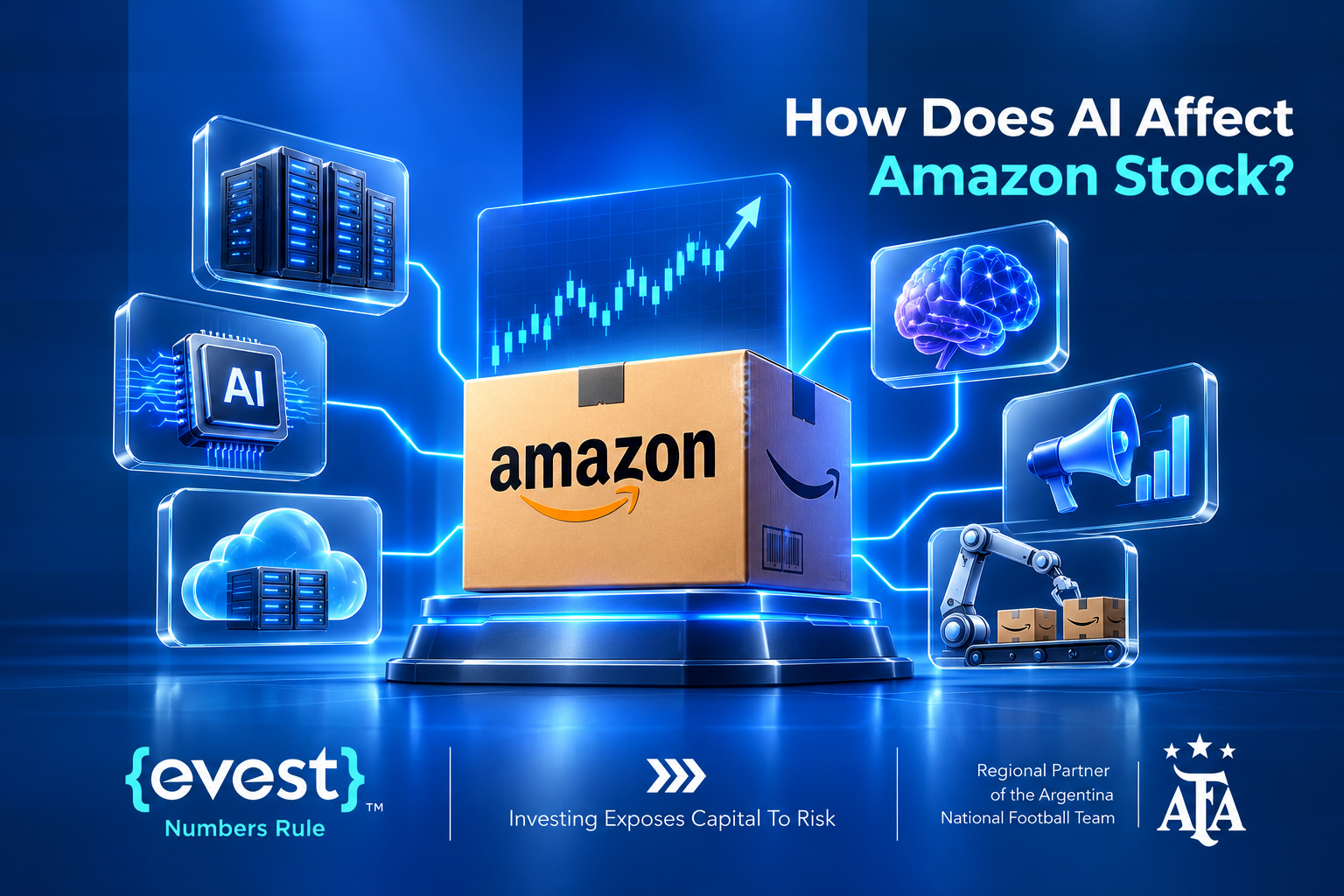
AI can support Amazon stock by increasing demand for AWS infrastructure, cloud services, advertising tools, and automation.
Amazon is investing heavily in:
- AI data centers.
- Custom chips.
- Cloud infrastructure.
- Generative AI services.
- Advertising technology.
- Automation.
Investors therefore watch whether Amazon can turn rising AI spending into higher revenue and profit.
This balance is important because large capital expenditures may pressure cash flow if returns take longer than expected.
Who Are Amazon’s Biggest Competitors?
Amazon’s biggest competitors depend on the business being considered.
E-commerce Competitors
Amazon competes with companies such as:
- Walmart.
- Alibaba.
- eBay.
- Shopify-supported merchants.
- Regional e-commerce platforms.
Cloud Computing Competitors
AWS competes mainly with:
- Microsoft Azure.
- Google Cloud.
Cloud competition has intensified as companies invest heavily in AI infrastructure. Reuters reported that Google Cloud’s rapid growth has increased pressure on both AWS and Microsoft Azure.
Advertising Competitors
Amazon Ads competes with digital advertising businesses such as:
- Google.
- Meta.
- Other retail-media networks.
Amazon’s advertising business continues to expand. In Q2 2026, advertising revenue increased 26% to $19.8 billion.
Entertainment Competitors
Amazon competes with:
- Netflix.
- Disney.
- YouTube.
- Apple.
- Other streaming and media platforms.
The company uses Prime Video, Twitch, Amazon Music, live sports, and advertising to compete for consumer attention.
How Is Amazon Using Its Ecosystem to Compete in Entertainment?
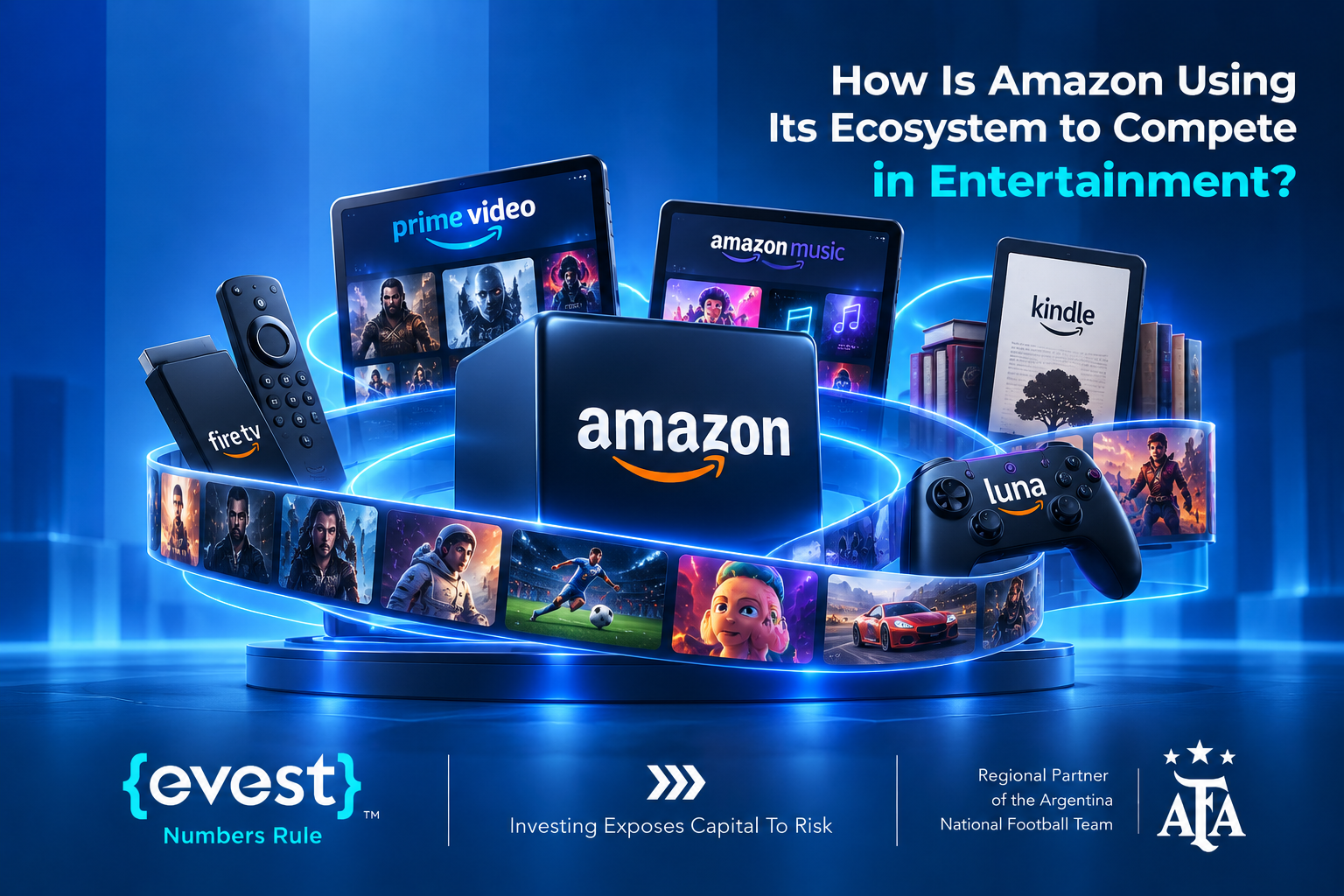
Amazon uses its retail, Prime, advertising, streaming, and technology businesses together to strengthen its entertainment position.
Its ecosystem includes:
- Prime Video.
- Live sports.
- Twitch.
- Amazon Music.
- Amazon MGM Studios.
- Amazon Ads.
- E-commerce.
This allows Amazon to connect entertainment with shopping and advertising.
For example, Amazon has expanded interactive and shoppable experiences that allow users to discover products while watching content. Prime Video’s ad-supported tier has also expanded Amazon’s advertising reach.
This ecosystem approach differentiates Amazon from a traditional streaming platform because entertainment can also support:
- Prime subscriptions.
- Advertising revenue.
- Product discovery.
- E-commerce activity.
Why Do Amazon Earnings Matter?
Amazon earnings matter because they show whether the company’s major businesses are meeting investor expectations.
Markets usually focus on:
- Total revenue.
- AWS growth.
- Operating income.
- Advertising revenue.
- Retail margins.
- Capital spending.
- Free cash flow.
- Management guidance.
A strong earnings report does not always guarantee that AMZN will rise. If expectations were even higher, the stock may fall despite strong growth.
How Do Interest Rates Affect AMZN?
Higher interest rates can pressure Amazon stock because technology stocks are often sensitive to changes in valuation.
When rates rise:
- Future earnings may be valued less highly.
- Borrowing costs can increase.
- Investors may shift toward lower-risk assets.
When rates fall, growth stocks may receive support, although the effect depends on broader market conditions.
How Does Competition Affect Amazon Stock?
Competition can affect Amazon stock by influencing revenue growth, pricing, margins, and market share. Amazon competes across multiple industries at the same time. This means investors monitor:
- Retail pricing pressure.
- Cloud market share.
- Advertising growth.
- Streaming engagement.
- AI infrastructure competition.
- Logistics efficiency.
Amazon’s diversification creates several growth opportunities, but it also exposes the company to competition from many large global firms.
How to Trade Amazon Stock?
Amazon stock can be traded by analyzing AMZN, choosing a direction, managing risk, and opening a position.
A typical process includes:
- Analyze Amazon: Review earnings, AWS growth, retail performance, advertising, and market conditions.
- Choose a Direction: Consider a long position if expecting AMZN to rise or a short position if expecting it to fall.
- Set Position Size: Decide how much exposure to take.
- Manage Risk: Use risk-management tools where available.
- Monitor the Trade: Follow earnings, economic data, competition, and company news.
- Close the Position: The result depends on the opening and closing price, position size, and trading costs.
Amazon is included among Evest’s stock CFD instruments. When trading Amazon through a CFD, the trader does not own the underlying Amazon shares. Instead, the position tracks movements in AMZN’s market price.
Buying Amazon Stock vs Trading an Amazon CFD
Buying Amazon shares means owning the underlying stock, while trading an Amazon CFD means gaining exposure to AMZN price movements without owning the shares.
For traders using Evest, Amazon exposure is provided through CFDs rather than direct ownership of the underlying stock.
| Feature | Buying Amazon Shares | Trading Amazon CFD |
| Own underlying shares | Yes | No |
| Exposure to rising prices | Yes | Yes |
| Ability to trade falling prices | Usually requires another product | May be available |
| Leverage | Depends on provider | May be available |
| Main exposure | Company ownership | Share-price movement |
| Risk | Stock-market risk | Market risk plus leverage risk |
The two approaches involve different rights and risks.
Risks of Trading Amazon Stock
Amazon stock can experience sharp price movements when expectations change.
Key risks include:
- AWS Growth Risk: Slower cloud growth could affect expectations.
- AI Spending Risk: Heavy investment may pressure cash flow.
- Retail Margin Risk: Rising fulfillment or logistics costs can reduce profitability.
- Competition Risk: Rivals can pressure market share and pricing.
- Valuation Risk: A high valuation may make AMZN sensitive to disappointing results.
- Economic Risk: Consumer weakness can affect retail demand.
- Leverage Risk: CFD leverage can magnify both gains and losses.
FAQs
What is Amazon stock?
Amazon stock is the publicly traded equity of Amazon.com, Inc., listed on the Nasdaq under the ticker AMZN.
Which company competes with Amazon?
There is no single competitor because Amazon operates across several industries. Different companies compete with Amazon in retail, cloud computing, advertising, streaming, and technology.
How is Amazon competing in entertainment?
Amazon uses Prime Video, Twitch, live sports, Amazon Music, MGM Studios, and Amazon Ads to connect entertainment with subscriptions, advertising, and e-commerce.
Why is AWS important to Amazon stock?
AWS is important because cloud computing is a major growth and profit driver for Amazon, and its performance can significantly influence investor expectations.
Can you trade Amazon without owning the stock?
Yes. An Amazon CFD allows traders to gain exposure to AMZN price movements without owning the underlying shares.