
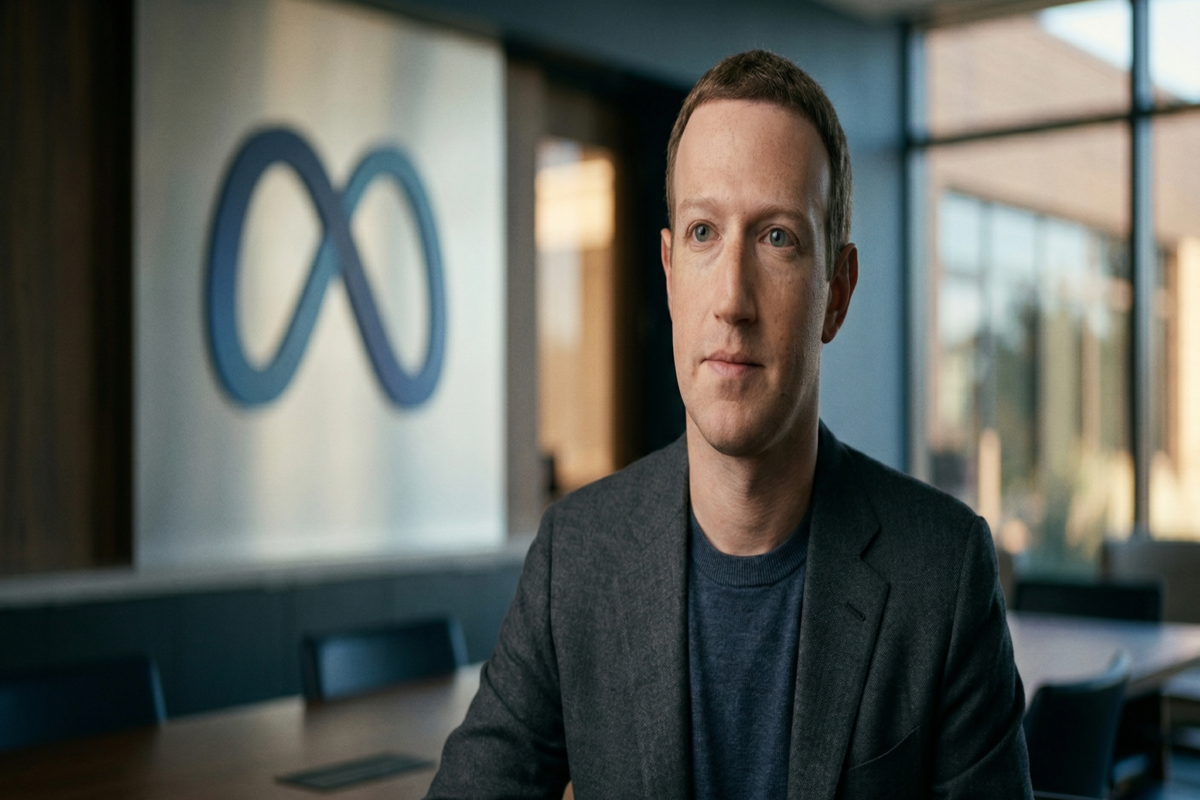
Meta’s ownership extends far beyond the millions of public shareholders, with Mark Zuckerberg holding a central role. While his share percentage might seem modest compared to the total stock, his voting control is far greater, giving him the power to direct major company decisions. This structure allows him to influence Meta’s strategy, from acquisitions to innovations like the metaverse, maintaining long-term vision and control.
Understanding Mark Zuckerberg share in Meta is essential for investors who want to know who really controls one of the world’s largest tech companies.
Meta at a glance
Meta Platforms, Inc. (formerly Facebook, Inc.) has grown from a college social network into a global technology powerhouse, encompassing Facebook, Instagram, WhatsApp, and Oculus. Its expansion into the metaverse signals ambitions beyond social media, aiming to reshape virtual interaction, work, and entertainment.
Public Trading vs. Insider Control:
- Meta is publicly traded, so that anyone can buy shares through a brokerage account.
- Institutional investors (e.g., Vanguard, BlackRock) hold significant stakes.
- Founder Mark Zuckerberg maintains disproportionate control through a dual-class share structure, where his shares carry greater voting power.
Key Takeaways:
- Zuckerberg’s voting shares ensure he drives corporate strategy and vision.
- Institutional shareholders influence financial decisions but cannot override insider control.
- The dual-class structure protects the company’s long-term strategy amid regulatory scrutiny and market shifts.
How many Meta shares are there?
As of the latest filings, Meta has approximately 2.6 billion shares outstanding. This figure includes both Class A and Class B shares, with Class B shares carrying ten times the voting power of Class A shares. The distinction is crucial because it explains how Zuckerberg maintains control despite owning a minority of the total shares.
The number of shares outstanding isn’t static—it fluctuates due to stock buybacks, employee compensation, and secondary offerings. Meta has been particularly aggressive with share repurchases in recent years, using its robust cash flow to reduce the total share count and boost earnings per share. This strategy not only rewards existing shareholders but also signals confidence in the company’s long-term prospects. For investors, understanding the total share count is essential, as it directly affects metrics such as market capitalization and valuation ratios.
Top Individual Insider Shareholders
While Meta’s ownership is spread across millions of investors, a handful of insiders hold significant sway. Beyond Zuckerberg, other key figures include:
- Sheryl Sandberg: The former COO held a substantial stake before her departure, though her influence waned as her role diminished.
- Mike Schroepfer: As Meta’s former CTO, Schroepfer played a pivotal role in the company’s technical direction and held a notable share position.
- David Wehner: The CFO’s financial expertise is reflected in his holdings, which align his interests with those of shareholders.
- Chris Cox’s stake as Chief Product Officer underscores his integral role in shaping Meta’s product strategy.
These insiders, along with other executives and early employees, benefit from Meta’s success through stock-based compensation. However, none come close to Zuckerberg’s level of control. His Mark Zuckerberg Meta shares not only represent financial wealth but also a legacy tied to the company’s origins. Unlike typical executives, Zuckerberg’s position is unique—he’s both a founder and a steward of Meta’s future, a dual role that grants him unparalleled authority in Silicon Valley.
Mark Zuckerberg’s Control and History
Who founded Facebook and how was it made?
- In 2004, 19-year-old Harvard student Mark Zuckerberg launched “TheFacebook” from his dorm room.
- Initially a platform for Harvard students to share profiles and photos, it quickly expanded to other universities, then high schools, and eventually the public.
- Zuckerberg dropped out of Harvard to focus full-time on Facebook, fueling its rapid growth.
- Early challenges included legal disputes, most notably with the Winklevoss twins, which were later settled.
What Percent of Meta Does Zuckerberg Own?
- Equity: Owns ~13% of Meta’s total shares.
- Voting Power: His Class B shares give him ~58% of voting rights, allowing him to maintain control despite public investment.
- Philanthropy: In 2015, Zuckerberg and his wife, Priscilla Chan, pledged to donate 99% of their shares via the Chan Zuckerberg Initiative, reducing equity but not voting power.
- Control Implications: His dominant voting power ensures he directs key strategic decisions, acquisitions, and Meta’s long-term vision.
Meet the man who became a billionaire at age 23:
- Became a billionaire at 23 (2007) after Facebook attracted over 50 million users.
- Microsoft investment (2007): $240M for a 1.6% stake, valuing Facebook at $15B.
- Chose to retain control rather than cash out early, shaping Meta’s culture and strategic trajectory.
Mark Zuckerberg’s Investment Strategy:
- Focused heavily on reinvesting in Meta, rather than diversifying.
- Key acquisitions under his leadership:
- Instagram ($1B, 2012)
- WhatsApp ($19B, 2014)
- Oculus VR, paving the way for Meta’s metaverse ambitions.
- Approach emphasizes long-term conviction, high-risk/high-reward bets, and maintaining control to execute his vision.
Key Takeaways for Investors:
- Zuckerberg controls Meta’s strategic direction via dual-class shares.
- Equity ownership is moderate, but voting dominance is decisive.
- The investment strategy shows a preference for long-term growth and ecosystem-building.
- Meta’s acquisitions reflect a willingness to take bold risks that pay off over time.
This combination of vision, control, and investment focus explains why Zuckerberg remains central to Meta’s evolution, despite market fluctuations and regulatory challenges.
Meta’s Key Acquisitions and Holdings
Meta’s growth hasn’t been organic alone—it’s the result of strategic acquisitions that have expanded its reach and capabilities. Here are some of the most pivotal deals in the company’s history:
- Instagram (2012): Acquired for $1 billion, Instagram has since become one of the world’s most popular social media platforms, with over 2 billion monthly active users. The deal is often cited as one of the smartest in tech history, as Instagram’s growth outpaced even Meta’s projections.
- WhatsApp (2014): Purchased for $19 billion, WhatsApp gave Meta a dominant foothold in global messaging, particularly in emerging markets. Despite initial skepticism about the price tag, WhatsApp’s user base has grown to over 2.7 billion, making it a critical revenue driver.
- Oculus VR (2014): Meta’s $2 billion acquisition of Oculus signaled its commitment to virtual reality and the metaverse. While the technology is still evolving, Oculus has become a cornerstone of Meta’s long-term strategy, with products like the Meta Quest headset leading the VR market.
- CTRL-Labs (2019): This lesser-known acquisition focused on neural interface technology, which could revolutionize how users interact with devices. The deal underscores Meta’s investment in cutting-edge innovation, even if the payoff is years away.
These acquisitions highlight Meta’s ability to identify and integrate high-potential platforms. However, they also come with risks. Regulatory scrutiny, integration challenges, and shifting market dynamics can turn even the most promising deals into liabilities.
Beyond acquisitions, Meta’s holdings include a vast portfolio of patents, data centers, and intellectual property. The company’s infrastructure supports not only its social media platforms but also its ambitions in AI, cloud computing, and virtual reality.
Investment Considerations
Is Meta a public stock?
Yes, Meta is a publicly traded company, listed on the Nasdaq under the ticker symbol META. This means anyone with a brokerage account can buy and sell its shares, making it accessible to both institutional and retail investors. Meta’s initial public offering (IPO) in 2012 was one of the most anticipated in history, raising $16 billion and valuing the company at $104 billion. Since then, its stock has experienced significant volatility, reflecting the company’s growth, challenges, and shifting market sentiment.
For investors, Meta’s public status offers several advantages:
- Liquidity: Shares can be bought or sold at any time during market hours, providing investors with flexibility.
- Transparency: As a public company, Meta is required to disclose financial results, executive compensation, and other key metrics, allowing investors to make informed decisions.
- Diversification: Meta’s stock provides exposure to the tech sector, social media, and emerging technologies like AI and virtual reality.
- Dividends: While Meta does not currently pay a dividend, its share buyback programs offer an alternative way to return value to shareholders.
However, investing in Meta also comes with risks. The company faces regulatory challenges, competition from rivals like TikTok, and the high costs of its metaverse investments.
Should I buy Meta stock?
Deciding whether to buy Meta stock depends on your investment goals, risk tolerance, and outlook on the company’s future. Here are some key factors to consider:
- Growth Potential: Meta’s core businesses—Facebook, Instagram, and WhatsApp—continue to generate robust revenue, primarily through advertising. The company’s push into AI and virtual reality could unlock new revenue streams, but these initiatives are still in the early stages.
- Valuation: Meta’s stock price fluctuates based on earnings reports, macroeconomic conditions, and investor sentiment. Analysts often debate whether the stock is over- or undervalued, making it important to assess its price relative to fundamentals such as earnings and cash flow.
- Regulatory Risks: Meta faces antitrust scrutiny across multiple countries, which could result in fines, forced divestitures, or other restrictions. These risks could impact the company’s profitability and growth prospects.
- Competition: Rivals such as TikTok, Snapchat, and Google pose a threat to Meta’s dominance in social media and digital advertising. The company’s ability to innovate and retain users will be critical to its long-term success.
Why ownership matters?
Ownership structure plays a pivotal role in shaping a company’s direction, culture, and performance. In Meta’s case, Zuckerberg’s mark zuckerberg share in Meta and voting control have several implications:
- Decision-Making: Zuckerberg’s dominance ensures that Meta’s strategic decisions align with his vision, whether it’s acquiring Instagram or pivoting to the metaverse. This can be an advantage in times of crisis but may also limit diverse perspectives.
- Accountability: With public shareholders holding limited voting power, Meta’s leadership is less accountable to external pressures. This can lead to bold bets, like the metaverse, but also to missteps that might have been avoided with more oversight.
- Investor Confidence: Some investors are drawn to Meta because of Zuckerberg’s track record, while others are wary of his unchecked authority. The dual-class share structure can create tension between those who prioritize stability and those who seek innovation.
- Long-Term Focus: Zuckerberg’s control allows Meta to pursue long-term projects without the short-term pressures faced by many public companies. This has enabled investments in AI, VR, and other emerging technologies, but it also means shareholders must be patient for returns.
Meta’s Growth and Future
Meta Platforms (META) is undergoing a major, AI-driven transformation, transitioning from a primarily 2D social media company into a leader in artificial intelligence and spatial computing. As of early 2026, the company is experiencing strong growth, with 2025 revenue increasing 22% to over $200 billion, driven by AI-optimized ad targeting and high user engagement across its “Family of Apps” (Facebook, Instagram, WhatsApp, Threads), which now serves over 3.5 billion daily users.
Some Facebook Stats
Meta’s scale is staggering, with its platforms shaping how billions of people communicate, consume content, and conduct business. Here are some key statistics that highlight the company’s reach and influence:
- Monthly Active Users (MAUs): Facebook alone has over 3 billion MAUs, making it the world’s largest social network. When combined with Instagram and WhatsApp, Meta’s platforms reach nearly 4 billion people globally.
- Advertising Revenue: In 2023, Meta generated over $130 billion in advertising revenue, accounting for the vast majority of its total income. The company’s ad targeting capabilities are unmatched, making it a critical partner for businesses of all sizes.
- Metaverse Investments: Meta has spent over $35 billion on Reality Labs, its metaverse division, since 2021. While these investments have yet to turn a profit, they reflect the company’s commitment to shaping the future of digital interaction.
- Employee Count: Meta employs over 86,000 people worldwide, with a significant portion working on AI, VR, and other cutting-edge technologies. The company’s workforce is a key driver of its innovation and growth.
These statistics underscore Meta’s dominance in the tech industry, but they also highlight the challenges ahead. As competition intensifies and regulatory pressures mount, the company must continue to innovate while maintaining its core businesses.
Meta Platforms investments
Meta’s investment strategy extends beyond acquisitions—it also includes significant spending on research and development (R&D), infrastructure, and emerging technologies. Here’s a breakdown of where the company is placing its bets:
- Artificial Intelligence (AI): Meta is investing heavily in AI to improve its ad targeting, content moderation, and user experience. The company’s AI research lab, FAIR (Facebook AI Research), is at the forefront of developing cutting-edge algorithms and models.
- Virtual Reality (VR) and Augmented Reality (AR): Through Reality Labs, Meta is building the hardware and software for the metaverse, including the Meta Quest headset and AR glasses. These investments aim to create immersive digital experiences that could redefine social interaction.
- Data Centers and Cloud Infrastructure: Meta operates a global network of data centers to support its platforms and services. The company is also exploring cloud computing as a potential revenue stream, though it lags behind competitors like Amazon and Microsoft.
- Blockchain and Cryptocurrency: While Meta’s Libra (later Diem) cryptocurrency project was abandoned due to regulatory hurdles, the company continues to explore blockchain technology for payments, identity verification, and other use cases.
These investments reflect Meta’s ambition to stay ahead of the curve, but they also come with risks. The metaverse, in particular, is a high-stakes bet that could take years to pay off.
What is Facebook valued at?
Meta Platforms (formerly Facebook) has a market capitalization of approximately $1.66 trillion as of early 2026. As one of the world’s most valuable companies, its value is driven by its “Family of Apps” (Facebook, Instagram, WhatsApp, Messenger) and investments in AI and the metaverse (Reality Labs).
Key Valuation Metrics (as of early 2026):
- Market Cap: ~$1.66 trillion
- Revenue (TTM): ~$200.97 billion
- Net Margin: ~37.4%
- Position: Frequently ranked among the top 10 most valuable companies globally.
FAQs
How much of Meta does Mark Zuckerberg currently own?
Mark Zuckerberg owns around 13% of Meta’s total shares.
What is the significance of Zuckerberg’s dual-class shares?
His dual-class shares grant him enhanced voting rights, enabling him to maintain control even though he owns a smaller share of the company.
How much voting power does Zuckerberg have in Meta?
He controls roughly 58–60% of Meta’s voting power, giving him decisive influence over major corporate decisions.
How has Zuckerberg’s shareholding changed over the years?
Zuckerberg has gradually sold or donated portions of his shares but retains significant voting control through his dual-class structure.