
| Silver | Gold | Platinum | Diamond | |
| Instrument | Spread in Pip Starting From: | Spread in Pip Starting From: | Spread in Pip Starting From: | Spread in Pip Starting From: |
| BTCUSD | 600 | 575 | 550 | 525 |
| BTCUSD.m | 790 | 770 | 750 | 730 |
| ETHUSD | 40 | 35 | 30 | 25 |
| LTCUSD | 10 | 9 | 8 | 7 |
| ETCUSD | 6620 | 6615 | 6610 | 6605 |
| DSHUSD | 9 | 8 | 7 | 6 |
| XRPUSD | 300 | 295 | 290 | 285 |
| SHBUSD.mln | 1.7 | 1.4 | 1.3 | 1 |
| ADAUSD | 31 | 26 | 21 | 16 |
| SOLUSD | 25.2 | 21.2 | 17.2 | 13.2 |
| XLMUSD | 45 | 41 | 37 | 33 |
| DOTUSD | 42.5 | 38.5 | 34.5 | 30.5 |
| DOGUST | 5 | 4.5 | 4 | 3.5 |
| TRPUST | 5 | 4.5 | 4 | 3.5 |
Currencies
| Silver | Gold | Platinum | Diamond | |
| Instrument | Spread in Pip Starting From: | Spread in Pip Starting From: | Spread in Pip Starting From: | Spread in Pip Starting From: |
| EURUSD | 0.9 | 0.7 | 0.5 | 0.1 |
| EURJPY | 2.3 | 1.7 | 1.2 | 0.7 |
| EURCHF | 2 | 1.7 | 1.1 | 0.7 |
| USDJPY | 2.3 | 2 | 1.4 | 1 |
| USDCAD | 2.3 | 1.7 | 1.2 | 0.9 |
| USDCHF | 1.5 | 1.3 | 0.7 | 0.5 |
| GBPUSD | 2.3 | 1.7 | 1.2 | 0.7 |
| GBPJPY | 1.5 | 1.3 | 0.7 | 0.5 |
| GBPCHF | 2 | 1.7 | 1.2 | 0.9 |
| AUDCAD | 2 | 1.7 | 1.2 | 0.9 |
| AUDCHF | 1.7 | 1.4 | 0.9 | 0.6 |
| AUDJPY | 2.5 | 2.2 | 1.7 | 1.4 |
| AUDNZD | 2.8 | 2.5 | 2 | 1.7 |
| AUDUSD | 1.5 | 1.2 | 0.9 | 0.6 |
| CADCHF | 1.5 | 1.2 | 0.9 | 0.6 |
| CADJPY | 2.6 | 2.4 | 2 | 1.7 |
| CHFJPY | 3.3 | 3 | 2.5 | 2.2 |
| EURAUD | 2.8 | 2.6 | 2.2 | 1.9 |
| EURCAD | 10 | 9.7 | 9.2 | 8.9 |
| EURDKK | 35 | 32.5 | 30 | 25 |
| EURGBP | 1.8 | 1.5 | 1.1 | 0.7 |
| EURHUF | 6 | 5.5 | 5 | 4.5 |
| EURNOK | 107 | 104.5 | 101 | 97 |
| EURNZD | 3.7 | 3.4 | 3.1 | 2.8 |
| EURPLN | 27.5 | 25 | 22.5 | 20 |
| EURSEK | 67 | 64.5 | 61 | 57 |
| EURTRY | 150 | 135 | 115 | 100 |
| GBPAUD | 4.3 | 4 | 3.7 | 3.4 |
| GBPCAD | 5.4 | 4.9 | 4.2 | 3.7 |
| GBPNZD | 6 | 5.5 | 5 | 4.5 |
| NZDCAD | 2 | 1.8 | 1.6 | 1.4 |
| NZDCHF | 1.5 | 1.2 | 0.8 | 0.4 |
| NZDJPY | 2.5 | 2.2 | 1.7 | 1.4 |
| NZDUSD | 1.7 | 1.4 | 0.9 | 0.6 |
| USDDKK | 24.5 | 22 | 18.5 | 14.5 |
| USDHUF | 43.5 | 41 | 38.5 | 36 |
| USDMXN | 94 | 91.5 | 88 | 84 |
| USDNOK | 72 | 69.5 | 66 | 62 |
| USDPLN | 27.5 | 25 | 22.5 | 20 |
| USDSEK | 78 | 75.5 | 72 | 68 |
| USDSGD | 15 | 12.5 | 10 | 0.8 |
| USDTRY | 172 | 167 | 162 | 157 |
| GBPTRY | 180 | 175 | 170 | 165 |
Asian Stocks Rise Led by Japan, Yen Stabilizes as Fed Decision Looms

Asian Stocks Rise Led by Japan, Yen Stabilizes as Fed Decision Looms
Asian stocks saw a significant rise on Tuesday, with Japanese shares leading the rally,
while the yen stabilized after its notable decline against the dollar last week.
Topic
September Caution and Market Expectations
Economic Data and Its Impact on the Dollar
Details
Japanese stocks benefited from the overall market rise, accompanied by gains in Hong Kong stock futures, while stocks in Sydney remained mostly unchanged. Conversely, U.S. stock futures dipped ahead of Wall Street’s reopening later today, following the Labor Day holiday.
The Japanese yen saw a slight increase after an additional decline against the dollar on Monday, which had exacerbated its losses from the previous week. Mark Matthews, Head of Asia Research at Julius Baer, believes that the yen’s weakness may persist for an extended period due to the significant interest rate differential between the United States and Japan. In an interview with Bloomberg TV, Matthews noted that Japan’s interest rate is expected to be 0.5% by March next year, while the U.S. federal funds rate is expected to be 4.5%, leaving a substantial gap of 400 basis points.
As traders in Asia closely monitor any new signs of economic slowdown in China, recent data indicated that Chinese factory activity contracted for the fourth consecutive month in August. This slowdown underscores the urgent need for new government stimulus, especially as inventories of key raw materials like steel and soybeans accumulate.
September Caution and Market Expectations
Traders are approaching September with considerable caution, as historical data shows that this month has been unfavorable for stocks in recent years. All eyes are on the upcoming U.S. jobs report on Friday, which could play a crucial role in determining the direction of interest rates. Some expect the Federal Reserve to begin a cycle of monetary easing this month, but strategists at JPMorgan warn that any rate cuts may not necessarily boost the stock market, particularly with the anticipated economic slowdown and the seasonal pressures of September.
Economic Data and Its Impact on the Dollar
The jobs data is likely to indicate a gradual slowdown in the U.S. labor market, which could prompt traders to adjust their expectations for interest rate cuts. According to Valentin Marinov, Head of G10 FX Strategy at Credit Agricole CIB, this could strengthen the dollar, especially if the Federal Reserve proceeds cautiously at its upcoming meeting.
In the commodities market, oil prices rose after Libya declared force majeure at a major oil field, leading to a reduction in global daily supplies by nearly one million barrels.
Asian Stocks Rise Led by Japan, Yen Stabilizes as Fed Decision Looms
What are global financial Indices

Overview of Global Financial Indices
Global financial indices are tools used to measure the performance of various financial markets worldwide.
These indices comprise a basket of stocks or bonds representing a specific sector or an entire market.
Topıc
The Importance of Global Financial Indices
Famous Global Financial Indices
The Importance of Global Financial Indices
Financial indices play a crucial role in providing an overall snapshot of a market’s economic health.
They help investors assess the performance of different markets and make investment decisions based on market trends.
How Is It Made
Indices are composed by grouping a certain number of stocks or bonds with common characteristics,
such as belonging to the same sector or geographical market.
The index calculates the average performance of these stocks or bonds.
Famous Global Financial Indices
Some of the most well-known indices include the Dow Jones Industrial Average in the United States,
the FTSE 100 in the United Kingdom, and the Nikkei 225 in Japan.
Each reflects the financial market’s condition in its respective country and serves as an important benchmark for investors.
How to Trade
Investors can trade indices through tools such as Contracts for Difference (CFDs) or Exchange-Traded Funds (ETFs).
These tools allow investors to benefit from market movements, going up or down, without purchasing individual stocks.
Trading Strategies
Various strategies can be followed when trading indices,
such as short-term trading to capitalize on daily fluctuations or long-term investing
based on expectations of the market’s overall economic performance.
Conclusion
Global financial indices are powerful tools that provide investors with a comprehensive view of the state of financial markets.
By understanding how these indices work and using the right tools to trade them,
investors can achieve sustainable profits and diversify their investment portfolios.
Trading indices is not just an investment strategy; it’s a way to gain deeper insights into global financial market trends.
What are global financial Indices
Restoring Confidence: Alibaba Surpasses Investigations

Restoring Confidence: Alibaba Surpasses Investigations and Begins a New Chapter
Alibaba regained the Chinese government’s confidence after three years of investigations by implementing corrective measures,
reflecting Beijing’s support for the tech sector.
Despite the improvement, the industry still faces significant challenges such as slowing consumer spending.
Topic
A New Dawn for the E-Commerce Giant
Investigations and Corrective Measures
Ongoing Challenges and Concerns
A New Dawn for the E-Commerce Giant
After more than three years of intensive investigations, Alibaba Holding has regained the confidence of the Chinese government,
following the Antitrust Authority’s commendation of the company’s corrective actions.
This move reflects Beijing’s desire to support the technology sector, which is vital to the country’s economy.
Investigations and Corrective Measures
The Antitrust Authority began its investigation into Alibaba in 2020 as part of a broader regulatory campaign
that targeted various sectors of the digital economy.
During this period, the company ceased its monopolistic practices and improved its services and competitive landscape online.
These changes contributed to a more than 4% increase in the company’s shares during after-hours trading.
Ongoing Challenges and Concerns
Despite this improvement, China’s technology sector faces significant challenges,
including a decline in funding and a slowdown in consumer spending,
raising concerns about future growth.
Despite some companies issuing pessimistic warnings,
Alibaba remains optimistic about its future and reaffirms its commitment to innovation and investment in technology.
Restoring Confidence: Alibaba Surpasses Investigations and Begins a New Chapter
OpenAI Nears Funding That Could Raise Its Valuation to $100 Billion

OpenAI Nears Funding That Could Raise Its Valuation to $100 Billion
OpenAI is close to securing new funding valued at over $100 billion, led by Thrive Capital,
which will make it one of the most valuable startups in the world.
This funding will help enhance its computing power and support its expansion in generative artificial intelligence.
Content
Thrive Capital
Thrive Capital Leads $1 Billion Investment Round
OpenAI is close to securing new funding valued at over $100 billion,
according to informed sources, with expectations that Thrive Capital will lead this round with an investment of around $1 billion.
Sarah Friar, OpenAI’s CFO, informed employees in an internal memo on Wednesday that the company is seeking new capital,
but did not disclose further details, according to the sources.
New Funding
New Funding Enhances OpenAI’s Capabilities and Supports AI Expansion
This move comes as part of OpenAI’s efforts since last December to raise funding that could increase its valuation to $100 billion or more, according to earlier reports from Bloomberg News.
This funding is expected to make the company one of the most valuable startups globally,
reflecting the growing demand for generative AI technologies.
OpenAI has gained widespread recognition through its ChatGPT program, backed by Microsoft,
which captured public interest due to its ease of use.
This success has accelerated the arms race among major tech companies,
which are working to integrate AI technologies into their products,
as well as supporting and funding other promising startups.
Friar noted in her memo that the new funding would help bolster computing capacity and cover rising operational expenses.
She also mentioned that the company plans to launch a tender later this year,
allowing employees to sell some of their shares, though these plans are still in early stages and details have not yet been confirmed.
The Wall Street Journal previously reported on Thrive Capital’s plan to invest in OpenAI.
OpenAI Nears Funding That Could Raise Its Valuation to $100 Billion
Nvidia’s Revenue Forecast Disappoints Investors and Impacts Tech Markets

Nvidia’s Revenue Forecast Disappoints Investors and Impacts Tech Markets: Nvidia, the leading AI chip manufacturer,
announced its revenue forecast for the third quarter of this year, which is estimated at $32.5 billion.
Although this figure exceeded analysts’ average estimates, it fell short of some more optimistic projections that reached $37.9 billion.
This news raised concerns about the company’s rapid growth, leading to a decline in tech stocks in global markets.
Content
Nvidia’s Forecast
Nvidia’s Revenue Forecast and Its Impact on the Market
Nvidia announced that its third-quarter revenue would reach $32.5 billion,
exceeding the average analyst expectation of $31.9 billion but falling short of some more optimistic forecasts of $37.9 billion.
Despite surpassing second-quarter sales expectations,
these numbers raised investor concerns that the company’s rapid growth might face a slowdown in the future.
Impact on the AI Boom and Market Value
Nvidia is one of the primary beneficiaries of the race to develop data centers and enhance AI applications,
which has contributed to its rise as the second-largest company in the world in terms of market value.
However, the company’s stock dropped after the revenue forecast announcement,
reflecting investor disappointment from those who had expected better performance,
especially given the stock’s value has been more than doubled since the beginning of the year.
AI Spending and Nvidia’s Dependence on Major Clients
The revenue forecast came after several quarters in which Nvidia’s results exceeded Wall Street expectations.
Still, much of this growth relied on a limited number of major clients, such as Google and Meta.
With these companies pouring billions into AI infrastructure,
concerns remain that the scale of these investments could surpass current needs, potentially leading to an economic bubble.
Decline in Tech Stocks After the Results Announcement
Major tech stocks declined in late trading after the market closed,
with investors disappointed by Nvidia’s results.
The Nasdaq 100 index fell by 0.5%, while Nvidia’s stock dropped by 3%.
This was influenced by revenue forecasts that fell short of some investors’ hopes for continued earnings growth.
Impact of the Forecast on Global Stock Markets
Nvidia’s forecast triggered a fresh wave of market volatility,
the S&P 500 index declined by 0.6%, and the Nasdaq 100 fell by 1.2%.
The volatility index (VIX) also rose to around 17 points,
reflecting the prevailing anxiety among investors about the future of tech stocks,
particularly amid macroeconomic data and semiconductor export controls that could heighten these fluctuations.
Impact of Nvidia’s Forecast on Asian Markets
Nvidia’s announcement also impacted Asian markets,
with significant chip manufacturers like Taiwan Semiconductor and SK Hynix seeing declines.
This led to a 0.5% drop in the MSCI Asia-Pacific Index.
These decreases highlight that Nvidia’s performance has a global effect,
influencing investor confidence across the tech sector.
The Future of Investment in Technology and Artificial Intelligence
Despite current challenges and volatility,
optimism remains strong about the future of AI and its role in driving growth and innovation.
Analysts believe that investment in this field will continue to thrive,
with the need to manage risk exposure carefully to ensure gains without falling into the trap of unsustainable inflation.
Nvidia’s Revenue Forecast Disappoints Investors and Impacts Tech Markets
What is the S&P 500 Standard & Poor: A Comprehensive Guide
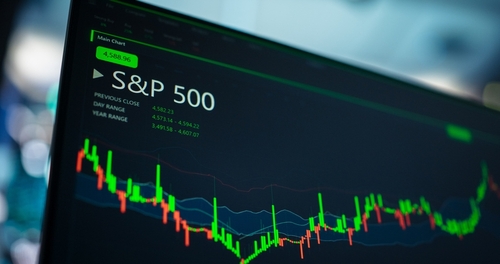
What is the S&P 500 Standard & Poor: A Comprehensive Guide
The S&P 500 is one of the most prominent stock market indices globally and
serves as a key benchmark for evaluating the performance of the U.S. market.
This index represents the performance of 500 of the largest publicly traded companies in the New York Stock Exchange and NASDAQ.
In this article, we will explore the details of the S&P 500, how it operates, and its importance to investors and the market.
Topic
Definition of It
The S&P 500, which stands for “Standard & Poor’s 500,”
is a market index that represents the performance of 500 of the largest American companies listed on major stock exchanges.
The index includes companies from various sectors, such as technology, finance, healthcare, and consumer goods.
How IT Works
The S&P 500 Index is calculated using a market capitalization-weighted system.
This means larger companies with higher market values have a greater impact on the index’s movement.
The index adjusts its composition based on the market capitalization of the companies,
so major companies like Apple and Microsoft significantly influence its performance.
Companies Included in IT
The S&P 500 Index includes a diverse range of prominent companies, such as:
- Technology: Including Apple, Microsoft, and NVIDIA.
- Finance: JPMorgan Chase and Goldman Sachs.
- Healthcare: Like Johnson & Johnson and Pfizer.
- Consumer Goods: Including Procter & Gamble and Coca-Cola.
Importance of It
The S&P 500 is a crucial index that investors and analysts use to gauge the performance of the U.S. market. It is notable for several reasons:
- Comprehensive Market Indicator: Reflects the performance of a broad range of companies, making it an important measure of overall market health.
- Benchmarking Tool: Used as a benchmark for mutual and exchange-traded funds (ETFs) that track the U.S. market performance.
- Investment Option: A popular investment choice, investors can buy ETFs that track the S&P 500 to benefit from the index’s performance.
How to Invest in It
Investors can participate in the S&P 500 in several ways:
- Buying Individual Stocks: Investing directly in the individual stocks that are part of the index.
- Investing in ETFs: One option is to buy the SPDR S&P 500 ETF (SPY), which tracks the index’s performance.
- Mutual Funds: Investing in mutual funds with a portfolio of stocks included in the index.
Risks and Benefits
Like any investment, investing in the S&P 500 comes with its risks, such as:
- Market Volatility: The index can experience significant fluctuations due to economic or political events.
- Impact of Large Companies: Major companies with significant weight in the index can greatly affect its performance.
However, investing in the S&P 500 also offers several benefits, including:
- Diversification: Represents a diverse range of companies, reducing the risk of investing in a single company.
- Good Growth Potential: This includes leading companies in the U.S. economy that offer potential for growth.
Conclusion
The S&P 500 is an essential tool for assessing the performance of the U.S. market and serves as a key reference for investors.
By understanding how the index operates and how to invest in it,
Investors can make informed decisions and achieve their financial goals better.
What is the S&P 500 Standard & Poor: A Comprehensive Guide
Apple Plans to Unveil iPhone 16 on September 10

Apple Plans to Unveil iPhone 16 on September 10
Launch of the Latest iPhone, Watches, and Earbuds
Apple is set to unveil its latest smartphone, the iPhone 16,
on September 10 in what is expected to be the company’s biggest event of the year.
In addition to the iPhone 16, the company will also introduce updates to its Apple Watch and AirPods,
according to sources familiar with the matter.
Topic
Expected Date for Device Releases
The Importance of This Launch for Apple
Features of iPhone 16 and Anticipated Improvements
Upcoming Updates for Mac Devices
Expected Date for Device Releases
Although Apple has not officially announced the event date, the company is preparing to launch these products on the mentioned date, with sales expected to begin on September 20. This timeline aligns with the company’s usual pattern of launching devices shortly after unveiling them. A spokesperson for Apple, based in Cupertino, California, declined to comment on the matter.
The Importance of This Launch for Apple
The iPhone 16 launch is crucial for Apple, which has faced a slowdown in sales of its smartphones and wearables in recent financial quarters. The September 20 release is expected to contribute to some revenue in the company’s current fourth fiscal quarter, as Apple aims for a 5% year-over-year sales growth. The bulk of sales, however, is expected to occur in the following fiscal quarter, which coincides with the holiday season. Analysts estimate that revenue could rise by 7% to $128.4 billion during that period.
Features of iPhone 16 and Anticipated Improvements
The iPhone 16 will feature larger displays in the Pro models, along with new camera capabilities, including a dedicated photography button.
The company will also introduce a set of AI tools called Apple Intelligence.
However, the new phones are not expected to be significantly different from last year’s models.
Updates to Wearable Devices
Apple’s wearable devices are also expected to receive notable updates.
The Apple Watch Series 10 will be thinner and feature larger displays.
Apple is planning to refresh its lineup of earbuds, introducing new low- and mid-tier versions.
For the first time, the mid-tier earbuds will offer noise-canceling capabilities,
and the cheapest model will be updated for the first time since 2019.
Upcoming Updates for Mac Devices
Additionally, Apple is preparing to transition its Mac devices to M4 processors later this year,
although these updates typically arrive about a month after the iPhone launch.
The company has conducted extensive testing on four new Mac models to ensure compatibility with third-party applications,
a crucial step before the new devices are released.
These Mac devices represent base versions of the M4 chip, with three models featuring 10-core CPUs,
while the lower-end version includes an 8-core CPU. The devices will come with 16GB or 32GB of RAM.
These devices, including a smaller Mac Mini, a new MacBook Pro,
and updated iMacs equipped with M4 chips, are expected to be unveiled later this year.
Apple Plans to Unveil iPhone 16 on September 10
What is the American Stock Market?

The American stock market is one of the world’s largest and most significant financial markets.
It is a major platform for trading stocks and securities and plays a crucial role in the global economy.
But what exactly is the American stock market, and how does it operate? In this article,
we’ll explore various aspects of this market and its impact on the economy and investors.
Topic
How to Invest in the American Stock Market
Definition
Definition of the American Stock Market
The American stock market is a marketplace where investors buy and sell shares of American companies and other securities.
It includes several major exchanges, such as:
- New York Stock Exchange (NYSE): One of the world’s oldest and largest stock exchanges,
known for trading shares of major companies. - NASDAQ: A stock exchange known for its focus on technology and emerging companies, making it a leader in the tech sector.
- AMEX (NYSE American): Less well-known than the other exchanges but includes various companies.
How It Works
The American stock market operates through a structured trading system where investors can buy and sell stocks and other securities.
This market includes various financial instruments, such as:
- Stocks: Ownership shares in companies that can be traded on the exchanges.
- Bonds: Debt instruments issued by companies and governments.
- Mutual Funds and Exchange-Traded Funds (ETFs): Allow investors to invest in diverse stocks or assets.
Role of It in the Economy
The American stock market plays a vital role in the global economy in several ways:
- Providing Capital: Allows companies to raise money by issuing stocks and bonds, supporting their expansion and projects.
- Economic Indicator: The stock market’s performance is often seen as a reflection of the overall economic health,
reflecting company performance and investor confidence. - Investment Opportunities: Offers a broad range of investment opportunities for individual and institutional investors.
How to Invest in the American Stock Market
Investors can participate in the American stock market through various methods:
- Buying Individual Stocks: Through trading platforms or stock brokers.
- Investing in Mutual Funds and ETFs: These funds allow investors to gain exposure to a range of stocks or assets.
- Online Trading: Using electronic trading platforms that provide access to American markets.
Risks and Benefits
Like any financial market, the American stock market comes with its risks, such as:
- Market Volatility: Markets can experience significant fluctuations due to economic and political events.
- Potential Losses: Investors might face financial losses if their investments are not managed properly.
However, the market also offers several benefits, including:
- High Growth Potential: Particularly in leading and active companies in the global economy.
- Investment Diversification: Provides a wide range of stocks and financial instruments.
Conclusion
The American stock market is a crucial component of the global economy,
offering significant investment opportunities and having a substantial impact on economic performance.
By understanding how the market operates and monitoring the performance of companies and financial instruments,
investors can make informed decisions and achieve their financial goals.