Learn Trading: A Beginner’s Guide

Financial markets can seem intimidating at first glance, especially for beginners. Terms like stocks, forex, leverage, and technical analysis may appear overwhelming, but the journey to learn trading doesn’t have to be confusing. With the right guidance, practical strategies, and access to reliable platforms such as Evest, anyone can begin their path toward becoming a successful trader.

In today’s world, opportunities to learn trading online are more accessible than ever.

Before you learn trading, it’s important to ask — is trading halal or haram? In Islam, trading is halal when done ethically, without interest or speculation.

Whether your interest lies in stocks, forex, commodities, or cryptocurrencies, the ability to understand and participate in financial markets offers both personal growth and financial potential.

This guide will break down the key concepts, strategies, and tools every beginner needs to know, ensuring that you develop a strong foundation before entering live trading markets.

What is Trading?

Trading is the act of buying and selling financial instruments like stocks, currencies, commodities, or digital assets to make a profit. Unlike investing, which usually involves holding assets for years, trading often focuses on shorter time frames, capturing price movements as they occur.

When you learn trading for beginners, you’ll discover that trading can be approached in different styles: day trading, swing trading, or even long-term position trading. Each style requires its own skill set, time commitment, and strategy.

At its core, trading revolves around anticipating market movements. Traders analyze trends, news, and data to determine whether an asset’s price is likely to rise or fall. The process requires patience, discipline, and continuous learning.

How to Learn Trading?

The process of learn trading successfully involves structured learning, practice, and adaptation. Here are the key steps:

  1. Start with education: Use guides, courses, and platforms like Evest to study and learn trading stocks or learn trading forex, depending on your interests.
  2. Practice with a demo account: This risk-free environment allows you to experiment with strategies without losing real money.
  3. Focus on one market at first: Beginners often spread themselves too thin. Whether you want to learn trading in the stock market or explore forex, start with one and master its mechanics.
  4. Develop a trading plan: Clearly outline your goals, risk tolerance, and preferred trading style.
  5. Stay updated: Follow financial news and market updates.
  6. Evaluate and adapt: Learn from mistakes, refine strategies, and never stop practicing.

Importance of Financial Markets

Financial markets are the backbone of the global economy. They provide businesses with access to capital, allow governments to raise funds, and give individuals opportunities to grow wealth.

For traders, understanding the importance of these markets is crucial. The stock market reflects corporate performance, the forex market shows currency value changes, and the commodities markets highlight supply and demand for essential goods.

When you learn trading options, forex, or stocks, you also learn how global events—from interest rate changes to geopolitical tensions—affect prices. This knowledge allows traders to anticipate movements and make informed decisions.

Types of Trading

Trading comes in various forms, each offering unique opportunities and strategies. Understanding the different types of trading helps you choose the approach that best fits your goals and style.

Stock trading

When you learn to trade stocks, you are dealing with company shares listed on stock exchanges. Stock traders analyze company earnings, market sentiment, and economic reports to predict share price movements.

Forex trading

To learn trading forex, you need to understand how currencies are exchanged globally. The forex market is the largest financial market in the world, offering high liquidity and 24-hour trading.

Forex trading recommendations can highlight currency pairs likely to move due to interest rate changes or geopolitical events.

Commodity trading

This involves trading natural resources such as oil, gold, or agricultural products. Commodity traders must track supply-demand factors, weather conditions, and geopolitical risks.

Crypto trading

For those who wish to learn trading online in modern markets, cryptocurrency trading are a popular choice. Digital assets like Bitcoin and Ethereum are traded globally, but they are also highly volatile.

Understanding Financial Markets

Financial markets are influenced by countless factors. Prices are determined by the balance between supply and demand, investor sentiment, and broader economic indicators.

Learning how these markets function is essential to learn trading for beginners. For example:

  • Stock prices may rise if companies report strong earnings.
  • Forex pairs move when central banks change interest rates.
  • Commodities react to global demand, weather patterns, or production cuts.

Understanding these dynamics ensures that traders don’t simply rely on guesswork but base their decisions on solid information.

Essential Trading Concepts

Mastering the fundamentals is key to becoming a successful trader. Understanding essential trading concepts builds the foundation for informed decisions and long-term growth.

Supply and demand

The most basic principle: if demand rises faster than supply, prices increase, and vice versa.

Bid-ask spread

The difference between the buying price (bid) and the selling price (ask) of an asset. Narrow spreads often signal high liquidity.

Leverage and margin

Leverage allows traders to control larger positions with a smaller investment. For example, with 1:100 leverage, a $100 deposit allows control of $10,000. While leverage can amplify profits, it also increases risks.

Mastering these basics is vital for anyone determined to learn trading forex, stocks, or commodities.

Technical vs Fundamental Analysis

Both technical and fundamental analysis offer valuable insights into market behavior. Understanding the difference between them helps traders create balanced and effective trading strategies.

Basics of technical analysis

Focuses on charts, price patterns, and indicators like moving averages or RSI. This approach helps traders identify entry and exit points.

Basics of fundamental analysis

Analyzes company earnings, economic data, and global events. A trader who wants to learn trading in the stock market must understand fundamentals like revenue growth and interest rate policies.

Combining both approaches

Experienced traders often use both technical and fundamental analysis. For example, technical charts may indicate when to buy, while fundamental analysis explains why prices are moving.

Key Trading Tools and Platforms

Modern trading relies on powerful tools and platforms that simplify analysis and execution. Knowing how to use these resources effectively can greatly enhance your trading performance.

Charting tools

Essential for technical analysis, allowing traders to identify patterns and make decisions.

Trading platforms

Reliable platforms like Evest make it easy to execute trades, access global markets, and practice strategies, for anyone looking to learn trading online, choosing a user-friendly platform is crucial.

Broker selection

A good broker offers transparent fees, fast execution, and strong customer support. Beginners should choose regulated brokers that offer demo accounts to practice.

How to Build a Trading Strategy?

A trading strategy is your personal roadmap. To learn trading options or stocks successfully, you must establish:

  • Clear goals: Are you looking for daily income or long-term growth?
  • Defined risk management: Never risk more than 1–2% of your capital per trade.
  • Consistent approach: Decide whether to trade based on fundamentals, technicals, or a blend.
  • Backtesting: Test your strategy on past data to measure effectiveness.

Without a strategy, traders often act impulsively, which is why many fail.

Tips for Long-Term Success

  1. Stay disciplined: Stick to your strategy even during losing streaks.
  2. Keep learning: Financial markets constantly change; continue to learn trading online with updated resources.
  3. Manage emotions: Fear and greed are the biggest enemies of traders.
  4. Diversify: Don’t focus only on one market—explore stocks, forex, and commodities.
  5. Use demo accounts: Practice regularly before going live.

Evest Services

Evest offers a full suite of trading services designed to support traders of all experience levels. Each service is built to provide flexibility, reliability, and a seamless trading experience.

Commission-Free Stock Trading

Evest allows clients to trade global stocks with zero commission, making it an attractive choice for investors who want to access international markets with minimum costs.

CFD Trading

The platform provides access to a wide range of financial assets through Contracts for Difference (CFDs), including stocks, forex, indices, commodities, and cryptocurrencies. This gives traders great flexibility to diversify their strategies.

WebTrader Platform

Evest offers a WebTrader platform that works directly from the browser without the need to download extra software. It features a user-friendly interface with real-time charts and Market analysis tools to help investors make better trading decisions.

Copy Trading

With the copy trading service, beginners or passive investors can automatically copy the trades of professional traders. This allows users to benefit from the experience of experts and potentially generate steady profits.

Demo Account

Evest provides a free demo account where traders can practice with virtual funds. This service is especially useful for beginners to learn trading basics and test strategies without risking real money.

Islamic Trading Accounts

Evest offers Islamic (Swap-Free) accounts that are free from interest charges, making them compliant with Shariah law and suitable for Muslim traders.

Smart Analytics Tool (Evest Analytics)

The platform integrates AI-powered analytics tools that deliver accurate market insights and instant alerts, helping traders to identify investment opportunities at the right time.

Mobile Trading App

Evest provides a modern mobile application for iOS and Android, enabling users to trade anywhere, anytime, with the same tools and features available on the web platform.

Multiple Deposit & Withdrawal Options

Evest supports various payment methods for deposits and withdrawals, including:

  • Credit and debit cards
  • E-wallets
  • Bank transfers

This ensures flexible and convenient financial transactions for traders worldwide.

In Conclusion

The journey to learn trading is one of growth, challenge, and opportunity. With Evest, beginners can access a wide range of tools, demo accounts, and educational resources to start confidently. Whether you want to learn trading stocks, forex, or cryptocurrencies, having the right foundation is key to success.

By mastering the basics, practicing strategies, and staying disciplined, traders can gradually build experience and confidence. Remember, trading is not about quick riches but about consistent growth and learning over time.

FAQs

How do I teach myself to trade?

You can start with educational resources, practice with a demo account, and gradually move to live markets with small investments.

Can I make $1000 per day from trading?

It is possible, but very risky. Success requires experience, discipline, and significant capital. Beginners should focus on learning first.

Is $100 enough to start trading?

Yes, many brokers allow trading with $100. However, practicing with a demo account is highly recommended before using real money.

Why do 90% of traders lose?

Most traders lose because of poor risk management, lack of discipline, and emotional decision-making. Building a strong strategy and practicing consistently can help avoid these pitfalls.

Dow Jones (DJIA): What It Is? How to Trade It 2026

The Dow Jones is one of the most recognized indicators of financial market performance worldwide. It reflects the strength of major U.S. companies and gives investors a quick snapshot of economic health. Understanding how this index moves can help traders make smarter decisions in volatile markets. Whether you are a beginner or an experienced investor, following market trends is essential. In this guide, you will explore key insights that shape investment strategies today.

Great question — and one that financial professionals have debated for decades. The short answer is: the Dow is still relevant, but it’s far from the best measure of the market. Here’s a breakdown of the arguments on both sides:

Where the Dow Still Matters?

It’s still widely watched. The Dow Jones Industrial Average is reported alongside the S&P 500 and Nasdaq in virtually every major market update, meaning it functions as a cultural and media benchmark. When people ask “how did the market do today?”, the Dow is often the first number cited.

It’s a solid blue-chip barometer. The DJIA contains 30 component companies across various industries and provides a view of the U.S. stock market and economy. For tracking the health of large, established American corporations — think Apple, JPMorgan, Boeing, Chevron — it remains a decent snapshot.

It’s used as a consensus benchmark. Economic data releases, like the ISM services index, are regularly measured against “Dow Jones consensus estimates,” so the Dow’s name carries weight in macroeconomic forecasting too.

Where the Dow Falls Short?

It only covers 30 stocks. The U.S. stock market has thousands of publicly listed companies. The S&P 500 covers 500 of the largest, making it a far broader and statistically more representative gauge of the overall economy.

It’s price-weighted, not market-cap weighted. This is the Dow’s most significant flaw. A stock trading at $500/share influences the index far more than one trading at $50, regardless of the company’s actual size or importance. The S&P 500, by contrast, weights companies by their total market value — a more logical and accurate method.

It misses huge swaths of the economy. High-growth sectors like biotech, smaller tech firms, and emerging industries are largely absent. The Nasdaq Composite and S&P 500 do a much better job capturing where the economy is actually growing.


The Bottom Line

The Dow is best understood as a historical artifact that refuses to retire gracefully. It’s over 130 years old, deeply embedded in media and public consciousness, and still useful as a quick pulse check on blue-chip America. But for investors, economists, and analysts who need an accurate picture of the broader market, the S&P 500 is the more meaningful benchmark — and has been for decades.

Think of the Dow like an old compass: it still points in roughly the right direction, but you wouldn’t rely on it alone to navigate complex terrain.


Definition of the Dow Jones Industrial Average (DJIA)

The Dow Jones Industrial Average index, often abbreviated as DJIA, is a stock market index that tracks 30 large, publicly traded companies listed on stock exchanges in the United States. These companies represent a wide range of industries such as technology, healthcare, energy, consumer goods, and finance.

Unlike broader indices that may cover hundreds of firms, the Dow Jones Industrial Average focuses on a select group of leading companies, making it easier to follow but also highly symbolic. Its performance is viewed as a reflection of the general health of the U.S. economy and, by extension, a signal to the global economy.

The index is unique because it is a price-weighted index rather than a market capitalization-weighted one. This means that companies with higher stock prices exert more influence on the index, regardless of their total market value.


Dow Jones in 2026: Current Level and Year-to-Date Performance

The Dow Jones Industrial Average is currently trading at approximately 51,784 points as of June 2026, having reached a new record high of 52,278 on June 17, 2026.

The DIA ETF — the primary vehicle tracking the DJIA — has gained approximately 6.1% year-to-date as of mid-June 2026, underperforming the S&P 500 (+8.6%) and significantly lagging the tech-heavy Nasdaq-100 (+17.7%) over the same period.

The DJIA rose 12.7% in 2025, climbing from around 42,660 at the January open to 48,063 by year-end. Industrials led sector contributions, with Caterpillar surging 59%, while Financials ranked second driven by Goldman Sachs’ 54–55% advance.

The underperformance relative to broader indices in 2026 reflects the Dow’s lower technology weighting — a structural characteristic that makes it less sensitive to the AI-driven rally that has benefited the Nasdaq and S&P 500 disproportionately this year.


History of the Dow Jones

The Dow Jones was created in 1896 by Charles Dow and Edward Jones, the founders of the Dow Jones & Company. Initially, the index included only 12 industrial companies, many of which operated in heavy industries such as oil, gas, steel, and railroads. Over time, the Dow Jones Industrial Average evolved, reflecting the transformation of the U.S. economy from industrial powerhouses to a diversified mix of sectors, including technology, services, and healthcare.

The Dow has witnessed major historical events:

  • The Great Depression of the 1930s saw the Dow Jones share market lose nearly 90% of its value.
  • During World War II, the index became a measure of wartime economic resilience.
  • The 2008 global financial crisis once again highlighted its importance as a market thermometer.
  • In recent years, with technology giants like Apple and Microsoft included, the index reflects modern economic drivers.

This rich history gives the Dow Jones Industrial Average immense significance as both a historical record and a forecasting tool.


How does the Dow Jones Work?

The Dow Jones is one of the most well-known stock market indexes in the world. Understanding how it works helps traders and investors gauge overall market performance and economic trends.

Price-weighted index explained

Unlike most indices that are weighted by market capitalization, the Dow Jones is price-weighted. This means that companies with higher stock prices have a greater impact on the index than those with lower prices, even if the latter have larger overall market caps.

Calculation methodology

The value of the Dow Jones Industrial Average index is determined by adding the stock prices of all 30 companies and dividing the sum by a special divisor. This divisor accounts for stock splits, dividends, and other corporate actions, ensuring the index remains consistent and comparable over time.

How companies are added or removed

Companies in the Dow Jones Industrial Average are not permanent members. The committee overseeing the index adds or removes companies based on factors such as industry representation, financial health, and market relevance. For example, as technology became dominant, firms like Apple and Microsoft were added, while traditional heavy industry firms were removed.

Major Components of the Dow Jones

The Dow Jones Industrial Average index includes 30 leading U.S. companies. These firms span across sectors like technology, healthcare, finance, retail, and energy. Some well-known names include Apple, Microsoft, Goldman Sachs, Johnson & Johnson, and Walmart.

The inclusion of diverse industries ensures the Dow Jones Industrial Stock Market reflects the broad economic picture, but it is not all-encompassing. For example, it excludes many small and mid-sized firms. Nonetheless, its components are carefully chosen to represent the backbone of the U.S. economy.


Top Dow Components Driving Performance in 2026

Because the Dow is price-weighted, a small number of high-priced stocks drive a disproportionate share of daily index movement. Understanding which components have the most mechanical influence helps traders anticipate how specific news events will affect the index.

Goldman Sachs (GS) — The Dominant Driver

Goldman Sachs maintains one of the highest nominal share prices in the index, meaning a 1% move in GS moves the DJIA significantly more than a 1% move in Apple. Goldman has delivered an 18.4% return over the trailing year, serving as a primary engine for index performance, fuelled by a resurgence in M&A deal-making and IPO activity.

Caterpillar (CAT) — The Macro CapEx Barometer

Caterpillar functions as the index’s macro capital expenditure barometer. Its stock price is highly sensitive to infrastructure spending and reshoring trends — making it a useful indicator of industrial economic momentum within the Dow.

Apple (AAPL) — The Market Cap vs. Price Paradox

Despite being the world’s largest company by market capitalisation, Apple’s daily impact on the Dow is relatively constrained because its share price is nominally lower than Goldman Sachs or UnitedHealth. This is the clearest illustration of the Dow’s price-weighting flaw — the most valuable company in the world is not the most influential component in the index.


Factors Affecting the Dow Jones

Several key factors influence the movement of the Dow Jones:

Economic indicators

Reports such as GDP growth, unemployment rates, inflation, and consumer confidence have a strong impact on the Dow Jones Industrial Average. Positive indicators often boost the index, while negative ones can drag it down.

Corporate earnings

The performance of the 30 companies directly affects the Dow Jones share market. Strong quarterly earnings often drive the index higher, while disappointing results can weigh it down.

Federal Reserve policy and interest rates

Interest rate changes by the Federal Reserve are closely tied to the Dow Jones risk centre analysis. Rising rates can negatively impact stock valuations, while lower rates usually encourage investment and drive the index higher.

Geopolitical events

Global tensions, wars, and trade policies also affect the Dow Jones Industrial Average, making it sensitive to international developments.


Key Risks for the Dow Jones in 2026

Key macro risks for the Dow in 2026 center on elevated valuations, AI investment returns potentially faltering, and persistent inflation forcing Federal Reserve policy shifts. US equities trade at premiums, demanding consistent earnings execution, with the Dow’s concentration in mega-caps amplifying downside if earnings growth slows to single digits or margins compress due to wage pressures

Several specific risk factors are worth monitoring:

  • Federal Reserve Policy: The Dow closed 500 points lower following the first Fed meeting under new Chair Kevin Warsh in June 2026, which triggered a surge in bond yields — illustrating the index’s direct sensitivity to interest rate signals.
  • Valuation Concerns: The Dow’s yield advantage over other indices is at multi-decade lows, and its relative valuation premium is unusually elevated — factors that could constrain future returns even without a sharp economic downturn.
  • Technology Underexposure: With only 18.38% allocated to the technology sector, the Dow is structurally underweight relative to the S&P 500 (~40%) and Nasdaq-100 (~55%). In an AI-driven market environment, this structural gap explains much of the Dow’s 2026 underperformance relative to broader indices.
  • Geopolitical Events: In June 2026, the Dow climbed over 450 points on news of a potential US-Iran deal that could reopen the Strait of Hormuz and lower oil prices — a reminder that geopolitical developments can produce sharp, rapid index moves in either direction.


Dow Jones Price Forecast: 2026–2030

Period Forecast Range Key Assumptions
End 2026 53,000 – 55,784 Continued earnings growth, stable Fed path
2027 54,000 – 58,000 Moderate expansion, lower rates
2028 56,000 – 65,000 AI monetisation, infrastructure spend
2030 61,779 – 85,438 Long-term compound growth, depends on scenario

Coin Price Forecast projects the Dow could reach 53,733 by end of 2026, while Long Forecast offers a more optimistic scenario of 55,784 in December. Long-term projections suggest the index could approach 100,039 by 2037 under bullish assumptions.

All figures are third-party projections and should be treated as directional guidance, not investment advice.


How to Gain Dow Jones Exposure: ETFs and CFDs?

Investors cannot buy the Dow Jones Industrial Average directly, but several instruments provide efficient exposure:

SPDR Dow Jones Industrial Average ETF (DIA)

The DIA ETF is the only liquid vehicle that tracks the price-weighted DJIA with 1:1 precision. With nearly $35 billion in assets under management and an expense ratio of 0.16%, it provides institutional-grade access to all 30 Dow components with minimal tracking error. It also distributes a monthly dividend, making it appealing to income-oriented investors.

Dow Jones CFDs

Traders can access Dow Jones price movements through Contracts for Difference (CFDs) on platforms like Evest. CFDs allow traders to take both long and short positions on the index without owning the underlying ETF or individual stocks. This approach is particularly suited to shorter-term traders seeking to capitalise on intraday or short-term directional moves in the DJIA.

Key difference: ETF ownership is suitable for long-term investors seeking broad exposure. CFD trading is suited to active traders focused on price movement rather than dividends or long-term appreciation. Both approaches carry risk, and CFD trading in particular involves the risk of significant losses due to leverage.


How to Trade the Dow Jones?

Before trading the Dow Jones, it’s essential to understand the right approach and tools needed to navigate the market effectively. Using a reliable platform like Evest can help traders execute strategies efficiently and access global markets with ease.

  • Choose a trusted platform: Trade the Dow Jones through Evest, which provides access to global indices with advanced tools and a user-friendly interface
  • Understand market trends: Analyze economic data, news, and overall market sentiment before entering any trade
  • Use technical analysis: Apply charts, indicators, and price patterns on Evest’s platform to identify entry and exit points
  • Manage risk properly: Set stop-loss and take-profit levels to protect your capital and control potential losses
  • Leverage wisely: Use leverage available on Evest carefully to enhance returns without exposing yourself to high risk
  • Practice with a demo account: Start with Evest’s demo account to test strategies and gain confidence before trading with real money

Common Mistakes When Trading the Dow Jones

Before trading the Dow Jones, it’s important to understand that it behaves differently from other indices due to its structure and sensitivity to key factors. Many traders fall into common mistakes that can be avoided with better awareness.

  • Ignoring price weighting: Assuming all companies impact the index equally, while higher-priced stocks actually have more influence
  • Overlooking economic news: Not tracking key indicators like interest rates, inflation, and employment data
  • Focusing only on the index: Ignoring the performance of individual companies that drive most of the movement
  • Trading without a strategy: Making decisions based on emotions or short-term market noise
  • Overleveraging: Using excessive leverage, which can amplify losses.
  • Ignoring global events: Not considering geopolitical and international market influences

What is The Difference Between Dow Jones and Other Indices?

Before comparing indices, it’s important to understand that each one represents the market in a different way. The Dow Jones, S&P 500, and Nasdaq are among the most widely followed benchmarks, but they differ in composition, weighting, and purpose.

Index Key Features What Makes It Different
Dow Jones (DJIA) Tracks 30 large, well-established U.S. companies across various industries; price-weighted index Simpler and more symbolic; influenced more by stock price than company size
S&P 500 Includes 500 of the largest U.S. companies; market-cap weighted Broader market representation; considered a more accurate measure of overall U.S. market performance
Nasdaq Composite Contains over 3,000 companies, heavily focused on technology and innovation sectors Highly growth-oriented; more volatile and sensitive to tech sector movements


FAQs

What is the Dow Jones?

The Dow Jones Industrial Average Index is a price-weighted stock market index of 30 major U.S. companies that serves as a benchmark for market performance.

Is Apple a Dow or Nasdaq?

Apple is listed on the Nasdaq exchange but is also a component of the Dow Jones.

What is the difference between the Dow and the S&P?

The Dow tracks 30 price-weighted stocks, while the S&P 500 includes 500 market-cap-weighted stocks, offering a broader representation of the U.S. market.

Can I invest in Dow Jones?

You cannot invest directly in the Dow itself, but you can invest through ETFs, futures, CFDs, and mutual funds that track its performance on platforms like Evest.

Saudi Exchange Sees Net Foreign Inflows Fall By 13.4% YoY In 9M 2025

Saudi Exchange Sees Net Foreign Inflows Fall By 13.4% YoY In 9M 2025:

The Saudi Exchange (Tawadul)—the largest in the Middle East, with a market capitalization of $2.5 trillion as of the end of September 2025—has experienced a slowdown in net foreign inflows this year, including from investors in GCC countries and beyond. The decline comes amid shifting global markets, tighter monetary policies, and fluctuating oil prices.

Topics
Saudi Exchange

Saudi Exchange

Net foreign purchases in the main market fell to $4.5 billion (SAR 16.7 billion) in the first nine months of 2025, compared to $5.1 billion (SAR 19.3 billion) during the same period last year, reflecting increased caution among international investors. This slowdown occurred despite ongoing market reforms and strong IPO momentum, indicating a shift in the dynamics of foreign participation in Saudi equities.


In parallel with declining foreign inflows, Tadawul All-Share Index (TASI) dropped 4.4% year-to-date to close at 11,503 points at the end of September, making it the weakest performer among the seven main GCC indices. However, TASI gained 7.5% in September alone.

In early October 2025, the Capital Market Authority (CMA) invited market participants and stakeholders to share feedback on a proposal to open the primary market to all categories of non-resident foreign investors, allowing them to invest directly for the first time. In September 2025, the media reported that CMA was close to easing rules that cap foreign ownership of listed companies at 49%.

Here’s a closer look at the reasons for the 13.4% year-on-year slowdown in foreign inflows to the Saudi Exchange’s primary market during the first nine months of 2025, along with the outlook for the remainder of the year.


Read more


Effective Trading Indicators to Boost Your Strategy

In the fast-paced world of financial markets, traders are constantly searching for tools and methods that can give them an edge. One of the most widely used tools in modern trading is trading indicators. These indicators help traders analyze price movements, predict potential future trends, and make informed decisions based on data rather than guesswork. Whether you are trading stocks, forex, commodities, or even cryptocurrency trading, understanding how to use the right trading indicators can be the difference between consistent profits and frustrating losses.

What Are Trading Indicators?

At their core, trading indicators are mathematical calculations applied to the price, volume, or open interest of a security. They transform raw market data into visual signals that traders can interpret to make decisions. Think of them as filters that help you see the underlying patterns in the market that might not be immediately visible on a simple price chart.

The trading indicators’ meaning can vary depending on the context. Some indicators are designed to show the strength of a trend, while others highlight potential reversal points. Others are used to identify overbought or oversold conditions, signaling when it may be time to buy or sell.

Trading indicators are not limited to a single asset class. They can be used across equities, forex, commodities, and even digital assets. For example, trading indicators for crypto have gained popularity among investors in Bitcoin and Ethereum, while trading indicators for forex are essential for currency traders navigating volatile exchange rates.

It’s important to note that trading indicators should not be viewed in isolation. They work best when used in combination with other tools, such as chart patterns, risk management strategies, and fundamental analysis. Evest highlights that the best results come from a balanced approach—combining technical signals from trading indicators with broader economic context.

For traders starting, building familiarity with trading indicators is an essential first step. This allows them to understand what each indicator shows, when to use it, and how to avoid false signals.

10 Common Trading Indicators You Can Use

Successful trading decisions rely on understanding the signals within market movements. Technical indicators help traders interpret trends and make more confident, informed choices.

Simple Moving Average (SMA)

The SMA is one of the most basic yet effective trading indicators. It smooths out price data by calculating the average closing price over a specific period. Traders use it to identify the overall direction of the market and to confirm trends. For example, if the price is consistently above the 50-day SMA, it often signals an upward trend.

Exponential Moving Average (EMA)

Unlike the SMA, the EMA gives more weight to recent prices. This makes it more responsive to sudden market changes. Forex and crypto traders often prefer EMA because of its sensitivity, making it ideal for volatile assets.

Moving Average Convergence Divergence (MACD)

The MACD is a momentum indicator that shows the relationship between two moving averages. It helps traders spot potential buy or sell signals when the short-term average crosses above or below the long-term average. It is particularly useful in developing a trading indicators strategy.

Fibonacci Retracements

Based on Fibonacci ratios, this indicator identifies potential levels of support and resistance. Traders use it to predict possible price reversals. It is widely used in both forex and commodity markets.

Stochastic Oscillator

This indicator compares a closing price to its price range over a set period. It signals whether the market is overbought or oversold, helping traders time their entries and exits more effectively.

Bollinger Bands

Bollinger Bands consist of a moving average and two standard deviation lines. They show market volatility and potential breakout zones. When the band’s contract is renewed, it often signals that a big move is coming.

Relative Strength Index (RSI)

RSI measures the speed and change of price movements. An RSI above 70 typically signals overbought conditions, while below 30 indicates oversold. This makes it one of the most trusted trading indicators that forex traders rely on.

Average Directional Index (ADX)

ADX measures the strength of a trend without indicating direction. A strong ADX reading suggests a powerful trend, which can help traders avoid false signals in choppy markets.

Standard Deviation Indicator

This indicator measures the degree of variation in prices. Higher values mean higher volatility, while lower values indicate a more stable market. It’s often paired with other indicators like Bollinger Bands.

Ichimoku Cloud Indicator

One of the most comprehensive trading indicators, the Ichimoku Cloud provides insights into support, resistance, momentum, and trend direction. Though it looks complex, experienced traders use it for its all-in-one functionality.

Types of Trading Indicators

Trading indicators can be categorized into different groups depending on their function:

Leading vs. Lagging Indicators

  • Leading indicators predict future price movements (e.g., RSI, Stochastic Oscillator).
  • Lagging indicators confirm existing trends (e.g., SMA, MACD).

Trend Indicators

These highlight the direction of the market. Examples include Moving Averages and ADX.

Momentum Indicators

These measure the speed of price changes. RSI and Stochastic Oscillator fall into this category.

Volatility Indicators

Indicators like Bollinger Bands and Standard Deviation show how much the market is fluctuating.

Volume Indicators

These measure the number of transactions to confirm the strength of price moves. Popular examples include On-Balance Volume (OBV).

By understanding trading indicator types, traders can choose the best combination that suits their strategies.

How to Use Trading Indicators Effectively?

Using trading indicators effectively is not about adding as many as possible to your chart. Instead, it’s about understanding what each one does and combining them for confirmation. For example, pairing a trend indicator like SMA with a momentum indicator like RSI can provide stronger signals.

Evest advises traders to:

  • Avoid relying on a single indicator.
  • Always test indicators on demo accounts before applying them live.
  • Adjust indicator settings based on the asset and timeframe.
  • Combine technical indicators with fundamental insights for well-rounded decisions.

Advantages and Limitations of Trading Indicators

Trading indicators can be powerful tools for analyzing market behavior and identifying opportunities. However, understanding their strengths and weaknesses is essential for using them effectively.

Advantages:

  • Provide objective signals based on math, not emotions.
  • Work across all asset classes (stocks, forex, commodities, crypto).
  • Help identify market entry and exit points.
  • Can be customized to match trading styles.

Limitations:

  • No indicator is 100% accurate.
  • False signals are common in volatile markets.
  • Lagging indicators react slowly to sudden market changes.
  • Over-reliance can lead to ignoring fundamentals.

Evest encourages traders to treat trading indicators as tools, not guarantees.

Building a Trading Strategy with Indicators

Creating a trading strategy involves more than just choosing indicators. It’s about combining them wisely to form a clear, consistent approach that supports smart decision-making.

Choosing the Right Indicators

Select indicators that complement each other rather than duplicate information. For example, combining MACD with Bollinger Bands offers both trend and volatility perspectives.

Backtesting Strategies

Backtesting allows traders to test indicators on historical data. This helps in understanding how a strategy would have performed before risking real capital.

Adjusting Based on Market Conditions

Markets change constantly. What works in a trending market may not work in a sideways one. Traders must adapt their use of indicators accordingly.

Tips for Beginners

Starting your trading journey can be exciting yet challenging. With the right mindset and practical guidance, beginners can build confidence and develop strong trading habits.

Start with Simple Indicators

Avoid getting overwhelmed. Beginners should start with SMA, RSI, or MACD before moving on to complex tools like Ichimoku.

Focus on Understanding Market Context

Indicators are only part of the picture. Always consider economic events, news, and market sentiment.

Practice on Demo Accounts

Evest offers demo trading accounts where beginners can practice without financial risk. This is the best way to gain confidence.

Evest Services

Evest offers a comprehensive range of services designed to support traders at every level. From advanced tools to expert guidance, each service aims to enhance your trading experience.

Commission-Free Stock Trading

Evest allows clients to make stock trading with zero commission, making it an attractive choice for investors who want to access international markets with minimum costs.

CFD Trading

The platform provides access to a wide range of financial assets through Contracts for Difference (CFDs), including stocks, forex, indices, commodities, and cryptocurrencies. This gives traders great flexibility to diversify their strategies.

WebTrader Platform

Evest offers a WebTrader platform that works directly from the browser without the need to download extra software. It features a user-friendly interface with real-time charts and Market analysis tools to help investors make better trading decisions.

Copy Trading

With the copy trading service, beginners or passive investors can automatically copy the trades of professional traders. This allows users to benefit from the experience of experts and potentially generate steady profits.

Demo Account

Evest provides a free demo account where traders can practice with virtual funds. This service is especially useful for beginners to learn trading basics and test strategies without risking real money.

Islamic Trading Accounts

Evest offers Islamic (Swap-Free) accounts that are free from interest charges, making them compliant with Shariah law and suitable for Muslim traders.

Smart Analytics Tool (Evest Analytics)

The platform integrates AI-powered analytics tools that deliver accurate market insights and instant alerts, helping traders to identify investment opportunities at the right time.

Mobile Trading App

Evest provides a modern mobile application for iOS and Android, enabling users to trade anywhere, anytime, with the same tools and features available on the web platform.

Multiple Deposit & Withdrawal Options

Evest supports various payment methods for deposits and withdrawals, including:

  • Credit and debit cards
  • E-wallets
  • Bank transfers

This ensures flexible and convenient financial transactions for traders worldwide.

In Conclusion

Trading indicators are powerful tools for traders across markets. They simplify decision-making by converting raw price and volume data into actionable signals. From simple moving averages to advanced Ichimoku clouds, mastering these tools requires patience, testing, and discipline.

Evest empowers traders by providing access to a reliable commodity trading platform, forex, and crypto markets, while offering insights into how to use trading indicators for long-term success. Whether you are a beginner or an advanced trader, combining the right tools with a proper strategy can greatly enhance your performance.

FAQs

Which indicator is best for trading?

There is no single best indicator. It depends on your style and market. Many traders prefer combining RSI with moving averages for reliability.

What is the 5 3 1 rule in trading?

This rule suggests focusing on 5 currency pairs, 3 strategies, and 1 trading timeframe. It helps traders stay disciplined.

Which indicator is 100% accurate?

No trading indicator is 100% accurate. All tools have limitations, and risk management is always necessary.

What are the big 3 indicators?

The big three are Moving Averages, MACD, and RSI. They are widely used across all markets for their versatility.

Copy Trading: Follow Experts with Evest

The financial markets are evolving at an incredible pace, with new methods and technologies emerging to make trading more accessible to a global audience. Among these innovations, copy trading has gained a special place in modern investment strategies. It allows traders—both experienced and beginners—to connect in an environment where knowledge is shared, risks are minimized, and opportunities are expanded.

In this blog, we’ll break down what copy trading is, how it works, its pros and cons, the things you need to know before starting, and why it’s becoming one of the fastest-growing trends in finance. We’ll also explore how to choose the right online trading platforms, what features to consider, and how Evest can guide you to long-term success.

What is Copy Trading?

At its core, copy trading is a method where investors automatically replicate the trades of more experienced traders. Instead of spending months or years developing complex strategies, beginners can instantly benefit from the knowledge and expertise of professionals.

The copy trading meaning is straightforward: once you connect your account to an expert trader on a platform like Evest, any action they take—buying or selling assets—is mirrored in your account proportionally. This way, your results align closely with theirs.

This method appeals to different groups:

  1. Beginners – who may have limited knowledge but want exposure to forex, stocks, or crypto.
  2. Busy Professionals – who don’t have time to monitor charts daily.
  3. Diversifiers – investors who want to spread their capital across multiple strategies.

Copy trading can apply to multiple markets. In copy trading forex, you might replicate trades from experts specializing in currency pairs. In copy trading crypto, you can mirror investors who navigate the volatile world of Bitcoin, Ethereum, and altcoins. Some traders even follow copy trading signals—real-time recommendations shared by professionals.

Unlike signal-following alone, copy trading offers automation. The moment the expert makes a move, the same move happens in your account. That’s why many consider it a hands-free trading solution that balances simplicity and effectiveness.

How Does Copy Trading Work?

Understanding how copy trading operates is crucial before diving in. The process typically follows these steps:

Selecting a Copy Trading Broker or Platform

The first step is choosing a copy trading broker like Evest that offers reliable access to experts. Brokers provide the infrastructure that connects investors and traders.

Choosing a Trader to Copy

On platforms, traders are ranked by performance, risk score, and trading history. You can view detailed statistics before selecting whom to copy.

Allocating Funds

Once you’ve chosen a trader, you decide how much capital to allocate. For example, if you allocate $1,000 and the expert invests 10% in EUR/USD, the same percentage applies to your account.

Automated Execution

Trades are mirrored instantly. If the expert makes a profit, you do as well—proportionally.

Adjustments and Monitoring

You can stop copying, change the trader, or adjust your allocated funds at any time.

Copy trading strategy varies. Some traders focus on conservative long-term growth, while others prefer aggressive short-term gains. Platforms like Evest let you evaluate both styles and choose what aligns with your risk appetite.
Automation is a major advantage. Unlike traditional investing, where execution delays or emotional decisions can harm results, copy trading ensures trades are executed instantly and without human error.

Pros and Cons of Copy Trading

Copy trading has gained popularity among both beginner and experienced investors as an easy way to participate in the financial markets. It offers unique advantages and potential risks that every trader should understand before getting started.

Pros

  • Accessibility for Beginners: Copy trading for beginners removes the steep learning curve by letting them learn through observation.
  • Diversification: You can copy multiple traders across forex, stocks, and crypto.
  • Time-Saving: No need to constantly analyze markets or track news.
  • Learning Opportunity: Beginners observe experts’ decisions and gradually build their own skills.
  • Consistency: Replicating professionals helps avoid emotional trading errors.

Cons

  • Dependency: Success depends on the expert you copy. Poor choices can lead to losses.
  • Fees and Commissions: Some platforms charge for copy trading, which may reduce overall returns.
  • Risk Exposure: Even the best traders face losses. Blindly following without risk management can be dangerous.
  • Lack of Control: Automated replication means you don’t influence trade decisions.

In summary, copy trading is powerful but not risk-free. It’s a tool to enhance performance, not a guaranteed path to profits.

What to Know Before Copy Trading?

Before starting, there are several points every trader should consider:

  1. Understand the Basics – Even though copy trading simplifies investing, having a basic grasp of forex, crypto, or stock markets is essential.
  2. Risk Management – Don’t invest all your capital with one expert. Diversify across multiple traders.
  3. Evaluate Performance – Look at long-term consistency, not just short-term results.
  4. Be Aware of Fees – Platforms may charge spreads, commissions, or management fees.
  5. Stay Informed – While automation handles execution, staying updated on global events improves decision-making.

For those new to investing, copy trading for beginners guides often recommend starting with small amounts to test the waters before committing larger capital.

Why is Copy Trading Gaining Popularity?

Several factors explain the rapid growth of copy trading:

  1. Democratization of Finance – Platforms like Evest allow anyone with an internet connection to participate.
  2. Technology – Advanced algorithms and faster networks make real-time mirroring possible.
  3. Shift in Investor Behavior – People want passive income opportunities that fit busy lifestyles.
  4. Transparency – Most copy trading platforms display trader histories, risks, and strategies clearly.
  5. Community Growth – Social media and trading communities boost awareness of copy trading signals and shared strategies.

With retail trading expanding globally, copy trading provides a simple yet powerful bridge between experts and novices.

Choosing the Right Copy Trading Platform

Selecting the right copy trading platform is a crucial step toward achieving consistent trading success. With numerous options available, understanding what sets each platform apart can make all the difference.

Key Features to Look For

When choosing a platform like Evest, consider:

  • User-friendly interface
  • Wide selection of traders
  • Transparent performance metrics
  • Real-time execution

Evaluating Platform Security and Regulation

A trusted copy trading broker ensures compliance with regulations, client fund protection, and strong cybersecurity.

Fees and Commission Structures

Always review costs. Some brokers charge performance fees, others spreads. Understanding these ensures you maximize profits.

Evest offers a balance of security, transparency, and competitive pricing—making it an ideal choice for both beginners and professionals.

How to Get Started with Copy Trading?

Starting with copy trading is simple:

  1. Open an Account – Register with a platform like Evest.
  2. Verify Identity – For security, complete KYC (Know Your Customer) steps.
  3. Deposit Funds – Choose an amount you’re comfortable investing.
  4. Browse Traders – Use filters like performance, risk, and experience.
  5. Start Copying – Allocate funds and let automation do the work.
  6. Monitor and Adjust – Track performance regularly and diversify across traders.

For those exploring specific markets, copy trading in forex is one of the most popular choices. Forex’s high liquidity and volatility make it ideal for strategies tested through copy trading. Similarly, copy trading crypto offers opportunities in Bitcoin and altcoins, though with higher risk.

Evest Services

Evest provides a suite of financial and copy-trading services designed to help users benefit from the expertise of seasoned traders. Their offerings aim to combine transparency, security, and accessibility in the world of online investing.

Commission-Free Stock Trading

Evest allows clients to make stock trading with zero commission, making it an attractive choice for investors who want to access international markets with minimum costs.

CFD Trading

The platform provides access to a wide range of financial assets through Contracts for Difference (CFDs), including stocks, forex, indices, commodities, and cryptocurrencies. This gives traders great flexibility to diversify their strategies.

WebTrader Platform

Evest offers a WebTrader platform that works directly from the browser without the need to download extra software. It features a user-friendly interface with real-time charts and analysis tools to help investors make better trading decisions.

Copy Trading

With the copy trading service, beginners or passive investors can automatically copy the trades of professional traders. This allows users to benefit from the experience of experts and potentially generate steady profits.

Demo Account

Evest provides a free demo trading account where traders can practice with virtual funds. This service is especially useful for beginners to learn trading basics and test strategies without risking real money.

Islamic Trading Accounts

Evest offers Islamic (Swap-Free) accounts that are free from interest charges, making them compliant with Shariah law and suitable for Muslim traders.

Smart Analytics Tool (Evest Analytics)

The platform integrates AI-powered analytics tools that deliver accurate market insights and instant alerts, helping traders to identify investment opportunities at the right time.

Mobile Trading App

Evest provides a modern mobile application for iOS and Android, enabling users to trade anywhere, anytime, with the same tools and features available on the web platform.

Multiple Deposit & Withdrawal Options

Evest supports various payment methods for deposits and withdrawals, including:

  • Credit and debit cards
  • E-wallets
  • Bank transfers

This ensures flexible and convenient financial transactions for traders worldwide.


Conclusion

Copy trading has transformed how people approach investing. It blends automation with human expertise, allowing traders of all levels to benefit from professional insights. Whether you’re interested in forex, crypto, or stock markets, Evest provides the ideal copy trading platforms to start your journey.

By following experts, applying sound risk management, and staying engaged, investors can leverage copy trading as a stepping stone to financial growth. While risks exist, with the right platform and approach, copy trading is one of the most effective ways to learn, diversify, and succeed in modern financial markets.

FAQs

Is copy trading a good idea?

Yes, copy trading can be highly effective, especially for beginners who want exposure to markets while learning from experts. However, results depend on the trader you follow.

Is copy trading legal?

Yes, it is legal in most jurisdictions when conducted through regulated brokers and platforms like Evest.

How much can you make day trading with $1000?

Earnings vary based on market conditions, risk tolerance, and the trader followed. Some may achieve steady gains, while others face losses. It’s essential to manage risk.

How to start copy trading?

Begin by opening an account with a trusted copy trading broker, verifying your identity, depositing funds, and selecting a professional trader to follow.

Double Award Winner Evest Marks the Success of ‘Evest Talk’ at the Museum of the Future

Double Award Winner Evest Marks the Success of ‘Evest Talk’ at the Museum of the Future:
Following a series of milestones that have strengthened its position in the digital investment landscape,
Evest continues its remarkable journey in 2025,
Having recently received two prominent awards that highlight its leadership and market trust.
The company was recognized as one of the Top 100 Trusted Financial Institutions of 2025 at the Middle East Financial Markets Awards
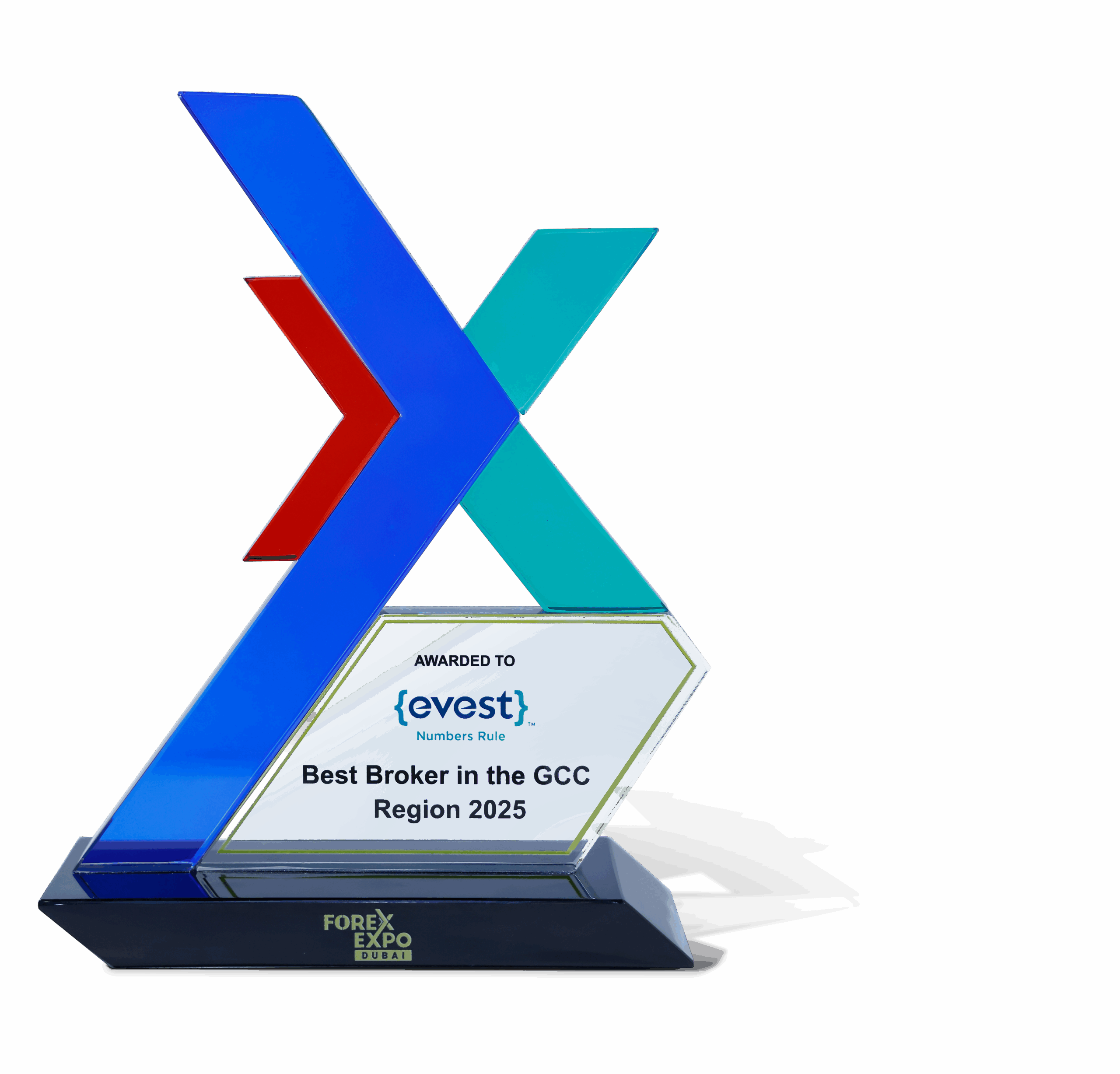
and also won the title of Best Broker in the GCC region for 2025 at Forex Expo Dubai 2025,
acknowledging its commitment to transparency and innovation in electronic trading services.

Building on this dual success, Evest crowned its achievements with an exceptional celebration at the Museum of the Future in Dubai,
hosting a special event to mark the success of four consecutive seasons of its discussion program “Evest Talk.”
This program is the first of its kind launched by a financial brokerage firm within the Museum of the Future,
combining technology and knowledge to redefine engagement between traders, investors, and financial decision-makers.

 Read More

Comprehensive Market Analysis for Trading Success

In the ever-changing financial world, market analysis stands as one of the most essential practices for traders and investors. Whether someone is new to trading or an experienced professional, analyzing the market provides valuable insights into opportunities, risks, and possible outcomes. Market analysis trading isn’t only about predicting price movements; it’s about creating a structured approach to decision-making, reducing emotional biases, and using real data to support every trade.

In this blog, we will cover what market analysis is, why it is important, its types, the tools and techniques used, and how you can apply it effectively in your trading journey. By the end, you will have a detailed roadmap to leverage market analysis for financial growth with the help of Evest.

What is Market Analysis?

Market analysis is the process of studying financial markets to understand their structure, behavior, and future direction. It helps traders identify whether assets are undervalued, overvalued, or trading at fair market prices.

From a trading perspective, market analysis trading focuses on interpreting factors such as supply and demand, historical patterns, technical indicators, and economic events to make informed decisions. In the business world, market analysis is also used by companies to evaluate consumer behavior, competitors, and opportunities for growth.

For traders, market analysis comes in two primary forms: fundamental analysis (examining the financial and economic drivers of an asset) and technical analysis (studying historical price data and charts). Both methods, when combined, provide a powerful framework for making trading decisions across forex, stocks, commodities, or cryptocurrencies.

Benefits of a Market Analysis

Conducting a market analysis is not a luxury—it’s a necessity for anyone looking to trade successfully. The key benefits include:

  1. Identifying Trading Opportunities – Market analysis forex allows traders to spot potential entry and exit points, especially during high volatility events such as interest rate announcements.
  2. Risk Reduction – By analyzing the stock or forex market, traders can avoid making decisions based on emotions. Market analysis of stocks ensures investments are backed by logic and evidence.
  3. Understanding Market Sentiment – Traders can evaluate whether the overall mood is bullish, bearish, or neutral. This helps align strategies with broader trends.
  4. Enhanced Decision Making – A systematic approach leads to more disciplined trading, allowing traders to follow a clear plan rather than guesswork.
  5. Competitive Advantage – In trading and business alike, those who conduct deep market analysis gain a significant edge over others who rely solely on speculation.
  6. Better Resource Allocation – Market analysis tools help traders focus their efforts on markets with the highest probability of profit.

How to Do a Market Analysis?

Conducting a market analysis is a crucial step for making informed trading and investment decisions. It helps traders understand market trends, identify opportunities, and develop effective strategies for success.

Research Your Industry

Before trading, one must research the financial market segment of interest. For example, forex traders should study global economic conditions, while stock traders should analyze industries like technology or healthcare.

Investigate the Competitive Landscape

Understanding who the major players are in the market helps predict trends. In forex, this means analyzing central banks, while in stocks, it involves evaluating leading companies.

Identify Market Gaps

Spotting gaps between supply and demand is essential in cryptocurrency trading. For instance, crypto traders often capitalize on price inefficiencies across different exchanges to generate profit.

Define Your Target Market

Traders must focus on the market segment they can understand best—such as forex pairs, commodities, or equities. Clarity ensures consistent strategies.

Identify Barriers to Entry

Each market has challenges—high volatility in forex, regulations in stock markets, or technological barriers in crypto. Recognizing these helps manage expectations.

Create a Sales Forecast

For businesses, this means predicting sales. For traders, it means estimating potential profits and losses based on historical performance.

Types of Market Analysis

Understanding the different types of market analysis is essential for developing a strong trading strategy. Each approach offers unique insights that help traders evaluate market conditions and make smarter investment decisions.

Qualitative vs Quantitative Analysis

  • Qualitative analysis focuses on subjective data such as news reports or market sentiment.
  • Quantitative analysis uses numbers, historical data, and algorithms.

Fundamental Market Analysis

This involves studying economic indicators, company earnings, and financial reports. For example, market analysis of forex often depends on GDP, inflation, and interest rates.

Technical Market Analysis

Charts, indicators, and price action dominate this type. Traders use moving averages, RSI, MACD, and candlestick patterns to predict future moves.

Competitive Market Analysis

This compares performance across different players—whether companies in the stock market or traders in financial markets. It helps identify strengths and weaknesses.

Key Components of Market Analysis

The main components of market analysis include:

  1. Market Size – Understanding how large the market is helps estimate potential opportunities.
  2. Market Trends – Recognizing upward or downward patterns.
  3. Market Segmentation – Dividing the market into categories like forex, stocks, commodities, and crypto.
  4. SWOT Evaluation – Assessing strengths, weaknesses, opportunities, and threats.
  5. Financial Forecasting – Predicting potential growth or decline.

Steps to Conduct a Market Analysis

Following the right steps to conduct a market analysis allows traders to assess opportunities with clarity and precision. It helps build a structured approach to understanding market movements and making informed decisions.

Defining Objectives and Scope

The first step is clarity: why are you conducting the analysis? Is it for forex trading, stock trading, or a general business investment?

Collecting and Analyzing Market Data

Data may come from price charts, financial reports, government releases, or trading platforms like Evest.

Identifying Opportunities and Threats

Opportunities may appear in undervalued stocks, while threats could emerge from inflation or global recessions.

Presenting and Interpreting Results

A trader must translate raw data into actionable steps. Tools such as charts, reports, and forecasts help.

Tools and Techniques for Market Analysis

Using the right tools and techniques for market analysis empowers traders to interpret data accurately and identify key trends. These resources help improve decision-making and enhance overall trading performance.

SWOT Analysis

Helps identify personal or market-level strengths and weaknesses.

PESTLE Analysis

Evaluates political, economic, social, technological, legal, and environmental factors influencing markets.

Porter’s Five Forces

Analyzes competition intensity, supplier power, customer influence, and industry threats.

Market Segmentation Tools

Helps divide and target specific sectors—for example, analyzing market analysis stock in technology vs. energy sectors.

Benefits of Market Analysis

Conducting regular market analysis brings:

  • Improved profitability
  • Reduced trading errors
  • Long-term consistency
  • Better adaptation to changes
  • Increased trader confidence

Common Challenges in Market Analysis

Despite its advantages, challenges exist:

  • Information Overload – Too much data can confuse traders.
  • Bias – Traders may ignore data that conflicts with their opinions.
  • Market Volatility – Unexpected events can disrupt even the best analysis.
  • Dependence on Tools – Over-reliance on software can limit independent thinking.

Evest Services

Evest Services offers traders a comprehensive suite of tools and resources to support their trading journey. With a focus on innovation, education, and reliability, Evest ensures a seamless experience across global financial trading markets.

Commission-Free Stock Trading

Evest allows clients to trade global stocks with zero commission, making it an attractive choice for investors who want to access international markets with minimum costs.

CFD Trading

The platform provides access to a wide range of financial assets through Contracts for Difference (CFDs), including stocks, forex, indices, commodities, and cryptocurrencies. This gives traders great flexibility to diversify their strategies.

WebTrader Platform

Evest offers a WebTrader platform that works directly from the browser without the need to download extra software. It features a user-friendly interface with real-time charts and analysis tools to help investors make better trading decisions.

Copy Trading

With the copy trading service, beginners or passive investors can automatically copy the trades of professional traders. This allows users to benefit from the experience of experts and potentially generate steady profits.

Demo Account

Evest provides a free demo account where traders can practice with virtual funds. This service is especially useful for beginners to learn trading basics and test strategies without risking real money.

Islamic Trading Accounts

Evest offers Islamic (Swap-Free) accounts that are free from interest charges, making them compliant with Shariah law and suitable for Muslim traders.

Smart Analytics Tool (Evest Analytics)

The platform integrates AI-powered analytics tools that deliver accurate market insights and instant alerts, helping traders to identify investment opportunities at the right time.

Mobile Trading App

Evest provides a modern mobile application for iOS and Android, enabling users to trade anywhere, anytime, with the same tools and features available on the web platform.

Multiple Deposit & Withdrawal Options

Evest supports various payment methods for deposits and withdrawals, including:

  • Credit and debit cards
  • E-wallets
  • Bank transfers

This ensures flexible and convenient financial transactions for traders worldwide.

Conclusion

A comprehensive market analysis is the foundation of trading success. Whether using market analysis tools for technical insights or relying on market analysis for macroeconomic evaluations, traders must stay informed and disciplined. With Evest, you can access professional-grade tools, educational resources, and real-time data to strengthen your decisions and boost your trading confidence.

FAQs

What are the 7 steps to conduct a market analysis?

They include defining objectives, researching the market, analyzing competitors, identifying gaps, defining the target market, forecasting, and presenting results.

What are the 4 C's of market analysis?

Customers, competitors, cost, and capabilities.

What are the five steps of market analysis?

Research, data collection, competitor evaluation, risk assessment, and strategy creation.

Is SWOT analysis a market analysis?

Yes, it is a widely used tool to identify strengths, weaknesses, opportunities, and threats in markets.

Trading Recommendations to Enhance Your Market Success

The financial markets have always fascinated investors, traders, and institutions with the promise of profits, wealth creation, and economic opportunities. Whether it’s the stock market, the forex market, or the world of cryptocurrencies, trading has become a major driver of global finance. Yet, while opportunities abound, trading is not simple. It requires knowledge, research, analysis, and the ability to make decisions under uncertainty. This is where trading recommendations come in.

In this blog, we will explore the definition, importance, sources, types, risks, and best practices of trading recommendations. We’ll also highlight how platforms like Evest help traders leverage these recommendations to boost success.

Definition of Trading Recommendations

At their core, trading recommendations are professional suggestions or strategies that aim to guide traders toward profitable decisions in financial markets. These recommendations can be generated through a variety of means: human expertise, financial institutions, trading algorithms, or a combination of these.

For example, an analyst might issue best stock trading recommendations by analyzing a company’s earnings, growth prospects, and technical chart patterns. In contrast, algorithm-driven platforms might provide crypto trading recommendations by scanning price action, volumes, and sentiment data from cryptocurrency exchanges.

It’s important to note that trading recommendations are not guarantees of profit. Instead, they serve as tools that provide direction, reduce guesswork, and enhance the decision-making process. The key for traders is to understand the recommendation, align it with their goals, and apply it in the context of their broader trading strategy.

Importance of Reliable Recommendations in Trading

The importance of reliable trading recommendations cannot be overstated. Financial markets are complex, influenced by countless factors such as economic data, interest rates, company performance, global politics, and even social media trends. For an individual trader, keeping up with all these variables can be overwhelming.

Reliable recommendations provide clarity and structure. For example:

  • Stock trading recommendations can help investors identify undervalued shares or avoid overhyped companies.
  • Forex trading recommendations can highlight currency pairs likely to move due to interest rate changes or geopolitical events.
  • Cryptocurrency trading recommendations can alert traders to market-moving news or technical setups in highly volatile markets.

By relying on trustworthy recommendations, traders reduce the risk of impulsive decisions and increase their chances of aligning with market trends. Platforms like Evest emphasize reliable, data-driven insights, ensuring their clients benefit from expert-backed and technologically supported guidance.

Sources of Trading Recommendations

Trading recommendations can come from various sources, each with its own strengths and weaknesses. Let’s explore the most common ones:

Financial Analysts and Market Experts

Professional analysts often provide recommendations based on fundamental and technical research. Their stock trading recommendations might be detailed reports suggesting which shares to buy, sell, or hold. They often include price targets, risk assessments, and timelines.

Brokerage Firms and Research Reports

Many brokerage firms issue option trading recommendations, forex insights, or stock picks for their clients. These reports often combine market outlooks with actionable advice, helping traders make informed decisions.

Trading Platforms and Newsletters

Modern trading platforms, like Evest, integrate trading signals and recommendations directly into their dashboards. These platforms sometimes also publish newsletters summarizing cryptocurrency trading recommendations or highlighting trends in commodities and indices.

Social Media and Trading Communities

In recent years, platforms like Twitter, Reddit, and Telegram groups have become popular sources of swing trading recommendations and market tips. While some of these insights can be valuable, traders must exercise caution as not all sources are reliable.

Types of Trading Recommendations

Trading recommendations can be categorized into several types based on the market or asset class they address:

  • Best stock trading recommendations – Focused on equities, often highlighting growth stocks, dividend stocks, or undervalued shares.
  • Cryptocurrency trading recommendations – Insights into Bitcoin, Ethereum, and altcoins, often driven by market sentiment and technical setups.
  • Forex trading recommendations – Covering currency pairs like EUR/USD or GBP/JPY, often influenced by macroeconomic data.
  • Option trading recommendations – Strategies like covered calls, straddles, or spreads, designed to reduce risks while capturing returns.
  • Swing trading recommendations – Short-to-medium-term trades based on capturing swings in market momentum.
  • Muhurat trading recommendations – Special trading insights tied to traditional or cultural trading days, such as Diwali muhurat trading in India.

These categories ensure that traders can access recommendations tailored to their chosen markets.

How to Use Trading Recommendations Effectively

Using trading recommendations effectively requires discipline and integration into your broader strategy. Here are three approaches:

Integrating Them into Personal Strategies

Traders should never blindly follow advice. Instead, they should integrate trading recommendations into their personal systems, testing them against their risk tolerance, capital, and goals.

Avoiding Overreliance on External Opinions

It’s easy to become dependent on analysts or platforms. However, traders must avoid overreliance. Recommendations should complement — not replace — independent research.

Balancing Recommendations with Independent Analysis

Combining recommendations with personal analysis creates balance. For instance, a trader receiving forex trading recommendations might confirm the insight with their own technical chart study before entering a trade.

How to Use Trading Recommendations Effectively?

This section deserves deeper emphasis because even the best advice can fail without proper execution. Traders must:

  1. Test Before Acting – Use demo accounts or paper trading on platforms like Evest to test the validity of recommendations.
  2. Understand the Rationale – Don’t just act — understand why a recommendation was made. Was it based on technical indicators, news events, or fundamental analysis?
  3. Manage Risk – Always use stop-loss orders, proper position sizing, and capital allocation to minimize downside risk.
  4. Time Sensitivity – Many recommendations are time-bound. Acting late can nullify the value of the recommendation.

By following these practices, traders can ensure they extract maximum value from the advice they receive.

Risks of Following Trading Recommendations Blindly

While trading recommendations can be invaluable, following them blindly carries risks:

  • Market Volatility – Conditions can change quickly, making recommendations outdated.
  • Conflicting Advice – Traders may receive different opinions from multiple sources, confusing.
  • Lack of Context – Recommendations may not consider a trader’s unique financial goals or risk tolerance.
  • Emotional Dependence – Over time, traders may stop learning and rely entirely on external advice.

Understanding these risks reinforces the need for caution and critical thinking when applying trading recommendations.

Evest Services

Evest Services provides traders with a complete ecosystem for efficient and confident trading. From intuitive platforms to expert support, Evest ensures a smooth and rewarding experience for every investor.

Commission-Free Stock Trading

Evest allows clients to trade global stocks with zero commission, making it an attractive choice for investors who want to access international trading markets with minimum costs.

CFD Trading

The platform provides access to a wide range of financial assets through Contracts for Difference (CFDs), including stocks, forex, indices, commodities, and cryptocurrencies. This gives traders great flexibility to diversify their strategies.

WebTrader Platform

Evest offers a WebTrader platform that works directly from the browser without the need to download extra software. It features a user-friendly interface with real-time charts and analysis tools to help investors make better trading decisions.

Copy Trading

With the copy trading service, beginners or passive investors can automatically copy the trades of professional traders. This allows users to benefit from the experience of experts and potentially generate steady profits.

Demo Account

Evest provides a free demo account where traders can practice with virtual funds. This service is especially useful for beginners to learn trading basics and test strategies without risking real money.

Islamic Trading Accounts

Evest offers Islamic (Swap-Free) accounts that are free from interest charges, making them compliant with Shariah law and suitable for Muslim traders.

Smart Analytics Tool (Evest Analytics)

The platform integrates AI-powered analytics tools that deliver accurate market insights and instant alerts, helping traders to identify investment opportunities at the right time.

Mobile Trading App

Evest provides a modern mobile application for iOS and Android, enabling users to trade anywhere, anytime, with the same tools and features available on the web platform.

Multiple Deposit & Withdrawal Options

Evest supports various payment methods for deposits and withdrawals, including:

  • Credit and debit cards
  • E-wallets
  • Bank transfers

This ensures flexible and convenient financial transactions for traders worldwide.

Conclusion

Trading recommendations are powerful tools that can help traders succeed in complex financial markets. From best stock trading recommendations to crypto trading recommendations and forex trading recommendations, they provide valuable insights into when to buy, sell, or hold. However, they must be used wisely.

By balancing recommendations with independent research, practicing strong risk management, and leveraging reliable platforms like Evest, traders can enhance their chances of success. In a world where every decision matters, the right recommendation at the right time can make a significant difference.

FAQs

What is the 5-3-1 rule in trading?

The 5-3-1 rule suggests focusing on 5 currency pairs, using 3 trading strategies, and mastering 1 consistent approach.

Is it possible to make $1000 a day trading?

Yes, but it depends on capital, experience, and risk management. Most traders achieve consistent, smaller gains before aiming for such targets.

What is the 3 5 7 rule in trading?

This rule often refers to setting structured profit and loss goals, ensuring traders aim for steady, achievable growth.

What is the best advice for trading?

The best advice is to remain disciplined, manage risk carefully, and continuously educate yourself while using trading recommendations as guidance, not absolute truths.

Top Trading Strategies to Boost Market Success

The world of financial trading is full of opportunities, risks, and constant change. Every day, millions of traders across the globe buy and sell assets such as stocks, currencies, commodities, and cryptocurrencies. While the potential for profit is immense, the risk of loss is equally significant. This is where trading strategies come into play. A trading strategy is essentially a structured plan that helps traders make informed decisions, minimize risks, and maximize returns.

In this blog, we’ll take a deep dive into the meaning of trading strategies, their importance, the different types, and how to find the one that suits you best.

What is a Trading Strategy?

A trading strategy is a systematic approach used by traders to decide when to enter and exit trades in the financial markets. It is based on predefined rules and criteria, often supported by technical indicators, chart patterns, or fundamental data. At its core, a strategy reduces emotional decision-making, which is often a trader’s biggest enemy.

For instance, in trading strategies in forex, traders might use moving averages, Fibonacci retracements, or support and resistance levels to determine entry and exit points. Similarly, trading strategies for options may involve covered calls, straddles, or spreads that reduce risk while capturing profit opportunities.

With technology evolving, many traders rely on trading strategies backtesting before committing real money. Backtesting involves applying a strategy to historical market data to analyze how it would have performed. Platforms like Evest provide tools that allow traders to practice and refine strategies without financial risk.

In essence, a trading strategy is your personal rulebook, designed to guide decisions and ensure consistency in the face of market volatility.

Importance of Having a Solid Trading Plan

Without a solid trading plan, traders often rely on emotions like fear or greed, which usually lead to losses. A robust plan based on well-researched trading strategies provides structure and discipline. Here’s why it matters:

  1. Risk Reduction – A trading plan ensures that you know how much capital you are risking on each trade, preventing large, unexpected losses.
  2. Consistency – By following rules, you avoid jumping from one strategy to another and maintain consistency.
  3. Adaptability – A good plan allows you to adjust strategies based on market conditions, whether it’s trading strategies for futures or trading strategies for crypto.
  4. Performance Tracking – It enables you to review your progress, evaluate wins and losses, and refine your approach.

Evest emphasizes education and planning for all its traders, ensuring they understand the importance of sticking to a structured plan before diving into active trading markets.

What is the Difference Between a Trading Strategy and a Trading Style?

While often confused, a trading strategy is not the same as a trading style.

  • Trading Style refers to the general approach a trader takes — such as day trading, swing trading, or position trading. Styles are broader and describe the timeframe and personality fit of a trader. For example, day traders prefer short-term positions, while position traders hold assets for weeks or months.
  • The Trading Strategy is more specific. It defines the exact method, rules, and indicators used to execute trades within that style. For example, within day trading, a trader may adopt trading strategies scalping, which involves making dozens of small trades in a day to capture minor price fluctuations.

Understanding this distinction is critical because a trader’s style should align with their lifestyle, time availability, and risk tolerance, while the strategy provides the actual roadmap for executing trades.

Best Trading Strategies

There are countless trading strategies available, each with its own advantages and challenges. Here are some of the most popular ones:

Trend Trading

This strategy involves following the direction of the market trend — either upward or downward. Traders use tools like moving averages and trendlines to identify momentum. It is particularly effective in markets like trading strategies for gold or forex.

Range Trading

Range trading capitalizes on price movements within a defined channel. Traders buy at support and sell at resistance. This works best in markets with low volatility.

Breakout Trading

Breakout traders enter positions when the price breaks out of a key level of support or resistance. This strategy is widely used in trading strategies for crypto, where sudden surges are common.

Reversal Trading

Reversal trading is based on identifying when a trend is about to change direction. It requires advanced technical analysis skills and is often combined with candlestick patterns.

Gap Trading

This strategy focuses on price gaps that occur between market sessions. Gaps often indicate strong momentum and provide opportunities for quick profits.

Pairs Trading

Pairs trading involves taking opposing positions in two correlated assets. For example, going long on one stock while shorting another in the same sector.

Arbitrage

Arbitrage strategies exploit price discrepancies between different markets or exchanges. For example, buying an asset at a lower price in one exchange and selling it higher price elsewhere.

Momentum Trading

Momentum traders look for strong price moves and attempt to ride the wave until the momentum fades. It is popular in high-volatility markets like cryptocurrencies and futures.

What’s the Best Trading Strategy for You?

There’s no universal “best” trading strategy — it depends on your personality, risk tolerance, and available time. For beginners, trading strategies for beginners often involve simple approaches like trend trading or range trading. More advanced traders might explore options, futures, or arbitrage.

Trading Platforms like Evest provide demo accounts, allowing traders to experiment with multiple strategies before committing real capital. This trial phase is essential to determine which strategy aligns with your strengths.

What to Know Before You Put Your Trading Strategy in Action?

Before you start trading, there are a few things to keep in mind:

  1. Education First – Understand the markets, whether it’s forex, stocks, gold, or crypto.
  2. Practice with Backtesting – Always test your strategy with historical data.
  3. Start Small – Begin with minimal investment and gradually scale up.
  4. Stay Disciplined – Stick to your rules and avoid impulsive trades.

Evest supports traders by providing tutorials, webinars, and simulation tools to prepare before trading with real money.

Risk Management in Trading Strategies

Risk management is at the heart of all trading strategies. No matter how profitable a strategy seems, without proper risk management, losses can wipe out your account. Key principles include:

  • Setting stop-loss orders to limit losses.
  • Using proper position sizing (risking only 1–2% of capital per trade).
  • Diversifying across different assets such as forex, commodities, and stocks.
  • Avoiding over-leverage, especially in volatile markets like crypto.

Tools and Indicators for Trading Strategies

Technical indicators and tools help traders refine their strategies. Some popular ones include:

  • Moving Averages
  • Relative Strength Index (RSI)
  • Bollinger Bands
  • Fibonacci Retracements
  • MACD (Moving Average Convergence Divergence)

Platforms like Evest integrate these tools directly into their trading dashboard, giving traders an edge in executing precise strategies.

Evest Services

Commission-Free Stock Trading

Evest allows clients to trade global stocks with zero commission, making it an attractive choice for investors who want to access international markets with minimum costs.

CFD Trading

The platform provides access to a wide range of financial assets through Contracts for Difference (CFDs), including stocks, forex, indices, commodities, and cryptocurrencies. This gives traders great flexibility to diversify their strategies.

WebTrader Platform

Evest offers a WebTrader platform that works directly from the browser without the need to download extra software. It features a user-friendly interface with real-time charts and analysis tools to help investors make better trading decisions.

Copy Trading

With the copy trading service, beginners or passive investors can automatically copy the trades of professional traders. This allows users to benefit from the experience of experts and potentially generate steady profits.

Demo Account

Evest provides a free demo trading account where traders can practice with virtual funds. This service is especially useful for beginners to learn trading basics and test strategies without risking real money.

Islamic Trading Accounts

Evest offers Islamic (Swap-Free) accounts that are free from interest charges, making them compliant with Shariah law and suitable for Muslim traders.

Smart Analytics Tool (Evest Analytics)

The platform integrates AI-powered analytics tools that deliver accurate market insights and instant alerts, helping traders to identify investment opportunities at the right time.

Mobile Trading App

Evest provides a modern mobile application for iOS and Android, enabling users to trade anywhere, anytime, with the same tools and features available on the web platform.

Multiple Deposit & Withdrawal Options

Evest supports various payment methods for deposits and withdrawals, including:

  • Credit and debit cards
  • E-wallets
  • Bank transfers

This ensures flexible and convenient financial transactions for traders worldwide.

Conclusion

Mastering trading strategies is the foundation of successful market participation. Whether you’re exploring trading strategies in forex, experimenting with trading strategies for futures, or diving into trading strategies for cryptocurrencies, having a structured plan is crucial. The best strategy is one that aligns with your goals, experience level, and risk tolerance.

With the support of platforms like Evest, traders gain access to educational resources, analytical tools, and multiple markets — all essential ingredients for long-term success.

FAQs

What is the best strategy in trading?

The best strategy depends on your goals and risk profile. Trend trading and range trading are great for beginners, while advanced traders may prefer arbitrage or options strategies.

What are the four types of trading strategies?

The four main categories are trend trading, range trading, breakout trading, and momentum trading.

What is the 3-5-7 rule in trading?

The 3-5-7 rule refers to a risk management guideline, where traders focus on small consistent wins (3%), moderate gains (5%), and avoid chasing unrealistic high returns (7% or more) on a single trade.

Trading Markets Overview: Key Trends

The financial world is constantly evolving, and one of the most critical pillars of this dynamic environment is the concept of trading markets. These markets form the backbone of the global economy by connecting investors, institutions, corporations, and governments in a complex web of exchanges. Whether it is the stock exchange in New York, the commodities markets in London, or the rapidly expanding cryptocurrency platforms available worldwide, trading markets create opportunities for growth, speculation, and long-term wealth creation.

What Are Trading Markets?

To start with, let us define trading markets in simple terms. A trading market is a platform or system where buyers and sellers come together to exchange financial instruments. These instruments may include stocks, bonds, commodities, currencies, cryptocurrencies, or derivatives. Each type of trading market has its unique features, participants, and rules.

For example, currency market trading, also known as forex, deals with the exchange of global currencies such as the U.S. dollar, euro, or Japanese yen. Similarly, share market trading focuses on company stocks, allowing investors to purchase ownership shares in public companies. Over time, these markets have expanded to include innovative products like exchange-traded funds (ETFs) and complex derivatives that cater to both institutional and retail traders.

Trading markets can be physical (like stock exchanges with trading floors) or electronic, where advanced digital platforms enable real-time transactions. With advancements in technology, electronic trading platforms such as Evest have gained popularity, offering accessibility and efficiency to investors worldwide.

In essence, trading markets are not only a hub for financial exchange but also a reflection of economic health, investor confidence, and global financial stability.

Importance of Trading Markets in the Global Economy

Trading markets play a pivotal role in shaping the global economy. Their importance can be analyzed through several key aspects:

  1. Capital Formation – By facilitating the sale of stocks and bonds, trading markets help companies raise the capital they need to expand operations, develop new products, or enter new markets. This leads to job creation, innovation, and overall economic growth.
  2. Liquidity – Trading markets provide liquidity, allowing investors to quickly buy and sell assets without significantly affecting their price. Liquidity is critical for ensuring market efficiency and investor confidence.
  3. Price Discovery – Through the interaction of buyers and sellers, trading markets establish the fair value of assets. This process of price discovery ensures that securities are neither undervalued nor overvalued.
  4. Risk Management – Many trading markets offer instruments such as futures and options that allow investors to hedge against risks. For example, an airline company may use commodity trading to lock in fuel prices.
  5. Global Connectivity – The interconnected nature of trading markets means that events in one part of the world can influence investor sentiment globally. For example, a slowdown in China’s economy can impact commodity markets worldwide.

Platforms like Evest recognize this global significance by offering access to diverse markets under one account, ensuring traders can seize opportunities across multiple regions.

Types of Financial Markets

The financial markets offer a wide range of opportunities for investors to trade and grow their wealth. Understanding the main types of markets is essential for building a solid foundation in trading and investment.

Stock Market

The stock market is perhaps the most recognized type of trading market. It involves buying and selling shares of publicly listed companies. Share market trading allows investors to become partial owners of corporations, earning profits through dividends and capital appreciation.

Investors often work with share market brokers, who act as intermediaries between the buyer and the stock exchange. With digital platforms, the reliance on traditional brokers has decreased, as services like Evest provide direct access to global equities with transparent fees.

Forex Market

The foreign exchange (forex) market, also known as currency market trading, is the largest trading market in the world. With trillions of dollars traded daily, it operates 24 hours a day across different time zones. Forex trading involves buying one currency while selling another, often influenced by interest rates, inflation, and geopolitical stability.

Cryptocurrency Market

Cryptocurrencies have transformed the definition of trading markets’ meaning. Digital currencies like Bitcoin, Ethereum, and Ripple operate on decentralized blockchain networks, offering traders new ways to speculate and invest. Despite their volatility, cryptocurrencies have become a mainstream financial market, with platforms like Evest providing easy access to trade them.

Commodities Market

The commodities market deals with raw materials like gold, oil, silver, and agricultural products. Commodities are influenced by supply-demand dynamics, weather conditions, and geopolitical factors. Many investors view commodities as a hedge against inflation and currency fluctuations.

Indices Market

Indices are groups of stocks that represent a particular market segment or economy. Examples include the S&P 500 or the FTSE 100. Trading indices allows investors to speculate on the performance of an entire sector or economy without focusing on individual companies.

Bond Market

The bond market enables governments and corporations to raise capital by issuing debt securities. Bonds provide fixed income returns, making them attractive for conservative investors.

ETFs (Exchange-Traded Funds) Market

ETFs combine the benefits of stocks and mutual funds. They are traded like individual stocks but offer diversification across sectors or asset classes.

Derivatives Market

The derivatives market includes contracts like options, futures, and swaps that derive their value from underlying assets. While often complex, derivatives allow investors to hedge risks or speculate on future price movements.

How to Choose a Trading Market?

Choosing the right trading market depends on several factors, including risk appetite, capital availability, and trading knowledge. For example:

  • New traders might start with share market trading, as it is more familiar and offers transparent company data.
  • Those with higher risk tolerance might explore cryptocurrencies or derivatives.
  • Investors seeking steady returns may prefer the bond market.

Platforms like Evest provide detailed insights, tutorials, and tools that guide users in selecting the most suitable market based on their goals.

How to Trade in Different Markets?

Trading strategies differ from one market to another. In the currency market trading, traders rely heavily on technical analysis and global economic indicators. In contrast, stock market investors analyze company earnings, management, and sector performance.

Evest simplifies this process by offering a single platform where traders can explore multiple markets, practice with demo accounts, and apply tailored strategies.

Factors Influencing Trading Markets

Several factors influence the direction of trading markets, such as:

  • Economic Indicators: GDP growth, inflation rates, and employment figures.
  • Political Stability: Elections, wars, or government policies.
  • Global Events: Pandemics or natural disasters.
  • Investor Sentiment: Fear and greed cycles play a crucial role in short-term fluctuations.

Risks and Challenges in Trading Markets

Like any investment activity, trading markets involves risks. Market volatility, unexpected global events, and a lack of knowledge can lead to significant losses. Traders must understand leverage, margin requirements, and risk management strategies before committing large amounts of capital.

Best Practices for Successful Trading

To succeed in trading markets, traders should:

    1. Continuously educate themselves.
    2. Diversify portfolios.
    3. Use risk management tools.
    4. Stay updated with global news.
    5. Utilize reliable platforms like Evest that provide robust research and trading tools.

Evest Services

Evest Services are built to deliver a seamless and professional trading experience for all users. Combining advanced technology, market insights, and dedicated support, Evest empowers traders to achieve their financial goals with confidence.

Commission-Free Stock Trading

Evest allows clients to trade global stocks with zero commission, making it an attractive choice for investors who want to access international markets with minimum costs.

CFD Trading

The platform provides access to a wide range of financial assets through Contracts for Difference (CFDs), including stocks, forex, indices, commodities, and cryptocurrencies. This gives traders great flexibility to diversify their strategies.

WebTrader Platform

Evest offers a WebTrader platform that works directly from the browser without the need to download extra software. It features a user-friendly interface with real-time charts and analysis tools to help investors make better trading decisions.

Copy Trading

With the copy trading service, beginners or passive investors can automatically copy the trades of professional traders. This allows users to benefit from the experience of experts and potentially generate steady profits.

Demo Account

Evest provides a free demo account where traders can practice with virtual funds. This service is especially useful for beginners to learn trading basics and test strategies without risking real money.

Islamic Trading Accounts

Evest offers Islamic (Swap-Free) accounts that are free from interest charges, making them compliant with Shariah law and suitable for Muslim traders.

Smart Analytics Tool (Evest Analytics)

The platform integrates AI-powered analytics tools that deliver accurate market insights and instant alerts, helping traders to identify investment opportunities at the right time.

Mobile Trading App

Evest provides a modern mobile application for iOS and Android, enabling users to trade anywhere, anytime, with the same tools and features available on the web platform.

Multiple Deposit & Withdrawal Options

Evest supports various payment methods for deposits and withdrawals, including:

  • Credit and debit cards
  • E-wallets
  • Bank transfers

This ensures flexible and convenient financial transactions for traders worldwide.

Conclusion

Trading markets are the foundation of global financial systems, offering opportunities for wealth creation and risk management. Whether one is interested in share market trading, currency market trading, or emerging markets like cryptocurrencies, the key lies in knowledge, strategy, and discipline. Platforms like Evest make this journey easier by offering seamless access, educational content, and advanced trading tools.

FAQs

What are trading markets?

Trading markets are platforms where buyers and sellers exchange financial instruments like stocks, currencies, commodities, or derivatives.

Which trading market is best?

The best trading market depends on your goals. Stocks are ideal for long-term investors, while forex and cryptocurrencies suit those seeking short-term opportunities.

What are the 5 types of trading?

The five common types are stock trading, forex trading, commodity trading, derivative trading, and cryptocurrency trading.

Can I make $1000 per day from trading?

Yes, but it requires advanced knowledge, experience, and significant capital. Most traders are advised to focus on steady long-term profits rather than unrealistic daily gains.