What is Financial Inflation and How Does It Happen?

What is Financial Inflation and How Does It Happen?

Financial inflation is one of the fundamental economic concepts that directly affects individuals’ lives and national economies.
However, it often remains misunderstood by many.
In this article, we will explain what inflation is, its causes, and how it impacts prices and living conditions.


Topic

What is Financial Inflation

How Does Inflation Happen

and How Does Inflation Affect Our Lives

How Can Inflation Be Controlled

What is the Impact of Inflation on Trading


What is Financial Inflation

Inflation refers to the sustained increase in the general level of prices for goods and services over a specific period.
Simply put, when prices rise, the purchasing power of money declines —
what you can buy today with 100 riyals may not be enough to buy the same quantity tomorrow.


How Does Inflation Happen

Inflation can occur due to several factors, including:

  • Increased Demand: When the demand for goods and services grows faster than the economy’s productive capacity, prices begin to rise.
  • Rising Production Costs: Increases in raw materials or wages push companies to raise prices to cover these higher costs.
  • Monetary Inflation: When governments print large amounts of money without real productive backing, it leads to excess money supply, driving prices up.
  • Imported Inflation: A rise in the prices of imported goods, especially essentials, reflects directly in consumer prices.


How Does Inflation Affect Our Lives

  • Reduced Purchasing Power: It’s harder for people to maintain their standard of living as prices rise.
  • Higher Cost of Living: Essentials like food, housing, transportation, and education become more expensive.
  • Market Instability: High inflation creates uncertainty, which can hinder investment and economic growth.


How Can Inflation Be Controlled

Governments and central banks aim to control inflation by:

  • Raising interest rates
  • Reducing government spending
  • Controlling money supply
  • Promoting local production to reduce import dependence


What is the Impact of Inflation on Trading

Inflation directly affects financial markets and trading across all asset classes, including stocks, currencies, and commodities.
When inflation rises, central banks often respond by increasing interest rates to curb spending and control inflationary pressures.
These policies create volatility in markets and can influence asset valuations.

In the stock market, high inflation can reduce company profits due to rising costs,
prompting investors to shift toward safe-haven assets like gold or bonds.
In currency markets, inflation weakens the local currency and increases exchange rate fluctuations,
creating both risks and opportunities for traders.

Thus, understanding inflation is essential for traders to make informed decisions and determine the best timing to enter or exit markets.


Conclusion:

Inflation is a natural economic phenomenon, but when it spirals out of control,
it threatens both economic stability and individuals’ livelihoods.
This highlights the importance of understanding it and implementing appropriate fiscal and monetary policies to manage it effectively.


What is Financial Inflation and How Does It Happen?
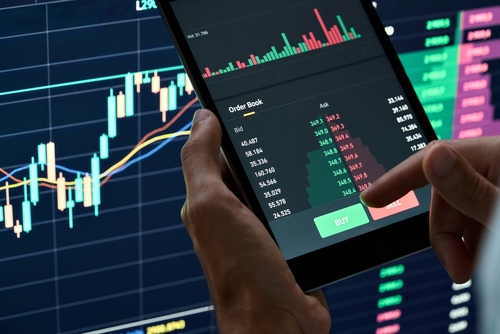
What Is Online Trading?

What Is Online Trading?

In a world rapidly shifting toward digitization, financial markets are no longer the exclusive playground of large investors or institutional giants.
Thanks to technological advances and the widespread availability of the internet,
anyone can now access global markets from the comfort of their home or office — live,
in real time. But what exactly is online trading? Is it a road to wealth, or a high-risk venture?


Topic
Online Trading: Your Gateway to Global Markets

Why Are Millions Turning to Online Trading

Between Opportunity and Risk: Who Wins and Who Loses

Is Now the Right Time to Start


Online Trading: Your Gateway to Global Markets

Online trading simply refers to the buying and selling of financial assets — such as stocks,
foreign currencies, commodities, or indices — through digital platforms provided by brokerage firms.
These platforms act as a bridge between the trader and the market, offering tools for technical and fundamental analysis,
real-time data, and a user-friendly interface to execute trades in seconds.

What makes online trading appealing is its speed and flexibility. No longer do you need a middleman to act on your behalf;
instead,
you’re in control of your decisions, determining when to enter or exit a trade based on your analysis and strategy.


Why Are Millions Turning to Online Trading

The appeal doesn’t lie only in the ease of access, but in the potential for significant profit.
Imagine investing in major companies like Apple or Tesla and earning from their daily price fluctuations.
This dynamic opens doors for both short- and long-term gains —
but only if you know what you’re doing.

Leverage is another attractive yet risky tool. It allows you to trade with more capital than you actually own,
amplifying both potential profits and potential losses. This is why risk management is crucial in online trading.


Between Opportunity and Risk: Who Wins and Who Loses

Success in trading doesn’t rely on luck — it’s driven by analysis, discipline, and strategy.
Markets fluctuate, and political or economic news can cause major price shifts in moments.
That’s where technical analysis (focused on price movements and trends) and fundamental analysis
(focused on financial performance and global events) come into play.

A professional trader treats trading like a serious business — not a gamble.
Those who enter without a clear plan or risk management strategy often end up on the losing side.


Is Now the Right Time to Start

If you’re curious and ready to learn the basics, online trading can be an exciting opportunity.
Many platforms offer demo accounts to practice without real money,
and there’s an abundance of educational resources available online.

Just remember: Every trade carries a potential reward — and a potential risk. And markets don’t forgive ignorance.


What Is Margin Trading and Is It Profitable?

What Is Margin Trading and Is It Profitable?

In the era of fast-paced trading and digital platforms, investing is no longer reserved for the wealthy.
Among the tools that have changed the rules of the game:
margin trading.
But is it a shortcut to profits—or a tempting trap that could lead to painful losses? Let’s uncover the truth together.


Contents


Introduction

Your Imagination Leads You to Profits… But What’s Behind the Curtain?

Imagine having only $1,000, but being able to open trades worth $5,000! That’s what margin trading allows you to do.
Tempting, right? But just like fire can cook food, it can also burn your fingers.

Margin trading is simply borrowing money from your broker to amplify your trades.
If the market moves in your favor, you’re on the path to multiplied profits.
But if it goes the other way, your money could vanish in moments.


Is It Profitable


The Answer Isn’t Black or White

Yes, some have made fortunes through margin trading.
But others have walked away with nothing—or worse, in debt.

Let’s look at both sides:


 Unmissable Opportunities:

  • Enter larger positions than your actual capital allows.
  • Profit from small market moves by leveraging more.
  • Diversify your portfolio and open more trades with less money.

 Relentless Risks:

  • The market shows no mercy to the unprepared.
  • Your losses may exceed your original capital.
  • Minor market movements could trigger forced liquidations or margin calls.


Real Stories: Between Dreams and Shocks

  • Sami, 28, entered the crypto market with 1:10 leverage. Within a week, his profits doubled.
    The next week, he lost everything in one hour due to a sudden market drop.

  • Layla, a cautious investor, used margin wisely in stock markets with strict risk management—and achieved steady, consistent growth.

The difference? Sami bet on luck, while Layla bet on planning.


Golden Tips

  • Don’t use margin in your first trade.
  • Always set stop-loss orders.
  • Never risk more than 1–2% of your capital on a single trade.
  • Learn first… then trade.

Test Yourself

Is Margin Trading for You?

  • Do you have a clear capital management plan?
  • Can you handle unexpected losses without damaging your financial life?
  • Do you fully understand margin terms and leverage with your broker?

If you answered “yes” to the above, margin trading might be worth exploring… but with extreme caution.


Conclusion

Margin trading is a double-edged sword. It can be a powerful tool to accelerate your profits,
but only in the hands of a disciplined trader who knows when to push forward and when to step back.
Are you ready for the big leagues?


What Is Margin Trading and Is It Profitable?

Guide to Quantitative Trading and How It Drives Markets

Guide to Quantitative Trading and How It Drives Markets:
In today’s fast-paced trading world, relying solely on instinct or news is no longer enough.
Many investors and traders now use strategies that rely on data and algorithms to make quick and effective decisions.
This is where quantitative trading comes in—one of the most advanced trends in financial markets.

In this article from Evest, we’ll take you on a journey to understand quantitative trading,
How it works, and why it has become a core part of institutional and individual trading strategies.


Contents

What is Quantitative Trading

How Does Quantitative Trading Work

What Makes Quantitative Trading Unique

Is Quantitative Trading Right for Everyone

Evest

Conclusion


What is Quantitative Trading

Quantitative trading is a trading method that relies on quantitative analysis using mathematical models,
statistics, and algorithms to identify trading opportunities.
Quantitative trading depends on real data and historical market patterns
Rather than making decisions based on emotions or subjective analysis.


How Does Quantitative Trading Work?

Quantitative strategies typically follow four key stages:

  1. Data Analysis: Collecting market data such as prices, volumes, indicators, and news.
  2. Model Development: Creating mathematical models that define entry and exit rules.
  3. Backtesting: Testing the model on historical data to evaluate its performance.
  4. Automated Execution: Implementing trades electronically with high speed and precision.


What Makes Quantitative Trading Unique?

Emotion-Free Trading: Strategies are based on formulas, not feelings.
High-Speed Execution: Thousands of trades can be executed in fractions of a second.
Precise Risk Management: Position size and risk levels are calculated mathematically.
Backtesting Capabilities: Strategies can be tested before committing real capital.


Is Quantitative Trading Right for Everyone?

While quantitative trading is often used by hedge funds and large financial institutions,
Its concepts and tools are becoming increasingly accessible to individual traders,
especially with modern platforms like Evest,

which offer advanced technical and statistical analysis tools that empower you to make data-driven

trading decisions without deep programming skills.

With Evest, you can:

  • Use ready-made technical indicators and statistical models
  • Analyze market patterns and identify opportunities with precision.
  • Access live data and enjoy fast trade execution

Although full-scale quantitative trading usually requires:

  • A solid understanding of mathematics and statistics
  • Programming skills (e.g., Python, R)
  • A fast and automated trading environment

Evest gives you a powerful start by offering intelligent analytics and technical tools that guide

You step by step toward quantitative-style trading in a simple and user-friendly format.


How Can Evest Support You in Quantitative Trading?

Evest provides an ideal environment to help traders:

  • Dive deeper into market analysis
  • Access advanced technical tools.
  • Execute trades with speed and accuracy.
  • Build data-driven strategies

Whether a beginner or an experienced trader,
you can use Evest’s quantitative tools to make smarter investment decisions.


Conclusion

Quantitative trading is the future of the markets. It’s the perfect approach for those seeking speed,
efficiency and discipline in trading decisions.
Integrating this type of trading into your strategy will become more seamless as technology evolves.

 Don’t let the markets surprise you—let the numbers work for you.
Start your quantitative trading journey with Evest today.


Guide to Quantitative Trading and How It Drives Markets

Apple Plans Safari Redesign with Focus on AI Search Engines

Apple Plans Safari Redesign with Focus on AI Search Engines: Apple has announced that it is seriously considering redesigning
It’s Safari browser across its devices to integrate AI-powered search engines.
This move could spark a significant shift in the tech industry as
The company faces the potential end of its long-standing partnership with Google.


Contents

Google Era

New Competition for Google

Alternative AI Search Options
Improvements Still Needed

The Future of Safari

Expanded Partnership with Google


Is the Google Era in Safari Coming to an End?

On Wednesday, Eddy Cue, Apple’s senior vice president of services,
revealed these plans during his testimony in the U.S. Department of Justice’s antitrust lawsuit against Alphabet, Google’s parent company.

The case revolves around a $20 billion annual deal that makes Google the default search engine in Safari.
If the companies are forced to end this deal, it could significantly affect how iPhones and other Apple products function.

But the impact goes beyond the deal. AI-powered search engines are increasingly capturing user interest.
Cue noted that Safari search volumes declined for the first time last month,
attributing the drop to the rising use of AI tools.

He added that search engines like OpenAI, Perplexity,
and Anthropic could effectively replace traditional engines like Google.
Apple plans to introduce these options in Safari,
although they won’t be default choices due to further development.


New Competition for Google

Cue stated: “Before AI emerged, I didn’t see any real alternative to Google,
but the entrance of new players has changed the equation,” referring to companies offering innovative search solutions.

This shift is a significant turning point for the iPhone,
where users have relied on Google as the default search engine since its launch in 2007.
Consumers are approaching a new era dominated by AI-driven tools.

Cue’s testimony was interpreted as a warning sign for both Apple and Alphabet,
as the end of their lucrative agreement appears possible.

Alphabet’s stock dropped by 7.3% on Wednesday.
The steepest decline since February, while Apple shares fell by 1.1% following Cue’s comments.


Alternative AI Search Options

Apple currently allows users to access ChatGPT from OpenAI
via Siri and is expected to add Google’s Gemini AI search engine later this year.
Cue also mentioned that Apple has evaluated other options,
including Anthropic, Perplexity, China’s DeepSeek, and Elon Musk’s Groq from xAI.

Cue explained that the deal with OpenAI permits the integration of additional AI providers,
including internally developed tools by Apple.

He noted that Apple selected ChatGPT after a trial comparison with Google,
which presented terms Apple found unacceptable and incompatible with its deal with OpenAI.

Cue added that technology is rapidly evolving, so “people might not even need iPhones in a decade.”
suggesting that tech shifts open the door to genuine competition and fresh opportunities.


Improvements Still Needed

Despite recognizing the advanced features of new AI search engines,
Cue emphasized that index quality still needs improvement.
He stated: “There’s enough funding and enough major companies involved that I don’t see a way this shift won’t happen.”


The Future of Safari Hangs in the Balance

Cue affirmed that large language models (LLMs), the core technology behind generative AI,
will continue improving, which may drive users to change their search habits.

Still, Cue believes that Google remains the best default engine for Safari due to the significant revenue the partnership provides.
He noted the current deal with Google offers Apple the most favorable financial terms.

Cue oversees services such as iCloud, Apple TV+, and Apple Music, and is known as Apple’s chief dealmaker.
A loss in search-related revenue could impact the financial performance of his division,
which recently posted a record $26.6 billion in quarterly services revenue.

Additionally, a recent court order requires Apple to allow U.S. developers
to use third-party payment methods, potentially cutting Apple’s 30% transaction commission and reducing revenue.


Expanded Partnership with Google

Last year, Apple and Google extended their partnership to integrate
Google Lens is integrated into Apple’s Visual Lookup feature on newer iPhones.
Allowing users to analyze images using Google’s AI.

Cue also noted that the agreement with Microsoft’s Bing,
a non-default search option in Safari, is now renewed annually.

Although Apple has lagged behind competitors in AI, lacking a proprietary intelligent search engine,
it is working on Siri enhancements that use personal data to provide more accurate responses.

The company is expected to unveil more updates to its Apple Intelligence platform
at its upcoming Worldwide Developers Conference on
June 9.


Apple Plans Safari Redesign with Focus on AI Search Engines

How to Invest in Copper? A Comprehensive Guide for Beginners


How to Invest in Copper? A Comprehensive Guide for Beginners and Professional Investors

Copper is one of the essential metals in modern industries and is experiencing growing demand
due to its use in renewable energy technologies, electric vehicles, and infrastructure.
As supply tightens, copper has become a valuable investment asset that smart investors seek.
So, how can you invest in it, and what are the available methods? That’s what we will explore in this article.


Topic

Why is Copper a Promising Investment Opportunity

How to Invest in Copper

Key Tips Before Investing

Copper Market Analysis

Comparison


Why is Copper a Promising Investment Opportunity

The copper market is undergoing significant changes due to expanding green energy projects
and economic growth in emerging markets.
Global demand for copper is expected to double in the next decade.
Key reasons that make copper attractive include:

  • Supply scarcity: Copper extraction requires massive investment, leading to slow production growth.
  • Rising industrial demand: Copper is used in electricity, electronics, and construction.
  • Key role in clean energy: Electric cars, wind, and solar energy rely heavily on copper.

How to Invest in Copper

There are several ways to invest in copper, catering to different risk levels and investor profiles:

  1. Buying shares in copper mining companies
    This indirect method is popular among investors.
    Rising copper prices benefit companies like Freeport-McMoran or Southern Copper Corporation.
  2. Exchange-Traded Funds (ETFs)
    These include copper-focused ETFs such as:

    • Global X Copper Miners ETF
    • United States Copper Index Fund
      These funds offer diversification and lower risk than individual stocks.
  3. Copper Futures
    Copper futures allow speculation on future prices,
    making them suitable for professional investors.
    However, they carry high risk and require deep market knowledge.
  4. Buying physical copper
    Though harder to store, copper can be bought as a physical commodity (bars or wires).
    This method suits those seeking unique diversification.


Key Tips Before Investing

  • Monitor global economic trends, especially in China and the U.S.
  • Follow renewable energy projects; demand for copper grows with them.
  • Diversify your investment portfolio to reduce risk.
  • Consult a financial advisor before making significant decisions.


Copper Market Analysis

Modern analysis suggests that copper is in a transitional phase.
With the world shifting to clean energy, copper has become essential.
EVs use over three times the copper of traditional vehicles, as do wind and solar power systems.

Economically, limited supply and rising mining costs add price pressure.
At the same time, booming demand may create a supply-demand gap in the coming years.

Major institutions like Goldman Sachs and Bloomberg forecast
a long-term bullish copper trend driven by digital and environmental transformation.


Comparison

Gold vs. Copper vs. Oil

Aspect Gold Copper Oil
Investment Nature Safe haven during inflation and crises Industrial metal linked to economic growth Strategic commodity for energy and industry
Price Volatility Relatively low, stable Medium to high, sensitive to industrial cycles Very high, driven by geopolitics and trading
Potential Return Slow but stable growth Higher potential, more volatile Strong returns, highly volatile
Use Cases Jewelry, reserves, hedging Electricity, EVs, infrastructure Fuel, manufacturing, transport, energy
Economic Sensitivity Affected by inflation & crises Affected by industrial growth and tech Affected by global growth & political shifts
Investment Methods Bullion, funds, coins, futures Mining stocks, ETFs, physical copper, futures Energy stocks, oil funds, futures
Physical Storage Easy, high value density Harder, bulkier and lower value Not stored physically, mostly traded online
Portfolio Role Hedge, diversification, stability Growth, diversification, future opportunity Speculation, diversification, mid-short term


Key Notes:

  • Gold is ideal during crises.
  • Copper shines with innovation and clean energy trends.

Oil remains powerful but requires experience to manage its volatility.


How to Invest in Copper? A Comprehensive Guide for Beginners and Professional Investors

IPO Guide: What It Is and How to Buy Shares at Launch

IPO Guide: What It Is and How to Buy Shares at Launch: Have you ever wondered how startups transform
into giant publicly listed companies?
Or have you been curious about how to enter the investing world through initial public offerings?
If the answer is yes, you’re about to embark on an exciting journey to understand
one of the most essential concepts in financial markets: the
Initial Public Offering (IPO).


Contents

What is an IPO

How to subscribe to shares

Is IPO always a golden opportunity

Tips for new investors


What is an IPO?

An Initial Public Offering, or IPO,
is the process by which a private company offers part of its shares
for sale to the public for the first time via the stock market.
Once the IPO is complete,
the company becomes “public” and investors can freely buy and sell its shares on the exchange.

Why do companies go public?

To raise capital: for expansion or new product development.

Brand awareness: Being listed boosts the company’s public profile.

Liquidity is needed for early investors, such as founders or venture capitalists.

Market credibility: being listed increases trust from customers and investors.


How to Subscribe to Shares in an IPO

Did you know that you can participate in IPOs as an individual investor? Here are the key steps:

1. Open a trading account with a licensed broker

Investing in IPOs requires an account with a licensed brokerage firm operating in the relevant stock market.

2. Monitor announcements of upcoming IPOs

Companies publish IPO prospectuses detailing:

The expected share price or price range

Number of shares on offer

Subscription period

Minimum and maximum participation limits

3. Read the IPO prospectus carefully

This document includes critical information about the company’s performance, plans, risks, and financials.
Don’t just skim the headlines—understand what you’re investing in.

4. Submit your IPO application

Select the number of shares you wish to buy (within allowed limits)
and transfer the required funds via your broker’s platform.

5. Wait for allocation results

After the subscription period ends, the company announces the allocation results.
You may receive all or part of the shares you applied for, depending on overall demand.

6. Start trading on the stock exchange

A few days after the IPO closes, the company’s shares begin trading on the stock market.
You can then choose to hold or sell your shares.


Is IPO Always a Golden Opportunity?

Not all IPOs succeed—some may fall short of investor expectations.
It’s crucial to objectively evaluate the company and avoid being swayed by media hype or peer influence.


Tips for New Investors

Invest in IPOs where you understand the business model.

Don’t put all your capital into a single IPO.
Study the performance of past IPOs and learn from experience.

In Conclusion, IPOs are a great gateway to financial markets
and offer a chance to participate in a company’s growth story.
But like any investment, they require sound knowledge and thorough analysis.
Stay informed and ready to seize the right opportunities.


IPO Guide: What It Is and How to Buy Shares at Launch

Investing in Dividend Growth Stocks: Your Path to Steady Income

Investing in Dividend Growth Stocks: Your Path to Steady Income and Sustainable Growth

In the world of investing, many seek a balance between stable income and long-term growth.
Dividend growth stocks stand out as an ideal option.
They not only offer regular cash dividends but also increase those payouts over time,
making them attractive for investors who value financial stability and capital appreciation.


Topic

What Are Dividend Growth Stocks

Why Do Investors Prefer Them

Risks to Consider

How to Start Investing


What Are Dividend Growth Stocks

Dividend growth stocks are shares of companies that pay regular dividends and increase them annually.
These companies are typically well-established, with stable growth and strong financial management.
Examples include consumer goods, defense, and energy sectors.


Examples of strong dividend growth companies:


Why Do Investors Prefer Them

  1. Growing Passive Income:
    They offer a consistent cash flow, perfect for retirees or those seeking a stable passive income.
  2. Inflation Hedge:
    As dividends increase annually, purchasing power is better preserved in times of inflation.
  3. Sign of Company Strength:
    A growing dividend reflects solid financial health and long-term stability.
  4. Dividend Reinvestment:
    Reinvesting dividends to buy more shares can significantly boost total returns.


Risks to Consider

  • Slower Growth: These companies are often more stable than fast-growing, which may not suit aggressive investors.
  • Interest Rate Sensitivity: Rising interest rates can make bonds more attractive, reducing interest in dividend stocks.
  • Temporary Price Drops: Even stable stocks can decline in value during economic downturns.


How to Start Investing

  1. Research companies with a strong dividend history.
  2. Calculate the dividend yield (annual dividend ÷ share price).
  3. Check the payout ratio to ensure sustainable distributions.
  4. Diversify across sectors for a balanced portfolio.


Conclusion

Dividend growth investing is a smart way to build reliable income and long-term wealth.
With proper research and diversification, these stocks can be a core part of a successful investment strategy.


Investing in Dividend Growth Stocks: Your Path to Steady Income

Which is Better: Investing in Gold or Silver?

Which is Better: Investing in Gold or Silver?
In the world of investment, gold and silver remain among the most popular precious metals
that attract investors’ attention—whether for wealth protection against inflation or for achieving long-term profits.
But the question remains: which is the better option, gold or silver? In this article,
we explore the differences between the two metals and outline the advantages and risks of each,
with a detailed analysis to help you make an informed investment decision.


Contents


Comparisons

Between Gold and Silver as Investments

  1. Price and Liquidity:
    Gold is significantly more expensive than silver, making it more costly for initial investment.
    However, it enjoys higher liquidity, as it is traded in large volumes globally by governments and individuals alike.
    Silver is more affordable, making it accessible to smaller investors, but may be less liquid in some markets.
  2. Industrial Uses:
    While gold is mainly used in jewelry and central bank reserves,
    silver has broad industrial applications such as in electronics and solar energy.
    This means that silver demand is affected by economic and industrial conditions, which may make it more volatile than gold.
  3. Inflation and Crisis Protection:
    Gold is considered a “safe haven” during economic and political crises, as it preserves its value over the long term.
    Silver is also used for this purpose, but gold is often preferred due to its higher stability and global recognition.

Market Performance Analysis

A Look at Historical Trends

Gold’s Performance:
Gold has seen notable rises during global crises, such as the 2008 financial crisis and the COVID-19 pandemic in 2020,
when the price of an ounce reached record highs.
This reflects investor behavior of turning to gold as a financial safety tool.

Silver’s Performance:
Silver is influenced by both its status as a precious metal and an industrial commodity.
During periods of industrial recovery, silver may outperform gold in growth.
However, it also suffers sharp declines in times of recession, as seen in 2015 and 2022.


Which is Better: Investing in Gold or Silver?


Technical and Analytical Review

Gold/Silver Ratio:
This analytical tool is used to determine whether one metal is undervalued or overvalued compared to the other.
Historically, the ratio hovers around 60 to 70.
When it rises significantly (as it did surpassing 100 in 2020), it suggests silver is relatively undervalued.

Price Volatility:
Silver is more volatile than gold due to its lower price, making its percentage changes in response to market events more extreme.
This implies higher profit opportunities—but also higher risk.


Which Suits You Best

Gold: Ideal for those seeking long-term stability and value preservation during uncertain times.
It is a good hedge against inflation and currency fluctuations.

Silver: Better suited for investors who anticipate industrial economic growth and are looking for affordable investment opportunities.
Its higher volatility may offer bigger profits—but also greater risks.


Conclusion

Gold represents security and consistent value during crises,
while silver offers faster growth potential—but with greater speculation.
The decision between the two should be based on your investment goals and risk tolerance.


Which is Better: Investing in Gold or Silver?