
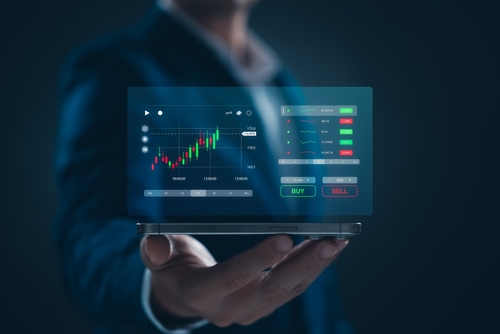
What Are Technical Indicators in Trading?
Technical indicators are essential tools used by traders to understand price movements and make more accurate decisions in financial markets.
Topic
Definition and Importance of Technical Indicators
Main Types of Technical Indicators
Definition and Importance of Technical Indicators
Technical indicators are mathematical formulas built on price data such as open, close, high, and low prices, in addition to trading volumes.
Their purpose is to help traders read trends, gauge momentum strength, and identify ideal entry and exit points.
They are widely used in stock markets, foreign exchange (forex), futures, and even cryptocurrencies.
Their importance lies in providing traders with deeper insights than simply looking at price movements on a chart,
as they help measure market sentiment and anticipate upcoming shifts.
Main Types of Technical Indicators
- Trend Indicators: such as Moving Averages, which show the general direction of price, whether upward or downward.
- Momentum Indicators: such as the Relative Strength Index (RSI) and MACD, which measure the speed and strength of price movements to identify overbought or oversold conditions.
- Volume Indicators: such as On-Balance Volume (OBV), which links trading volume to price movements to confirm trends.
- Oscillators: such as the Stochastic Oscillator, which help spot potential reversal points.
Advantages
- Ease of use: Provide clear numbers and charts that make it easier to interpret markets quickly.
- Variety of tools: Suitable indicators exist for different trading strategies, whether short-term or long-term.
- Trend confirmation: Help confirm entry and exit signals instead of relying solely on price movements.
- Risk management: Some indicators highlight overbought or oversold zones, reducing potential risks.
Disadvantages
- Lagging signals: Most indicators rely on historical data, sometimes causing delays compared to actual market movements.
- False signals: Indicators may produce misleading alerts, especially in sideways or low-volatility markets.
- Over-reliance: Depending solely on indicators can lead to poor decisions without considering fundamental analysis.
- Complexity when combined: Using too many indicators at once can create conflicting signals and complicate decision-making.
Conclusion:
Technical indicators are powerful tools, but they are not sufficient on their own.
It is advisable to combine them with other methods such as fundamental analysis and risk management for optimal results.
They are not magical tools that guarantee success, but when used properly alongside sound strategies,
they can strongly support trading decisions.
What Are Technical Indicators in Trading?