
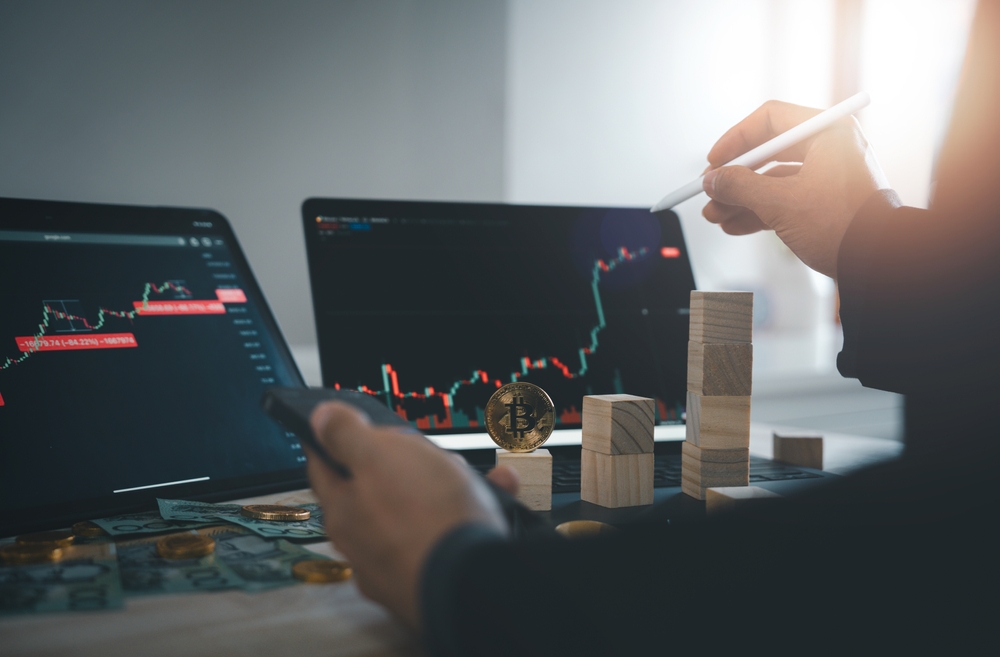
Spot trading is a straightforward method where assets are bought or sold for immediate delivery at the current market price. Unlike futures or forwards, trades occur instantly, with the “spot” price reflecting the asset’s value at the moment of execution. This applies to cryptocurrencies, forex, and commodities alike.
Many spot markets are highly liquid, particularly in forex and major cryptocurrencies, allowing quick transactions without major price impact, which is especially useful in volatile markets. Benefits include instant execution, pricing based on supply and demand, no margin requirements, and reduced overnight risk, making it ideal for short-term traders.
Spot Trading in Different Markets
The concept of spot trading applies across multiple financial markets, with immediate execution at current market prices. While the principle remains the same, each asset class has unique characteristics.
Cryptocurrency Spot Trading
In crypto markets, spot trading involves buying or selling digital assets like Bitcoin or Ethereum directly using fiat currency or stablecoins. Platforms such as digital trading platforms provide real-time order books with live bid and ask prices. Due to high volatility, traders often use trading signals for faster decision-making.
- Execution occurs instantly, while settlement typically happens within T+2 in traditional markets.
- No expiration dates or contract rollovers
- Generally lower fees than futures trading
- Wide range of trading pairs (crypto-to-crypto, crypto-to-stablecoin)
- Highly volatile market environment
Foreign Exchange (Forex) Spot Trading
Forex spot trading is the most liquid financial market globally. Traders exchange currency pairs like EUR/USD or USD/JPY at the current market rate. The market operates 24 hours a day, five days a week.
- Influenced by economic data, geopolitical events, and central bank policies
- Leverage is commonly used to increase position size
- Profits measured in pips (smallest price movements)
- Often combined with technical analysis
- High liquidity ensures tight spreads
Commodities Spot Trading
Commodities such as gold, oil, and agricultural products are traded at their current market value. Supply and demand dynamics and global events influence prices.
- Physical delivery possible (though often cash-settled)
- Prices benchmarked against exchanges like COMEX (gold) or NYMEX (oil)
- High liquidity in major commodities
- Often used as a hedge against inflation
- Influenced by production levels, weather, and geopolitical tensions
Key Takeaway
Across crypto, forex, and commodities, spot trading centers on immediate execution at prevailing market prices. The ability to respond quickly to market changes is what defines and differentiates spot trading from other trading methods.
Differences Between Spot Trading, Futures Trading, Options Trading, and Forward Contracts
| Comparison Point | Spot Trading | Futures Trading | Options Trading | Forward Contracts |
| Execution Timing | Immediate buy/sell at current market price | Agreement to trade at a future date | Right to trade within a specific timeframe | Agreement to trade at a future date |
| Ownership | Direct ownership of the asset | Contract based (derivative) | Contract based (derivative) | Private contract agreement |
| Obligation | Mandatory execution once trade is placed | Obligation to fulfill contract at expiration | Right, not obligation, to execute | Obligation to fulfill agreement |
| Trading Venue | Exchange-based markets | Standardized exchanges | Exchanges | Private over-the-counter (OTC) agreements |
| Complexity Level | Simple and straightforward | Moderate to complex | More complex (pricing models, premiums) | Customized and complex |
| Use of Leverage | Optional (depends on broker) | Commonly used | Often used | Depends on agreement terms |
| Best For | Direct asset exposure and real-time trading | Speculating on future prices or hedging | Hedging and strategic speculation | Large customized transactions |
Spot trading stands out for its simplicity, transparency, and immediate execution, making it ideal for traders who prefer direct market exposure without managing contract expirations.
Important Factors in Spot Trading
Leverage and Margin in Spot Trading
Spot trading can be simple, but some markets—especially cryptocurrency and forex—allow the use of leverage, amplifying both potential gains and losses.
- Leverage in Cryptocurrency Spot Trading
Platforms like crypto leverage trading enable users to trade with borrowed funds, often up to 10x–12x.- Example: Open a $10,000 position with $1,000 of your own capital.
- Risk: Increased exposure in volatile markets.
- Leverage in Forex Spot Trading
Retail traders can access high leverage, often 50:1 to 100:1 or more.- Example: Control a $50,000 position with $1,000 capital.
- Risk: Market moves against you can result in large losses; margin accounts facilitate this.
How Leverage Works:
- Traders borrow capital from a broker or exchange to increase position size.
- Borrowed funds are secured by the trader’s margin.
- Profits/losses are based on the full position, not just margin.
- Brokers may close positions automatically if losses exceed margin.
Risks of Leverage:
- Liquidation Risk: Position may be closed automatically, losing the entire margin.
- Volatility Exposure: Rapid price swings can magnify losses.
- Interest Costs: Borrowed funds may accrue interest, reducing net profit.
- Overtrading: Larger positions can lead to impulsive, emotionally driven decisions.
Traders using leverage should combine it with disciplined strategies and risk management. Educational resources and risk calculators on platforms like digital trading platforms can help navigate these complexities effectively.
Transaction Fees and Costs
Transaction fees are unavoidable in spot trading, and knowing them helps maximize profits. Fees vary by asset type, exchange, and broker, and frequent trading can increase costs significantly.
Common Types of Fees:
- Maker and Taker Fees: Charges for adding liquidity (maker) or removing it (taker).
- Spread: Difference between bid and ask prices.
- Commission Fees: Flat fee or percentage per trade.
- Withdrawal/Deposit Fees: Costs for moving funds in/out of accounts.
Cryptocurrency Spot Trading Fees
- Exchange Fees: Platforms like Binance or Coinbase charge maker-taker fees (0.1%–0.5%).
- Liquidity Incentives: Discounts for high-volume or liquidity-providing traders.
- Transaction Costs: Frequent trading can accumulate fees.
- Network Fees: Additional blockchain fees depending on network congestion.
Forex Spot Trading Fees
- Spread-Based Costs: Brokers profit from spreads, sometimes as low as 0.1 pips.
- Commission Models: ECN accounts may charge commissions on top of spreads.
- Overnight Fees: Rollover or swap fees for positions held overnight.
- Account Types: Different tiers offer varying spreads or fee structures.
Commodities Spot Trading Fees
- Exchange Fees: LME, COMEX charge membership and transaction fees.
- Brokers’ Commissions: Typically 0.5%–2% per trade.
- Storage/Delivery Costs: Extra for physical delivery or logistics.
- Benchmarking Costs: Fees for access to real-time price benchmarks.
Compare fee structures across platforms to reduce costs. For instance, forex traders using trading signals should select brokers with low spreads and commissions for better profitability.
Regulatory and Legal Considerations
Spot trading is subject to regulations that differ by asset type and jurisdiction. Compliance is essential to avoid legal issues, account restrictions, or penalties.
Cryptocurrency Spot Trading
- KYC/AML Requirements: Exchanges verify trader identities.
- Licensing: Platforms must be licensed by authorities (e.g., SEC in the U.S., MiCA in the EU).
- Tax Implications: Profits may be subject to capital gains tax.
- Market Manipulation Laws: Regulators monitor for wash trading, spoofing, and other manipulative practices.
Forex Spot Trading
- Broker Licensing: Brokers regulated by FCA (UK), CFTC (U.S.), ASIC (Australia).
- Leverage Restrictions: Some regions limit leverage (e.g., 30:1 in the EU).
- Negative Balance Protection: Prevents losses exceeding deposited funds.
- Transparency Requirements: Fee structures, spreads, and conflicts must be disclosed.
Commodities Spot Trading
- Exchange Oversight: Regulated by authorities like CFTC or FCA.
- Position Limits: Prevent market dominance by a single entity.
- Reporting Obligations: Large positions may need to be reported.
- Physical Settlement Rules: Trades with delivery must follow strict contract and logistics standards.
General Legal Considerations
- Age Restrictions: Most platforms require traders to be 18+.
- Residency Requirements: Some platforms limit access based on location.
- Account Verification: Incomplete KYC can lead to suspension.
- Fraud and Misrepresentation: Illegal practices carry severe consequences.
Stay updated on regulatory changes that may affect markets, such as U.S. or EU laws impacting crypto leverage trading. Platforms like Evest platforms provide compliance updates to navigate the legal landscape effectively.
What Is a Spot Price?
The spot price is the current market price at which an asset can be bought or sold for immediate delivery. It serves as the benchmark for all spot trades and reflects real-time supply and demand, unlike forward or futures prices, which anticipate future value.
Spot Price Across Asset Classes
- Cryptocurrency Spot Price: Immediate exchange rate between digital assets or crypto-to-fiat/stablecoin.
- Forex Spot Price: Current exchange rate between two currencies, updated continuously.
- Commodities Spot Price: Physical price of commodities like gold or oil, based on availability and demand.
How Spot Prices Are Determined
- Order Book Dynamics: Balance of buy and sell orders affects the price.
- Market Depth: High liquidity stabilizes the spot price.
- News and Events: Regulatory announcements or disasters can trigger sharp moves.
- Global Supply and Demand: Production levels, storage, and consumption trends influence commodity prices.
Factors That Influence Spot Prices
- Volatility: Cryptocurrencies and other volatile assets can change rapidly.
- Leverage Activity: Margin and leveraged trades amplify price movements.
- Seasonal Trends: Agricultural products fluctuate with planting or harvest periods.
- Geopolitical Risks: Conflicts or trade disputes affect commodities like oil and metals.
Traders often use the spot price as the primary reference for decisions, especially when following trading signals.
Definition of a Spot Price
The spot price is the current cost of an asset at the exact moment of trade, with immediate settlement. It reflects real-time market conditions and serves as a benchmark for both physical and digital markets.
Key Points About Spot Price:
- Immediate Settlement: Most assets settle within two business days (T+2), while crypto trades often settle instantly.
- No Future Contracts: Spot prices are based on current value, not future contracts or projections.
- Benchmark for Valuation: Influences derivatives, hedging strategies, and market pricing.
- Real-Time Data: Continuously updated to reflect market trends and participant activity.
Key Characteristics of Spot Prices:
- Liquidity-Driven: Highly traded assets tend to have more stable spot prices.
- Transparency: Prices are publicly visible on exchanges for all participants.
- Global Standardization: Commodities like gold and oil have standardized spot prices across major exchanges (e.g., COMEX, NYMEX)
- No Counterparty Risk: Immediate settlement eliminates the risk of default seen in future contracts.
Understanding the spot price is essential for traders. In crypto market trading, Bitcoin’s spot price against USD sets the basis for all orders. In forex, the spot price of EUR/USD determines the cost of converting euros to dollars instantly.
Difference Between Spot Trading and Derivatives Trading
| Aspect | Spot Trading | Derivatives Trading |
| Definition | Buying or selling assets for immediate delivery | Trading contracts (futures, options, swaps) derived from an underlying asset |
| Settlement | Immediate, usually within T+2 for most assets | Occurs at a future date, often requiring margin or leverage |
| Price Determination | Based on current supply and demand | Influenced by spot price of the underlying asset and market expectations |
| Complexity | Simple, no contracts or expiration dates | Higher complexity due to expiration, strike prices, and contract terms |
| Leverage | Sometimes available, generally lower | Often higher, amplifying potential gains and losses |
| Risk | Limited to immediate price movements | Higher due to leverage, time factors, and market speculation |
| Use Case | Short-term trading, direct asset ownership | Hedging, speculation, advanced strategies like spreads and options |
| Examples | Buying EUR/USD now, purchasing Bitcoin instantly | Futures on oil, options on stocks, swaps on interest rates |
| Regulation | Standard market rules, simpler compliance | Stricter regulations, margin requirements, reporting obligations |
| Best For | Traders seeking simplicity and immediate execution | Traders aiming to hedge, speculate, or use advanced strategies |
What’s the Difference Between a Spot Rate and a Forward Rate?
| Aspect | Spot Rate | Forward Rate |
| Definition | Current market price for immediate delivery | Agreed price for exchanging an asset at a future date |
| Usage | Spot trading for instant transactions | Forward contracts for future settlement |
| Time Value | No time value considered | Includes adjustments for interest rates, storage, or financing costs |
| Settlement | Usually within T+2 (two business days) | Occurs on a predetermined future date |
| Market Access | Publicly available on exchanges | Negotiated privately between parties (OTC) |
| Liquidity | Highly liquid markets | Less standardized, lower liquidity |
| Price Determination | Based on real-time supply and demand | Influenced by spot price plus future cost factors |
| Examples | EUR/USD at 1.1000 today | EUR/USD three-month forward at 1.1050 |
| Application | Immediate trading decisions | Hedging, speculation, and planning for future exposure |
| Complexity | Simple and straightforward | More complex due to time adjustments and contract terms |
Steps to Trading Spot Markets
Spot trading on the Evest platform gives traders a seamless way to buy and sell assets at current market prices with speed and transparency. The platform provides advanced tools, real-time data, and secure execution, making it ideal for both beginners and experienced traders looking to capitalize on immediate market opportunities.
- Analyze market conditions using Evest’s live charts and signals
- Open and fund your Evest trading account easily
- Develop a clear trading strategy with platform tools
- Determine position size and risk level
- Execute trades instantly with market, limit, or stop orders
- Monitor open positions in real time with dashboard alerts
- Set take-profit and stop-loss levels to manage risk
- Review past trades and optimize strategies with Evest insights
Spot Trading vs Futures Trading
| Feature | Spot Trading | Futures Trading |
| Definition | Immediate purchase or sale of an asset at the current market price | Agreement to buy or sell an asset at a predetermined price on a future date |
| Settlement | Usually within two business days (T+2) | Occurs on the contract’s expiration date |
| Leverage | Minimal or optional, depending on the platform | Often high, amplifying both gains and losses |
| Price Determination | Driven by current supply and demand | Influenced by spot price and market expectations for future movements |
| Complexity | Simple, direct ownership | Requires understanding of contract terms, margin, and expiration dates |
| Best Use | Short-term trades or immediate asset exposure | Hedging, speculation, or long-term strategies |
| Example on Evest | Quick entry and exit trades in crypto, forex, or commodities | Hedging price risk with futures contracts in commodities or crypto |
What Is the Settlement Period for Spot Trades?
The settlement period for spot trades refers to the time it takes for the transaction to be officially completed and ownership of the asset to be transferred from seller to buyer after the trade is executed.
Key Points:
- T+2 Settlement:
Most traditional markets (such as stocks and forex) follow a T+2 settlement cycle, meaning the trade settles two business days after the transaction date. - T+1 or Same-Day Settlement:
Some markets are moving to T+1 (one business day after trade date) to improve efficiency. - Cryptocurrency Settlement:
In crypto spot trading, settlement is often near-instant once the transaction is confirmed on the blockchain. - Commodities Settlement:
Financial spot commodities typically follow T+2, while physical delivery may involve additional logistical timelines. - Why Settlement Matters:
The settlement period affects cash availability, ownership transfer, and counterparty risk.
In short, while spot trades are executed immediately at the current price, the actual transfer of funds and assets usually completes within T+2, depending on the market.
FAQs
What is spot trading and how does it work?
Spot trading is the buying or selling of an asset at its current market price for immediate delivery. Trades are executed instantly, and settlement usually occurs within T+2 (or faster in crypto).
How is a spot price determined?
A spot price is determined by real-time supply and demand. It changes continuously based on buy and sell orders in the market.
What are the main differences between spot trading and futures trading?
Spot trading involves immediate ownership and settlement, while futures trading uses contracts for delivery at a future date and often includes leverage.
Which assets can be traded using spot trading?
Common assets include cryptocurrencies, forex pairs, stocks, and commodities like gold and oil.