
Investment Funds and Index Funds

Investment Funds and Index Funds

Choosing the right investment tool is crucial to achieving your financial goals.
The difference between Them lies in their management approach,
expected performance, and costs, making it essential for every investor to understand these distinctions.


Topic

Understanding

Key Differences in Performance and Costs

How to Choose Between Them

Conclusion


Understanding

Investment and index funds are popular investment tools that diversify portfolios and reduce risks.
However, they differ significantly regarding operation, objectives, and costs.

  • Investment Funds: These are actively managed by professional fund managers
    who select securities based on specific strategies to outperform the market.
  • Index Funds: These funds track the performance of a specific market index,
    such as the
    S&P 500 or MSCI, aiming to match the index’s performance rather than beat it.


Key Differences in Performance and Costs

  1. Fund Management:
    • Investment funds are actively managed, with fund managers continuously buying and selling assets.
    • Index funds are passively managed, simply replicating the components of the index they track.
  2. Costs:
    • Investment funds have higher costs due to management fees associated with analysis and portfolio management.
    • Index funds are much cheaper, as they require minimal active management.
  3. Expected Performance:
    • Investment funds may deliver higher returns if fund managers succeed in selecting the right investments but carry higher risks.
    • Index funds provide returns that align with market performance and are often considered a more stable option.


How to Choose Between Them

The choice between investment and index funds depends on your investment goals and risk tolerance.

  • If you aim for higher returns and can accept greater risks, investment funds might suit you.
  • If you prefer a low-cost, stable investment aligned with market performance, choose index funds as your ideal option.

Understanding these financial tools and how they work enables you to make the best decision for achieving your financial goals.


Conclusion

Whether you choose investment funds for higher potential returns or index funds for simplicity,
the primary goal remains to strike a balance between risk and reward.
Carefully assess your options to ensure they align with your financial plan and risk tolerance.



The Difference Between Opening Price and Closing Price

The Difference Between Opening Price and Closing Price in the Stock Market

They are two fundamental elements in stock trading.
To understand their differences,
let’s delve into the definition of each and their importance in market analysis.


Content


Opening Price

The opening price is the first price at which a stock is traded at the beginning of the trading session.
This price is determined by factors such as the accumulated buy and
sell orders before the session starts and market news influencing investor sentiment prior to opening.


Closing Price

The closing price is the last price at which a stock is traded at the end of the trading session.
It is an important reference point as it reflects the stock’s final daily performance.


The Difference

Timing

  • Opening Price: Set at the beginning of the session.
  • Closing Price: Recorded at the end of the session.


Influencing Factors

  • Opening Price: Affected by orders accumulated during the “pre-market” period.
  • Closing Price: Reflects the trading activity and events of the day.


Significance

  • Opening Price: Offers an early outlook on market expectations.
  • Closing Price: Used to analyze trends and assess the stock’s performance.


The Importance of Understanding the Differences

Knowing the difference between the two prices helps traders to:

  • Make informed decisions when determining entry and exit points.
  • Analyze historical stock data to evaluate future trends.
  • Understand the impact of news and announcements on trading activity.


Conclusion

The opening price and closing price are key indicators for any investor seeking to comprehend the dynamics of the stock market.
By understanding their differences and using them effectively,
Traders can develop more successful trading strategies.


The Difference Between CFD Trading and Stock Trading

The Difference Between CFD Trading and Stock Trading

Many investors are constantly seeking innovative ways to invest in financial markets.
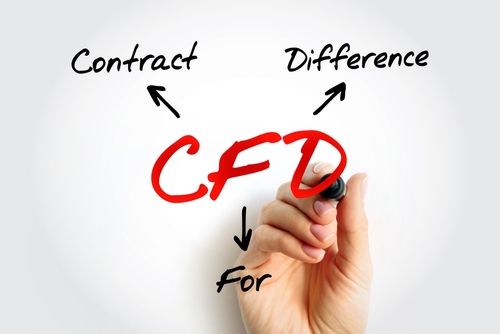
Among the available options, stock trading and Contract for Difference (CFD) trading stand out,
each offering unique advantages and drawbacks tailored to different types of investors.
In this article, we will explore the key differences between these two trading methods to help you make an informed decision.


Contents


Stocks

What is Stock Trading?

Stock trading involves buying and selling actual shares of companies listed on financial markets.
When you purchase a share, you become a partial owner of the company and can benefit from:

  • Dividends: If the company decides to distribute profits to shareholders.
  • Capital growth: If the stock’s value increases over time.


CFDs

What Are Contracts for Difference (CFDs)?

CFDs are derivative financial instruments that allow investors to trade on the price movements of various assets (such as stocks,
commodities, or currencies) without owning the actual underlying asset.
Key features of CFD trading include:

  • Leverage: Enables increased potential profits, but also amplifies potential losses.
  • Flexibility: The ability to trade on both rising and falling markets.


Differences

Between Stock Trading and CFD Trading

Criteria Stock Trading CFD Trading
Ownership Buying actual shares and owning a portion of the company. No ownership of the underlying asset.
Leverage Rarely available or very limited. High leverage available.
Fees and Costs Lower commissions and fees over the long term. Additional costs, such as spreads and overnight fees.
Risk Level Lower risk due to the absence of leverage. Higher risk due to price volatility and leverage.


Which Option Is Right for You?

  • Stock Trading: Suitable for long-term investors seeking stable investments.
  • CFD Trading: Ideal for experienced traders looking to capitalize on short-term market movements with greater flexibility.


Conclusion

Your choice between stock trading and CFD trading depends on your financial goals and market knowledge.
It is crucial to understand the differences and associated risks before engaging in any type of trading.


The Difference Between CFD Trading and Stock Trading

Temporal Analysis of Stocks: Key Concept for Investors

Temporal Analysis of Stocks: Key Concept for Investors: In the world of stock trading, the success of investors largely depends
on their ability to time their decisions accurately.
This is where the role of temporal analysis of stocks emerges as a critical tool for understanding market dynamics.
It helps identify time-based price trends and predict future movements,
enabling investors to make well-informed decisions.


Content


Temporal Analysis

Temporal analysis is an approach based on studying time patterns in stock price movements.
This type of analysis relies on the assumption that prices move in predictable cycles to some extent.
By analyzing historical data and identifying recurring patterns,
investors can determine the optimal times for buying and selling stocks.


Its Tools

  • Time Cycles: Used to identify time periods during which price increases or decreases are recurrent.
  • Moving Averages: Highlight the general price trend over a specific period.
  • Seasonality Analysis: Shows the impact of seasons or periodic events on price movements.
  • Fibonacci Time Zones: Assist in predicting future market reversal points.


Its Importance

  • Investment Planning: Helps investors determine the best timeframes for entering or exiting the market.
  • Risk Management: Reduces the likelihood of making random and uncalculated decisions.
  • Profit Maximization: Increases the chances of achieving higher returns by timing decisions accurately.


How Can Temporal Analysis Be Applied?

  • Study historical price data to identify long-term and short-term trends.
  • Use advanced analytical tools that leverage artificial intelligence and machine learning.
  • Combine temporal analysis with technical analysis for a comprehensive market view.


Challenges and Limitations

Despite its significance, temporal analysis faces certain limitations, such as:

  • Unpredictable Surprises: Such as economic news or geopolitical events.
  • Data Complexity: Requires expertise and advanced analytical tools to interpret patterns accurately.


Conclusion

Temporal analysis of stocks is a powerful tool that helps investors improve their investment decisions by understanding time patterns.
However, it should be used alongside other analytical tools to minimize risks and increase the chances of success.


Temporal Analysis of Stocks: Key Concept for Investors

The Difference Between a Financial and an Investment Portfolio

The Difference Between a Financial and an Investment Portfolio: Financial and investment portfolios are fundamental concepts in finance and investment.
However, individuals often confuse them.
This article aims to clarify the differences and help investors understand how to manage their money more effectively.


Content

  1. Financial Portfolio
  2. Investment Portfolio
  3. Key Differences


Financial Portfolio

What is a Financial Portfolio?

A financial portfolio refers to the total financial assets owned by an individual or organization, which may include:

  • Cash: Funds deposited in bank accounts or readily available cash.
  • Short-term securities: Such as treasury bills or certificates of deposit.
  • Savings: Money set aside for emergencies or future expenses.


Characteristics of a Financial Portfolio:
  • Aims to provide immediate liquidity and meet daily financial needs.
  • Features lower risk compared to long-term investments.
  • Serves as a tool to preserve capital and ensure short-term financial stability.


Investment Portfolio

What is an Investment Portfolio?

An investment portfolio is a collection of investment assets designed to generate long-term financial returns.
These assets may include:

  • Stocks: Ownership shares in companies.
  • Bonds: Debt instruments that offer fixed returns.
  • Real estate: Investments in property assets.
  • Alternative assets: Such as gold and cryptocurrencies.


Characteristics of an Investment Portfolio:
  • Focuses on growing capital and increasing returns.
  • Entails a higher level of risk compared to a financial portfolio.
  • Built using strategies aligned with an investor’s goals (e.g., diversification and hedging).


Key Differences

The Main Differences Between the Two Portfolios

Aspect Financial Portfolio Investment Portfolio
Objective Managing liquidity and daily needs Achieving long-term financial returns
Risk Low Medium to high
Assets Cash and fixed-income instruments Stocks, bonds, real estate
Time Frame Short-term Long-term


How to Manage Both Portfolios Together?

To achieve financial balance, it is advisable for an investor to have both types of portfolios:

  1. Financial Portfolio: To cover daily expenses and emergencies.
  2. Investment Portfolio: To grow wealth and meet future goals.


Tips for Effective Management:
  • Clearly define your financial objectives.
  • Allocate your assets according to your risk tolerance.
  • Regularly review your investment portfolio to ensure alignment with your goals.


Conclusion

Financial and investment portfolios complement each other in managing personal finances.
The former focuses on security and liquidity, while the latter seeks growth and returns.
Understanding their differences helps you make better financial and investment decisions that address your current and future needs.

If you need advice on building your portfolio, don’t hesitate to seek guidance from financial and investment experts.


The Difference Between a Financial and an Investment Portfolio

The Difference Between Stocks and Cryptocurrencies

Investing in stocks and cryptocurrencies are among the most popular options for investors today.
While both share the idea of profiting through speculation or trading,
there are fundamental differences between them that investors must understand before making financial decisions.


Topic

The Difference

Conclusion


The Difference

Nature of Assets

  • Stocks: These are ownership shares in companies traded on exchanges.
    When you buy a stock, you own a part of the company.
  • Cryptocurrencies: These are digital assets based on blockchain technology.
    They don’t represent ownership in a company but derive their value from supply, demand, and the technology behind them.


Regulation and Oversight

  • Stocks: They are regulated by government laws and regulatory bodies such as the Securities and Exchange Commission (SEC).
  • Cryptocurrencies: In many countries, cryptocurrencies still lack full regulation, which increases their risks in some markets.


Volatility and Market

  • Stocks: Stock markets are affected by economic, political, and business factors.
    Stock prices tend to be less volatile compared to cryptocurrencies.
  • Cryptocurrencies: Known for their high volatility, their values can rise or fall sharply in short periods,
    making them a high-risk investment.


Technology and Support

  • Stocks: Stocks depend on the actual performance and profits of the listed companies.
    They are supported by the real economy.
  • Cryptocurrencies: These rely on blockchain technology and the community that supports their use.
    Their value is often driven by user trust and the underlying technology.


Liquidity and Accessibility

  • Stocks: Stocks can be easily bought and sold on global markets like the NYSE or NASDAQ. Stock liquidity is typically high.
  • Cryptocurrencies: Cryptocurrencies can be traded on many digital exchanges,
    but some may face liquidity issues or difficulty in quick access to funds.


Risks and Returns

  • Stocks: Returns tend to be more stable in the long term,
    but there are risks associated with market fluctuations and poor company performance.
  • Cryptocurrencies: While they offer high potential profits, they also come with significant risks due to volatility and uncertainty about their future.


Conclusion

Understanding the differences between stocks and cryptocurrencies is crucial for any investor looking to succeed in financial markets.
Choosing the right investment depends on personal goals, risk tolerance, and a deep understanding of each asset type.


Spot Contracts: What Are They

Spot contracts are widely traded financial instruments in global financial markets.
However, many people are unfamiliar with their details, how they operate, and their rulings from an Islamic perspective.
In this article, we will explore the concept of spot contracts,
how they are traded, and whether they are compliant with Islamic law.


Content


Contract Details


What Are Spot Contracts

It  a type of contract in which the transaction is settled immediately or within a short period of time.
Unlike futures contracts, which require waiting until the settlement date,
spot contracts are executed instantly or very soon after the agreement.
This type of contract is commonly used in commodity markets, such as oil, gold, and foreign currencies.


How Are Spot Contracts Traded?

The trading process for spot contracts is relatively simple.
Both parties agree on the price of the commodity or financial asset at a specific moment,
and the transaction is executed immediately or within a short specified time.
The commodity is delivered, or the transaction is settled in cash according to the agreed-upon terms.


Shariah Perspective

Are Spot Contracts Halal?

From a Shariah perspective, the ruling on spot contracts is an important topic, as it depends on the terms and details of the transaction.
One of the principles of Islamic law is that contracts must be free from
riba (usury) and gharar (uncertainty).
In the case of It , if the transaction is conducted transparently
and does not involve interest, it can be considered halal.
However, it is essential to consult with a qualified Islamic scholar to ensure that the specific details of the contract comply with Shariah.


The Difference Between Spot Contracts and Futures Contracts

It differ from futures contracts in terms of settlement time.
While spot contracts are settled immediately or within a short period, futures contracts require waiting until a specified date.
Futures contracts often include additional terms, such as storage costs or deferred payment interest,
frequently making them incompatible with Islamic law.


Conclusion

It are critical financial tools that investors can benefit from,
but it is crucial to understand their nature and ensure they comply with Islamic law.
To achieve this, investors should review the details of the contracts and ensure
that there are no elements that would make them impermissible.


Long-Term Stock Investment

Long-Term Stock Investment

Investing in long-term stocks is one of the most effective strategies for building wealth over time.
This type of investment requires patience and commitment,
as it relies on the gradual growth of stocks and dividend distributions over time.
In this article, we will discuss the key factors that make long-term investment a wise choice for many investors.


Content
Factors
Conclusion


Factors

  1. Focusing on Companies with Strong Fundamentals
    When investing in long-term stocks, it is crucial to choose companies with solid financial foundations and clear growth strategies.
    Large, stable companies often perform well in the long run due to their ability to adapt to various economic conditions.
  2. Benefiting from Market Growth Over Time
    Despite short-term market fluctuations, history shows that stock markets tend to rise in the long run.
    Therefore, patience and avoiding the rush to sell during downturns are essential to achieving significant returns.
  3. The Role of Dividends
    Dividends play a vital role in the returns of long-term stock investments. Companies that generate sustainable profits and tend to distribute a portion of those profits to shareholders are more stable and offer continuous cash flow to investors, enhancing total returns.
  4. Risk Management
    Even in long-term investments, it is important to diversify the portfolio to reduce risks. Investors should spread their investments across different sectors and stocks to ensure they are not heavily impacted by the underperformance of a single sector.
  5. Maintaining a Long-Term Strategy
    One of the key factors for success in long-term investing is sticking to the plan and not being influenced by emotions. The market may experience significant volatility, but investors who remain committed to their investment strategies often achieve greater success.


Conclusion

Investing in long-term stocks is one of the most successful strategies for building wealth, but it requires patience, discipline, and the ability to properly analyze stocks and companies. By following a well-thought-out investment approach and focusing on fundamental factors, investors can achieve significant returns over the years.


Long-Term Stock Investment

Which is Better for Preserving Wealth, Gold or the Dollar?

Which is Better for Preserving Wealth, Gold or the Dollar?

When it comes to preserving wealth and saving, many investors face an important choice: Is it better to invest in gold or hold onto dollars? Each option has its own advantages and challenges, and the decision depends on various economic and financial factors.


Topic

Gold as a Safe Haven

The Dollar and Fiat Currencies

Comparison

Conclusion


Gold as a Safe Haven

  • Long-term stability: Gold is considered a safe haven in times of economic uncertainty, retaining its value even during inflation or deflation periods.
  • Protection from inflation: When currency values decline, demand for gold increases as a wealth-preserving asset.
  • Lower risk, lower returns: Although gold is stable, its returns are not as high as other investments, but it remains a safe long-term option.


The Dollar and Fiat Currencies

  • Liquidity and flexibility: The dollar provides quick liquidity and is easy to use in everyday transactions, also serving as the world’s primary reserve currency.
  • Market fluctuations: The dollar can be affected by inflation and monetary policies, and may lose purchasing power over time.
  • Other investment opportunities: Holding dollars can open doors to other investments like real estate and stocks, but it requires constant market monitoring.


Comparison

Between Gold and the Dollar

  • Safety: Gold offers more safety during crises compared to the dollar.
  • Returns: The dollar may be more beneficial for short- to medium-term investments.
  • Volatility: Gold is less volatile during times of crisis, while the dollar can be heavily influenced by economic and political events.


Conclusion

In the end, the choice between gold and the dollar depends on the investor’s financial goals and the surrounding economic conditions. For those seeking safety and protection from inflation, gold is an excellent option. On the other hand, for those looking to leverage liquidity and investment opportunities, the dollar can be a suitable choice, but one must be mindful of its volatility risks.


Which is Better for Preserving Wealth, Gold or the Dollar?

What is Stock Hedging?

What is Stock Hedging?

Hedging is one of the most important tools used by investors in the stock market to protect their investments from potential losses.
But what exactly is stock hedging, and how can it be applied to safeguard an investment portfolio from market volatility?


Topic

Hedging

Benefits and Risks


Hedging


Definition of Stock Hedging

Hedging is a strategy aimed at reducing risk by taking opposite positions to current investments.
Simply put, it’s a way to insure against potential losses in a stock portfolio.
Investors use financial instruments such as options and futures contracts to achieve this goal.


Why is Hedging Used?

  • Protection from Market Volatility: This strategy protects investors from sharp fluctuations that may lead to a decline in stock value.
  • Risk Mitigation: Hedging helps reduce the risk of capital loss without having to liquidate the entire portfolio.
  • Stability: It provides greater stability for investors and reduces the impact of unexpected events such as economic crises.


How to Apply Hedging in Stocks

  1. Using Options:
    • Put Options: These give the investor the right to sell stocks at a certain price, offering protection against price declines.
    • Call Options: Can be used to profit from anticipated price increases, offsetting losses in other assets.
  2. Using Futures Contracts:
    • Futures allow investors to lock in a specific price to buy or sell assets in the future, reducing the impact of price volatility.
  3. Short Selling:
    • Some investors use this strategy to sell stocks they expect to drop in value, allowing them to profit even when the market declines.


Benefits and Risks

  • Benefits:
    • Reduces potential losses.
    • Provides additional protection for the portfolio.
    • Allows for profit even in bear markets.
  • Risks:
    • Hedging costs (such as commissions and contracts) can reduce final returns.
    • Some tools used for hedging can be complex and require extensive financial expertise.


When to Use Hedging?

  • When an investor expects significant market fluctuations.
  • In case of holding a large portfolio with diverse stocks that may be affected by price volatility.
  • During unexpected political or economic events that may impact the market.


Conclusion

Stock hedging is a powerful tool that helps investors protect their portfolios from unforeseen risks.
However, it requires a deep understanding of the market and the financial instruments available.
Smart use of hedging can be key to maintaining portfolio stability and achieving long-term investment goals.


What is Stock Hedging?