
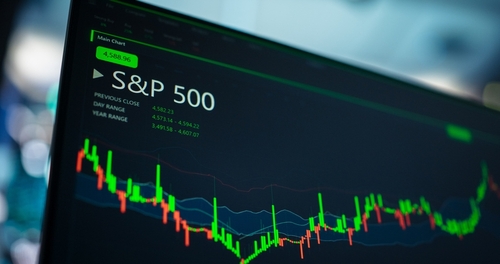
What is the S&P 500 Standard & Poor: A Comprehensive Guide

What is the S&P 500 Standard & Poor: A Comprehensive Guide

The S&P 500 is one of the most prominent stock market indices globally and
serves as a key benchmark for evaluating the performance of the U.S. market.
This index represents the performance of 500 of the largest publicly traded companies in the New York Stock Exchange and NASDAQ.
In this article, we will explore the details of the S&P 500, how it operates, and its importance to investors and the market.


Topic

Definition of It

How IT Works

Companies Included in IT

Importance of It

How to Invest in It

Risks and Benefits

Conclusion


Definition of It

The S&P 500, which stands for “Standard & Poor’s 500,”
is a market index that represents the performance of 500 of the largest American companies listed on major stock exchanges.
The index includes companies from various sectors, such as technology, finance, healthcare, and consumer goods.


How IT Works

The S&P 500 Index is calculated using a market capitalization-weighted system.
This means larger companies with higher market values have a greater impact on the index’s movement.
The index adjusts its composition based on the market capitalization of the companies,
so major companies like Apple and Microsoft significantly influence its performance.


Companies Included in IT

The S&P 500 Index includes a diverse range of prominent companies, such as:


Importance of It

The S&P 500 is a crucial index that investors and analysts use to gauge the performance of the U.S. market. It is notable for several reasons:

  • Comprehensive Market Indicator: Reflects the performance of a broad range of companies, making it an important measure of overall market health.
  • Benchmarking Tool: Used as a benchmark for mutual and exchange-traded funds (ETFs) that track the U.S. market performance.
  • Investment Option: A popular investment choice, investors can buy ETFs that track the S&P 500 to benefit from the index’s performance.


How to Invest in It

Investors can participate in the S&P 500 in several ways:

  • Buying Individual Stocks: Investing directly in the individual stocks that are part of the index.
  • Investing in ETFs: One option is to buy the SPDR S&P 500 ETF (SPY), which tracks the index’s performance.
  • Mutual Funds: Investing in mutual funds with a portfolio of stocks included in the index.


Risks and Benefits

Like any investment, investing in the S&P 500 comes with its risks, such as:

  • Market Volatility: The index can experience significant fluctuations due to economic or political events.
  • Impact of Large Companies: Major companies with significant weight in the index can greatly affect its performance.

However, investing in the S&P 500 also offers several benefits, including:

  • Diversification: Represents a diverse range of companies, reducing the risk of investing in a single company.
  • Good Growth Potential: This includes leading companies in the U.S. economy that offer potential for growth.


Conclusion

The S&P 500 is an essential tool for assessing the performance of the U.S. market and serves as a key reference for investors.
By understanding how the index operates and how to invest in it,
Investors can make informed decisions and achieve their financial goals better.


What is the S&P 500 Standard & Poor: A Comprehensive Guide

U.S. Bank Stocks Stumble After Earnings Fall Short of Expectations

U.S. Bank Stocks Stumble After Earnings Fall Short of Expectations: The sector’s stocks struggle with overly high expectations for significant bank valuations.
The stocks of the largest U.S. banks have outperformed the broader market this year,
but this rise has halted due to results that disappointed investors.


Contents

Loss of Momentum

Results Insufficient to Maintain Momentum

Performance of Wells Fargo and Citigroup
Overly High Expectations


Loss of Momentum

Wells Fargo & Co. is headed for its worst decline on an earnings announcement day over three years after failing to achieve the expected net interest income.
Citigroup shares also fell, with a focus on expenses, even though its market revenues exceeded expectations.
Meanwhile, JPMorgan Chase & Co., whose shares saw the most significant drop a month after its results and stable guidance disappointed investors,
is set to recover some of those losses early in the session.


Results Insufficient to Maintain Momentum

In short, the results were insufficient to maintain momentum after a series of gains
led all stocks to rise more than 20% this year up until the day before yesterday’s close,
compared to the S&P 500‘s 17% gain. The moves were strong, especially considering yesterday’s broader market’s rise,
with about 425 stocks in the S&P 500 index posting gains.

Art Hogan, Chief Market Strategist at B. Riley Wealth, explained,
“The stocks of all three companies that announced results have risen significantly yearly.
This significant increase puts you where you have reached the maximum price range.”
The three stocks fell after the first quarter results announcement,

highlighting how profits increasingly pose a hurdle for the sector amid rising valuations.


Performance of Wells Fargo and Citigroup

Wells Fargo’s stock is the worst performer among index stocks during the trading session,
with shares falling as much as 7.6%, marking the most significant one-day decline since March 2023.
The giant lending institution warned in its earnings report that it will not be able to reduce costs
this year as quickly as expected after recording higher-than-expected expenses in the second quarter.
Citigroup’s stock also declined, ranking among the 10 worst performers in the S&P 500 index, dropping by 3.6%.


Overly High Expectations

The shares of the largest U.S. banks have seen significant gains in 2024 amid optimism about the Federal Reserve cutting interest rates,
the continued strength of the U.S. economy, and the potential easing of restrictive regulatory proposals.
While they remain significantly elevated despite yesterday’s session declines,
second-quarter results highlight the possible risks facing the banking group after heightened expectations.
Bank of America, Goldman Sachs Group, and Morgan Stanley will be in the spotlight early next week as they release their results.


U.S. Bank Stocks Stumble After Earnings Fall Short of Expectations

US stocks close at record highs

US stocks close at record highs: As The earnings season approaches, the S&P 500 index reached a record level,

at the time that index rose slightly amid caution before the five largest companies announced their earnings.


Topics

US stocks close at record highs  

Oil stability

Evergrande liquidation


US stocks close at record highs  

Traders are anticipating a wave of companies’ earnings announcements,

that are expected to significantly influence the direction of the markets over the coming months.
After a strong rise that led to the
S&P 500 index reaching a record level,

the index witnessed a slight rise in light of the state of caution before announcing

the results of five large companies with a market value exceeding 10 trillion dollars.

Before the Federal Reserve’s decision,
the US Treasury was expected to reveal an increase in its sales of long-term bonds,
threatening higher yields and putting pressure on growth stocks.

On the other hand, the S&P 500 index rose around 4,900 points,
while
Amazon retreated from its acquisition of iRobot Corp. for $1.4 billion.
Yields on 10-year Treasury bonds fell, as investors watch for more profit-taking.

Fundamentally, US economic data remains positive,
and the Fed is expected to feel comfortable cutting interest rates starting in May,
despite further signals on economic stability are needed.


Oil stability

Brent crude futures currently stand at $83.26 per barrel,
after hitting the highest level since November 29 at $82.06 per barrel earlier.

Likewise, West Texas Intermediate crude futures remain at $76.90 per barrel.

Russian oil refineries were attacked by Ukrainian drones,

affecting their production and the outlook for exports of refined products.

Data from the shipping company LSEG indicated that Russia was reducing exports of the petrochemical naphtha,
which could lead to a significant reduction in the volume of its exports.


Evergrande liquidation

On the demand front, oil demand expectations were affected by the Hong Kong court’s decision to liquidate the Evergrande Group,
which affected demand in the world’s largest oil importer.
The OPEC+ member states meeting is scheduled for February,

yet expectations indicate that there will be no new decisions on production policy.

Oil prices remain under the influence of these movements and volatile market expectations.


US stocks close at record highs