Why is the Cost of Developing Artificial Intelligence So High?

Why is the Cost of Developing Artificial Intelligence So High?

The push towards larger AI models, coupled with the increasing need for chips and data centers,
is driving up costs for tech companies.


Topic

details

Massive Investments for Early Gains

Rising AI Costs: Bigger Models and Increasing Demand

Large Language Models Require Massive Investments

Chip and Computing Costs: Major Investments in Advanced Technology

Renting Chips: Another Expensive Option

Conclusion


details

After more than 18 months of intense focus on generative AI,
some of the biggest tech companies have shown that this technology can be a real revenue source.
However, it also represents a significant expense.
Microsoft and Google’s parent company, Alphabet,
both reported increases in cloud services revenue in their latest quarterly results,
with customers spending more on AI services.
Meta Platforms indicated that its AI efforts have enhanced user engagement and ad targeting,
although it is still far from making substantial profits from this technology.


Massive Investments for Early Gains

The three companies have spent billions on AI development to achieve these early gains and plan to increase these investments.
On April 25, Microsoft announced that its capital expenditures reached $14 billion in the last quarter,
a 79% increase from the previous year’s quarter was partly driven by AI infrastructure investments.
Alphabet spent $12 billion during the same quarter, a 91% increase from the previous year,
and expects spending to remain at the same level or higher for the rest of the year,
focusing on AI opportunities.
Meanwhile, Meta raised its investment estimates for the year,
now projecting capital expenditures to range between $35 billion to $40 billion,
a 42% increase at the upper end of the range.


Rising AI Costs: Bigger Models and Increasing Demand

The rising cost of AI has surprised some investors,
with Meta’s stock falling in response to spending projections paired with slower-than-expected sales growth.
However, within the tech industry, it has long been known that AI costs would rise.
This is due to two main reasons: AI models are becoming larger and more expensive to develop,
and the global demand for AI services necessitates building more data centers to support them.


Large Language Models Require Massive Investments

Today’s most popular AI products, like OpenAI’s ChatGPT,
rely on large language models, systems fed with massive amounts of data to provide the best possible responses to user queries.
Many leading AI companies are betting that the path to more advanced AI,
and possibly systems capable of surpassing humans in many tasks, lies in making these large language models even bigger. This requires more data, computational power, and longer training periods.
Dario Amodei, CEO of Anthropic, a competitor to OpenAI, stated that current AI models cost around $100 million to train, with future models potentially costing $1 billion, and between $5 billion to $10 billion by 2025 and 2026.


Chip and Computing Costs: Major Investments in Advanced Technology

A significant portion of the cost is tied to chips, not the usual CPUs but powerful GPUs that can process vast amounts of data at high speeds, like Nvidia’s H100 chip, which sells for about $30,000.
Major tech companies need many of these chips; Meta’s CEO Mark Zuckerberg stated that his company plans to acquire 350,000 H100 chips by the end of the year to support its AI research.


Renting Chips: Another Expensive Option

Companies can avoid buying physical chips by renting them, but this is also costly.
Renting Nvidia’s H100 chip sets costs about $100 per hour.
Nvidia revealed a new processor design called Blackwell,
which is highly efficient at handling large language models and is expected to be priced similarly to the Hopper chip line, which includes the H100.
Nvidia stated that it would take around 2,000 Blackwell GPUs to train an AI model with 1.8 trillion parameters,
the estimated size of OpenAI’s ChatGPT-4. In comparison, it would take 8,000 Hopper GPUs to perform the same task.


Conclusion

Ultimately, the tech industry is pushing towards building larger and more advanced AI models,
significantly increasing costs.
Despite the high expenses, companies continue to invest heavily in developing this technology to achieve potential future gains.


Why is the Cost of Developing Artificial Intelligence So High?

Day Trading Strategies

Day Trading Strategies – Mastering Real-Time Market Operations

Day trading is one of the most popular trading strategies, involving buying
and selling financial assets within the same day.
Day traders rely on daily market fluctuations to achieve quick profits. In this article,
we will cover the basics needed to succeed in day trading.


Topic

What is Day Trading

Day Trading Tools

Day Trading Tips


What is Day Trading

Day trading involves the purchase and sale of financial assets like stocks,
currencies, or futures within a single trading day.
It aim to profit from small price movements that occur throughout the day.


Day Trading Tools

  1. Technical Analysis: Technical analysis is a fundamental tool for day traders.
    It uses charts and technical indicators such as moving averages, Relative Strength Index (RSI),
    and Bollinger Bands to identify optimal entry and exit points.
  2. Stop-Loss Orders: To protect capital from significant losses,
    traders use stop-loss orders to close positions at predefined levels.
  3. Leverage Trading: Leverage is used to amplify potential returns. However,
    it also increases risks, so it should be used cautiously.


Day Trading Tips

  • Proper Planning: Before starting to trade, it is crucial to develop a trading plan that includes daily goals and risk-reward ratios.
  • Stick to the Plan: Discipline is key. Day traders must stick to their plan and avoid emotional decisions.
  • Continuous Learning: The market is constantly changing, so day traders should stay updated with economic news and continuously enhance their knowledge.


What is a Margin Call in Trading?

In the world of financial trading, a “margin call” is a fundamental term that every trader must understand thoroughly.
A margin call is a notification sent by a broker to a trader,
requiring the trader to deposit additional funds into their trading account.
This occurs when the value of the account’s assets falls below a certain level, known as the “maintenance margin.”


Topic

How Does a Margin Call Occur

When Does a Margin Call Happen

Actions Taken During a Margin Call

Importance of Risk Management


How Does a Margin Call Occur

To understand how a margin call occurs, one must first grasp the concept of margin in trading.
When trading on margin, the trader borrows money from the broker to increase the size of the trade.
This borrowing is covered by a portion of the trader’s own capital, known as the “initial margin.”

Example: If a trader has $1,000 in their account and wants to purchase assets worth $10,000,
they use margin to borrow the difference ($9,000) from the broker. In this case, the margin requirement is 10%.


When Does a Margin Call Happen

A margin call happens when the value of the assets purchased on margin falls
to a level where the trader’s own capital is insufficient to cover potential losses.
For example, if the value of the assets purchased for $10,000 drops to $8,000,
the broker may require the trader to deposit additional funds to cover the difference and ensure that the account’s value still covers the borrowing.


Actions Taken During a Margin Call

When a margin call occurs, the trader has several options:

  1. Deposit Additional Funds: The trader can deposit more money into their account to increase the available margin and cover the shortfall.
  2. Close Some Open Positions: The trader can choose to close some of their trades to reduce the amount borrowed and the potential risk.
  3. Ignore the Margin Call: If the trader ignores the margin call, the broker may automatically sell some assets in the account to cover the required margin.


Importance of Risk Management

A margin call highlights the importance of risk management in trading.
Traders must regularly monitor their accounts and ensure they have enough margin to cover their open positions.
Using risk management tools like stop-loss orders can help avoid reaching the margin call stage.


In conclusion

a margin call is an integral part of margin trading and serves as a warning to traders about the risks of borrowing money to increase trade size.
By thoroughly understanding how margin calls work and effectively managing risks,
traders can improve their performance and reduce potential risks in the financial markets.


What is a Chart and How to Read It in Trading

What is a Chart and How to Read It in Trading

Charts are essential visual tools in the world of trading, used to analyze financial data
and make informed decisions about buying and selling.
They provide valuable insights into price movements and
potential future trends of financial assets like stocks, currencies, and commodities.
In this article, we will discuss the types of charts used in trading and how to read them effectively.


Topic

Types of Charts in Trading

How to Read Charts in Trading

Conclusion


Types of Charts in Trading

  1. Line Chart:
    • Description: Displays price over time as points connected by lines.
    • Usage: Used to show general trends and price movements over a specific period. Preferred by traders who need a clear and simple view of long-term trends.
  2. Candlestick Chart:
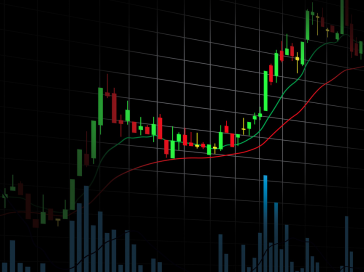
    • Description: Shows the open, close, high, and low prices for a specific period. Each “candle” consists of a body and upper and lower shadows.
    • Usage: Widely used to read patterns and predict future price movements. Candlestick charts provide more detailed information about price action compared to line charts.
  3. Bar Chart:
    • Description: Similar to the candlestick chart but uses bars to display price ranges.
    • Usage: Also used for analyzing trends and price movements, focusing on the high and low prices for each period.
  4. Point and Figure Chart:
    • Description: Focuses on significant price movements and ignores time.
    • Usage: Useful for identifying support and resistance levels and strong trends.


How to Read Charts in Trading

To read charts effectively in trading, follow these steps:

  1. Understand the Axes:
    • Horizontal Axis (X): Represents time (day, week, month, etc.).
    • Vertical Axis (Y): Represents price or financial value.
  2. Identify Trends:
    • Uptrend: A series of higher highs and higher lows.
    • Downtrend: A series of lower highs and lower lows.
    • Sideways Trend: Price movements within a narrow range without a clear direction.
  3. Use Technical Indicators:
    • Moving Averages: Help identify general trends and filter out noise.
    • Relative Strength Index (RSI): Measures momentum and can indicate overbought or oversold conditions.
    • Moving Average Convergence Divergence (MACD): Helps identify optimal entry and exit points.
  4. Read Patterns:
    • Candlestick Patterns: Such as hammer, shooting star, morning star, and evening star.
    • Chart Patterns: Such as head and shoulders, double bottoms, and flags.


Conclusion

Charts are indispensable tools in the trading world, providing valuable insights into price movements and potential future trends. By understanding the different types of charts and how to read them, traders can improve their ability to make informed decisions and increase their chances of success in financial markets. Always ensure to use a variety of tools and indicators to analyze charts comprehensively, and don’t forget to manage risks carefully to achieve positive results in the long term.


What is a Chart and How to Read It in Trading

What is Earnings Per Share (EPS)?

What is Earnings Per Share (EPS)? Is one of the most important financial indicators used to evaluate a company’s performance.
It reflects a company’s profitability for each of its outstanding shares.
EPS is a fundamental metric for investors to analyze and compare the financial performance of different companies.
Let’s delve deeper into the concept of EPS,
how it is calculated, and its importance.


Topic

Concept of Earnings Per Share

How to Calculate Earnings Per Share

Types of Earnings Per Share

Importance of Earnings Per Share

Conclusion


Concept of Earnings Per Share

EPS measures the profit a company has made on each share.

Calculate EPS by dividing the company’s net profit (after tax) by the number of outstanding common shares.

This indicator reflects how efficiently a company is generating profit for its shareholders.
The higher the EPS value, the better the company’s performance.


How to Calculate Earnings Per Share

EPS can be calculated using the following formula:

Earnings Per Share=Net ProfitNumber of Outstanding Shares

Earnings Per Share=

Number of Outstanding Shares \ Net Profit

Example:

If a company makes a net profit of $1,000,000 and has 500,000 outstanding shares, the EPS would be:

EPS=1,000,000 \ 500,000=2 dollars per share

EPS=

1,000,000 \500000

=2 dollars per share


Types of Earnings Per Share

  • Basic EPS: Calculated using the number of outstanding common shares without considering
    any potential impact from convertible securities, such as preferred shares or convertible bonds.


  • Diluted EPS : This measure takes into account the impact of convertible securities
    which can increase the number of outstanding shares in the future, potentially leading to a reduction in EPS.


Importance of EPS

  • Performance Evaluation: EPS is a crucial measure for
    evaluating and comparing a company’s performance with other companies in the same sector.
  • Investment Decisions: Helps investors make informed decisions about buying or selling shares based on the company’s profitability.
  • Profitability Analysis: EPS can be used to analyze a company’s profitability over time by comparing EPS across different years.
  • Dividend Distribution: Some companies use EPS to determine dividend distributions to shareholders,
    where an increase in EPS can lead to higher dividend payouts.


Conclusion

EPS is an essential financial tool that provides deep insight into a company’s performance and profitability.
Investors should pay close attention to this indicator when analyzing various investment opportunities.
Understanding EPS can help you make smarter and more effective investment decisions.


What is Earnings Per Share (EPS)?

Pip in Trading: Its Concept and Importance in Financial Markets

Pip in Trading: Its Concept and Importance in Financial Markets

In the trading world, traders must understand various terms and concepts to succeed.
One essential term is the “pip.”
The pip is a crucial concept in trading as it represents the basic unit of measurement for changes in currency value.


Topic

What is a Pip

Importance of a Pip in Trading

How to Calculate the Value of a Pip

Examples of Pip Calculation

Conclusion


What is a Pip

A pip stands for “Percentage in Point” or “Price Interest Point,”
representing the smallest unit change in a currency’s price.
In most currency pairs, a pip equals 0.0001, the fourth decimal place.
The notable exception is currency pairs involving the Japanese yen (JPY),
where a pip equals 0.01.


Importance of a Pip in Trading

Measuring Profit and Loss:

  1. The pip is the fundamental unit traders use to calculate profit and loss.
    When the price of a currency pair moves by one pip, this change can directly affect the value of the trade.

Calculating Costs:

  1. A pip helps calculate trading costs like spreads and commissions.
    The spread is the difference between a currency pair’s bid and ask price, measured in pips.

Risk Management:

  1. Pips can be used to set stop-loss and take-profit levels.
    Traders can manage risk more effectively by setting a certain number of pips as a maximum loss or gain.


How to Calculate the Value of a Pip

The value of a pip varies depending on the currency pair and the trade size. For currency pairs where the quote currency is the US dollar, one pip equals 0.0001 dollars. For example, with a contract size of 100,000 units (1 standard lot), one pip equals $10.

To calculate the pip value for any currency pair, you can use the following formula:

Pip Value=(Contract Size×Pip Change)/Current Exchange Rate

Pip Value=(Contract Size×Pip Change)/Current Exchange Rate


Examples of Pip Calculation

EUR/USD Pair:

If the current exchange rate is 1.1200, and the contract size is 100,000 units, the pip value would be:

  1. \text{Pip Value} = (100,000 \times 0.0001) / 1.1200 = $8.93

USD/JPY Pair:

If the current exchange rate is 110.00, and the contract size is 100,000 units, the pip value would be:

  1. \text{Pip Value} = (100,000 \times 0.01) / 110.00 = $9.09


Conclusion

The pip is a fundamental measure in trading that helps traders understand small changes in currency prices and accurately calculate profit and loss. By understanding how to calculate the pip value and using it in risk management and cost determination, traders can improve their trading strategies and achieve better results. Whether you are a beginner or a professional trader, knowing the pip and how it affects your trades is integral to your success in the financial markets.


Pip in Trading: Its Concept and Importance in Financial Markets

Swap in Trading: What It Is and How It Affects Your Investments

In the world of trading, there are many concepts that traders need to understand to achieve success,
and one of these concepts is the “swap.”
The swap can significantly impact profits and losses in trading, so it is important to understand it well.


Topic

What is Swap in Trading

How Does Swap Work

The Impact of Swap on Trading

How to Calculate Swap

Conclusion


What is Swap in Trading

Swap, also known as “rollover interest” or “overnight financing,” is the interest paid or earned on positions that remain open overnight. This occurs because currencies and other financial assets are traded with leverage, meaning traders borrow money to finance their trades. The cost of borrowing depends on the different interest rates of the traded currencies.


How Does Swap Work

When you open a position on a currency pair, you buy one currency and sell another. Each currency has an interest rate set by the central bank of the respective country. If the currency you bought has a higher interest rate than the one you sold, you may earn interest on the open position. Conversely, if the currency you sold has a higher interest rate, you will pay interest.


The Impact of Swap on Trading

Increasing Costs or Profits:

  1. Swap can increase the cost of trades or increase profits, depending on the difference in interest rates between the two currencies being traded. This means that traders need to be aware of the rates they pay or earn when holding positions overnight.

Effect on Trading Strategies:

  1. Swap can influence trading strategies. For example, traders who rely on day trading strategies might avoid swap because it can increase costs. On the other hand, traders who hold positions for a long period might benefit from favorable interest rates.

Trading High-Interest Currencies:

  1. Traders can use swap as a strategy to generate profits by trading high-interest currencies against low-interest currencies. This is known as the “carry trade” strategy, where traders earn positive interest on the differences between interest rates.


How to Calculate Swap

Swap is calculated on a daily basis and varies from broker to broker. Most brokers display swap rates on their platforms. The swap is calculated based on the trade size and the interest rate differential between the two currencies, and it can be either positive (earning interest) or negative (paying interest).


Conclusion

Swap is an important element that all traders need to understand when dealing with financial markets. It can significantly affect profits and losses, so it is essential to have a strategy for managing it. Whether you are a day trader or a long-term investor, understanding swap and how it affects your trades can help you make more informed trading decisions and achieve better results.

Ultimately, swap is part of the overall trading costs and should be considered when evaluating the potential returns from any trading strategy.


Long-Term Investment Strategies in the Stock Market

Long-Term Investment Strategies in the Stock Market

In a volatile world like the investment sphere, many investors seek ways to achieve stable
and reliable returns over the long term.
Long-term stock investment is one such strategy,
enabling investors to benefit from company growth over time and achieve accumulated profits.


Topic

Details

Conclusion


Details:

Definition of Long-Term Investment:

  1. Long-term investing involves buying stocks and holding them for extended periods, typically exceeding five years. This type of investment aims to benefit indirectly from market fluctuations and achieve growth by reinvesting profits and dividends.
  2. Benefits of Long-Term Investment:
    • Risk Mitigation: Investing for long periods can reduce the impact of short-term price volatility.
    • Benefiting from Compound Interest: Reinvesting profits can lead to compound growth, increasing long-term returns.
    • Portfolio Stability: Diversifying investments protects against downturns in certain sectors.
  3. How to Choose Stocks for Long-Term Investment:
    • Look for Companies with Strong Fundamentals: The company should be financially healthy, with good cash flows and profit growth.
    • Reputable Companies: Choose companies with a reliable reputation and a long history of success.
    • Invest in Promising Sectors: Focus on sectors that show potential for long-term growth, such as technology or healthcare.
  4. Tips for Beginner Investors:
    • Start with a Diverse Portfolio: Avoid the risks of a single company.
    • Patience and Discipline: Maintain a long-term investment strategy and not be swayed by short-term market fluctuations.
    • Continuous Learning: Keep up with market changes and adjust strategies accordingly.

Conclusion:

Long-term stock investing offers a unique opportunity to build sustainable wealth. With proper planning and patience, investors can achieve stable growth and confidently withstand market volatility, providing a more secure and prosperous financial future.


Long-Term Investment Strategies in the Stock Market

Secrets of Success in Buying and Selling Stocks for Profit

Secrets of Success in Buying and Selling Stocks for Profit

In the world of investing, the stock market is among the most attractive ways to build wealth.
However, not every investor achieves the desired success.
The difference between success and failure lies in specific strategies and secrets that successful investors use.
In this article, we will reveal some of these secrets that can help you profit through buying and selling stocks.


Topic

The most important secrets


The most important secrets


Financial and Economic Education

Before entering the stock market, it is essential to arm yourself with
sufficient knowledge about economic and financial fundamentals.
This includes understanding how markets operate,
what factors influence price movements, and how to analyze a company’s financial data.


Technical and Fundamental Analysis

Successful investors rely on both technical and fundamental analysis to choose stocks.
Technical analysis focuses on studying price movement charts and trading patterns,
whereas fundamental analysis focuses on the intrinsic value of the company and its financial indicators.


Buy and Hold Strategy

One of the simplest and most effective strategies is buy and hold.
This strategy involves purchasing stocks of companies with
strong fundamentals and holding onto them for an extended period,
allowing investors to benefit from the company’s long-term growth.


Portfolio Diversification

To minimize risk, it is important to diversify your investment portfolio.
This means not relying on a single stock or sector but spreading your investments across various stocks and different sectors.


Risk Management

Every investor should have a clear plan for managing risk,
which includes setting appropriate exit levels and using stop-loss orders to protect investments from sharp price fluctuations.


Patience and Discipline

Patience and discipline are qualities of successful investors.
It is crucial to wait for the right moment to buy and sell and not to give in to emotions like greed or fear.


By following these strategies and secrets, you can increase your chances of making a profit in the stock market.
Remember, success doesn’t come overnight but through thoughtful planning and persistent effort.


Secrets of Success in Buying and Selling Stocks for Profit

Understanding Base Currencies in Trading

Understanding Base Currencies in Trading

In the world of Forex, base currencies play a pivotal role in determining economic movements
and investment opportunities.

Traders’ success depends on a precise understanding of these currencies and how they interact in the global market. In this article, we will explore the concept of base currencies and their importance in trading, along with a deep dive into some of the most traded currencies in the world.


Topic

What are Base Currencies

The Importance of Base Currencies in Trading

The Impact of Economic Events on Base Currencies

Trading Strategies Using Base Currencies

Conclusion


What are Base Currencies

Base currencies are the currencies used as the primary standard
in currency pairs in the Forex market. Typically,
these currencies are from major economies and hold significant positions in global trade and finance.
The US Dollar (USD), Euro (EUR), British Pound (GBP),
and Japanese Yen (JPY) are some of the most prominent examples of base currencies.


The Importance of Base Currencies in Trading

Base currencies provide an understanding of the economic forces that impact the Forex market.
They represent the economies that have the largest effect on the global economy,
and therefore,
their movements are vital indicators for traders who are trying to analyze
the market and make informed trading decisions.


The Impact of Economic Events on Base Currencies

Economic events such as changes in interest rates, economic reports,
and political crises can significantly affect the value of base currencies.
For example, central bank decisions on interest rates can attract investors to a particular currency or push them away, leading to market fluctuations.


Trading Strategies Using Base Currencies

Successful traders use their knowledge of base currencies to develop strong trading strategies.
Traders can leverage the volatility caused by economic events of base currencies through technical and fundamental analysis of the markets to determine ideal entry and exit points.


Conclusion:

Base currencies are the foundation upon which Forex trading is built.
Understanding these currencies and their economic impacts can provide traders
with a competitive edge and help achieve profitability.
Whether you are a beginner or an expert trader,
a deep understanding of base currencies will always be a vital part of your success in the Forex market.


Understanding Base Currencies in Trading