These lines, derived from statistical analysis, pinpoint moments of selling pressure and buyer support within a price range. By strategically integrating these lines into your trading approach, you can capitalize on buying at “support” junctures and selling at “resistance” levels, potentially enhancing your trading strategy.
Support and resistance lines are instrumental elements of technical analysis, enabling traders to anticipate future price trends. These lines are particularly beneficial for identifying critical turning points in the market.
In the context of an ongoing downtrend, a support line emerges when there is an influx of buyers, causing the price to rebound. On the other hand, during an uptrend, a resistance line arises due to an abundance of sellers, leading to a price reduction.
Utilizing Historical Data for Predictions
To identify potential trend reversals, traders draw lines that connect prior instances of support or resistance.
By assessing historical data and observing these connections,
traders can predict upcoming market movements more accurately.
By adhering to a strategy that involves purchasing at support levels and selling at resistance levels, traders can effectively reduce their risk exposure and increase their overall profit potential. This approach hinges on the understanding that support and resistance levels represent psychological barriers within the market.
Enhancing Trading Strategy with Technical Indicators
Incorporating technical indicators into your trading strategy can significantly enhance your profitability.
These indicators provide valuable insights into market dynamics and trends.
To gain a comprehensive understanding of these indicators and how to integrate them into your trading,
you can explore our academy section at evest.com.
This resource offers a wealth of knowledge entirely free of charge,
ensuring that traders at all levels can access the information they need to succeed.
Conclusion
These lines are invaluable tools that empower traders to make informed decisions in the volatile world of trading.
By identifying key moments of buyer support and selling pressure,
traders can strategically time their buying and selling activities to optimize profits and minimize risk.
Incorporating these lines into a well-rounded trading strategy,
along with the judicious use of technical indicators, can elevate your trading performance and contribute to long-term success.
FAQs
What exactly are support and resistance lines?
These lines are analytical tools in trading that indicate levels where buying pressure and selling pressure intersect, helping traders predict market movements.
How can I use support and resistance lines effectively?
Understanding historical data and drawing lines connecting previous support and resistance areas can guide your trading decisions and help you optimize profits.
Why are support and resistance lines important?
These lines offer insights into market psychology and can help traders identify potential trend reversals, minimizing risk and maximizing profits.
What role do technical indicators play in trading?
Technical indicators provide data-driven insights into market trends, enabling traders to make informed decisions and enhance their trading strategies.
Where can I learn more about technical indicators and trading strategies?
Explore our academy section at evest.com, where you can access a range of educational resources for free to bolster your trading knowledge and skills.
What Does It Mean to Be an Evest Partner? Exploring the Evest Partners Program
If you’re an aspiring digital marketer looking to establish meaningful partnerships and unlock new avenues of success, the Evest Partners Program might just be the opportunity you’ve been searching for. In this article, we’ll delve into the essence of being an Evest partner, understanding the program’s dynamics, payment models, and the benefits it offers.
In the ever-evolving landscape of digital marketing, collaboration and partnerships have taken center stage. The Evest Partners Program distinguishes itself by offering genuine and fruitful partnerships for a diverse range of digital marketers. Whether you’re an affiliate marketer, introduction broker, social media influencer, online publisher, or vlogger, Evest welcomes you into its family with open arms.
Evest Partners: A Collaborative Frontier
Being an Evest partner means more than just a mere association. It’s a collaborative frontier where marketers from different domains come together to create synergies that amplify their reach and impact. Evest Partners is a platform that values individual strengths while fostering collective growth.
Who Can Join Evest Partners?
Evest Partners is an inclusive program designed to accommodate a variety of digital marketing professionals.
Whether you’re a seasoned affiliate marketer with a proven track record, a charismatic social media influencer,
a vlogger with a niche following, or an introduction broker with the gift of connecting people,
Evest Partners welcomes individuals from all these fields and more.
CPA and Rev-Share Models
How Evest Partners Works
At the core of Evest Partners’ success are its effective payment models: Cost Per Acquisition (CPA) and Revenue Share (Rev-Share). These models ensure that partners are rewarded according to their performance, making the partnership mutually beneficial. Evest believes that when its partners thrive, the program thrives.
The Power of a Personal Dashboard
Upon joining Evest Partners, partners gain access to a personalized dashboard that serves as a control center for monitoring results and performance. This dashboard empowers partners with real-time insights, helping them make informed decisions to optimize their marketing strategies.
Timely Payments: A Reward for Excellence
Evest Partners values your hard work, and that’s why it ensures timely payments for the efforts you put in. Payments are settled on a monthly basis, providing a consistent stream of income that acknowledges your dedication.
Exceptional-Performing Partners
A Special Recognition
Evest Partners doesn’t shy away from recognizing exceptional performance. Partners who consistently excel have the chance to receive quicker settlements, showcasing Evest’s commitment to nurturing and celebrating success.
Join the Evest Partners Family: Embrace the Future
If you’re ready to take your digital marketing journey to the next level, now is the time to join the Evest Partners family. By collaborating with Evest, you’re not just entering a partnership; you’re embracing a future that’s driven by innovation, growth, and mutual prosperity.
Evest: Where Numbers Rule
Evest isn’t just a platform; it’s a philosophy where numbers rule the realm of possibilities. With a data-driven approach, Evest empowers its partners to harness the true potential of their efforts.
Evest Partners
A Synonym for Innovation and Success
Being an Evest partner means aligning yourself with innovation and success. Evest Partners Program isn’t just about partnerships; it’s about pioneering new avenues, leveraging collective strengths, and rewriting the future of digital marketing.
FAQs
Q1: How do I become an Evest partner?
A1: Becoming an Evest partner is a straightforward process. You can visit our official website at https://www.evest.com and navigate to the “Partners” section. There, you’ll find the option to join our program. Simply follow the instructions provided, submit your application, and our team will review it. Once approved, you’ll gain access to all the benefits and resources available to our esteemed partners.
Q2: Can I join Evest Partners if I’m new to digital marketing?
A2: Absolutely! Evest Partners Program is designed to accommodate individuals with varying levels of experience in the digital marketing landscape. Whether you’re a seasoned professional or just starting out, our program provides the tools, support, and guidance you need to thrive. Our inclusive environment welcomes newcomers and experts alike.
Q3: What benefits does the CPA model offer to partners?
A3: The Cost Per Acquisition (CPA) model is designed to reward partners based on the number of successful conversions they generate. For each customer or user you bring to Evest through your marketing efforts, you’ll receive a predetermined commission. This model ensures that your earnings are directly tied to your performance, providing a clear incentive to excel.
Q4: Is there a minimum threshold for receiving payments?
A4: Yes, to maintain efficiency in payment processing, Evest Partners has a minimum payment threshold.
Once your earnings exceed this threshold, you’ll receive your payments on the regular monthly schedule.
This threshold is in place to ensure that payments are made in a timely and cost-effective manner.
Q5: How does Evest support partners in optimizing their performance?
A5: Evest is committed to the success of its partners. Along with providing a personalized dashboard that offers real-time insights into your performance, we offer regular training sessions, workshops, and resources to enhance your marketing skills. Our dedicated support team is also available to assist you with any queries or challenges you might encounter along the way.
What Does It Mean to Be an Evest Partner? Exploring the Evest Partners Program
Evest Integrations Unveiling New Tools for Retail Investors
In today’s fast-paced financial landscape, staying ahead of the curve is crucial for retail investors. The integration of Evest with TipRanks brings forth an array of new tools that empower investors with real-time data, analysis, and insights. Let’s delve into the exciting new features and capabilities that Evest users can now access.
In the ever-evolving world of finance, having access to accurate and timely information is the key to success. The collaboration between Evest and TipRanks introduces an innovative synergy that empowers retail investors with an arsenal of cutting-edge tools designed to enhance their decision-making process.
The Power of TipRanks
TipRanks stands as a beacon of financial technology, leveraging artificial intelligence to analyze massive amounts of financial data. This empowers investors with research tools that were once reserved for industry professionals. At the heart of TipRanks lies the Financial Accountability Engine, a robust system that continuously scans and analyzes financial websites, SEC filings, and analyst ratings.
Evest Integration: A Game-Changer
With the integration of Evest and TipRanks, retail investors gain access to an enriched investment ecosystem. This partnership simplifies research and provides invaluable insights into assets, analyst ratings, news sentiment, and insider activity. Let’s explore the newfound capabilities in more detail.
Information at Your Fingertips
Evest integration grants users detailed information about assets, including their trading hours and discrepancies. This level of insight enables investors to make well-informed decisions while considering the specific characteristics of each asset.
Unveiling Analyst Ratings
Understanding market sentiment is paramount. Analyst ratings, now seamlessly available through Evest, provide a comprehensive overview of expert opinions. Gain access to analyst consensus, ratings, and the overall sentiment surrounding an asset.
News and Sentiment Analysis
Staying updated with the latest news is crucial for effective decision-making. Evest’s integration with TipRanks offers a unique News Score that combines sentiment and media buzz. Additionally, sector averages and all-encompassing news sentiment refine your understanding of market trends.
Insider Activity Insights
Insider trading can offer valuable insights. Evest’s integration provides an Insider Confidence Signal, granting a glimpse into the confidence insiders have in their actions. Insider transactions further complement this data, allowing investors to align their strategies accordingly.
Elevating Your Investment Strategy
The synergy between Evest and TipRanks isn’t just about data—it’s about strategy. With access to such comprehensive tools, investors can fine-tune their approach, leveraging real-time insights for more precise decisions.
Unlocking Executive Accountability
Beyond asset analysis, the integration rates executives based on their stock purchases and timing accuracy. This feature adds an extra layer of accountability, aiding investors in identifying companies with management teams that have demonstrated confident decision-making.
Evest Integrations Unveiling New Tools for Retail Investors
Real-Time Data for Informed Decisions
The hallmark of this integration is its real-time nature. Timely information is invaluable in a dynamic market, and Evest ensures that users receive the latest updates, enabling them to seize opportunities promptly.
The User-Friendly Interface
While the technology behind Evest and TipRanks is sophisticated, the user experience remains user-friendly. The intuitive interface ensures that even novice investors can navigate the tools with ease, making complex data more accessible.
How to Access Evest Integration with TipRanks
Accessing the power of Evest and TipRanks is simple. By following a few straightforward steps, investors can unlock a treasure trove of data-driven insights to inform their investment strategies.
Visit Evest.com to get started on your journey toward smarter investments.
Conclusion
In a world driven by data, Evest’s integration with TipRanks marks a significant milestone for retail investors. The partnership introduces tools that were once the privilege of financial experts, democratizing access to real-time information, insider insights, and expert opinions. With this integration, investors can navigate the complexities of the market with confidence, armed with knowledge that empowers their financial decisions.
FAQs
Q1: What is TipRanks’ primary function?
TipRanks employs AI to analyze financial data, offering research tools and expert rankings to retail investors.
Q2: How does TipRanks rank financial experts?
TipRanks ranks financial experts based on their accuracy in stock timing and previous purchases.
Q3: How can I access the Evest integration with TipRanks?
Access the integration by visiting Evest.com and following the provided instructions.
Q4: What are the key features of Evest’s integration with TipRanks?
The integration offers asset information, analyst ratings, news sentiment analysis, and insights into insider activity.
Q5: Can TipRanks’ data be relied upon for accurate investment decisions?
Yes, TipRanks’ real-time data, comprehensive analysis, and expert insights provide a reliable foundation for making informed investment choices.
Evest Integrations Unveiling New Tools for Retail Investors
Explore the seismic shifts and golden opportunities in the dynamic global energy landscape of 2023.
Discover how supply, demand, investments, renewables, and geopolitics shape this year’s energy market.
In the fast-evolving realm of energy, 2023 promises seismic shifts that hold the potential to reshape economies and industries worldwide.
This blog post takes you on a journey through the year’s energy landscape, unveiling key economic prospects and opportunities.
Riding the Supply-demand Curve Rollercoaster
Navigating Economic Prospects in Energy Markets of 2023
The intricate dance between supply and demand will be a defining factor in the energy sector’s economic trajectory this year. As global economies recover from recent challenges, understanding how these forces interplay is crucial for investors and industry players alike. Anticipate market fluctuations and learn to navigate this rollercoaster to secure economic gains.
Fortunes in Flux
Investing Wisely in Oil, Gas, and Beyond in 2023’s Energy Frontier
The energy industry is no stranger to change, and 2023 is no exception. Oil and gas, traditional cornerstones of the sector, are being reevaluated in the context of an evolving energy landscape. Explore investment potential and strategies that extend beyond fossil fuels.
From sustainable technologies to emerging markets, discover how to wisely invest in this dynamic environment.
Harnessing Renewable Energy’s Economic Momentum in 2023
Renewable energy sources are no longer a niche but a driving force behind economic growth.
2023 sees renewables taking center stage, fostering innovation, creating jobs, and enhancing energy resilience.
From solar to wind and beyond, learn how to capitalize on the green wave sweeping across markets, contributing not only to your portfolio but also to a sustainable future.
Global Power Play
Geopolitical Forces and Their Impact on 2023’s Energy Economics
Geopolitical dynamics exert a powerful influence on energy markets. As nations strategize their energy policies, global shifts have far-reaching consequences. In 2023, understanding these connections will be imperative. Delve into the intricate interplay between politics and energy, gaining insights into how international relations will shape the path of energy market prospects this year.
Conclusion
As we embark on the journey through 2023’s energy revolution, it’s clear that economic prospects are intertwined with various factors: supply-demand equilibrium, investment strategies, renewable energy growth, and geopolitical forces. By staying informed and adapting to these changes, individuals and industries can harness the transformative power of this dynamic energy market. Whether you’re an investor, a policymaker, or simply curious about the world of energy, the opportunities and challenges of 2023 are waiting to be explored and embraced.
FAQs
Q1: What makes 2023 a transformative year for the energy sector?
2023 marks a turning point as renewable energy gains economic momentum, geopolitics shape energy policies, and traditional energy sources face new challenges.
Q2: How can investors adapt to the changing energy landscape?
Investors can diversify portfolios by exploring renewable energy investments, staying updated on geopolitical events, and considering emerging market opportunities.
Q3: What role does geopolitics play in energy economics?
Geopolitical forces impact energy supply, demand, and pricing. Tensions, alliances, and policy decisions can reshape global energy dynamics.
For those looking to invest in the German economy, the task of managing diverse asset portfolios can be daunting and time-consuming. Recognizing this challenge, Evest has introduced a groundbreaking solution – an investment asset basket tailored to provide an exclusive and efficient trading tool for long-term investments. This distinctive basket comprises shares from some of Germany’s corporate giants, granting investors unparalleled access to a comprehensive collection of the strongest stocks the German economy has to offer. With the added advantage of real-time insights into market values, trading volumes, and price fluctuations, Evest’s Asset Basket empowers investors to make informed decisions with just a single click.
Evest’s Investment Baskets
Gaining Deeper Insights with Evest
Evest’s Asset Basket is a game-changer for investors looking to delve into the German economy. The basket encompasses an array of shares from corporate behemoths that form the backbone of Germany’s economic prowess. From automotive giants to technology powerhouses, these stocks collectively contribute to the stability and growth of the nation’s financial landscape. By investing in the Asset Basket, investors gain exposure to these top-performing stocks, resulting in a diversified and well-balanced portfolio.
Why Choose Evest’s Asset Basket?
Seamlessness and Efficiency
Investors often find themselves juggling multiple assets and portfolios, which can be both complex and time-consuming. Evest’s Asset Basket simplifies this process by consolidating the strongest stocks of the German economy into a single, easy-to-manage entity. This seamless approach allows investors to monitor their investments efficiently and make decisions with greater clarity.
Comprehensive Insights
Informed decision-making is pivotal in the world of investments. Evest’s Asset Basket equips investors with real-time insights into market values, trading volumes, and price fluctuations of the included stocks. This data empowers investors to track the performance of their investments and make adjustments as needed, ensuring that their portfolio remains aligned with their financial goals.
Long-Term Investment Potential
The German economy is renowned for its resilience and consistent growth. Investing in the strongest stocks in this economy provides investors with the potential for long-term gains. Evest’s Asset Basket not only offers exposure to these stocks but also provides the tools to understand and capitalize on their growth trajectory.
The Evest Experience
Accessibility and Convenience
Evest’s user-friendly platform ensures that investing in the strongest stocks in the German economy is just a click away. Whether you’re a seasoned investor or a newcomer to the world of finance, Evest’s intuitive interface makes the investment process straightforward and accessible to all.
Empowering Investors
Evest believes in empowering investors to make informed decisions. The Asset Basket’s user interface provides a wealth of information, enabling investors to stay updated on market trends and stock performance. This knowledge equips investors with the confidence to navigate the complexities of the financial world.
Conclusion
Investing in the strongest stocks of the German economy has never been easier, thanks to Evest’s revolutionary Asset Basket. By offering an exclusive collection of shares from Germany’s corporate giants, coupled with real-time insights and a user-friendly interface, Evest ensures that investors can access and capitalize on the growth potential of the German economy with just one click. Say goodbye to the complexities of managing diverse portfolios and embrace a new era of streamlined, informed, and efficient investing with Evest.
FAQs
Q: How does Evest’s Asset Basket work?
A: Evest’s Asset Basket consolidates the strongest stocks of the German economy into a single investment entity, providing investors with a seamless and efficient way to access and manage these stocks.
Q: Can I invest in Evest’s Asset Basket if I’m new to investing?
A: Absolutely! Evest’s user-friendly platform is designed to cater to investors of all levels, making the investment process accessible and straightforward.
Q: What advantages do I gain from investing in the German economy through Evest?
A: By investing in Evest’s Asset Basket, you gain exposure to a diverse collection of the strongest German stocks, coupled with real-time insights into their performance.
Q: How does the Asset Basket help with long-term investments?
A: Evest’s Asset Basket offers access to stocks with strong growth potential in the German economy, making it an ideal choice for investors seeking long-term gains.
Q: How do I get started with Evest’s Asset Basket?
A: Getting started is easy. Simply visit Evest’s website and explore the seamless investment experience offered by the Asset Basket.
Investing in the Strongest Stocks of the German Economy
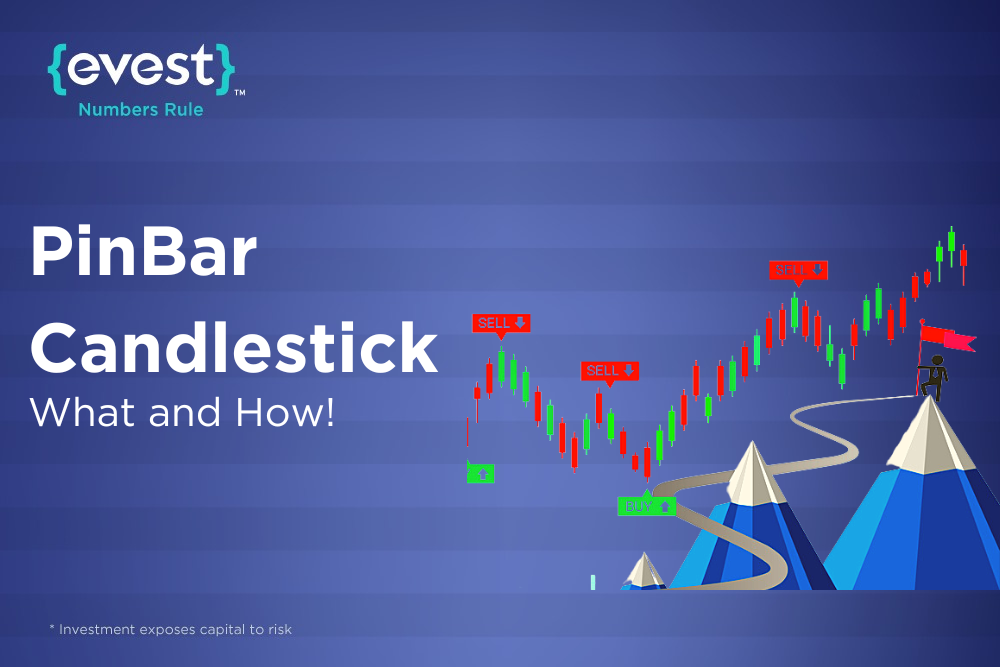
Understanding the PinBar Candlestick Pattern in Trading
In the trading world, where every market move holds potential profit or loss,
mastering patterns that provide insights into market behavior becomes a priority.
One such pattern is the PinBar candlestick.
This article will explain the intricacies of the PinBar candlestick pattern,
its significance, and its role in trading strategies.
As a trader, spotting potential reversals in price movements is akin to finding hidden treasures.
The PinBar candlestick pattern, with its distinctive appearance and predictive abilities,
serves as a valuable tool in the trader’s toolkit.
Whether you’re a seasoned trader or just stepping into the world of finance,
Understanding the PinBar pattern can give you an edge in making informed trading decisions.
What is a PinBar Candlestick?
At its core, a PinBar candlestick is a powerful indicator of potential price reversals.
This pattern can emerge as either bullish or bearish, depending on the direction of its tail.
The primary feature of the PinBar is its unique shape, which consists of a short body and a longer wick.
This combination provides essential insights into the balance of power between buyers and sellers.
Anatomy of a PinBar
The Short Body and Its Meaning
The PinBar’s short body signifies that the opening and closing prices are closely aligned.
This suggests a period of market indecision where neither buyers nor sellers have gained the upper hand.
The short body acts as a pivot point, indicating the potential for a shift in sentiment.
The Long Upper Wick A Glimpse into Bearish Sentiment
When the upper wick of a PinBar extends significantly above the body, it signals potential downward pressure.
This elongated wick reveals that despite attempts to push prices higher,
the market encountered resistance, implying the possibility of a bearish reversal.
The Long Lower Wick: A Peek at Bullish Sentiment
Conversely, a lengthy lower wick in a PinBar suggests potential upward momentum.
This occurs when the price encounters support at lower levels, leading to a rejection of lower prices.
The presence of a substantially lower wick points towards a bullish reversal.
PinBar Candlestick’s Role in Trading Strategies
PinBar candles aren’t just intriguing formations but valuable tools for crafting trading strategies.
The unique structure of PinBar and the insights it provides
into market sentiment make it an indispensable part of any trader’s strategy.
By identifying potential reversals, traders can fine-tune their entries and exits, enhancing their profitability.
How to Interpret and Trade with PinBar Patterns
Interpreting PinBar patterns involves a combination of technical analysis and an understanding of market dynamics.
Traders often use confirmation signals, such as candlestick patterns,
trend lines, and support and resistance levels, to validate the potential reversal indicated by a PinBar.
Considering the broader market context before making trading decisions based on PinBar patterns is essential.
Common Mistakes to Avoid
While the PinBar pattern offers valuable insights,
Traders should exercise caution and avoid common pitfalls.
One mistake is solely relying on PinBar patterns without considering other technical and fundamental factors.
Additionally, misinterpreting PinBar patterns can lead to inaccurate predictions,
highlighting the importance of comprehensive analysis.
Conclusion
In conclusion, the PinBar candlestick pattern is a powerful tool for traders aiming to predict potential price reversals.
Its unique structure, with a short body and long wick, provides essential insights into market sentiment.
You can make more informed and profitable trading decisions by incorporating
PinBar patterns into your trading strategy and pair them with comprehensive analysis.
FAQs
Q1: Are PinBar patterns equally effective in all market conditions?
While PinBar patterns can offer valuable insights into various market conditions,
their effectiveness may vary.
Considering the broader market context and combining PinBar analysis with other technical and fundamental factors is important.
Q2: Can PinBar patterns be used as standalone indicators?
Pinbar patterns should ideally be used with other technical indicators and analysis methods.
Relying solely on PinBar patterns might result in incomplete or inaccurate predictions.
Q3: What’s the significance of the PinBar’s wick length?
The length of the PinBar’s wick relative to its body provides insights into market sentiment.
A longer upper wick suggests potential bearish sentiment, while a lengthy lower wick indicates potential bullish sentiment.
Q4: Are there variations of the PinBar pattern?
Yes, variations of the PinBar pattern exist, such as the Hammer and Shooting Star patterns.
These variations share similar characteristics but might have slightly different implications.
Q5: How can I incorporate PinBar patterns into my trading strategy?
To incorporate PinBar patterns effectively, study their interactions with support and resistance levels,
trend lines, and other technical indicators.
Combine this analysis with comprehensive market research for more accurate trading decisions.
Understanding the PinBar Candlestick Pattern in Trading
Unlock $100 for Every Friend: Evest Referral Rewards: Are you ready to turn your trading journey into a rewarding adventure?
With Evest’s Referral Program, you can earn $100 for every friend who joins Evest and makes
a deposit using your unique referral link.
Imagine the possibilities—trading with your pals and earning while at it!
Let’s delve into the exciting world of Evest’s Friend Referral Program, where trading meets friendship most profitably.
Ever wondered if there’s a way to make trading even more enjoyable?
Look no further—Evest’s Friend Referral Program is here to make your trading journey exciting.
Invite your friends to join the Evest community and receive a delightful $100
reward for each friend who opens a trading account and makes a deposit.
It’s like adding extra flavor to your trading experience!
The Power of Community and Collaboration
Trading is often seen as a solitary endeavor, but that’s changing with Evest’s Referral Program.
Our rapidly growing community of traders is a testament to the incredible power of collaboration.
Your role in this is pivotal; the Evest community’s growth owes a lot to you.
Together, we’re shaping the future of trading,
and the Referral Program is your invitation to be a part of something bigger.
Your $100 Journey Begins: How it Works
Curious about how to turn your connections into cash?
It’s simple. Once you’re a member of Evest, you’ll receive a unique referral link.
Share this link with friends, family, and across your social network.
When your friend uses this link to open a trading account and deposit funds,
you’ll be credited with a handsome $100 reward, not withdrawable.
It’s a win-win situation: they experience Evest’s top-notch trading platform,
and you earn a reward for expanding the community.
Sharing is caring
Spread the Word
Remember the joy of sharing good news? Imagine sharing a platform that’s changing the way people trade.
Spread the word about Evest’s Referral Program and tell your friends about the exciting opportunity to trade and earn together.
After all, trading is more enjoyable with friends by your side.
Watching Rewards Grow on Your Dashboard
As you introduce more friends to Evest, you’ll witness something truly satisfying:
Your rewards are growing on your dashboard. Each time a friend uses your referral link to make a deposit,
$100 will be added to your account. It’s like watching your efforts bear fruit in real time.
So sit back, relax, and watch your balance flourish as your network expands.
Generosity Beyond Limits: Unlimited Opportunities
You might wonder if there’s a cap on your earnings.
The answer is simple—there isn’t! Evest’s generosity knows no bounds.
With every new friend’s deposit, you’ll receive $100; there’s no limit to how many friends you can invite.
Whether it’s one friend or a dozen, your rewards keep growing,
giving you unlimited opportunities to make your trading experience truly rewarding.
Unlock $100 for Every Friend: Evest’s Lucrative Referral Program.
Terms and Condition
Know the Ropes
While the Friend Referral Program offers incredible rewards,
It’s essential to know the terms and conditions.
Familiarize yourself with the guidelines to make the most of this opportunity.
Understanding the rules ensures a smooth and transparent experience so you can focus on what truly matters:
trading with your friends and earning rewards together.
Evest’s Rapidly Growing Trader Community
Ever wondered how Evest’s trader community is growing so rapidly?
It’s because traders like you believe in the platform’s potential.
Your contribution goes beyond just trading.
It’s about creating a vibrant ecosystem that thrives on collaboration and mutual growth.
The Referral Program is a testament to your role in this journey.
The Ripple Effect: Impact of Your Referrals
Just like a pebble creates ripples in a pond, your referrals have a far-reaching impact.
As you invite friends, you’re not just earning rewards;
You’re introducing them to a platform that empowers them to trade confidently.
Your actions initiate a chain reaction, transforming the trading landscape for your friends and beyond.
Unlock $100 for Every Friend: Evest’s Lucrative Referral Program.
Security and Reliability
Security is paramount when it comes to trading and referrals.
Evest’s platform is built with robust security measures to ensure your personal information and transactions are protected.
You can confidently invite friends, knowing that their experience with Evest will be as secure as yours.
FAQs
Q: How do I get started with the Evest Friend Referral Program? Once you’re a member of Evest, you’ll find your unique referral link in your account.
Share it with your friends to start your referral journey.
Q: Is there a limit to how many friends I can refer? No, there’s no limit! Invite as many friends as you’d like and earn rewards for each one who joins Evest.
Q: When will I receive the $100 referral reward? You’ll receive the reward when your referred friend opens a trading account and makes a deposit using your referral link.
Q: Are there any restrictions on using the referral rewards? A: The referral rewards you earn can be used for trading or withdrawn according to Evest’s terms and conditions.
Q: Can I refer friends who are new to trading? A: Absolutely! The Referral Program is a fantastic way to introduce friends,
whether they’re experienced traders or new to the trading world.
Are you ready to level up your trading experience?
Join the Evest Friend Referral Program today and earn rewards while trading with friends.
With $100 waiting for every new trader you bring in,
it’s time to share the joy of trading and grow together!
Unlock $100 for Every Friend: Evest Referral Rewards.
Access Market Buzz with TradingCentral Evest Integration: Professional Media Coverage of 35,000 Trade Assets
In today’s fast-paced financial markets, staying informed about the latest market trends and news is crucial for successful trading. With the integration of TradingCentral Evest, investors gain unparalleled access to market buzz and professional media coverage for a vast array of 35,000 trade assets. In this article, we’ll explore how TradingCentral Evest can empower traders with real-time insights, analysis, and expert opinions, providing them with a competitive edge in the world of finance.
TradingCentral Evest is a cutting-edge platform that provides investors and traders with comprehensive market analysis and coverage. It’s a powerful tool that harnesses artificial intelligence and big data analytics to deliver real-time market sentiment, technical analysis, and news updates for a wide range of trade assets, including stocks, commodities, forex, and more.
The Power of Market Buzz
Market buzz refers to the overall sentiment and discussions surrounding a particular trade asset. Understanding market buzz is essential because it can influence the asset’s price direction. TradingCentral Evest scours the internet, social media, financial news, and other relevant sources to analyze market buzz comprehensively. By harnessing this data, traders can gain insights into how the market perceives a specific asset, helping them make more informed trading decisions.
Media Coverage of 35,000 Trade Assets
One of the standout features of TradingCentral Evest is its extensive media coverage. With access to a whopping 35,000 trade assets, investors can delve into a vast array of markets and financial instruments. Whether you’re interested in stocks of major corporations, precious metals, global currencies, or emerging markets, TradingCentral Evest has you covered. This breadth of coverage ensures that investors can explore various opportunities and diversify their portfolios effectively.
How TradingCentral Evest Outperforms Competitors
In a sea of financial information providers, TradingCentral Evest stands out due to its unique features and functionalities that set it apart from the competition. Let’s take a closer look at why this platform excels at providing valuable market insights:
Real-Time Analysis
TradingCentral Evest doesn’t just offer stale data; it provides real-time analysis and news updates. As financial markets are constantly evolving, having up-to-the-minute information can be the difference between seizing a profitable opportunity and missing out.
Expert Opinions and Reports
The platform collects expert opinions and research reports from reputable sources, allowing traders to benefit from the knowledge of seasoned financial analysts. This invaluable input can shed light on complex market dynamics and aid traders in making more informed decisions.
User-Friendly Interface
TradingCentral Evest boasts an intuitive and user-friendly interface, making it accessible to both seasoned traders and beginners. The platform’s ease of use ensures that investors can quickly navigate through vast amounts of data and locate the insights that matter most to them.
Customized Alerts
To further enhance its user experience, TradingCentral Evest offers customized alerts based on individual preferences and trading strategies. Whether you prefer email alerts or in-platform notifications, you can tailor the alerts to suit your needs and never miss a critical market development.
Technical Analysis Tools
The platform provides advanced technical analysis tools that empower traders to visualize market trends, identify key support and resistance levels, and determine potential entry and exit points for trades. These tools are instrumental in developing successful trading strategies.
Leveraging TradingCentral Evest for Optimal Trading Strategies
Successful trading requires a well-informed and strategic approach. Here are some ways traders can leverage the power of TradingCentral Evest to enhance their trading strategies:
Stay Informed in Real-Time
By regularly checking the platform’s real-time updates and market analysis, traders can stay ahead of market movements and respond swiftly to changing conditions.
Analyze Market Buzz
Understanding market sentiment can provide valuable insights into the prevailing market mood. By analyzing market buzz on TradingCentral Evest, traders can gauge how other market participants perceive specific assets.
Utilize Expert Opinions
Expert opinions and research reports can offer a fresh perspective on trade assets and unveil potential opportunities that might have been overlooked otherwise.
Diversify with Media Coverage
With access to media coverage of 35,000 trade assets, traders can diversify their portfolios effectively, spreading risk across different markets and instruments.
Conclusion
TradingCentral Evest integration opens the door to a world of market buzz and professional media coverage for 35,000 trade assets. Armed with real-time analysis, expert opinions, and technical tools, investors gain a competitive edge in the financial markets. By leveraging the power of TradingCentral Evest, traders can stay informed, make well-informed decisions, and optimize their trading strategies for success. So, why settle for less when you can have comprehensive market insights at your fingertips? Start using TradingCentral Evest today and take your trading journey to new heights.
Access Market Buzz with TradingCentral Evest Integration: Professional Media Coverage of 35,000 Trade Assets
TradingCentral: Empowering Traders with Informed Decisions
Discover how TradingCentral, a leading provider of financial market research and investment analytics tools, assists traders and investors in making informed decisions. Explore the integration of TradingCentral into the Evest trading platform and how it benefits users. Gain insights into equity, commodities, Forex, and fixed-income markets and access professional media coverage of over 35,000 trade assets with the Access Market Buzz feature. Learn how to spot trends, understand market movements, and make well-informed trading decisions while understanding the importance of sound investment practices.
In the fast-paced world of financial markets, making informed decisions is crucial for traders and investors alike. Whether you are a seasoned trader or just starting, having access to reliable and insightful market research tools can make a significant difference in your investment success. TradingCentral is a trusted name in the financial industry, offering comprehensive market research and investment analytics tools that empower users with valuable insights into equity, commodities, Forex, and fixed-income markets. In this article, we will explore the integration of TradingCentral into the Evest trading platform, uncovering how this alliance enhances the trading experience for users. So buckle up and let’s dive into the world of informed trading!
TradingCentral
The Beacon of Market Research
TradingCentral is renowned for its cutting-edge technology and vast expertise in providing accurate market research and investment analytics. As a leading provider of financial tools, it equips traders and investors with the information they need to make informed decisions. From equity to commodities, Forex, and fixed-income markets, TradingCentral covers a wide spectrum of assets to cater to a diverse audience.
The key to successful trading lies in staying ahead of market trends and being well-informed about potential opportunities. With TradingCentral’s sophisticated analysis and insights, users can gain a competitive edge by optimizing their trading strategies and minimizing risks.
TradingCentral: Empowering Traders with Informed Decisions
Evest
Where Trading Meets Simplicity
At the heart of seamless trading lies a user-friendly platform, and that’s exactly what Evest offers. Evest is a comprehensive trading platform that caters to both beginners and experienced traders. Whether you are new to the world of trading or a seasoned professional, Evest’s user-centric approach ensures a smooth and rewarding experience for all.
The platform’s integration of TradingCentral takes the trading experience to a whole new level. By merging the powerful market research tools of TradingCentral with Evest’s simplicity and user-friendliness, traders gain access to a wealth of data and insights while effortlessly navigating through the financial markets.
Access Market Buzz
Unleashing the Power of Media Coverage
A critical aspect of trading is being aware of global events and their impact on financial markets. With the Access Market Buzz feature, TradingCentral offers investors a unique advantage. By providing access to professional media coverage of more than 35,000 trade assets, traders can stay informed about the latest happenings in real-time.
From stocksto bonds, commodities to currencies, this comprehensive media coverage keeps traders updated about market-moving news, ensuring they never miss a potential opportunity. The power of information combined with Evest’s user-friendly interface becomes a game-changer in the trading landscape.
TradingCentral: Empowering Traders with Informed Decisions
Spotting Trends and Understanding Market Movements
The integration of TradingCentral into Evest not only enables users to access expert analyses and market insights but also helps them spot trends and understand market movements. Armed with this knowledge, traders can anticipate potential market shifts and make well-informed decisions, enhancing their chances of success.
Being able to identify trends before they become apparent to others is a key advantage that TradingCentral’s integration with Evest brings to the table. Users can ride the waves of market movements with confidence, bolstered by the robust analytical tools at their disposal.
The Power of Informed Trading Decisions
TradingCentral’s comprehensive suite of tools and Evest’s user-friendly platform provide users with the power to make informed trading decisions. However, it is essential to recognize that no tool should be the sole basis for investment decisions. While market research and insights are valuable, understanding the inherent risks of trading and investing is crucial.
Users are encouraged to exercise diligence, seek professional financial advice when needed, and develop a well-thought-out investment strategy that aligns with their risk tolerance and financial goals. By combining knowledge, insights, and prudent decision-making, traders can navigate the financial markets with confidence.
TradingCentral: Empowering Traders with Informed Decisions
Conclusion
Empowering Traders for Success
TradingCentral’s leading position in the financial market research and investment analytics arena, coupled with Evest’s user-friendly platform, forms a powerful alliance. This integration allows traders and investors to access expert analyses, spot trends, and make well-informed decisions based on real-time media coverage.
Remember, informed trading decisions are vital, but they should be supplemented with due diligence, risk assessment, and professional financial advice when needed. By harnessing the power of TradingCentral and Evest while exercising sound investment practices, traders can pave the way to success in the dynamic world of financial markets.
FAQs: Answering Your Queries
How does TradingCentral assist traders and investors?
TradingCentral empowers traders and investors by providing valuable insights and accurate market research tools for various asset classes, including equity, commodities, Forex, and fixed-income markets. These insights help users make informed trading decisions and stay ahead of market trends.
What makes Evest a user-friendly platform?
Evest is designed to cater to both beginners and experienced traders, offering a seamless and intuitive interface. Its user-friendly approach ensures that traders can navigate the platform effortlessly, accessing valuable tools and market research data with ease.
What does the Access Market Buzz feature offer? The Access Market Buzz feature allows investors to access professional media coverage of over 35,000 trade assets in real-time. This includes global media coverage of stocks, bonds, commodities, and currencies, providing valuable market-moving news.
How can users spot trends with TradingCentral and Evest?
The integration of TradingCentral into Evest equips users with expert analyses and insights, enabling them to spot trends and understand market movements. This helps traders anticipate potential market shifts and make well-informed decisions.
Are TradingCentral’s tools sufficient for investment decisions?
While TradingCentral provides valuable insights, it should not be the sole basis for investment decisions. Users are advised to understand the risks associated with trading and investing and seek the advice of a financial advisor when necessary.
How can traders optimize their success with TradingCentral and Evest?
To optimize success, traders should combine TradingCentral’s market research tools and Evest’s user-friendly platform with prudent decision-making and a well-thought-out investment strategy.
TradingCentral: Empowering Traders with Informed Decisions
Their comprehensive coverage enables traders to access analysis
and insights across different asset classes.
Q4: How do I read TradingCentral charts?
TradingCentral charts provide visual representations of market trends and key levels
Pay attention to the pivot line, our preference, alternative scenario,
and supports and resistances.
These elements will guide you in understanding market dynamics
and making informed trading decisions.
Q5: How can I get access to TradingCentral?
To gain access to TradingCentral, I kindly request that you reach out to your designated account manager.
They will assist you in registering for a platinum account type,
enabling you to take full advantage of the comprehensive analysis provided by TradingCentral.
If you do not have an existing account, please follow the link provided below to sign up for one. This will grant you the opportunity to access TradingCentral and enjoy its numerous benefits.
To sign up and get immediate access, please click on the following link: Get Access Now.