Nvidia strengthens its investments in the field of artificial intelligence

Nvidia strengthens its investments in the field of artificial intelligence through new stakes in 3 companies.

Nvidia, the giant in chip manufacturing and a leader in spending on artificial intelligence technologies,
announced the enhancement of its investments by acquiring stakes in three major companies:
ARM Holdings, SoundHound AI, and Recursion Pharmaceuticals.


Topic

Details


Details

Nvidia revealed this information in its annual report, Form 13F, submitted to the U.S. Securities and Exchange Commission on Wednesday,
outlining a new investment strategy for the company that has garnered significant global attention.


This move comes after Nvidia’s unsuccessful attempt to acquire ARM for $40 billion in 2020,
a deal that was abandoned in February 2022 due to regulatory pressures.
Meanwhile, shares of SoundHound surged by 55% following the investment announcement.


SoundHound specializes in AI software for voice recognition, with Nvidia making its initial investment in the company back in 2017.


Nvidia’s stake in ARM is the largest among the three, valued at $147.3 million, compared to $76 million in Recursion and $3.67 million in SoundHound.
Nvidia also disclosed acquiring smaller stakes in Nano-X Imaging and TuSimple Holdings.


Additionally, Nvidia has become the fourth-largest company by market capitalization globally,
surpassing Alphabet and Amazon, reaching a market value of $1.83 trillion.


This strong surge in stock value is attributed to the continued demand for Nvidia’s accelerators in running data centers and AI applications.

Amid this rapid ascent, analysts anticipate a sustained strong demand for Nvidia’s products,
with brokerage firms raising their target stock prices and improving revenue forecasts for 2024 by over 100%, according to data compiled by Bloomberg.


While other major technology companies are performing well in the stock market in 2024,
Nvidia stands out as a company experiencing significant growth in its revenues from smart technology.


Nvidia strengthens its investments in the field of artificial intelligence

Commodity Trading in Oman

Commodity Trading in Oman

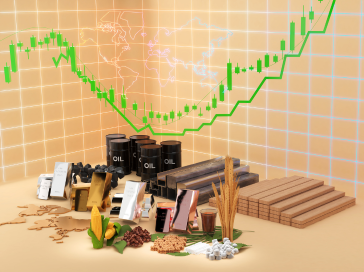
Commodity trading is a type of financial asset trading where derivative contracts related to the actual commodity values are traded.
These contracts are sometimes known as “Contracts for Difference” or CFDs.
The basic idea behind commodity trading is to allow investors to profit from changes in commodity prices without the need to own the actual physical commodities.


Content

Steps

Importance
Challenges


Steps

Here are some fundamental steps to take when starting commodity trading:

  • Research and Learn:
    • Understand the basics of commodity trading and the impact of various factors on commodity prices. Read and research information about commodities that interest you.
  • Choose Commodities:
    • Decide which type of commodities you want to trade. It could include oil, gold, silver, grains, or any other commodity that catches your interest.
  • Open a Trading Account:
    • Open a trading account with a reliable and licensed financial broker such as Everest.
  • Learn Platform Usage:
    • Learn how to use the trading platform provided by the broker. Understand how to open and close trades and use different order types.
  • Define Trading Strategy:
    • Develop a clear trading strategy. Define the criteria for opening and closing positions and how you will manage your financial risks.
  • Monitor the Market:
    • Stay updated on market news and economic and political events that may impact commodity prices. These events can significantly affect the market.
  • Risk Management:
    • Determine a reasonable percentage of capital to allocate for each trade. Use stop-loss and take-profit orders to protect your capital.
  • Practical Experience:
    • Start trading with small positions initially to test your strategy and gain a deep understanding of market dynamics.
  • Regular Evaluation:
    • Regularly assess your performance and review your strategy. Adjust it if necessary based on experience and results.
  • Utilize Resources:
    • Take advantage of educational and analytical resources provided by the trading platform or broker to enhance your market understanding and make informed decisions.

It is crucial that trading operations be balanced and thoughtful. It is always advisable to consult with a financial advisor before making significant investment decisions.


Importance

Commodity trading holds significant importance for many investors and companies for several reasons:

  • Portfolio Diversification:
    • Commodity trading is considered an effective means to diversify an investor’s portfolio, as the performance of commodities is often linked to different factors than stocks and bonds.
  • Protection Against Inflation:
    • Some commodities, such as gold and silver, are traditionally seen as a way to protect investors against the effects of inflation on the purchasing power of their money.
  • Risk Hedging:
    • Commodity trading can provide a means for investors and companies to control risks associated with price fluctuations in commodities.
  • Profiting from Price Movements:
    • Investors can profit from price fluctuations in commodities, whether these fluctuations are caused by geopolitical, economic, or natural events.
  • Meeting Corporate Needs:
    • Companies relying on commodities in their production can use commodity contracts to hedge against price volatility and ensure continuity of operations.
  • Offering Diverse Investment Opportunities:
    • Investors can benefit from diverse investment opportunities in various sectors such as energy, agriculture, and metals.
  • Impact of Global Events:
    • Investors can capitalize on the impact of global events on commodity prices and make investment decisions based on these expectations.

Despite these benefits, investors should be aware of potential risks and adopt appropriate trading strategies based on their goals and risk tolerance.


Challenges

Despite the available opportunities in commodity trading, there are challenges that can be faced in this market:

  • Price Volatility:
    • Commodities can be subject to significant price volatility, increasing trading risks and requiring precise analysis to anticipate trends.
  • Geopolitical and Political Factors:
    • The impact of geopolitical and political events on commodities can be unpredictable and lead to sharp price fluctuations.
  • Influence of Natural Events:
    • Natural events like floods and droughts can affect commodity production, resulting in price increases.
  • Foreign Exchange Impact:
    • Commodity trading is influenced by changes in foreign exchange rates, making it more complex for investors dealing in commodity contracts denominated in foreign currencies.
  • Leverage:
    • The use of leverage can amplify profits, but it also increases risks and may lead to significant losses.
  • Demand and Supply Changes:
    • Changes in demand and supply can significantly impact commodity prices, especially in a volatile market.
  • Government Policy Effects:
    • Government decisions, such as imposing tariffs or changes in economic policies, can have a substantial impact on commodity markets.

It is always important for investors, especially those trading commodity contracts, to have a good understanding of the market and assess the risks associated with trading carefully. Thorough research before making any investment decisions is crucial.


Commodity Trading in Oman

Adjustments in Saudi Stock Market Small-Cap Index

Adjustments in Saudi Stock Market Small-Cap Index, Highlighting 6 Stocks of Interest

The “MSCI” foundation has announced new adjustments to its global small-cap stock index, impacting six Saudi companies.
These changes are set to take effect on February 29th.


Topic

Details


Details:

Shares of “Lomar for Leasing,” “National Manufacturing Company,” “Saudi Reinsurance Company,” and “Saudi Steel Pipes Company” have been added to the index,
while shares of “Riyadh Cables Group” and “Saudi Fisheries Company” have been excluded.


The spotlight is on “Lomar for Leasing” as its shares witnessed an impressive 82% increase since its debut in September.
Despite initial intense trading, the stock price experienced a decline,
reaching an average of 719.85 thousand Saudi Riyals over a 20-day period.


Concerning the “National Manufacturing Company,” its shares have seen substantial trading with an average of around 4.8 million Riyals over a 20-day period.
The stock price has remained stable at 12.3 Riyals since the beginning of the year.


The “Saudi Reinsurance Company” has seen a 22.2% increase in its shares since the start of the year,
accompanied by intensive trading.
The 20-day average trading volume reached 820.4 thousand Riyals.


Finally, the “Saudi Steel Pipes Company” maintained stable trading density,
with its shares trading in a range of 5 Riyals since the beginning of the year.

These developments make these stocks a focal point for investors in the Saudi stock market,
indicating the potential for future gains.


Adjustments in Saudi Stock Market Small-Cap Index


Exxon Exploring Away from the Disputed Area


Exxon Exploring Away from the Disputed Area between Venezuela and Guyana
:
ExxonMobil intends to conduct exploratory drilling operations far south of the disputed area between Venezuela and Guyana,
which is a subject of contention due to its rich natural resources.


Topic

detail


detail

In an interview, Alister Routledge, Exxon’s operations chief in Guyana,
affirmed that the drilling operations would occur a considerable distance south of the disputed region, over which Venezuela claims sovereignty.


Amid escalating tensions between the two countries, with the conflict shifting to maritime territories,

Routledge stated that the drilling activities planned for this year would occur south of the 70-degree line,
emphasizing the absence of historical conflict or Venezuelan activity in that area.


This statement comes in the context of reports indicating Venezuelan military movements near the Essequibo region,
which has become a major security concern in the region.

Exxon aims to accelerate the development of its significant oil discoveries off the coast of Guyana,
marking a transformative shift for the sparsely populated South American nation.


In response to Venezuelan threats, Routledge asserted,
“We continue development and activity within an area that is evidently part of Guyana’s territory.
We have a license for exploration and development.” He further emphasized that when there is a border dispute,
it is the responsibility of both governments to resolve it.


On the other hand, Routledge sought to alleviate concerns,
confirming that the chosen drilling site is south of the 70-degree line and outside the potential conflict zone.
The company commits to adhering to international laws and regulations applicable in such situations.


This dispute is part of an ongoing disagreement between Venezuela and Guyana over their maritime borders,
Venezuela insists that all regional waters in Essequibo are part of its territory.
At the same time, Guyana sees them as part of its regional waters.


Exxon Exploring Away from the Disputed Area between Venezuela and Guyana

Trading commodity contracts in Saudi Arabia 

Trading commodity contracts in Saudi Arabia allows investors to trade on the rise or fall of commodity prices without the need to physically own them.
It enables trading in both current and future prices of commodities, including (oil, gold, silver, and many other commodities).


Topic

General Steps

Opportunities

Challenges


General Steps

Trading commodity contracts can be done through various markets and financial instruments. Here are general steps for trading commodity contracts:

  • Learning and Research:
    • Understand the basics of the commodity market and the impact of economic and political factors on it.
    • Study the assets you want to trade, whether it’s gold, silver, oil, or any other commodity.
  • Choose a Financial Broker:
    • Select a reliable and licensed financial broker that offers commodity contract trading services.
  • Open a Trading Account:
    • Open a trading account with the chosen broker, which may require providing personal information and verifying your identity.
  • Analysis and Decision-Making:
    • Use market analysis to understand price trends and make decisions based on technical and fundamental analysis.
  • Place Orders:
    • Based on your analysis, place trading orders, whether they are immediate market orders or pending orders.
  • Monitor and Risk Management:
    • Track the execution of your orders and regularly monitor your trading account.
    • Use risk management carefully, including setting stop-loss and take-profit orders to minimize risks.
  • Learn from Experiences:
    • Learn from your trading experiences and market movements. Continuously improve your strategies over time.

It’s important to note that trading commodity contracts involves high financial risks, and having a complete understanding of the market is crucial.
If you are unsure how to start, seeking financial advice from a professional can be helpful.


Opportunities

Trading commodity contracts offers various opportunities for investors, influenced by factors such as technical and fundamental analysis, as well as global economic events. Here are some potential opportunities:

  • Price Fluctuations:
    • Price fluctuations in commodities can be a source of profit, allowing investors to capitalize on price changes.
  • Impact of Global Events:
    • Global events, such as geopolitical crises, natural disasters, and economic events, can significantly impact commodity prices, creating trading opportunities.
  • Portfolio Diversification:
    • Trading commodity contracts provides a means to diversify an investment portfolio effectively, offering different performance from stock and bond markets.
  • Trading Futures Contracts:
    • Trading futures contracts can have benefits, as investors can agree to buy or sell a specific commodity at a predetermined price in the future.
  • Profiting from Price Movements:
    • Investors can profit from both rising and falling commodity prices, either through buying (going long) or selling (going short).
  • Currency-Commodity Trading:
    • Currency contracts related to commodities, like the Australian Dollar/Canadian Dollar, provide additional trading opportunities.

It’s crucial to be aware of the risks associated with trading commodity contracts and have an effective strategy for risk management.
Continuous research and learning are recommended before engaging in commodity trading, and consulting with a financial advisor can be beneficial.


Challenges

Trading commodities involves several challenges that investors should be aware of. Here are common challenges in commodity trading:

  • Price Volatility:
    • Commodity markets are known for significant price volatility, which can lead to substantial losses if risks are not managed carefully.
  • Geopolitical and Global Events:
    • Geopolitical events and global occurrences can have a significant impact on commodity prices, posing challenges in predicting changes and making informed decisions.
  • Leverage:
    • While leverage can amplify profits, it also increases the risk of losses, and managing leverage effectively is crucial.
  • Weather and Climate Impact:
    • Agricultural commodities are heavily influenced by weather conditions. Adverse weather can negatively impact production and lead to price increases.
  • Technological Costs and Market Access:
    • Trading commodities electronically depends on access to trading platforms and technological tools, which may involve associated costs.
  • Changes in Supply and Demand:
    • Changes in consumption and production patterns can affect commodity prices. For example, fluctuations in oil demand and supply can impact prices.

It’s emphasized that trading commodities requires a good understanding of these challenges and an effective risk management strategy.
Striking a balance between potential gains and risks is a crucial part of successful commodity trading.


Trading commodity contracts in Saudi Arabia

The awakening of the American markets

The Awakening of the American Markets Propels Wall Street to New Record Highs

U.S. stocks continue their historic upward trajectory, with the S&P 500 index closing near the milestone of 5000 points.


Topic

details

Expectations


details

Stock prices rose on Wednesday, driven by major technology companies, while 10-year Treasury bond issues helped alleviate concerns about supply.
Bond prices remained stable, showing little significant change.

Stocks have sustained their sharp rise from their lowest levels in October 2022,
fueled by traders’ optimism about ongoing economic improvement and corporate earnings.Investors ignored concerns about high valuations and sluggish trading in February, leading the S&P 500 index to achieve new record levels.

Mark Haefele of UBS noted that the market is overcoming concerns even amid challenges such as changes in Federal Reserve policy and geopolitical tensions.Despite expectations of a seasonal economic downturn, market conditions have visibly improved, indicating strong momentum.

Positive sentiments for U.S. stocks were reinforced by a government decision to sell bonds over ten years,
exceeding $42 billion with yields below expectations.This is considered a sign of market confidence in the Federal Reserve’s continued interest rate cuts this year.

Peter Bookvar, the founder of The Boock Report, highlighted the significant success of the 10-year bond auction.


Wall Street

also received statements from Federal Reserve officials, emphasizing the need to avoid rushing into interest rate cuts.
Adriana Kugler expressed optimism about the ongoing inflation slowdown, stating that there is no urgent need to reduce borrowing costs. Susan Collins,
the president of the Federal Reserve in Boston, mentioned the need for additional evidence of inflation stability before considering interest rate cuts.

Neel Kashkari, the president of the Federal Reserve in Minneapolis,
added that a few more months’ data on inflation should be examined before making any decisions on easing monetary policy.

Solita Marcelli of UBS Global Wealth Management anticipated continued strong economic growth in the United States and expected improvements in Europe,
supporting stocks.
She indicated a positive environment paving the way for the Federal Reserve to start lowering interest rates from May,
by 100 basis points by year-end.

In this context, the MSCI World Index for advanced stock markets rose to record levels,
following the lead of all major U.S. stock indices.


Expectations

Strong economic growth in the United States and expected recovery in Europe are expected to support the markets.
However, there are indications of saturation in some market sectors, according to strategists at Barclays.

As one of the world’s largest exchange-traded funds approaches a crucial turning point after a strong 22% rise since late October,
there may be opportunities for further gains in the coming weeks. The Invesco QQQ Trust Series 1 (QQQ), which tracks the Nasdaq 100 index,
is trading near key resistance levels from three years ago,
making it a competitor to the broader SPDR S&P 500 ETF (SPY), known as “SPY.”

If the fund decisively breaks through the February 2021 resistance level, QQQ’s performance is expected to significantly outpace SPY in the coming period.
With the confirmation of the upward trend for QQQ, it may reach new record levels, according to Bloomberg Intelligence’s Anthony Feld’s estimates.


Performance of Key Indices:

  • S&P 500 rose by 0.8% as of 4 pm New York time.
  • Nasdaq 100 increased by 1%.
  • MSCI World Index rose by 0.6%.
  • 10-year Treasury bond yield rose by two basis points to 4.12%.
  • Bitcoin price increased by 2.3% to $44,161.79.


The Awakening of the American Markets

Oil Contracts in the UAE

Oil Contracts in the UAE

Trading oil contracts online is considered a common and effective way to invest in oil,
and you can do so in the UAE through Contract for Difference (CFD) trading platforms.


Topic

How to Trade

Opportunities

Challenges


How to Trade

Opening a Trading Account:

Open an online trading account with Everest. You will need to go through the registration process, provide some personal information, and possibly verify your identity.

Deposit and Account Management:

Deposit funds into your trading account. After that, you can manage your account, monitor your performance, and track prices through the provided trading platform.

Choosing oil Contracts:

Once your trading account is open, look for available oil CFDs on the platform and choose contracts that align with your strategy and interests.

Placing Orders:

You can place buy or sell orders based on your expectations regarding oil price movements. CFD trading allows you to benefit from price movements in both directions (upward or downward).

Risk Management:

Define a risk management strategy and use stop-loss and take-profit orders to protect your capital.


Opportunities

Investing in Upward and Downward Movements:

  • Investors can benefit from trading opportunities in both directions – whether oil prices are rising or falling – by buying or selling CFDs.

Portfolio Diversification:

  • Trading oil contracts is considered an effective way to diversify an investor’s portfolio, serving as part of a broader investment strategy.

Leverage Effect:

  • The ability to use leverage means you can trade with larger amounts than you have in your account, providing opportunities for larger profits. However, leverage should be used cautiously to avoid excessive risks.


Challenges

Market Risks:

  • The oil market is characterized by strong dynamics and significant volatility. Unexpected fluctuations can impact oil prices, necessitating a thorough understanding of market risks.

Global Events Impact:

  • Global economic and political events can significantly influence oil prices. Challenges such as inflation or economic crises can affect the market either positively or negatively.

Regulations and Controls:

  • Specific regulations and controls may exist for trading contracts in some countries, potentially affecting access to certain trading opportunities.

Technical and Fundamental Analysis:

  • Successful trading in oil contracts requires a good understanding of both technical and fundamental analysis, which can be a challenge that requires learning and experience.


To achieve success in trading oil contracts in the UAE, it is advisable to have a deep understanding of the market and a high level of risk awareness. Always be mindful of the risks associated with CFD trading and the importance of understanding the terms and conditions. Additionally, researching and consulting analysts’ opinions about the market before making any decisions is recommended.


Oil Contracts in the UAE

Aramco and DHL Launch Asmo to Enhance Energy Supply Chains

Aramco and DHL Launch Asmo to Enhance Energy Supply Chains

“Saudi Aramco” and “DHL” have announced the establishment of “Asmo,”
aiming to enhance the efficiency of supply chains in the energy, chemicals, and industrial sectors.
The joint project aims to find sustainable solutions for modern supply chain challenges
according to statements by the Chairman of “Asmo,” Salem Al-Hareesh.


Topic

detail


detail


The new company seeks to promote the economic interests of “Saudi Aramco” and “DHL,”
contributing to industrial growth in Saudi Arabia, the Middle East, and North Africa.


The strategic goal of “Asmo” is to achieve a national vision that positions the Kingdom as a global logistics center,
as stated by the Executive Vice President for Technical Services at “Saudi Aramco,” Wael Al-Jafary.

This initiative aligns with the Kingdom’s efforts to strengthen its global trade position,
reflecting its initiatives aimed at developing the industrial sector.


In October 2022, Saudi Crown Prince Mohammed bin Salman launched a national initiative for global supply chains,
with the aim of enhancing the Kingdom’s role as a key hub in global supply chains.


The new project aims to break free from the constraints of traditional procurement and logistics services,
adapting to the evolving trends in global supply chains.


“Asmo” is considered the first center in the region to provide comprehensive and integrated supply chain services in the energy,
chemicals, and industrial sectors.


The company will redefine the processes of purchasing, storing, and transporting goods and services within the Kingdom,
the Middle East, and North Africa, aiming to enhance efficiency and provide economic savings.

Through its unique mediation model, “Asmo” will connect suppliers with customers,
potentially reducing the need for inventory retention and contributing to cost reduction and savings in procurement,
logistics, and inventory operations.


This allows customers to focus on their core business activities and alleviate operational burdens,
according to the company’s statement.


Aramco and DHL Launch Asmo to Enhance Energy Supply Chains

Bezos Plans to Dispose of 50 Million Shares in Amazon 

Bezos Plans to Dispose of 50 Million Shares in Amazon and Nears the Summit of the World’s Wealthiest

The wealth of business magnate Jeff Bezos increased by approximately $13 billion in a single day following an 8% surge in “Amazon” shares. Bezos intends to sell up to 50 million shares of “Amazon.com” over the next year, capitalizing on the stock’s rise that brings him close to becoming the world’s richest person.


Topic

Details


Details:

This move comes after “Amazon” announced strong growth in online sales, leading to an approximate 8% increase in the company’s stock, reaching $172. With the surge in “Amazon’s” stock, Bezos’ wealth jumped by an amount nearly equal to the stock increase, making him the second richest person globally with a difference of around $5.7 billion, according to Bloomberg’s billionaire index. It’s worth noting that Bezos hasn’t held the top position on the index since 2021.

The gap between Bezos and Elon Musk, the current leader, is narrowing due to the opposing movements of “Amazon” and “Tesla” stocks. “Amazon” benefited from the rise in technology stocks, while “Tesla” faced the impact of a series of negative news.


On the other hand

Musk’s wealth may be affected by a Delaware judge’s decision to cancel a $55 billion compensation package earlier this week.

“Bezos” has laid out a plan to sell 50 million “Amazon” shares over the next year, with an estimated value of about $8.6 billion at the current stock price. “Amazon” disclosed these plans in its annual report, aligning with the new rules of the U.S. Securities and Exchange Commission that impose greater transparency in stock selling operations.


The company has not publicly commented on these plans yet.

If the plan is executed, it will be the first time Bezos sells “Amazon” shares since 2021, despite purchasing a single share in May of last year, marking the first such transaction in records dating back to 2002.


Additionally, Bezos recently announced his move to Miami from the Seattle area, meaning Washington state may lose expected exceptional profits tax revenue from any potential sale of his stocks. It’s worth mentioning that Washington recently imposed a capital gains tax, while Florida does not.


Bezos Plans to Dispose of 50 Million Shares in Amazon 


Trading Gold Contracts in Kuwait

Trading Gold Contracts in Kuwait

Trading gold contracts, like any investment activity, carries potential risks. In this article, we will discuss the key points that affect gold trading.


Topic

Steps to Open a Trading Account

Risks

Important Tips


Steps to Open a Trading Account:

Find a Reliable Broker:

  • Search for a reputable and licensed financial broker to provide trading services, such as Everest.

Fill Out the Registration Form:

  • Locate the registration section on the website and complete the registration form.
    You will need to provide personal information and banking details to fund your trading account.

Verify Your Identity:

  • Submit documents to verify your identity and address, such as a passport and utility bill.

Fund Your Account:

  • After registration and verification, fund your trading account using available payment methods like bank transfers or credit cards.

Download the Trading Platform:

  • Download and install the online trading platform or use the Everest mobile application.

Select the Assets to Trade:

  • Choose the assets you want to trade, whether forex contracts, stocks, or commodities like gold.

Place Your First Trade Order:

  • Initiate your first trade order and start interacting with the trading platform.

Manage Your Account:

  • Monitor your account’s performance and practice careful risk management.


Risks:

Price Volatility:

  • Gold prices are influenced by market fluctuations and various economic and geopolitical factors, leading to sharp price changes.

Leverage:

  • If using leverage in trading, it can amplify losses along with potential profits.

News and Events Impact:

  • Economic and geopolitical events can significantly affect gold prices, causing sudden fluctuations due to unexpected news.

Insufficient Information Availability:

  • Difficulty in obtaining accurate and reliable market information may lead to misguided decisions.

Changes in Supply and Demand:

  • Alterations in gold supply and demand levels can result in price fluctuations.

Regulatory Risks:

  • Trading operations may be affected by regulatory changes and market legislation.

Lack of Adequate Training:

  • Inexperienced traders may face increased risks if not familiar with trading processes and strategies.

To minimize risks, be prepared to invest an amount you can afford to lose.
Always conduct thorough research and consult with a professional financial advisor before making any trading decisions.


Influencing Factors:

Some factors influencing gold contracts trading include:

Global Economic Conditions:

  • Events like inflation and monetary policies can impact the value of gold.

Geopolitical Tensions:

  • Geopolitical events, such as international conflicts or crises, may increase demand for gold as a safe haven.

Currency Fluctuations:

  • Changes in currency values can affect commodity prices, including gold.

Supply and Demand:

  • Shifts in the supply and demand dynamics can influence gold prices.

Technical and Fundamental Analysis:

  • Traders often use technical and fundamental analysis to understand price patterns and potential trends.

Market Volatility:

  • Daily market fluctuations and economic news play a role in gold trading.


Important Tips:

Continuous Learning:

  • Understand the basics of the gold market and stay updated on economic and geopolitical developments.

Set Goals and Strategies:

  • Define your investment goals and establish a clear trading strategy, determining when to enter and exit the market.

Risk Management:

  • Set a specific percentage of capital you can afford to lose in a single trade. Avoid large risks and use risk management tools like stop-loss orders.

Use Technical and Fundamental Analysis:

  • Combine technical and fundamental analysis to comprehend gold price movements and potential trends.

Balance Leverage:

  • If using leverage, ensure you understand how it works and mitigate risks by choosing a reasonable leverage ratio.

Analyze Liquidity:

  • Ensure there is sufficient liquidity in the gold market for efficient trade execution without significant price slippage.

Monitor Economic News:

  • Stay informed about economic news and geopolitical events that may impact gold prices.

Test Your Strategy:

  • Test your trading strategy on a demo account before engaging in real trading.

Regularly Update Plans:

  • Reevaluate and update your trading plans according to changes in the market.

Always remain calm during trading, avoiding hasty decisions based on emotions.
Remember that trading involves risks, and no trading method guarantees profit in every transaction.
Consult a financial professional if uncertain about your trading decisions.


Trading Gold Contracts in Kuwait