

Alkahleej

Dubai TV

UAE News

Alnjah

Sputnik Arabic

Fear and Greed Index Explained: How It Measures Market Sentiment?
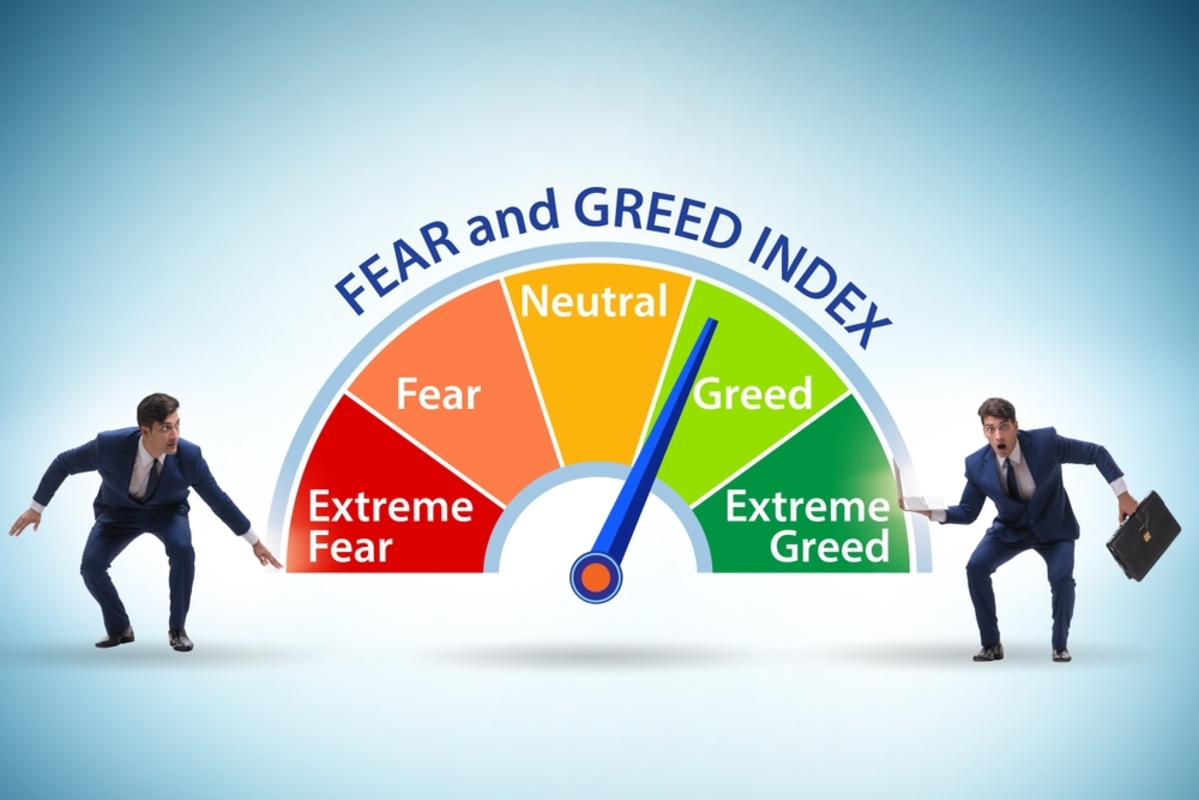
The financial markets are often driven not only by data and fundamentals, but also dominated by fear or greed. One of the most widely used tools to measure these emotions is the fear and greed index, which reflects whether the market is dominated by fear or excessive optimism. This index helps traders understand the overall sentiment and potential direction of market movements.
By analyzing emotional extremes, investors can identify possible buying or selling opportunities. Ultimately, it serves as a guide to balance emotional decision-making with rational analysis in trading.
What Is the Fear and Greed Index?
The fear and greed index is a widely used sentiment indicator designed to measure market psychology by tracking extreme emotions among investors. Developed as a tool to gauge whether traders are overly optimistic or pessimistic, it provides valuable insights into market behavior beyond traditional technical or fundamental analysis. At its core, the index quantifies the collective emotional state of the market, helping investors identify potential turning points before they occur.
Unlike traditional indicators that rely on price movements or economic data, the fear and greed index focuses on psychological factors—such as panic selling or euphoric buying—that often precede market shifts. For example, when the index signals “extreme fear,” it may suggest that assets are undervalued due to irrational selling, while “extreme greed” could indicate overvalued markets ripe for correction. This duality makes it particularly useful for traders seeking to anticipate market sentiment-driven trends.
Why Was It Created?
The creation of the fear and greed index stemmed from a fundamental observation: markets are not always rational. While economic models assume investors make decisions based on logic and data, reality often reveals that emotions—fear, greed, panic, and euphoria—play a dominant role in trading behavior. The index was developed to quantify these emotional drivers and provide a measurable framework for understanding market psychology.
Before its inception, traders relied on anecdotal evidence or qualitative assessments to gauge sentiment. However, these methods lacked consistency and objectivity. The fear and greed index was introduced as a systematic way to track these emotions, offering a standardized metric that could be applied across different markets and timeframes. By doing so, it bridged the gap between subjective sentiment analysis and data-driven decision-making.
How Does the Fear and Greed Index Work?
The Fear and Greed Index is a market sentiment tool that combines multiple indicators to measure whether investors are driven more by fear or greed in the financial markets.
- The index aggregates data from several market indicators, each representing a different aspect of investor behavior and sentiment.
- These indicators are weighted and combined to generate a single score ranging from 0 to 100.
- Lower values indicate extreme fear, while higher values reflect extreme greed in the market.
- The index updates in real time to reflect changing market conditions and investor emotions.
- It captures market psychology extremes, helping identify potential buying or selling pressure.
- When fear dominates, the index drops, often signaling possible buying opportunities.
- When greed dominates, the index rises, which may indicate overvaluation or speculative behavior.
- Reconcile the two statements or clarify the distinction.
- The index helps traders identify contrarian opportunities where market sentiment may reverse.
- It is a composite tool made up of multiple indicators rather than a single data source.
- The weighting of components may vary depending on the market or asset class being analyzed.
- This structure makes the index flexible and useful across different trading environments.
Components of the Index
The fear and greed index is composed of seven key components, each designed to capture a distinct aspect of market sentiment. These components are:
- Market Momentum
- Volatility
- Safe Haven Demand
- Put and Call Options
- Market Breadth
- Junk Bond Demand
- Stock Price Breadth
Market Momentum
Market momentum measures the strength and direction of recent market movements. A strong upward momentum suggests confidence among investors, while declining momentum may indicate growing pessimism. This component is particularly useful for identifying trends and potential reversals.
Volatility
Volatility reflects the degree of price fluctuations in the market. High volatility often accompanies extreme emotions—either fear during sharp declines or greed during rapid rallies. By tracking volatility, the index can signal when market participants are becoming overly cautious or overly optimistic.
Safe Haven Demand
Safe haven demand assesses the flow of capital into traditionally safe assets, such as gold or government bonds. During periods of uncertainty, investors flock to safe havens, reducing demand for riskier assets. This component helps identify when fear is driving market behavior.
Put and Call Options
The ratio of put to call options provides insight into whether investors are hedging against downside risk (puts) or betting on further gains (calls). A high put-to-call ratio often signals fear, while a low ratio may indicate greed.
Market Breadth
Market breadth measures the participation of individual stocks in a market’s overall movement. A broad rally with widespread participation suggests strong confidence, whereas a narrow rally with limited participation may indicate speculative behavior.
Junk Bond Demand
Junk bond demand reflects the appetite for high-risk, high-reward investments. When investors are willing to take on greater risk, it often signals greed. Conversely, a decline in junk bond demand may indicate fear.
Market Breadth
Market Breadth evaluates the number of stocks hitting new highs versus new lows. A high number of new highs suggests bullish sentiment, while an increase in new lows may signal bearishness.
Interpretation of index levels
The Fear and Greed Index is used to measure overall market sentiment by showing how investors are feeling at different stages of the market cycle, ranging from extreme fear to extreme greed.
Extreme Fear
This level indicates that investors are highly pessimistic and strongly risk-averse. Markets are often oversold during this stage, which may create potential buying opportunities for long-term investors.
Fear
At this stage, uncertainty dominates the market, and many investors start selling or avoiding risk. Prices may be under pressure, but it can also signal that negative sentiment is already priced in.
Neutral
A neutral reading reflects a balanced market where neither fear nor greed is dominant. It often suggests that the market is in a consolidation phase with no strong directional bias.
Greed
Greed indicates growing investor optimism and increased buying activity. While this can support upward price momentum, it may also signal that assets are becoming overvalued.
Extreme Greed
This is the highest level of optimism, where investors may be overly confident and speculative. It often appears near market tops and can be a warning of a possible correction or reversal.
How do traders and investors use the index?
The Fear and Greed Index is widely used by traders and investors as a sentiment-based tool to better understand market psychology and improve decision-making in different market conditions.
Timing Market Entries and Exits
Traders use the index to identify potential entry and exit points in the market. When the index shows extreme fear, it may signal a possible buying opportunity, while extreme greed can indicate a good time to take profits or reduce exposure.
Risk Management
Investors rely on the index to adjust their risk levels depending on market sentiment. During high fear or extreme greed phases, they may reduce position sizes, diversify portfolios, or increase hedging strategies to protect capital.
Sentiment Confirmation Tool
The index is also used as a confirmation tool alongside technical or fundamental analysis. It helps traders validate whether market sentiment supports their trading decisions or if the market may be overreacting in one direction.
Limitations of the Fear and Greed Index
The Fear and Greed Index is a useful sentiment indicator, but like any financial tool, it has certain limitations that traders should understand before relying on it for decision-making. It works best when combined with other forms of analysis rather than being used alone.
Not a Standalone Prediction Tool
The index should not be used as the only basis for predicting market movements. It reflects current investor sentiment but does not guarantee future price direction. Successful traders often combine it with technical and fundamental analysis—something that can be easily done using advanced trading platforms like Evest, which provide integrated tools for smarter decision-making.
Lagging vs Leading Signals
In many cases, the Fear and Greed Index acts as a lagging indicator because it reacts to existing market conditions rather than predicting future changes. This means it may confirm trends that are already in motion instead of signaling them early. Therefore, investors should use it as a supportive tool rather than a primary forecasting method.
FAQs
Who created the Fear and Greed Index?
The Fear and Greed Index was originally developed by CNN Business to measure investor sentiment in the financial markets. It was designed to help investors understand whether emotions like fear or greed are driving market behavior.
What factors are included in the Fear and Greed Index?
The index includes several factors such as market momentum, volatility, trading volume, put and call options, safe-haven demand, market breadth, and junk bond demand. Each factor reflects a different aspect of investor behavior and market sentiment.
How is the Fear and Greed Index calculated?
The index is calculated by combining and weighting multiple market indicators into a single score ranging from 0 to 100. Lower values represent extreme fear, while higher values indicate extreme greed in the market.
What are the three types of market movements?

Understanding market movements is essential for anyone involved in trading or investing, as it reflects the constant changes in asset prices over time. These movements are driven by a combination of economic data, investor sentiment, and global events that influence supply and demand. By analyzing price fluctuations, traders can identify potential opportunities and risks in the financial markets.
It also helps in making more informed decisions rather than relying on speculation. Ultimately, studying market behavior allows investors to better anticipate possible future trends.
Definition of Market Movements
Market movements refer to the fluctuations in financial markets, including stocks, bonds, commodities, and currencies, driven by supply and demand dynamics. These movements can occur over different timeframes—from daily market movements that reflect intraday volatility to long-term trends shaping investor sentiment. At its core, the meaning of market movement lies in how prices adjust based on real-time data, economic shifts, and investor behavior. For example, a sudden spike in oil prices can trigger a chain reaction across global markets, illustrating how interconnected these movements are.
Evest Price Fluctuations: The most visible aspect of market movements, where asset prices rise or fall based on trading activity.
Evest Volume Changes: The number of shares or contracts traded, which can amplify or dampen price swings.
Evest Trend Directions: Whether markets are trending upward (bullish), downward (bearish), or moving sideways (consolidation).
Evest Liquidity Shifts: How easily assets can be bought or sold without affecting their price, which impacts movement stability.
Why They Matter in Finance and Investing?
Market movements are the heartbeat of finance, dictating how wealth is created, preserved, or lost. For investors, these movements determine portfolio performance, risk exposure, and long-term growth strategies. Ignoring them is akin to navigating a storm without a compass—reacting to market movements without context can lead to costly mistakes. Here’s why they are critical:
- Opportunity Identification: Rising markets may signal buying opportunities, while declines can highlight assets to avoid or short-sell.
- Risk Assessment: Volatile movements often precede economic downturns, allowing investors to hedge or diversify proactively.
- Portfolio Adjustments: Understanding trends helps in rebalancing portfolios to maintain desired risk levels.
- Behavioral Insights: Movements reveal investor sentiment, such as panic selling during crashes or euphoric buying in bubbles.
For example, during the 2020 COVID-19 crash, share market movement volatility exceeded 30% in some indices, but savvy investors who recognized the temporary nature of the decline were able to capitalize on subsequent rebounds. Platforms like Evest provide resources to decode these signals, helping investors align their strategies with market realities.
Key Drivers of Market Movements
Market movements are rarely random; they are shaped by a complex interplay of factors that can be categorized into economic, corporate, and external drivers. Each of these influences moves markets in distinct ways, often overlapping to create compound effects. Below are the primary forces behind market movements:
Economic Indicators
Economic data releases act as catalysts for market shifts. Investors closely monitor:
- GDP Growth: Strong GDP figures typically boost stock markets, while contractions signal caution.
- Unemployment Rates: Rising unemployment can trigger sell-offs, as it reflects weakening consumer spending.
- Consumer Confidence: Surveys like the University of Michigan’s index influence spending and corporate revenues.
- Purchasing Managers’ Index (PMI): A PMI above 50 indicates expansion, while a PMI below 50 suggests contraction.
- Evest Inflation Data: High inflation erodes purchasing power, prompting central banks to raise interest rates, which can dampen market growth.
- Evest Retail Sales: Strong retail numbers suggest robust economic activity, often leading to bullish trends.
- Evest Housing Starts: A barometer for construction and consumer confidence, impacting related sectors like materials and appliances.
- Evest Trade Balances: Deficits or surpluses in trade can influence currency values and export-driven stocks.
Interest Rates and Inflation
Central banks, such as the Federal Reserve or the European Central Bank, wield immense power over markets through monetary policy. Their decisions on interest rates directly impact borrowing costs, corporate profits, and investor returns.
- Rate Hikes: Higher rates increase borrowing costs for businesses and consumers, often leading to lower stock valuations.
- Rate Cuts: Lower rates stimulate economic activity, typically benefiting growth stocks and sectors like real estate.
- Inflation Expectations: If markets anticipate rising inflation, they may demand higher yields on bonds, reducing their prices.
Global Events and Geopolitics
External shocks can send markets into tailspins, often overshadowing economic fundamentals. Geopolitical tensions, natural disasters, and policy changes create uncertainty that drives market movements. Key examples include:
- Trade Wars: Tariffs and trade restrictions, such as those between the U.S. and China, disrupt supply chains and corporate profits.
- Elections and Policy Shifts: Uncertainty around political outcomes can lead to volatile premarket movements as investors brace for potential changes.
- Natural Disasters: Events like hurricanes or pandemics disrupt production and consumer behavior, causing sharp market reactions.
- Sanctions and Embargoes: Geopolitical conflicts, such as Russia’s invasion of Ukraine, can trigger energy price spikes and global market sell-offs.
Types of Market Movements
Not all market movements are created equal. They vary in duration, intensity, and underlying causes, each requiring a different investment approach. Below are the primary types of market movements investors encounter:
Bull Markets vs Bear Markets
| Aspect | Bull Market | Bear Market |
| Definition | Rising prices, optimism, and strong economic growth | Falling prices, pessimism, and economic downturn |
| Market Characteristics | Prolonged upward trends, low volatility, and high liquidity | Prolonged declines (≥20%), high volatility, risk aversion |
| Investor Behavior & Strategy | Focus on growth stocks, long positions, and sector rotation into high-momentum areas | Shift to defensive assets like gold and cash, and use of short-selling strategies |
| Overall Psychology | Confidence and strong buying activity | Fear and selling pressure dominate |
| Key Difference | Rewards patience and long-term growth thinking | Tests discipline and risk management skills |
Volatility and Sideways Trends
| Aspect | Volatility | Sideways Trends (Consolidation) |
| Definition | Rapid and significant price swings driven by news events or liquidity shifts | Prices move within a narrow range due to market indecision |
| Types | Short-term volatility (intraday/weekly swings), long-term volatility (structural shifts like tech or regulation changes) | No formal types, but sideways trends often appear as accumulation or consolidation phases |
| Market Characteristics | High price movement, high risk, and opportunity, often unpredictable | Low volume, tight trading range, uncertainty dominates |
| Investor Impact | Can amplify both gains and losses, making risk management and hedging essential | Requires patience; often leads to breakout or breakdown moves |
| Investor Strategy | Use hedging strategies, active trading, and risk control techniques | Range trading, breakout strategies, or waiting for a clearer market direction |
Short-term vs. Long-term Movements
| Aspect | Short-Term Movements | Long-Term Movements |
| Definition | Driven by news, technical levels, or liquidity events such as premarket and intraday swings | Driven by broader economic cycles, demographics, and technological progress |
| Duration | Hours to weeks | Years to decades |
| Key Influences | Earnings reports, Federal Reserve decisions, macroeconomic surprises | Interest rate cycles, population growth, industry disruptions (e.g., AI, renewable energy) |
| Market Behavior | Fast and reactive price changes with higher short-term noise | Gradual structural trends and long-term directional shifts |
| Investor Focus | Day traders and swing traders target short-term opportunities | Long-term investors focus on sustained growth and macro trends |
How Investor Behavior Influences Markets?
Market movements are not solely driven by economic data or geopolitical events—they are also profoundly shaped by the collective psychology and actions of investors. Understanding how investor behavior influences markets is crucial for predicting trends, avoiding pitfalls, and capitalizing on opportunities. Below are the key psychological and behavioral factors that drive market movements:
Psychology and Sentiment
Investor sentiment refers to the overall attitude of market participants toward financial assets, which can swing between extreme optimism and deep pessimism. Sentiment is highly contagious and often amplifies market movements, leading to bubbles or crashes. Key aspects of sentiment include:
Optimism (Bullish Sentiment):
- Investors expect prices to rise, leading to increased buying.
- Often seen during economic expansions or when new technologies (e.g., cryptocurrencies, AI stocks) gain traction.
- Can result in overvaluation, where asset prices exceed fundamental worth (e.g., the dotcom bubble of the late 1990s).
Pessimism (Bearish Sentiment):
- Investors anticipate declines, triggering sell-offs and further downward pressure.
- Common during recessions, pandemics, or geopolitical crises (e.g., the 2008 financial crisis).
- May lead to undervaluation, where assets trade below intrinsic value, creating buying opportunities.
Fear and Greed:
- Fear drives panic selling, exacerbating declines (e.g., the 2020 COVID-19 crash).
- Greed fuels speculative bubbles, as investors chase quick profits (e.g., GameStop short squeeze in 2021).
- Tools like the Fear & Greed Index (e.g., CNN’s Fear & Greed Index) quantify these emotions in real time.
Herd Mentality:
- Example: Retail investors flooded into meme stocks.
- Example: Retail investors flooding into meme stocks (e.g., AMC, Bed Bath & Beyond) based on social media hype.
- Can create momentum effects, where assets rise or fall simply because others are buying or selling.
Tools Used to Analyze Market Movements
To navigate market movements effectively, investors rely on a combination of analytical tools and methodologies. These tools help decode trends, predict reversals, and manage risk. Below are the most widely used approaches:
Technical Analysis
Technical analysis focuses on studying price charts and historical market data to predict future price movements. Traders use patterns, trends, and indicators such as moving averages and RSI to identify entry and exit points.
Fundamental Analysis
Fundamental analysis examines the underlying value of an asset by analyzing economic, financial, and industry-related factors. This includes company earnings, interest rates, inflation, and overall economic conditions. Investors use this approach to determine whether an asset is overvalued or undervalued, making it more suitable for long-term investment decisions.
Market Indicators and Charts
Market indicators and charts are essential visual tools used to simplify market data interpretation. Charts such as candlestick and line charts display price movements over time, while indicators like volume, MACD, and Bollinger Bands help confirm trends and signals. These tools assist traders in making more accurate and data-driven trading decisions.
FAQs
What is the difference between bullish and bearish market movements?
Bullish market movements refer to rising prices and overall optimism, where investors expect continued growth. Bearish market movements refer to falling prices and pessimism, where selling pressure dominates the market.
Can market movements be predicted accurately?
Market movements cannot be predicted with complete accuracy due to the influence of many unpredictable factors. However, traders use analysis tools and indicators to improve the probability of making informed predictions.
How should investors respond to sudden market movements?
Investors should remain calm and avoid emotional decision-making during sudden market changes. It is better to rely on risk management strategies and stick to a well-defined trading plan.
How to identify trend direction in trading markets?

Understanding trend direction is the first step toward unlocking profitable trading opportunities, as they help traders align with market momentum. At their core, these markets are characterized by sustained price movements in a single direction—either upward or downward—rather than oscillating within a confined range.
Unlike sideways markets, where prices struggle to break out, trending markets create clear momentum that traders can leverage. For example, when Bitcoin surged from $30,000 to $70,000 in early 2024, it wasn’t just random volatility—it was a strong market trend behavior driven by institutional adoption and macroeconomic factors. The key lies in recognizing these trends early, as they often signal shifts in investor sentiment, liquidity, and economic conditions.
What Defines a Trend Direction?
A trending market isn’t just any price movement; it’s a structured shift in momentum that persists over time. To qualify, a trend must meet three critical criteria:
- Directionality: means the price is moving consistently higher or lower, not zigzagging.
- Persistence requires the trend to last for multiple sessions or weeks, not just hours.
- Confirmation comes from volume, technical indicators, or external factors such as news events. Without these, what looks like a trend could be a false breakout.
For example, the 2023 gold rally can be considered a case study. When gold broke above $2,000/oz and held, it wasn’t just a spike; it was the start of a market trend driven by geopolitical tensions and central bank purchases. The trend only solidified when volume surged, and technical indicators like the ADX confirmed strength. This is the difference between a fleeting move and a sustainable trend.
Key characteristics of trending markets
- Clear directional bias (up, down, or sideways)
- Higher highs/lows (uptrend) or lower highs/lows (downtrend)
- Increasing volatility as the trend matures
- Institutional participation (smart money flows)
1. Strong vs weak trends
Not all trends are created equal. A strong trend is one where price moves decisively with minimal pullbacks, often accompanied by high volume and extreme sentiment. Weak trends are characterized by sluggish movement, frequent reversals, and low conviction. For example, the 2021 meme stock frenzy (GameStop, AMC) was a weak trend because it lacked institutional backing and was driven purely by retail speculation. In contrast, the 2020 S&P 500 surge was strong, with consistent gains supported by Fed interventions and corporate earnings.
1. Signs of a strong trend
- Price extends beyond key resistance/support
- Volume spikes on breakouts
- Indicators show extreme readings (e.g., RSI >70 in uptrends)
2. Red flags of a weak trend
- Frequent false breakouts
- Low volume on moves
- Price struggles to close above/below key levels
2. Trending vs ranging markets
The battle between trending markets and ranging markets is a common challenge for traders. Ranging markets (or consolidations) occur when the price oscillates between support and resistance without a clear direction. These markets are ideal for mean-reversion strategies but deadly for trend traders. For example, the USD/JPY pair spent months in 2023 trading between 145 and 155 without a decisive break, frustrating trend followers.
How to spot the difference?
Trending: Price makes new highs/lows beyond previous extremes
Ranging: Price respects support/resistance repeatedly
Types of Market Trends
Market trends aren’t one-size-fits-all. They vary by duration, strength, and asset class, each requiring tailored strategies. Understanding these variations is crucial for adapting to changing conditions.
1. Uptrend (Bullish Market)
An uptrend is the trader’s dream scenario—a market where higher highs and higher lows create a staircase pattern. Bullish markets thrive on optimism, liquidity, and positive news cycles. For example, the Nasdaq’s 2023 rally was fueled by AI stock dominance and record-low interest rates. Traders in uptrends focus on buying pullbacks, using tools like moving averages to confirm the trend’s strength.
1. How to trade uptrends
Buy dips near moving averages (e.g., 50-day EMA)
Use volume spikes to confirm breakouts
Set stop-losses below recent swing lows
2. Common pitfalls
Chasing the trend without pullback confirmation
Ignoring overbought conditions (RSI >70)
Assuming the trend will last forever
2. Downtrend (Bearish Market)
Downtrends are the opposite—lower highs and lower lows create a death spiral. Bear markets are driven by fear, economic downturns, or policy shifts. The 2022 crypto crash is a textbook example, where Bitcoin fell from $69,000 to $16,000 in months. Short sellers and trend-following algorithms thrive here, but timing exits is critical to avoid getting trapped in reversals.
Key indicators for downtrends
- Price closes below moving averages
- Volume increases on down moves
- RSI <30 signals oversold conditions
3. Sideways (Non-trending Market)
Not all markets trend. Sideways markets, or consolidations, occur when buyers and sellers are evenly matched. These phases are exhausting for trend traders but lucrative for range traders. For instance, the S&P 500 spent 2023 in a tight range between 4,100 and 4,500, frustrating momentum strategies. Identifying these phases early is key—traders must switch from trend-following to mean-reversion tactics.
Short-term vs long-term trends
Understanding the difference between short-term and long-term trends is essential for choosing the right trading strategy, timing entries, and managing risk effectively. Each type of trend reflects different market forces and requires a different approach.
| Category | Short-Term Trends | Long-Term Trends |
| Duration | A few hours to several days (up to a week) | Weeks, months, or even years |
| Market Drivers | News events, earnings reports, market sentiment | Economic cycles, interest rates, global events |
| Volatility | High volatility and rapid price movements | More stable and consistent |
| Market Behavior | Frequent reversals and market noise | Less affected by short-term noise |
| Trend Strength | Less reliable direction | Stronger and more reliable direction |
| Trading Style | Day trading and swing trading | Position trading and investing |
| Strategy Focus | Quick entries and exits | Holding trades for longer periods |
| Indicators Used | RSI, MACD strategy, short-term moving averages | 100-day / 200-day moving averages + fundamentals |
| Monitoring | Requires constant market monitoring | Less frequent monitoring needed |
| Advantages | More opportunities, faster profit potential | More reliable, lower stress, better risk-to-reward |
| Disadvantages | Higher risk, more noise, needs fast decisions | Fewer opportunities, requires patience and capital |
How to Identify Trending Markets?
Identifying trending markets is one of the most important skills in trading. A trend shows the overall Directional Trading, and recognizing it early helps traders enter high-probability setups.
1. Price Action and Market Structure
Price action and market structure help you visually confirm whether the market is trending.
Key points:
- Look for higher highs (HH) and higher lows (HL) in an uptrend
- Look for lower highs (LH) and lower lows (LL) in a downtrend
- In a strong trend, price moves in a clear directional pattern
- Avoid markets where the price is moving sideways (no structure clarity)
How to identify a trend:
- Uptrend → consistent HH + HL formation
- Downtrend → consistent LH + LL formation
- Break of structure (BOS) confirms continuation or reversal
Why it matters:
- Shows who controls the market (buyers or sellers)
- Helps avoid false entries in sideways markets
2. Volatility and Momentum
Volatility and momentum measure the strength and speed of price movement.
Volatility:
- Refers to how much the price moves in a given time
- High volatility = strong movement and fast price changes
- Low volatility = weak or sideways market
Momentum:
- Measures the speed and strength of a trend
- Strong momentum = smooth directional movement
- Weak momentum = choppy and uncertain price action
How to identify a trending market:
- Strong directional candles (large bodies, few wicks)
- Price moves quickly in one direction
- Pullbacks are shallow and short-lived
Why it matters:
- Strong trends usually have high momentum
- Weak momentum often signals consolidation or reversal
3. Volume Analysis
Volume shows the level of participation in the market and helps confirm trends.
Key points:
- Increasing volume = strong trend confirmation
- Decreasing volume = weak or ending trend
- Volume spikes often occur during breakouts
How to identify a trend using volume:
- Uptrend: rising price + increasing volume
- Downtrend: falling price + increasing volume
- Breakout with high volume = strong trend continuation
Why it matters:
- Confirms whether a trend is real or fake
- Helps filter out false breakouts
- Shows institutional participation
Best Indicators for Trending Markets
While price action and volume are foundational, technical indicators provide additional confirmation. The best indicators for trending markets filter noise and highlight high-probability setups.
Moving Averages
Moving averages (MAs) are the backbone of trend-following strategies. They smooth out price data and act as dynamic support/resistance levels.
Identifying direction and dynamic support
Price above a moving average (e.g., 50-day EMA) confirms an uptrend
Price below a moving average confirms a downtrend
Example: The 200-day MA acts as a major support in uptrends (e.g., S&P 500 rarely closes below it for long)
Golden Cross (Bullish): 50-day MA crosses above 200-day MA
Death Cross (Bearish): 50-day MA crosses below 200-day MA
1. Which moving averages to use
- Short-term: 9-day or 10-day EMA (for intraday/swing trades)
- Medium-term: 20-day or 50-day EMA (for swing trades)
- Long-term: 100-day or 200-day SMA (for position trades)
- Volume-Weighted: VWAP (Volume-Weighted Average Price) for institutional confirmation
2. Common moving average mistakes
- Using only one MA (e.g., just the 50-day) without context
- Ignoring MA slopes (flat MAs signal weak trends)
- Entering trades when the price is too far from the MA (higher risk of pullbacks)
Relative Strength Index (RSI)
RSI measures momentum and identifies overbought/oversold conditions. While it’s often used for reversals, it’s equally valuable in trending markets to spot exhaustion.
Measuring momentum strength
- RSI > 70 in an uptrend: Overbought but not necessarily a reversal (check price action)
- RSI < 30 in a downtrend: Oversold but may continue lower (wait for bullish divergence)
- Bullish Divergence: Price makes lower lows, RSI makes higher lows
- Bearish Divergence: Price makes higher highs, RSI makes lower highs
RSI settings for trends
- Standard (14-period): Best for swing trading
- Shorter (9-period): For intraday momentum confirmation
- Longer (21-period): For long-term trend strength
- Stochastic RSI
Trending Markets Across Asset Classes
Trending markets can appear in all financial asset classes, but each market behaves differently based on its structure, drivers, and volatility. Understanding how trends form in each asset class helps traders choose the right strategy and manage risk effectively.
1. Forex Market Trends
Forex trends are driven by macroeconomic factors such as interest rates, inflation, and central bank policies. Major currency pairs like EUR/USD and GBP/USD often show clear directional moves. Currency strength and indices help traders compare performance, while economic indicators like GDP and employment data can significantly shift market trends.
2. Stock Market Trends
Stock market trends reflect economic conditions and investor sentiment. Major indices like the S&P 500 and global markets indicate overall direction. Growth stocks tend to outperform in bullish conditions, while value stocks may lead in uncertain markets. Market movers, including top gainers and losers, highlight short-term opportunities.
3. Cryptocurrency Trends
Cryptocurrency markets are highly volatile and trend-driven. Market capitalization trends indicate overall market strength, while certain coins experience extreme price swings. Crypto cycles alternate between bull and bear markets, often influenced by adoption, regulation, and investor sentiment.
4. Commodities and Futures Trends
Commodity trends depend on supply and demand dynamics. Energy markets like oil and gas are influenced by geopolitical events. Metals such as gold and silver often act as safe havens during uncertainty. Agricultural commodities are affected by weather, seasons, and global demand.
5. Bonds and Interest Rate Trends
Bond markets are closely tied to interest rates and the economic outlook. Government bonds and yield curves reflect investor expectations about growth and inflation. Rising interest rates can pressure markets, while falling rates often support economic expansion and asset price growth.
6. ETFs and Sector Trends
ETFs allow traders to follow trends across specific sectors or markets. Sector rotation strategies involve shifting investments between industries based on economic cycles. High-growth ETFs focus on sectors like technology or innovation, offering opportunities during strong market expansions.
Role of Economic Data in Trending Markets
Economic data drives trending markets through key factors like economic calendars, news releases, inflation, and interest rates. These elements influence market sentiment and price direction. Positive sentiment supports trends, while uncertainty can reverse them. Traders use this data to anticipate movements, manage risk, and align with prevailing market trends effectively.
1. Economic Calendar and News Impact
The economic calendar is a key tool for traders, as it highlights scheduled events such as interest rate decisions, employment reports, and GDP releases. These events often trigger strong price movements and can either strengthen or reverse existing trends. High-impact news increases volatility, making it essential for traders to anticipate and react to market changes effectively.
2. Inflation and Interest Rates
Inflation and interest rates play a central role in shaping market trends. Rising inflation often leads central banks to increase interest rates, which can slow economic growth and impact asset prices. Higher interest rates may strengthen a currency but weaken stocks and commodities. Conversely, lower rates tend to support risk assets and encourage upward market trends.
3. Global Market Sentiment
Global market sentiment reflects the overall mood and confidence of investors. Positive sentiment, driven by strong economic data or stability, supports bullish trends. Negative sentiment, often caused by uncertainty or geopolitical risks, leads to bearish movements. Understanding sentiment helps traders align with market direction and anticipate potential trend shifts.
Strategies for trading in trending markets
trading in trending markets focuses on capturing sustained price movement in one direction. Instead of predicting reversals, traders aim to follow the trend and profit from its continuation.
1. Trend Following Strategy
The trend following strategy focuses on trading in the same direction as the market. Instead of predicting reversals, traders identify a clear uptrend or downtrend and align their positions accordingly. This approach increases the probability of success by following the dominant market force and avoiding unnecessary counter-trend risks.
2. Trading with the Market Direction
Trading with the market direction means entering positions that match the current trend. In an uptrend, traders look for buying opportunities, while in a downtrend, they focus on selling. This strategy helps reduce risk, improves timing, and allows traders to benefit from sustained price movements rather than short-term fluctuations.
3. Breakout Strategy
The breakout strategy involves entering trades when price moves beyond key support or resistance levels. Breakouts often signal the start or continuation of a strong trend. Traders monitor consolidation zones and enter once price breaks out with momentum, aiming to capture early moves in a developing trend.
4. Entering Strong Trends Early
Entering strong trends early requires patience and confirmation. Traders look for signs such as increasing volume, strong price momentum, and clear breakouts. Early entries provide better risk-to-reward ratios and allow traders to maximize profits as the trend develops over time.
5. Pullback Strategy
The pullback strategy focuses on entering trades after temporary corrections within a trend. Instead of chasing price, traders wait for the market to retrace to key levels such as support, trendlines, or moving averages before entering in the direction of the trend.
6. Buying Dips in Uptrends
In an uptrend, buying dips means entering when price temporarily declines to support levels. This provides a better entry price and lower risk. As long as the trend remains intact, these pullbacks often lead to continued upward movement.
7. Selling Rallies in Downtrends
In a downtrend, selling rallies involves entering short positions when price temporarily rises to resistance levels. These rallies are often short-lived, and the trend usually resumes downward, giving traders an opportunity to profit from continued bearish momentum.
Risk Management in Trending Markets
Effective risk management is essential when trading in trending markets, as even strong trends can reverse unexpectedly. Proper control of risk helps protect capital and ensures long-term consistency.
1. Setting Stop Loss Correctly
- Place stop-loss orders based on market structure, not random distances.
- In an uptrend, set the stop loss below the most recent swing low to protect against trend failure.
- In a downtrend, place it above the most recent swing high.
- Avoid placing stops too tight, as normal market fluctuations may trigger them.
- Adjust stop-loss levels as the trend progresses to lock in profits (trailing stop).
2. Position Sizing
- Determine position size based on your total account balance and risk tolerance.
- Risk only a small percentage of your capital per trade (commonly 1–2%).
- Larger positions can be used in strong, confirmed trends, while smaller positions are الأفضل in uncertain conditions.
- Always calculate position size before entering a trade to maintain consistency.
- Proper position sizing helps prevent large losses from a single trade.
3. Avoiding Overtrading
- Do not enter multiple trades without clear setups or confirmations.
- Focus on high-quality opportunities instead of trading every market movement.
- Overtrading often leads to emotional decisions and increased risk exposure.
- Stick to a clear trading plan and avoid impulsive entries.
- Give trades time to develop instead of constantly opening and closing positions.
By applying these principles, traders can manage risk effectively, protect their capital, and take advantage of trending markets with greater discipline and confidence.
Common Mistakes in Trending Markets
trading in trending markets can be highly profitable, but many traders fail due to avoidable mistakes. Understanding these errors helps improve consistency and decision-making.
1. Trading Against the Trend
- One of the most common mistakes is trying to predict reversals too early.
- Traders open positions opposite to the main trend, expecting a quick change in direction.
- Strong trends often continue longer than expected, leading to repeated losses.
- Counter-trend trading increases risk because it goes against market momentum.
- It is safer to align trades with the dominant trend instead of fighting it.
2. Entering Too Late
- Many traders enter the market after the trend is already mature.
- Late entries often result in poor risk-to-reward ratios.
- Price may be near exhaustion, increasing the chance of reversal.
- Emotional decisions like fear of missing out (FOMO) lead to late trades.
- Early planning and patience are essential to avoid chasing price.
3. Ignoring Confirmations
- Entering trades without confirmation signals increases failure rate.
- Confirmation can include breakouts, volume increase, or trend structure validation.
- Skipping confirmation often leads to false entries and unnecessary losses.
- Traders should wait for clear signals before entering positions.
- Confirmation improves accuracy and reduces uncertainty in decision-making.
4. Misreading Market Conditions
- Traders often confuse ranging markets with trending markets.
- Entering trend strategies in sideways markets leads to weak performance.
- Misidentifying structure results in poor trade selection.
- Market context is essential before applying any strategy.
- Proper analysis of trend, range, or reversal conditions improves trading efficiency.
By avoiding these common mistakes, traders can significantly improve performance and take better advantage of trending market opportunities.
Pro Tips for trading in trending markets
Successful trading in trending markets requires more than just identifying direction. It involves combining tools, analysis techniques, and discipline to improve decision-making.
1. Combine Multiple Indicators
- Use more than one indicator to confirm trend direction.
- Combine tools like moving averages, RSI, and trendlines for stronger signals.
- Avoid relying on a single indicator, as it may give false signals.
- Confirmation from multiple sources increases trading accuracy.
- The goal is to build a complete picture of market behavior.
2. Use Multi-Timeframe Analysis
- Analyze the market on different timeframes (e.g., daily, 4-hour, 1-hour).
- Higher timeframes show the main trend direction.
- Lower timeframes help refine entry and exit points.
- Aligning timeframes improves timing and reduces risk.
- This approach helps avoid trading against the larger trend.
3. Focus on High-Probability Setups
- Only take trades that clearly match the trend structure.
- Look for strong confirmation signals such as breakouts or pullbacks.
- Avoid low-quality or unclear market conditions.
- Patience is key to waiting for the best opportunities.
- Fewer but higher-quality trades lead to better long-term results.
4. Stay Updated with Global Markets
- Monitor economic news and global financial events regularly.
- Central bank decisions, inflation data, and geopolitical events affect trends.
- Market sentiment can change quickly based on global developments.
- Staying informed helps anticipate volatility and trend shifts.
- Awareness of macro factors improves overall trading strategy.
When Trending Markets Become Risky
Trending markets can offer strong opportunities, but they also become risky in certain conditions. Understanding these situations helps traders avoid unnecessary losses and protect capital.
1. During Major News Events
- High-impact news such as interest rate decisions, inflation reports, or employment data can disrupt existing trends.
- Price may move violently in both directions within seconds, causing unpredictable volatility.
- Stop losses can be triggered easily due to sharp spikes and slippage.
- Trends that looked stable may suddenly reverse after news releases.
- Traders often reduce exposure or stay out of the market during major announcements.
2. Low Liquidity Periods
- Low liquidity occurs when fewer market participants are active, such as during holidays or off-market hours.
- In these conditions, price movements can become erratic and less reliable.
- Spreads may widen, increasing trading costs and reducing profitability.
- Trends may appear weak or inconsistent due to lack of volume.
- It is safer to avoid trading or reduce position size during low liquidity periods.
3. False Breakouts
- A false breakout happens when price moves beyond support or resistance but quickly reverses back.
- Traders may enter too early, expecting a strong trend continuation that does not occur.
- These moves often trap traders and lead to sudden losses.
- Lack of volume confirmation is a common reason for false breakouts.
- Waiting for confirmation and retests helps reduce the risk of being caught in fake moves.
Maximize Opportunities in Trending Markets with Evest
In trending markets, timing and precision are everything and that’s where Evest stands out. The platform equips traders with advanced charting tools, real-time data, and powerful indicators to help identify and follow strong market trends with confidence. Whether the market is in a strong uptrend or a sharp downtrend, Evest allows you to react quickly, manage risk effectively, and capitalize on momentum. With its intuitive interface and professional trading environment, Evest helps you stay aligned with market direction and make more informed, strategic trading decisions.
FAQS :
What are trending markets?
Trending markets are markets where price moves consistently in one direction, either upward or downward, over a period of time. These trends reflect strong dominance of buyers or sellers. Identifying trending markets helps traders follow momentum, avoid noise, and focus on high-probability opportunities aligned with the overall market direction.
How can you identify a trending market?
A trending market can be identified by observing higher highs and higher lows in an uptrend, or lower highs and lower lows in a downtrend. Traders also use tools like moving averages and trendlines. Strong momentum and consistent price movement in one direction are key signals of a trending environment.
Why are trending markets important for traders?
Trending markets are important because they provide clearer trading opportunities compared to sideways markets. When a trend is strong, traders can follow the direction of price with higher probability of success. Trends reduce uncertainty, improve timing, and allow traders to ride sustained movements instead of reacting to random fluctuations.
What strategies work best in trending markets?
Trend-following strategies work best in trending markets. These include buying pullbacks in an uptrend and selling rallies in a downtrend. Breakout strategies are also effective when price continues in the same direction. Combining trend analysis with risk management helps traders maximize profits while controlling potential losses effectively.
What are the risks of trading in trending markets?
Although trending markets offer opportunities, they also carry risks such as sudden reversals or false breakouts. Entering too late or ignoring confirmation signals can lead to losses. Traders must manage risk carefully, use stop-loss orders, and avoid overconfidence, especially when trends appear strong but may be nearing exhaustion.
How does momentum affect trending markets?
Momentum measures the strength and speed of price movement in a trend. Strong momentum supports continuation, while weak momentum may signal a slowdown or reversal. Traders use momentum to confirm trend strength and decide whether to enter, hold, or exit trades, making it a key component in trending market analysis.
What is the Relative Strength Index Indicator in trading?
The Relative Strength Index Indicator (RSI) is a widely used momentum indicator in technical analysis that helps traders evaluate the speed and magnitude of price movements. Developed by J. Welles Wilder, the RSI measures whether an asset is overbought or oversold on a scale from 0 to 100. Typically, readings above 70 indicate overbought conditions, while readings below 30 suggest oversold levels.
By analyzing these signals, traders can identify potential trend reversals, confirm market strength, and improve entry and exit decisions. The RSI is especially effective when combined with other indicators and market structure analysis to enhance trading accuracy and reduce risk.
Why is RSI one of the most popular momentum indicators?
The relative strength index meaning has earned its place as a cornerstone in technical analysis due to its simplicity and effectiveness. Traders across all experience levels rely on it because it provides clear insights into market momentum, overbought, and oversold conditions. Unlike complex indicators that require advanced knowledge, the RSI offers actionable signals with minimal setup, making it ideal for both beginners and seasoned professionals. Its ability to function across different markets—stocks, forex, cryptocurrencies, and commodities—adds to its universal appeal. Traders on Evest use RSI to refine their strategies to refine their strategies, reduce emotional decision-making, and improve trade accuracy. Whether you’re analyzing short-term swings or long-term trends, the RSI’s versatility ensures it remains relevant in any trading environment.
Why Is the RSI So Powerful?
What makes the RSI particularly powerful is its dual functionality: it serves as both a momentum oscillator and a divergence tool. This means traders can use it not only to identify potential reversals but also to confirm trend strength or weakness. The indicator’s scalability—working effectively on 1-minute charts for day traders and weekly charts for swing traders—further solidifies its status as a go-to tool. However, its popularity doesn’t mean it is foolproof. Like all technical indicators, the RSI requires proper understanding and context to avoid common pitfalls such as false signals in strong trends or prolonged overbought/oversold conditions.
How traders use RSI to improve decision-making?
In practice, traders rely on the Relative Strength Index Indicator (RSI) not just as a standalone indicator, but as a strategic tool to enhance decision-making, improve discipline, and refine overall trading performance. By integrating RSI into their analysis, they can better manage emotions, control risk, and identify optimal entry and exit points with greater confidence.
- Reducing over-trading: The RSI helps traders avoid impulsive decisions by providing objective signals rather than relying on gut feelings. For example, a trader might hesitate to enter a long position when the RSI is already in overbought territory (above 70), even if the price appears attractive. This disciplined approach helps filter out weak setups and focuses only on high-probability trades.
- Improving Risk Management: By identifying overbought or oversold conditions, traders can set tighter stop-loss levels or take partial profits before a potential reversal. For instance, if an asset’s RSI hits 80 in an uptrend, a trader might consider reducing position size or exiting entirely, knowing the risk of a pullback increases. At Evest, the RSI is emphasized as a confirmation tool when combined with other indicators like moving averages or volume analysis.
- Enhancing Entry and Exit Timing: Instead of guessing when a trend might reverse, traders can wait for the RSI to exit overbought or oversold zones before initiating trades. This method reduces the likelihood of chasing price movements and improves trade precision.
- Using Divergence as an Early Signal: The RSI’s divergence feature—where price makes a new high or low while the RSI fails to confirm—serves as an early warning for potential trend changes. This is particularly useful in ranging markets where assets move between support and resistance levels without clear direction.
What Is the Relative Strength Index Indicator (RSI)?
The Relative Strength Index (RSI) is a momentum oscillator that measures the speed and change of price movements. Developed by J. Welles Wilder in 1978, it oscillates between 0 and 100, providing traders with a visual representation of an asset’s momentum. Unlike trend-following indicators, the RSI is designed to highlight overbought or oversold conditions, which can signal potential reversals. Its simplicity lies in its binary output: values above 70 typically indicate overbought conditions, while values below 30 suggest oversold conditions. This straightforward interpretation makes it accessible for traders of all levels, including those new to relative strength index technical analysis.
What RSI Actually Measures?
At its core, the RSI measures the magnitude of recent price changes to determine whether an asset is overvalued or undervalued relative to its recent trading range. It does this by comparing average gains to average losses over a specified period (usually 14 periods). If the average gains are significantly higher than the losses, the RSI will rise toward 100, indicating overbought conditions. Conversely, if losses dominate, the RSI will drop toward 0, signaling oversold conditions. This dynamic range helps traders gauge whether an asset is due for a pullback or a continuation of the current trend.
RSI Scale Explained (0–100)
The RSI scale is divided into three primary zones:
- Overbought Zone (70–100): Suggests the asset may be due for a pullback or reversal.
- Oversold Zone (0–30): Indicates the asset may be oversold and due for a bounce.
- Neutral Zone (30–70): Represents a balanced market where momentum is neither extreme nor weak.
While these zones are widely used, it is important to note that the RSI can remain in overbought or oversold territory for extended periods during strong trends. This is why traders often combine the RSI with other tools to avoid false signals.
How RSI Works?
Momentum in trading refers to the rate of acceleration of price movements. Strong momentum indicates that an asset is moving quickly in one direction, while weak momentum suggests consolidation, stagnation, or a potential reversal. The RSI quantifies this momentum by comparing recent gains to recent losses over a defined period, typically 14 periods.
For example, if an asset closes higher in most of the last 14 periods, the RSI will reflect strong upward momentum, pushing the value toward 70 or above. Conversely, if losses dominate, the RSI will decline toward 30 or below. This momentum-based calculation allows traders to estimate whether a trend is strengthening or losing force, helping them anticipate potential continuations or reversals.
RSI Behavior in Different Market Conditions
The RSI does not behave the same way in all market environments. Its interpretation depends heavily on overall price structure:
- Trending Markets: In strong uptrends, the RSI may remain above 70 for extended periods without signaling an immediate reversal. Similarly, in strong downtrends, it can stay below 30. In these conditions, treating overbought or oversold levels as automatic reversal signals can lead to premature entries.
- Ranging Markets: The RSI is most effective in sideways or consolidating markets. In these environments, it typically oscillates between overbought and oversold zones, creating clearer opportunities for buying near support and selling near resistance.
- Volatile Markets: During periods of high volatility, RSI readings can become erratic and generate false signals. Because of this, traders often rely on additional confirmation tools such as trendlines, support and resistance levels, or volume-based indicators.
RSI Formula and Calculation
The Relative Strength Index calculation is based on a two-step process that measures the relationship between average gains and average losses over a selected period.
Calculate Average Gain and Average Loss
For each period:
- Subtract the previous closing price from the current closing price.
- If the result is positive, it is recorded as a gain.
- If the result is negative, it is recorded as a loss.
- Gains and losses are then averaged over a defined lookback period (commonly 14 periods).
Compute Relative Strength (RS) and RSI
Once averages are calculated:
- Relative Strength (RS):
RS = Average Gain ÷ Average Loss - RSI Formula:
RSI = 100 − (100 ÷ (1 + RS))
This formula reduces the impact of short-term price fluctuations, revealing the underlying momentum trend.
Understanding Gains vs Losses
The RSI focuses on the frequency and consistency of gains and losses rather than the size of individual price moves. This means:
- A small gain is treated the same as any other gain within the period.
- A small loss is treated the same as any other loss.
As a result, the RSI filters out extreme price spikes and provides a more stable view of overall market direction.
How to Read the RSI Indicator?
Understanding how to read the RSI indicator is a key step in applying it effectively within any trading strategy. While RSI values are straightforward numerically, their interpretation depends on market context.
Traders typically focus on:
- Overbought levels (above 70): Potential exhaustion of buying pressure.
- Oversold levels (below 30): Potential exhaustion of selling pressure.
- Neutral zone (30–70): Market consolidation or balanced momentum.
However, RSI should not be used in isolation. Effective interpretation requires combining RSI signals with price action, trend structure, and other technical tools to reduce false signals and improve decision-making accuracy.
Key Considerations When RSI Is Overbought
- Trend Confirmation: If the market is in a strong uptrend (higher highs and higher lows), an RSI above 70 may reflect sustained momentum rather than exhaustion.
- Volume Analysis: Rising volume alongside an overbought RSI often confirms bullish strength, Declining volume may indicate weakening momentum and possible exhaustion.
- Support and Resistance Levels: An overbought RSI near a major resistance zone (such as previous highs) increases the probability of a reversal. In trending markets, however, it may simply signal a temporary pause.
- Moving Average Alignment: If price remains above a key long-term moveing average (such as the 200-day MA), overbought RSI readings are less likely to result in immediate reversals.
Common Scenarios Where RSI Stays Overbought
- Strong Bullish Trends: Assets like Bitcoin or high-growth equities (e.g., Tesla) can remain above 70 for long periods during powerful uptrends.
- Breakout Moves: Sharp breakouts often push RSI into overbought territory before consolidation occurs.
- News-Driven Rallies: Positive earnings or macroeconomic news can sustain elevated RSI levels temporarily.
- Liquidity Surges: Events such as central bank announcements may trigger strong buying pressure that keeps RSI elevated.
Key Considerations When RSI Is Oversold
- Trend Context: In a confirmed downtrend, oversold RSI levels may indicate temporary relief rallies rather than full reversals.
- Support Levels: If RSI reaches oversold territory near strong support zones (such as historical lows or Fibonacci retracements), the probability of a bounce increases.
- Volume Behavior
- Declining volume during oversold conditions may suggest selling exhaustion.
- Increasing volume may indicate continued bearish strength or panic selling.
- RSI Divergence: A bullish divergence occurs when price makes lower lows while RSI forms higher lows. This is often a strong early signal of a potential reversal.
Common Scenarios Where RSI Stays Oversold
- Strong Bearish Trends: During extended downtrends, many stocks and crypto assets remain below 30 for long periods.
- Market Crashes: Events like the 2008 financial crisis or COVID-19 selloff in 2020 often push RSI to extreme oversold levels.
- Assets with high short interest may show oversold RSI readings before sharp upward reversals.
- During liquidity crises, thin markets or panic selling can keep RSI suppressed for extended periods before a sudden rebound
Neutral Zone and Trend Strength
The neutral zone (30–70) is where the RSI spends most of its time in balanced or non-extreme market conditions. In this range, the indicator does not signal overbought or oversold conditions, but instead reflects moderate and developing momentum.
Rather than generating direct buy or sell signals, the neutral zone is mainly used to understand trend behavior and strength.
How Traders Use the Neutral Zone?
- Identify Trend Continuation: If the price is trending upward and the RSI is gradually rising within the neutral zone, it confirms sustained bullish momentum.
- Spot Weakening Trends: If the RSI starts to decline while price is still in an uptrend, it may indicate weakening momentum and a potential reversal ahead.
- Avoid over-trading: Since RSI is not in extreme territory, traders often avoid aggressive entries and wait for clearer confirmation signals.
How to Interpret RSI in the Neutral Zone?
- Uptrend + Rising RSI: Confirms strong bullish momentum; potential long opportunities.
- Uptrend + Falling RSI: Signals weakening momentum; consider taking profits or tightening stops.
- Downtrend + Falling RSI: Confirms strong bearish momentum; potential short opportunities.
- Downtrend + Rising RSI: Signals weakening bearish momentum; possible exit or reversal setup.
RSI Trading Strategies
RSI trading strategies help transform the indicator from a simple momentum oscillator into a structured decision-making tool. By applying RSI in different market conditions—such as overbought/oversold zones, divergence setups, and trending or ranging markets—traders can improve timing and reduce emotional decision-making.
Overbought & Oversold Strategy
Overbought Conditions (Above 70)
An RSI above 70 indicates strong buying pressure and suggests that the asset may be extended to the upside. However, it does not guarantee an immediate reversal, especially in strong uptrends where momentum can persist.
Oversold Conditions (Below 30)
An RSI below 30 indicates strong selling pressure and suggests that the asset may be undervalued in the short term. Like overbought conditions, it does not guarantee an immediate bounce, especially in strong downtrends.
When NOT to Trade These Signals
Traders should avoid relying solely on overbought or oversold signals during strong trending markets. In such conditions:
- Price can continue in the same direction despite extreme RSI levels.
- Premature entries often lead to losses.
Key Principle
RSI overbought/oversold signals are most effective when combined with:
- Price action confirmation
- Trend context
- Additional technical indicators
This combination significantly improves the accuracy of trading decisions.
RSI Divergence Strategy
Bullish Divergence
Bullish divergence occurs when price forms a lower low, while the RSI forms a higher low. This indicates that selling pressure is weakening even though price continues to decline, suggesting a potential upward reversal.
Bearish Divergence
Bearish divergence occurs when price forms a higher high, while the RSI forms a lower high. This signals that buying momentum is fading despite rising prices, increasing the likelihood of a downward reversal.
How to Confirm Reversals
Divergence signals are more reliable when confirmed with additional tools, such as:
- Candlestick reversal patterns (e.g., engulfing, hammer, shooting star)
- Key support and resistance levels
- Volume confirmation (increasing volume on reversal strengthens the signal)
Using multiple confirmations reduces the risk of acting on false divergence signals.
RSI Trend Strategy
Using RSI in Trending Markets
In strong uptrends, RSI often remains above 50 and may frequently enter overbought territory. In strong downtrends, it tends to stay below 50 and may repeatedly enter oversold zones.
Instead of predicting reversals, traders use RSI here to confirm trend direction and strength.
RSI in Ranging Markets
In sideways or consolidating markets, RSI typically oscillates more predictably between 30 and 70.
This makes overbought and oversold readings more effective for identifying short-term trading opportunities, especially near support and resistance levels.
relative strength index strategy
Entry and Exit Signals
Swing traders often use RSI to improve timing:
- Entries: Near oversold levels during an uptrend
- Exits: Near overbought levels or when momentum begins to fade
For best results, RSI signals are usually combined with price action confirmation and broader trend analysis.
Best Timeframes for Swing Trading
The most commonly used timeframes for RSI-based swing trading are:
- 4-hour charts
- Daily charts
These timeframes provide a balance between signal reliability and sufficient trading opportunities, reducing market noise compared to lower timeframes.
Trade Smarter Using the RSI Indicator on Evest
Trading smarter isn’t about increasing effort or the number of trades—it’s about making informed decisions using the right tools. One of the most effective indicators for this purpose is the Relative Strength Index (RSI). When applied through a reliable platform like Evest, RSI becomes a powerful tool that helps traders identify opportunities with greater accuracy and confidence.
- Understanding RSI: The RSI measures market momentum and indicates whether an asset is overbought or oversold, helping traders rely on data instead of emotions.
- Versatility Across Markets: On Evest, RSI can be applied to multiple markets including forex, commodities, stocks, and cryptocurrencies.
- Combining RSI with Other Tools: Traders can enhance accuracy by using RSI alongside price action, support and resistance levels, and volume analysis to reduce false signals.
- Identifying Trends and Reversals: RSI is effective in spotting potential reversals and assessing trend strength, especially when used within a structured strategy.
- Building a Smarter Trading Approach: Success with RSI comes from discipline—combining strategy, analysis, and the right tools to improve consistency and long-term performance.
FAQs
What is the RSI indicator and why is it used in trading?
The RSI (Relative Strength Index) is a technical indicator that measures momentum on a scale from 0 to 100. Traders use it to identify overbought and oversold conditions. Above 70 suggests overbought, below 30 suggests oversold. It helps anticipate potential reversals and improve timing for entries and exits.
Is RSI enough on its own to make trading decisions?
No, RSI should not be used alone because it can produce false signals, especially in strong trends or volatile markets. It is best combined with price action, support and resistance levels, and volume analysis. Using multiple confirmations improves accuracy and reduces the risk of bad trading decisions.
What is the difference between overbought and oversold in RSI?
Overbought occurs when RSI rises above 70, indicating strong buying pressure that may slow down. Oversold occurs when RSI falls below 30, indicating strong selling pressure that may lead to a bounce. However, these conditions do not guarantee immediate reversals, especially in strong trending markets.
What is RSI divergence and why is it important?
RSI divergence happens when price and RSI move in opposite directions. For example, price makes higher highs while RSI makes lower highs. This signals weakening momentum and a possible reversal. It is one of the strongest RSI signals but should still be confirmed with other technical tools.
How does RSI help in trending markets?
In uptrends, RSI often stays above 50 and may frequently enter overbought territory. In downtrends, it usually stays below 50. Instead of predicting reversals, traders use RSI to confirm trend strength and stay aligned with the dominant market direction.
What are the best timeframes to use RSI?
RSI works on all timeframes, but effectiveness depends on trading style. Day traders use lower timeframes like 1-hour or less, while swing traders prefer 4-hour and daily charts. Higher timeframes provide more reliable signals and reduce market noise.