
A Currency Peg is an exchange rate arrangement in which a country maintains its currency’s value at a fixed rate or within a specified range against another currency, usually the US dollar. In forex trading, this system limits exchange rate fluctuations between linked currencies and influences how traders assess price movements, volatility, and market risks. Central banks support the arrangement through foreign exchange interventions, reserve management, and monetary policy measures. Understanding how pegged exchange rates work helps forex traders evaluate currency pairs, identify potential trading opportunities, and recognize the risks associated with changes in exchange rate policies.
Currency Peg Meaning in Forex Trading
In forex trading, a pegged exchange rate means that a country’s monetary authority seeks to maintain its domestic currency at a predetermined value relative to another currency or a basket of currencies. Unlike freely floating currencies, whose exchange rates respond primarily to market supply and demand, pegged currencies operate within boundaries established by monetary policy.
For example, if a country fixes its currency at 3.75 units per US dollar, its central bank aims to prevent significant deviations from that rate. This arrangement directly affects forex trading because it influences exchange rate volatility, currency pair behavior, and potential trading opportunities.
According to IG Group and BabyPips, pegged exchange rates are a form of fixed exchange rate policy maintained through monetary authority intervention.
How Does a Currency Peg Work in Forex?
The system operates through central bank measures designed to keep the exchange rate close to its official target. When market demand pushes the currency away from its intended value, monetary authorities may intervene to restore stability through foreign exchange transactions, monetary policy adjustments, and reserve management.
Central Bank Intervention
To maintain the target exchange rate, monetary authorities may buy or sell currencies in the foreign exchange market. The direction of intervention depends on whether the domestic currency is strengthening or weakening against its official target.
- When the domestic currency weakens: The central bank may buy its currency using foreign exchange reserves to support its value.
- When the domestic currency strengthens: The central bank may sell its currency and purchase foreign assets to limit appreciation.
- When market pressure increases: Authorities may adjust liquidity conditions or interest rates to support the exchange rate arrangement.
The effectiveness of these actions depends on available foreign exchange reserves, policy credibility, and prevailing market conditions.
Exchange Rate Stability
A fixed exchange rate does not necessarily mean the market price remains completely unchanged. Some arrangements allow limited fluctuations within an established trading band, while others maintain a more tightly controlled rate. For forex traders, these boundaries help explain why certain currency pairs experience relatively small price movements under normal market conditions.
Currency Peg to USD and What It Means for Forex Trading
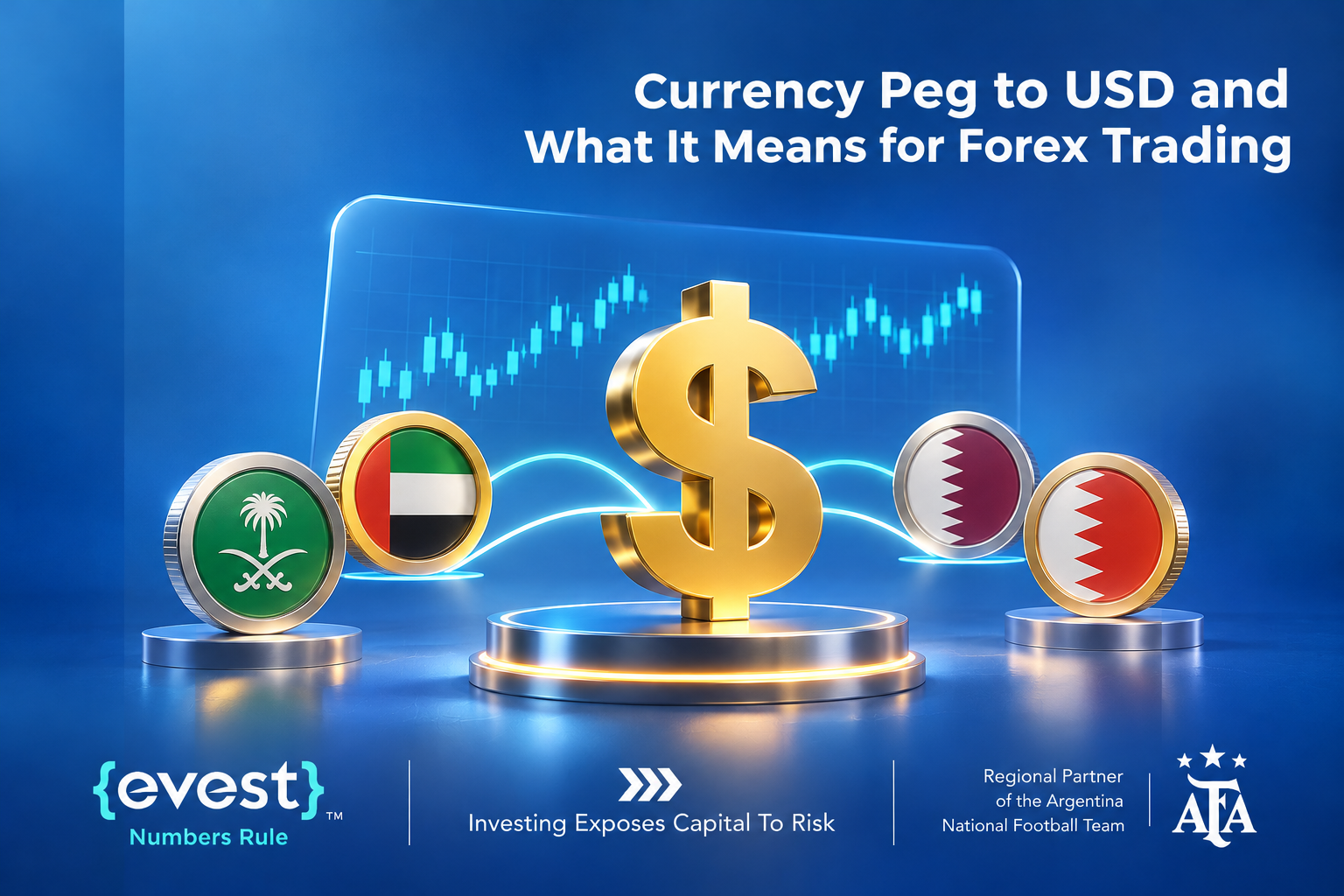
The US dollar is commonly used as an anchor currency because of its importance in international financial markets and its widespread use in foreign exchange transactions. When a domestic currency is tied to the USD, its exchange rate against the dollar is intended to remain stable, although its value against other currencies can still change as the dollar strengthens or weakens.
For instance, if the euro appreciates against the US dollar, a dollar-linked currency will generally depreciate against the euro, assuming its relationship with the dollar remains unchanged. For forex traders, the key distinction is that stability against the anchor currency does not guarantee stability against every other currency.
Currency Peg Example in the Forex Market
Two practical examples help explain how fixed exchange rate arrangements influence forex trading. The Saudi riyal and Hong Kong dollar both maintain established exchange rate relationships with the US dollar, although their monetary authorities use different arrangements to support exchange rate stability.
Saudi Riyal Against the US Dollar
The Saudi riyal is officially linked to the US dollar at a rate of approximately 1 USD = 3.75 SAR. The Saudi Central Bank maintains this exchange rate policy to support monetary stability, making USD/SAR a currency pair that typically experiences relatively limited price fluctuations under normal market conditions.
For forex traders, this arrangement means:
- USD/SAR normally trades close to its official exchange rate.
- Large directional price movements are less common while the policy remains credible.
- Trading costs, liquidity conditions, and market expectations still influence execution.
- Changes in the official exchange rate policy could create substantial market volatility.
Hong Kong Dollar Against the US Dollar
Hong Kong maintains a linked exchange rate system that allows the Hong Kong dollar to fluctuate within the range of 1 USD = 7.75–7.85 HKD. The Hong Kong Monetary Authority operates a currency board system to maintain this range through established convertibility commitments.
Forex traders monitoring USD/HKD may observe price movements within these boundaries and evaluate central bank actions when the exchange rate approaches either side. However, the established range should not be interpreted as a guarantee of profitable trading, as spreads, market conditions, and unexpected policy developments can influence trading outcomes.
Currency Peg Advantages for Forex Traders
A fixed exchange rate arrangement can offer several benefits when evaluating foreign exchange markets. These advantages mainly relate to lower exchange rate volatility, greater predictability, and a clearer framework for assessing monetary policy decisions.
Lower Exchange Rate Volatility
Currency pairs operating under credible fixed exchange rate policies generally experience smaller fluctuations against their anchor currencies than freely floating pairs. This can make short-term exchange rate movements more predictable, although sudden policy changes remain possible and may create unexpected market volatility.
Greater Exchange Rate Predictability
An established exchange rate target gives traders a clear reference point when evaluating market prices. This can help traders distinguish normal fluctuations from unusual exchange rate pressures while assessing whether current price movements remain consistent with the monetary authority’s established policy.
Clearer Assessment of Monetary Policy
Traders can monitor central bank announcements, foreign exchange reserve developments, and interest rate policies to understand how authorities are defending the established exchange rate. These indicators can provide useful information about the sustainability of the arrangement and potential changes in currency market conditions.
Risks and Disadvantages of Pegged Currencies in Forex Trading
Despite their relative stability, pegged exchange rates introduce risks that traders should consider before opening positions. These risks can become particularly significant when monetary authorities face difficulty maintaining their exchange rate targets or when market expectations change unexpectedly.
Sudden Exchange Rate Adjustments
A currency peg can be adjusted or abandoned when economic conditions make the existing exchange rate difficult to maintain. Such changes may lead to substantial price movements, including sharp gaps that can exceed expected trading ranges and expose traders to significant losses.
Dependence on Foreign Exchange Reserves
Central banks may need substantial foreign currency reserves to defend their exchange rate targets. If reserves become insufficient or market confidence deteriorates, maintaining the official rate can become increasingly difficult, potentially increasing speculative pressure and uncertainty in the forex market.
Limited Monetary Policy Flexibility
Countries maintaining fixed exchange rates may have less flexibility to set interest rates independently from the anchor currency’s monetary conditions. This relationship can influence liquidity, funding costs, and market expectations, particularly when domestic economic conditions differ from those affecting the anchor currency.
Trading Costs and Liquidity Risks
Limited price fluctuations do not eliminate trading expenses. Spreads, commissions, overnight financing costs, and reduced liquidity can affect profitability, particularly when traders attempt to capture small movements within a narrow range or execute positions during periods of unusual market pressure.
Fixed Exchange Rate vs Floating Exchange Rate
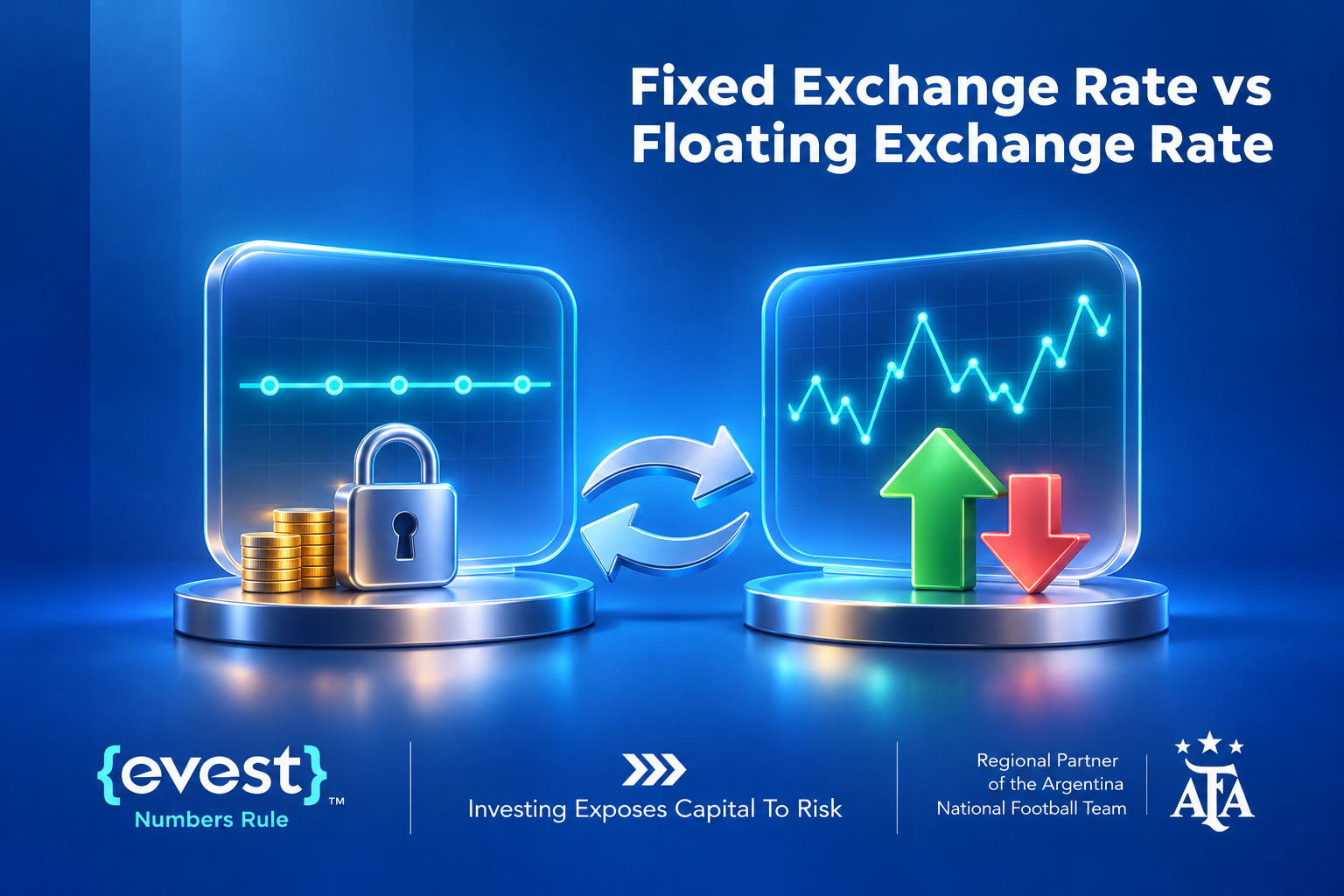
The following comparison highlights the differences that matter most when trading currency pairs. Understanding these distinctions helps traders evaluate market behavior, potential opportunities, and the risks associated with different exchange rate systems.
| Comparison | Fixed Exchange Rate | Floating Exchange Rate |
| Exchange rate determination | Maintained around an official target or range | Primarily determined by market supply and demand |
| Price volatility | Generally lower against the anchor currency | Can fluctuate more freely |
| Central bank involvement | Intervention supports the exchange rate target | Intervention varies by monetary policy framework |
| Trading opportunities | Often limited directional movement | Wider potential directional movements |
| Main trading risks | Revaluation, devaluation, or abandonment of the arrangement | Market volatility and unexpected economic developments |
| Examples | USD/SAR, USD/HKD | EUR/USD, GBP/USD |
The main difference is that fixed exchange rate systems prioritize stability against an anchor currency, while floating exchange rates adjust more freely to changing market conditions.
How Do Pegged Exchange Rates Affect Forex Trading Strategies?
Traders evaluating pegged currencies should consider how the exchange rate arrangement influences their preferred trading strategy. Although these currencies may experience relatively limited fluctuations, trading opportunities depend on market conditions, interest rate differences, liquidity, and the monetary authority’s ability to maintain its exchange rate policy.
1- Range Trading
Some traders monitor currencies operating within established exchange rate bands and look for potential price movements between the boundaries. However, central bank interventions, spreads, and execution costs can make these opportunities difficult to capture consistently, particularly when the available trading range is narrow.
2- Carry Trading
Interest rate differences between currencies may create opportunities for carry trading, where traders seek to benefit from favorable interest rate differentials. Nevertheless, financing costs, interest rate adjustments, and sudden exchange rate changes can offset potential returns and increase the risk of losses.
3- Trading Around Central Bank Announcements
Announcements concerning exchange rate policy, foreign exchange reserves, or monetary conditions may influence market expectations and currency pair movements. Traders should monitor official communications and evaluate potential policy changes rather than assume the established exchange rate arrangement will remain unchanged indefinitely.
What Should Forex Traders Monitor?
Before trading a pegged currency pair, traders should assess several important indicators that may influence exchange rate stability and market conditions. Monitoring these factors can help identify unusual pressures and improve the assessment of potential trading risks.
- Official exchange rate policy: Confirm the target rate, permitted trading band, and applicable intervention rules.
- Foreign exchange reserves: Evaluate whether the monetary authority has sufficient resources to defend the exchange rate.
- Interest rate differentials: Monitor changes in borrowing costs between the linked currencies.
- Central bank statements: Follow announcements that may signal adjustments to monetary or exchange rate policy.
- Market liquidity: Consider spreads, available trading volume, and the potential for unexpected price gaps.
These factors help traders evaluate both the apparent stability of a currency pair and the risks that may emerge under changing market conditions.
FAQs
Why do countries link their currencies to the US dollar?
Countries may link their currencies to the US dollar to reduce exchange rate volatility, support predictable international transactions, and strengthen monetary stability. For forex traders, this arrangement generally means smaller exchange rate movements against the USD, provided the monetary authority successfully maintains its policy.
Can forex traders profit from pegged currencies?
Forex traders may identify opportunities through limited exchange rate fluctuations, interest rate differentials, or changing market expectations. However, narrow trading ranges can restrict potential gains, while spreads, financing costs, and sudden exchange rate adjustments may create losses that exceed anticipated returns.
Can a pegged currency lose value?
Yes, a pegged currency can lose value if authorities officially devalue it, adjust its exchange rate target, or abandon the existing arrangement. It can also depreciate against third-party currencies when its anchor currency weakens, even if the original exchange rate remains stable.
Are pegged currency pairs less risky than floating pairs?
Pegged currency pairs often experience lower day-to-day volatility against their anchor currencies, but this does not necessarily make them less risky. Unexpected policy changes, liquidity shortages, and sudden price gaps can generate substantial losses, especially when traders use high leverage.
How can traders identify whether a currency is pegged?
Traders can consult official central bank publications, monetary authority websites, and exchange rate policy reports. These sources typically explain whether a currency follows a fixed rate, a permitted trading band, or another managed arrangement, helping traders assess its expected behavior in the forex market.