
Cotton trading allows traders to gain exposure to changes in cotton prices without necessarily buying, storing, or handling physical cotton. As part of the wider soft commodities trading market, cotton is influenced by agricultural production, weather conditions, global textile demand, currency movements, and international trade. For traders, understanding these forces is important because cotton prices can react quickly when expectations around supply or demand change. This Evest guide explains how cotton trading works, the main factors affecting cotton prices, the instruments used to access the market, common trading approaches, and the risks that should be considered before opening a position.
What is Cotton Trading?
Cotton trading refers to buying, selling, or gaining financial exposure to changes in the price of cotton. The global cotton market connects producers, merchants, textile manufacturers, financial institutions, and traders. Some participants use cotton contracts to manage commercial price risk, while others trade changes in cotton prices without intending to receive physical cotton.
For retail traders, the focus is generally on price movements rather than ownership of physical cotton. This makes understanding the structure of the market, its price drivers, and the characteristics of the trading instrument especially important.
Defining Cotton as a Commodity
Cotton is classified as a soft commodity because it is grown rather than extracted or mined. It is primarily used as a natural fibre in textile and apparel production.
Unlike many manufactured products, cotton production is highly exposed to environmental conditions. Rainfall, drought, temperature, pests, crop diseases, and planting decisions can all affect the amount of cotton reaching the global market.
For this reason, agricultural developments play an important role in cotton trading and can lead to changes in market expectations even before the final crop is harvested.
The Role of Futures Contracts in Cotton Trading
Futures contracts are an important part of the global cotton market because they provide a standardized way to trade future cotton prices.
Producers and textile companies may use futures for hedging, while market traders may use them to gain exposure to price changes.
One of the best-known global benchmarks is ICE Cotton No 2 futures, traded through the Intercontinental Exchange. Changes in the price of this contract can reflect shifting expectations about production, inventories, demand, weather conditions, and international trade.
Factors Affecting Cotton Prices
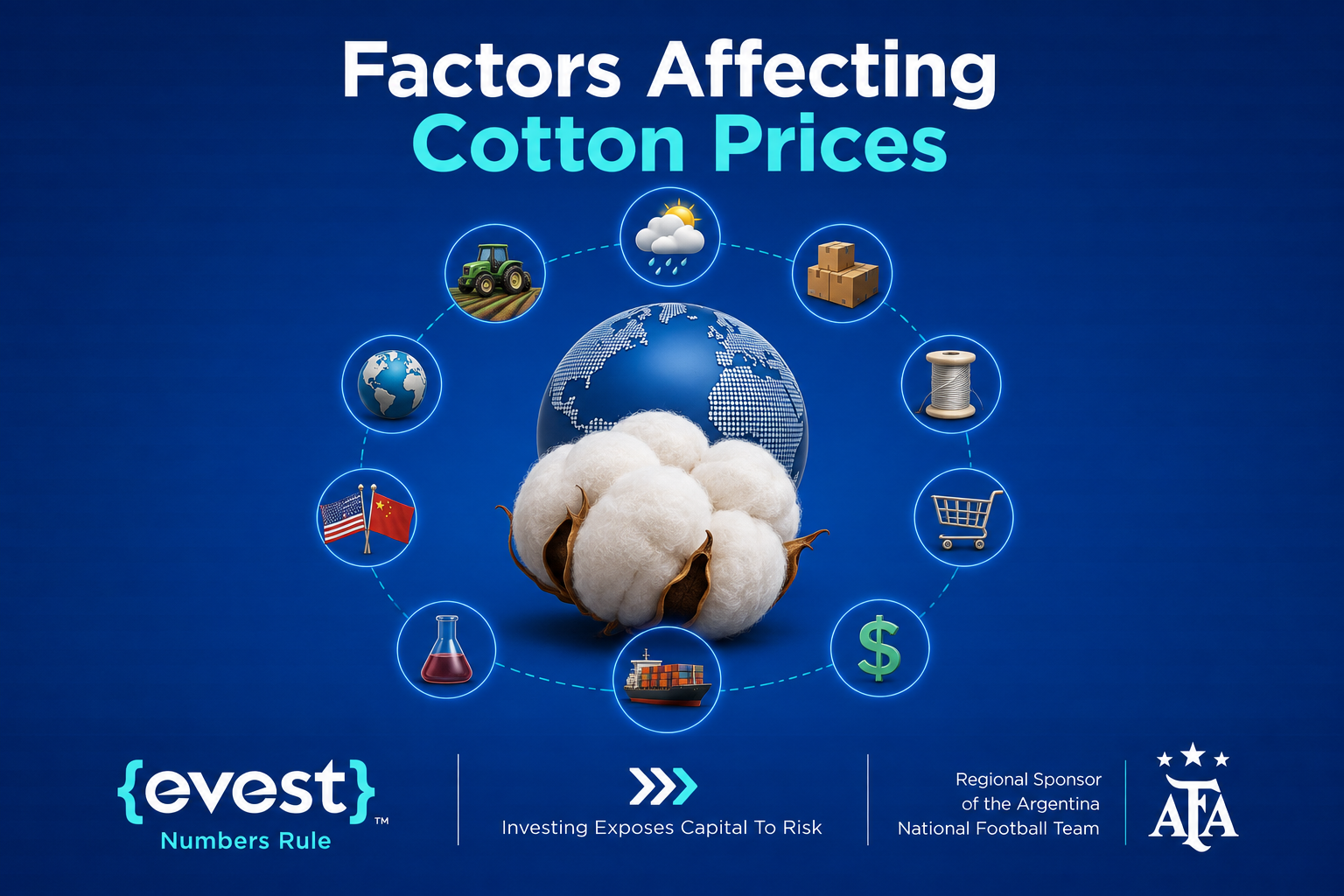
Understanding the main factors affecting cotton prices is essential when analysing the cotton market.
The price is not driven by one variable. Instead, traders usually monitor a combination of agricultural, economic, political, and market factors. Important price drivers include:
- Global cotton production
- Crop yields and planted acreage
- Weather conditions
- Global inventories
- Textile industry demand
- Consumer spending
- US dollar movements
- Trade policies and tariffs
- Competition from synthetic fibres
- Geopolitical developments
Cotton Supply and Demand
Cotton supply and demand form the foundation of long-term price movements. On the supply side, traders monitor how much cotton major producing countries are expected to grow and bring to market. Changes in planted acreage, crop yields, inventories, weather, and farming conditions can alter supply expectations.
On the demand side, cotton consumption is closely connected to textile manufacturing and apparel demand. Stronger textile production may support cotton demand, while weaker manufacturing activity can reduce it.
When available supply declines while demand remains strong, prices may face upward pressure. When production rises faster than demand, additional supply may place downward pressure on the market.
Impact of Weather and Climate on Cotton Production
Weather is one of the most important variables in agricultural commodities. Cotton crops require suitable conditions throughout the growing and harvesting cycle. Drought, flooding, excessive rainfall, extreme temperatures, or storms may reduce expected yields or affect crop quality.
Because markets trade expectations as well as current conditions, updated weather forecasts can influence cotton prices before the full impact on production becomes known.
Traders therefore often monitor weather developments alongside crop and inventory reports when evaluating the cotton market.
Global Economic Indicators and Consumer Trends
Cotton demand is also connected to wider economic conditions. When consumer spending and textile manufacturing expand, demand for cotton may increase. During periods of slower economic activity, clothing and textile demand may weaken, affecting the amount of cotton manufacturers require.
Consumer preferences can also influence the longer-term market. Changes in demand for natural fibres, synthetic materials, or different types of clothing can gradually alter cotton consumption patterns.
Geopolitical Events and Trade Policies
Cotton is traded internationally, which means tariffs, sanctions, import restrictions, export policies, and trade disputes can influence global flows.
A policy change affecting a major producer or consumer may alter where cotton is exported, its cost to buyers, or expectations about available supply.
For traders, geopolitical developments should therefore be considered alongside agricultural data rather than treated as a separate factor.
Cotton Price Forecast: What Should Traders Monitor?
A cotton price forecast should be based on several indicators rather than one prediction. Traders may monitor:
- Production forecasts
- Crop conditions
- Global inventories
- Weather developments
- Textile demand
- Currency movements
- Trade policy
- Price trends and technical levels
For example, expectations of weaker production combined with stable demand may create a different market outlook from a situation where inventories are rising and textile demand is slowing.
However, price forecasts are uncertain. Unexpected weather, economic news, or policy changes can quickly alter market expectations, so a forecast should not be treated as a guaranteed future price.
How to Trade Cotton: Methods and Instruments?
There are different ways to invest in cotton or gain exposure to cotton prices, depending on the market, financial product, investment objective, and trading provider.
These can include futures contracts, derivatives such as CFDs, commodity-related funds, and physical cotton transactions.
Physical cotton trading is primarily relevant to producers, merchants, and industrial users. Financial instruments are generally more practical for traders who want exposure to changes in price without storing or taking delivery of cotton.
Cotton Futures Trading
Cotton futures trading involves standardized contracts linked to the future price of cotton. Futures markets are widely used for price discovery and hedging. A producer, for example, may use futures to reduce exposure to falling prices, while a textile manufacturer may use them to manage the risk of rising input costs.
Traders can also use futures to take a market view on whether cotton prices may rise or fall.
Before trading any futures-based instrument, it is important to understand the relevant cotton contract specifications, including factors such as contract size, pricing unit, expiry date, margin requirements, and settlement conditions.
Contract details should always be checked for the specific instrument being traded because specifications and trading conditions can vary.
How to Trade Cotton CFD Positions?
Traders searching for how to trade cotton CFD positions should first understand that a Contract for Difference provides exposure to changes in an instrument’s price without requiring ownership of physical cotton. A trader may open a buy position when expecting the price to rise or a sell position when expecting it to fall.
However, CFDs are leveraged instruments. This means market exposure may be larger than the amount initially committed as margin, which can amplify both potential gains and potential losses. Before opening a cotton position, traders should understand:
- The underlying market
- Position size
- Margin requirements
- Applicable trading costs
- Stop Loss and Take Profit tools
- The amount of capital at risk
Product availability and trading conditions can differ between providers, accounts, and jurisdictions.
Cotton ETFs and Other Investment Vehicles
Investors may also gain cotton-related exposure through certain exchange-traded products or funds linked to cotton futures or broader agricultural commodities.
These products work differently from CFDs and direct futures contracts and may suit different investment horizons.
Anyone looking to invest in cotton should therefore understand exactly what an instrument tracks, its costs, and whether it provides direct cotton exposure or broader exposure to agricultural commodities.
How Cotton Trading Works with Evest?
For traders considering cotton trading through Evest, the first step is to review the cotton instrument currently available on the platform and understand its trading conditions before opening a position.
Market analysis can combine fundamental information with price-chart analysis. Traders may monitor production expectations, weather conditions, textile demand, inventories, currencies, and international trade developments before deciding whether market conditions support their trading view.
Before placing an order through Evest, traders should review the current instrument information, including applicable costs, margin requirements, trading conditions, and available risk-management tools.
Because product availability and specifications may vary by jurisdiction or account, the current information displayed for the relevant Evest instrument should take priority over general market descriptions.
Cotton Trading Hours
Cotton trading hours depend on the specific instrument, the underlying market, the trading provider, and the market session.
Hours can also change during public holidays, contract transitions, or other market events.
For this reason, traders using Evest should check the current trading schedule displayed for the cotton instrument rather than assuming that the market is available continuously.
Trading conditions can also vary across different periods of the session, particularly when market activity or liquidity changes.
Strategies for Successful Cotton Trading
A structured approach to cotton trading normally combines market analysis with risk management.
Rather than reacting to every short-term price movement, traders may build a view using both technical and fundamental information. Common approaches include:
- Trend following
- Breakout trading
- Support and resistance analysis
- Fundamental event analysis
The appropriate strategy depends on the trader’s objectives, timeframe, risk tolerance, and market conditions.
Technical Analysis for Cotton Markets
Technical analysis focuses on historical price behaviour to identify trends, support and resistance levels, momentum, and possible entry or exit areas. Traders may use tools such as moving averages, RSI, MACD, or other chart indicators.
However, indicators do not predict cotton prices with certainty. Technical analysis is generally more useful when combined with an understanding of broader market conditions and disciplined risk management.
Fundamental Analysis: News and Reports
Fundamental analysis in cotton trading focuses on the real-world forces that can change supply and demand. Traders may monitor:
- Crop reports
- Production estimates
- Inventories
- Weather conditions
- Textile demand
- Currency movements
- Economic developments
- Trade policies
For example, expectations of lower production caused by adverse weather may tighten the supply outlook. In contrast, weaker textile demand could reduce buying pressure.
Fundamental analysis can support a broader cotton price outlook, but no single report can reliably predict future market movements.
Risk Management Techniques: Stop Loss and Take Profit
Risk management is especially important in commodities because market conditions can change quickly. A Stop Loss order can be used to close a position when price moves against the trader beyond a predefined level. A Take Profit order can close a position when a selected target is reached.
These tools do not eliminate trading risk, but they can help traders define possible losses and exits before entering a position. Position size should also reflect the amount of capital a trader can afford to place at risk.
Risks and Challenges in Cotton Trading
Cotton trading involves significant risk and is not suitable for every trader. Cotton prices may move quickly because of weather events, changing production forecasts, demand shifts, currency movements, geopolitical developments, or unexpected economic news. Key risks include:
- Market volatility
- Leverage risk
- Liquidity risk
- Execution risk
- Regulatory changes
- Technology or platform disruption
- Unexpected gaps in market prices
Volatility and Price Fluctuations
Cotton can experience significant price volatility because its supply depends heavily on agricultural conditions while its demand is linked to global manufacturing and consumer activity.
A major change in weather expectations or crop forecasts can alter the market outlook rapidly. This makes predetermined risk levels and appropriate position sizing particularly important when trading cotton.
Managing Operational Risks in Commodity Trading
Operational risk includes issues such as platform interruptions, delayed execution, connectivity problems, and incorrect order placement.
Traders should understand how orders work before using them in live market conditions and should regularly review open positions rather than assuming automated orders remove all risk.
Evest users should also refer to the platform’s current instrument and order information when planning a cotton trade.
FAQs
What are the key drivers of cotton prices globally?
The main drivers include cotton supply and demand, weather conditions, production levels, inventories, textile demand, currency movements, trade policies, and global economic conditions.
How does trading cotton differ from owning physical cotton?
Financial cotton trading focuses on changes in price through instruments such as futures or derivatives. Physical ownership involves purchasing, storing, transporting, and managing actual cotton, which is primarily relevant to commercial market participants.
What are ICE Cotton No 2 futures?
ICE Cotton No 2 futures are widely followed standardized futures contracts linked to cotton prices. They are used by commercial participants for hedging and by traders seeking exposure to changes in the cotton market.
What should I check before trading cotton?
Before entering a position, review market conditions, the instrument's cotton contract specifications, applicable costs, margin requirements, trading hours, position size, and the amount of capital you are prepared to risk.
Can individuals invest in cotton?
Yes. Individuals looking to invest in cotton may gain exposure through different financial products depending on their market and provider. Futures, derivatives, and certain commodity-related investment products may provide cotton exposure, but each carries different risks and costs.
Can I trade cotton through Evest?
Evest provides access to a range of financial markets and commodities. Traders interested in cotton should check the cotton instrument currently displayed on Evest for its availability, specifications, costs, cotton trading hours, and applicable trading conditions before opening a position.
Is cotton trading risky?
Yes. Cotton prices can be volatile, and leveraged products can magnify losses as well as gains. Traders should understand the instrument, use appropriate risk management, and avoid risking capital they cannot afford to lose.