
What is Filecoin? Filecoin is a decentralized data storage network powered by FIL, its native cryptocurrency. The network connects clients that need storage with providers that can supply it, while blockchain-based proofs help verify that agreed data remains stored. From a market perspective, the Filecoin price is influenced by wider cryptocurrency conditions, network activity, token supply, liquidity, and demand for decentralized storage. This guide explains what FIL crypto is, how the network functions, why FIL has utility inside the ecosystem, and which factors may influence its market performance. It also covers Filecoin trading, the technical reality of Filecoin mining, price-analysis scenarios, and the key risks traders should understand before taking exposure.
What Is FIL Crypto?
FIL is the native cryptocurrency of the Filecoin network. It supports payments, provider collateral, network rewards, transaction costs, and penalties. The token therefore has two roles: it is an economic tool used inside the network and a market-traded crypto asset whose value can rise or fall.
When a client wants to store data, the client can enter a storage agreement with a provider. The agreement may define the storage period, price, capacity, and other conditions. Providers may need to lock FIL as collateral, giving them an economic incentive to perform the service correctly. If a provider fails to meet its commitments or does not submit the required proofs, penalties may apply.
The main functions of FIL include:
- Paying providers for storing data
- Supporting network transactions and fees
- Acting as collateral for storage commitments
- Rewarding eligible providers for contributing storage power
- Creating economic penalties for failed commitments
- Providing a tradable crypto asset
What Is Filecoin?
Filecoin is an open-source decentralized storage marketplace built around blockchain-based verification. It allows clients to arrange storage with independent providers that have available capacity and the technical infrastructure required to participate.
The network is designed to make storage commitments verifiable. Instead of relying only on a provider’s statement that a file has been stored, Filecoin uses cryptographic proofs that help demonstrate whether the provider created the required copy and continued storing it for the agreed period.
Filecoin is often discussed alongside the InterPlanetary File System, or IPFS, but the two are not identical. IPFS is a protocol for addressing and sharing content, while Filecoin adds an economic marketplace and incentive system for paid, verifiable storage. They can work together, but one does not automatically replace the other.
How Does Filecoin Work?
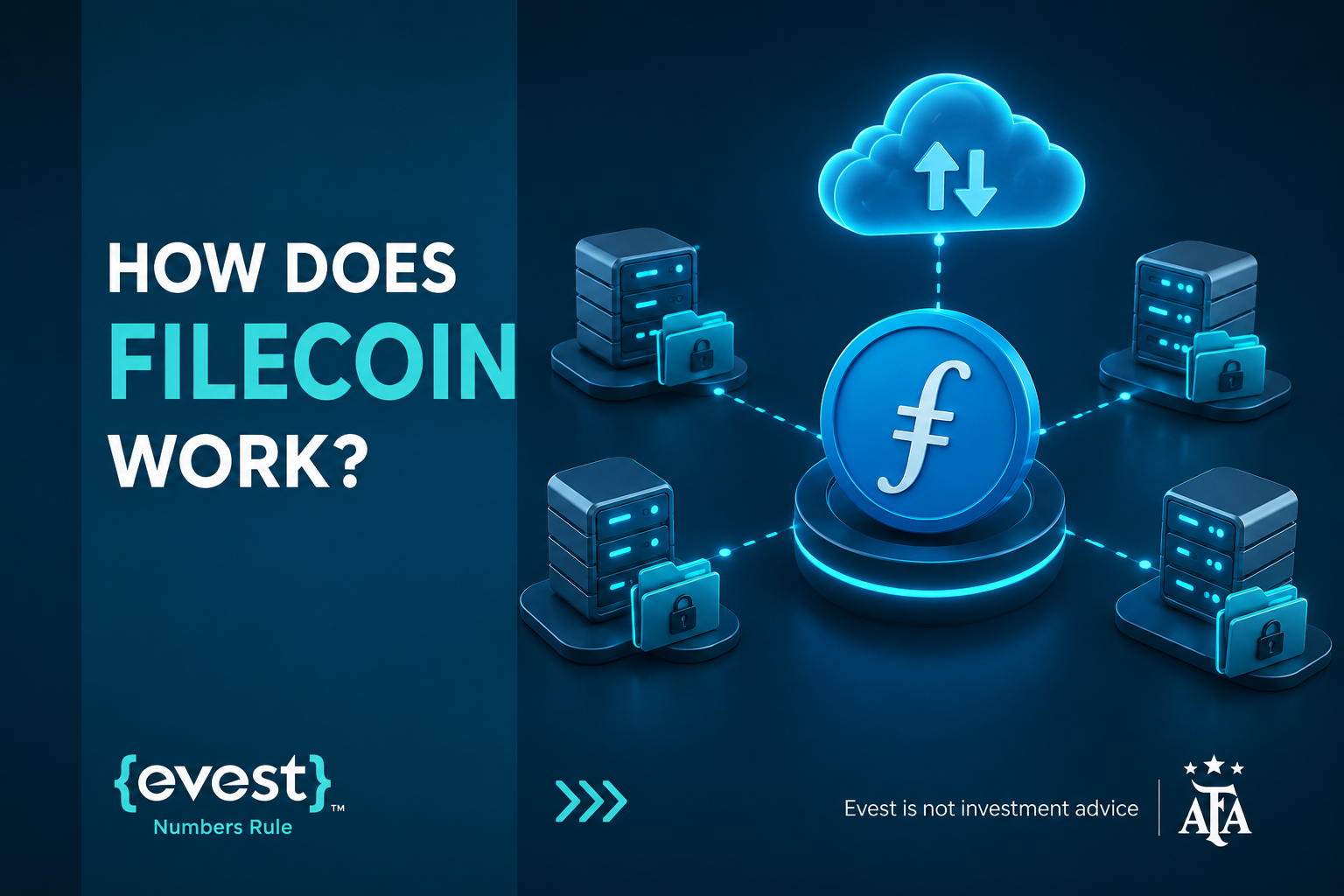
To understand how Filecoin works, it helps to view the system as a storage marketplace supported by cryptographic verification. Clients select providers based on capacity, pricing, location, technical reliability, and service requirements. The parties then create a storage deal that defines the terms of the commitment.
A simplified process looks like this:
- A client prepares data for storage.
- The client selects one or more providers.
- The parties agree on the storage terms.
- The provider prepares and stores the data.
- The provider submits cryptographic proofs.
- The network verifies continued storage over time.
- Payments, rewards, collateral, and penalties support the agreement.
- The client retrieves the data through the relevant service.
Filecoin does not automatically encrypt every file on behalf of the user. Clients handling sensitive information should encrypt it before uploading. The network also does not guarantee that every file is automatically copied across several providers. A client requiring stronger redundancy may arrange separate deals with more than one provider.
Proof-of-Replication and Proof-of-Spacetime
Filecoin uses two important proof concepts. Proof-of-Replication is designed to show that a provider created a unique encoded copy of a client’s data and committed physical storage to it. Proof-of-Spacetime helps demonstrate that the provider continues to store that data throughout the agreed period.
Providers must submit valid proofs within defined windows. Failure to do so may lead to penalties and can reduce future rewards. The process requires specialized infrastructure, computation, storage preparation, and ongoing sector management. Operating as a provider is not as simple as placing a file in a folder and waiting for a reward.
These proof systems do not reveal the contents of stored files. Their purpose is to verify storage commitments. Privacy still depends on client-side encryption, secure key management, and appropriate access controls.
Filecoin Use Cases
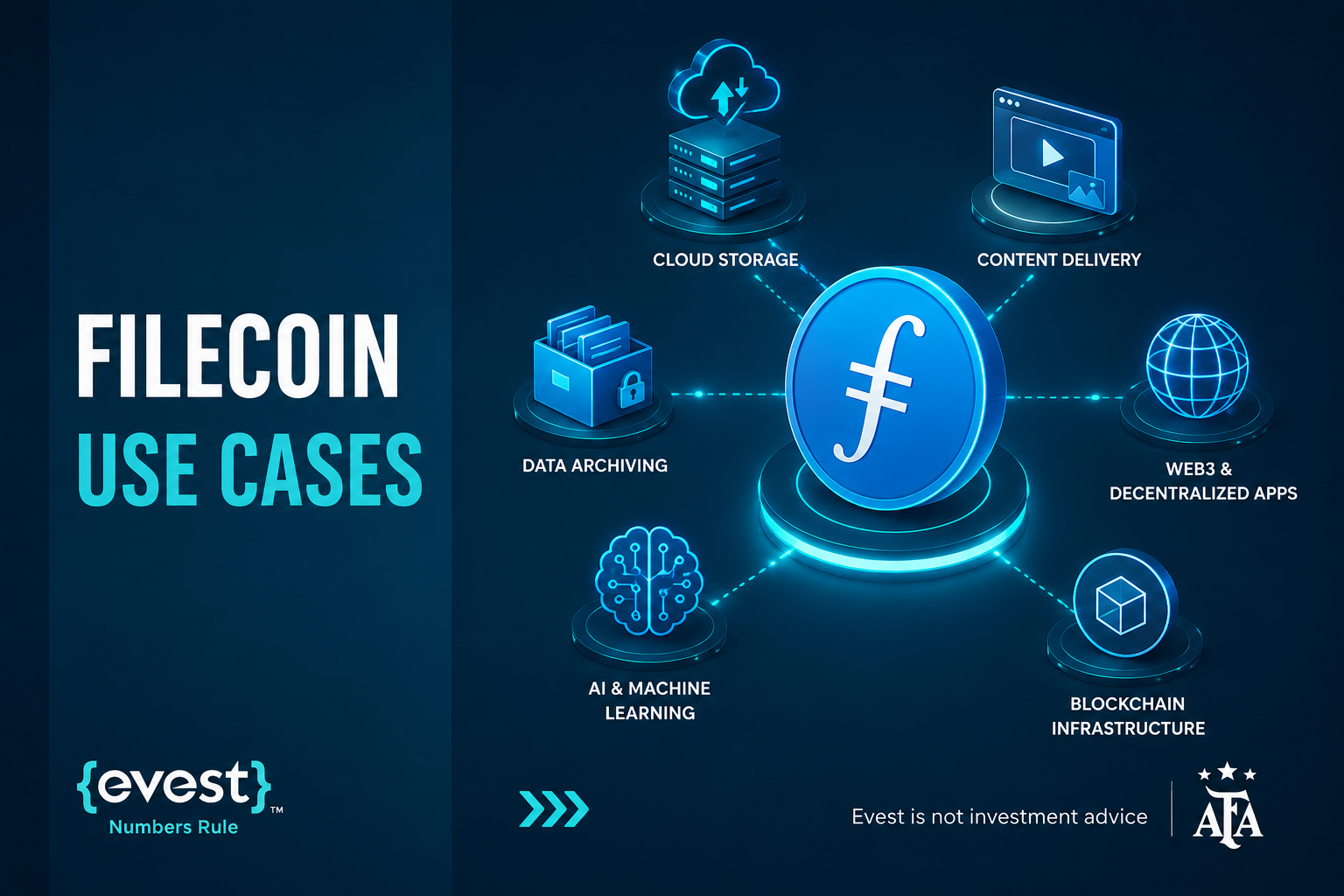
Filecoin may support storage-focused use cases where users value verifiability, open participation, and distributed infrastructure.
Archival and Research Data
Research organizations, media projects, and data-heavy institutions may need to preserve large datasets for long periods. Filecoin can form part of an archival strategy where proofs help verify that providers continue storing committed information.
Web3 and Digital-Asset Data
Decentralized applications often need storage for metadata, media, user-generated content, and application records. Filecoin can provide a distributed storage layer, but developers still need to design encryption, retrieval, addressing, and redundancy correctly.
Backup and Resilience
Organizations may use decentralized storage as one part of a broader backup plan. A single storage agreement is not a complete business-continuity solution. Encryption, access controls, multiple copies, legal requirements, and recovery testing remain essential.
The economic value of these use cases depends on real demand. Available capacity, announcements, or integrations do not automatically create paid storage activity or guarantee a higher token valuation.
Factors That Affect FIL’s Market Value
The Filecoin price is influenced by network-specific developments and wider cryptocurrency conditions. No single indicator explains every movement, so a balanced assessment normally combines market data, technical analysis, token economics, and risk management.
Storage Demand and Network Activity
Growth in active clients, paid storage deals, and useful stored data can strengthen the economic case for the network. Raw capacity alone does not prove commercial adoption. Changes in active providers, collateral requirements, reward levels, and operating costs may also influence FIL supply and demand.
Token Supply
Network rewards and scheduled releases can increase available supply, while collateral locking, fees, and penalties can reduce liquid supply. Traders often monitor large supply events, although recipients may choose to hold, lock, or use the tokens rather than sell them.
Wider Market Conditions
FIL trades inside the broader digital-asset market. Changes in liquidity, risk appetite, interest-rate expectations, and market-wide momentum can affect FIL even when project-specific fundamentals remain unchanged.
Trading Volume and Technical Developments
Volume helps traders judge participation. A move supported by rising volume may have different implications from a sharp move in a thin market, where slippage and wider spreads can become more significant. Protocol upgrades, security incidents, developer tools, infrastructure improvements, and new applications may also influence expectations.
Regulation and Sentiment
Rules affecting crypto trading, custody, taxation, derivatives, or market access can influence demand and liquidity. Markets may also react sharply to rumors, online discussion, and short-term momentum without any immediate change in network performance.
Filecoin Trading: What Should Traders Know?
Filecoin trading involves taking a position based on expected changes in FIL’s market value. Before entering a trade, users should understand the type of financial instrument available. Buying FIL directly is different from trading a product linked to its price.
With direct ownership, a buyer generally owns the token and may be able to transfer it to a compatible wallet, depending on the service terms. With a price-linked instrument, the trader may not own FIL and may instead gain exposure to upward or downward movements. Such instruments can include spreads, margin requirements, financing costs, and leverage.
Before trading through Evest, users should review the current product specifications and confirm whether FIL or a related instrument is available. Availability, trading hours, leverage, margin, fees, and eligibility may change.
Important points to check include:
- Whether the instrument provides ownership or price exposure
- The quoted spread and any commission
- Overnight or financing charges
- Minimum trade size
- Margin and leverage requirements
- Stop-loss and take-profit tools
- Trading hours
- Slippage and execution policy
- Product availability
- The official risk disclosure
A trader may use several forms of analysis. Fundamental analysis examines network use, token supply, technical development, and regulation. Technical analysis focuses on price trends, support, resistance, volume, and momentum. Sentiment analysis considers market psychology and positioning.
Managing Risk
Cryptocurrency markets can move quickly, and FIL may experience substantial volatility. A risk plan should be defined before a position is opened.
1- Position Sizing
Traders can limit exposure by deciding in advance how much capital they are prepared to lose on one idea. Oversized positions can turn a normal fluctuation into a significant account loss.
2- Stop-Loss Planning
A stop-loss can help define risk, but it does not guarantee execution at the requested level. During fast markets or reduced liquidity, the final execution price may be worse.
3- Leverage
Leverage increases exposure relative to committed capital. It can amplify gains, but it can also accelerate losses and trigger margin close-outs. Traders should understand the exact margin rules before entering a position.
4- Volatility and Time Horizon
Historical volatility can help estimate common movement, but future volatility may be higher. A short-term trader may focus on liquidity, chart structure, and event risk. A longer-term participant may place more weight on token supply, network adoption, and protocol development. Mixing the two approaches can lead to unclear decisions.
How to Read FIL Price History?
A historical FIL chart should use clearly dated market data. Rather than listing isolated highs and lows, the analysis should connect major movements with broader crypto cycles, liquidity conditions, project developments, and changes in supply.
When reviewing historical data, traders may ask:
- Was the move part of a broader crypto rally?
- Did trading volume support it?
- How long did the trend continue?
- How deep were the corrections?
- Did important support or resistance levels form?
- Were there major supply events?
- Was the move sustained or quickly reversed?
Historical performance is not a forecast. A previous high does not guarantee that FIL will return to the same level, and a previous low does not guarantee future support. Market structure, supply, regulation, and investor behavior can change.
For publication, Evest should use an updated interactive chart or a clearly dated static chart. Any historical percentage change should include the exact start date, end date, and calculation method.
Three Possible Scenarios for Filecoin Price Prediction
Any Filecoin price prediction should be treated as scenario analysis rather than a guaranteed target. FIL’s future performance depends on cryptocurrency market direction, storage demand, network use, token-supply changes, liquidity, regulation, and technical execution.
Bullish Scenario
A bullish scenario may develop if the wider crypto market strengthens, real storage demand grows, network activity expands, and liquidity improves. Positive price action would be more convincing if supported by higher volume, stronger paid usage, continued development, and manageable supply growth.
The scenario would be weaker if the token rose mainly because of short-term speculation while network activity remained unchanged. Traders should distinguish between momentum and long-term adoption.
Neutral Scenario
In a neutral scenario, Filecoin may continue developing while FIL remains within a broad range. This may happen when adoption improves gradually, but wider conditions remain uncertain, or when additional token supply offsets demand.
A range-bound market can still be volatile. FIL may move sharply between support and resistance without establishing a sustained trend.
Bearish Scenario
A bearish scenario may emerge if crypto liquidity declines, market access becomes more restricted, network adoption slows, technical incidents damage confidence, or selling pressure increases. A broad decline may also affect FIL even when there is no negative project-specific event.
A responsible forecast should include a publication date, a defined timeframe, and clear assumptions. It should explain which evidence would invalidate the scenario. Traders should not treat one predicted number as certainty.
What Is Filecoin Mining?
Filecoin mining generally refers to operating as a storage provider rather than performing energy-intensive mining in the traditional sense. A provider commits storage capacity, locks collateral, prepares sectors, accepts storage deals, and submits proofs showing that data remains stored over time.
Eligible providers may receive storage payments and network rewards. Earnings are not guaranteed. Revenue can vary according to verified storage power, deal flow, reward rules, hardware performance, operating costs, collateral, and penalties.
A serious Filecoin mining operation may require:
- High-capacity storage hardware
- Powerful processors for storage preparation
- Reliable internet connectivity
- Monitoring and maintenance systems
- Backup power and operational resilience
- Technical knowledge of Filecoin software
- FIL collateral
- Capital for hardware and electricity
- Procedures for proof submission and sector management
A provider that misses proof deadlines or fails to maintain commitments may face penalties. Anyone evaluating Filecoin mining should model hardware costs, energy use, maintenance, collateral needs, expected rewards, storage demand, and the risk of protocol changes.
Provider rewards and collateral can influence token supply and demand, but the relationship is not simple. More storage capacity does not automatically create stronger paid demand or guarantee a higher token value.
FAQs
What is FIL crypto?
FIL is the native cryptocurrency of the Filecoin network. It is used to pay for data storage, provide collateral, reward storage providers, cover network fees, and apply penalties. FIL can also be bought, sold, and traded across cryptocurrency markets worldwide.
How does Filecoin work?
Filecoin connects users needing decentralized storage with providers offering available capacity. Clients pay providers to store data, while providers submit cryptographic proofs confirming the information was stored correctly and remains available over time according to the network’s agreed storage conditions.
Does Filecoin automatically encrypt data?
No. Filecoin does not automatically encrypt uploaded data. Users should encrypt sensitive files before storage and manage their own keys and access permissions. Filecoin’s proofs confirm that data is stored, but they do not provide privacy, encryption, or access control.
Is Filecoin the same as IPFS?
No. IPFS is a protocol for identifying, sharing, and retrieving content using content-based addresses. Filecoin builds a marketplace around storage by rewarding providers for storing data. The technologies can complement each other, but they perform different functions within decentralized infrastructure.
What affects FIL’s market value?
FIL’s market value can be influenced by overall cryptocurrency sentiment, storage demand, network activity, token issuance, vesting schedules, collateral requirements, token burning, market liquidity, regulation, technical upgrades, investor behavior, competition, and broader economic conditions affecting digital asset markets globally today.
Can a Filecoin price prediction be accurate?
No Filecoin price prediction can guarantee future results. Analysts may create scenarios using market trends, token economics, network adoption, liquidity, technical indicators, and investor sentiment. However, regulatory changes, security incidents, macroeconomic events, or unexpected developments can quickly invalidate those assumptions.
Can individuals participate in Filecoin mining?
Individuals can participate in Filecoin storage mining, but the requirements may be demanding. Participants need hardware, reliable connectivity, technical knowledge, collateral, ongoing maintenance, and the ability to meet proof deadlines. Missed requirements may lead to operational losses or network penalties.
What should traders check before taking a FIL position?
Before trading FIL, traders should review the available instrument, spread, fees, leverage, margin requirements, liquidity, volatility, and platform conditions. They should also read the official risk disclosure, choose an appropriate position size, and define entry, exit, and loss limits beforehand.