
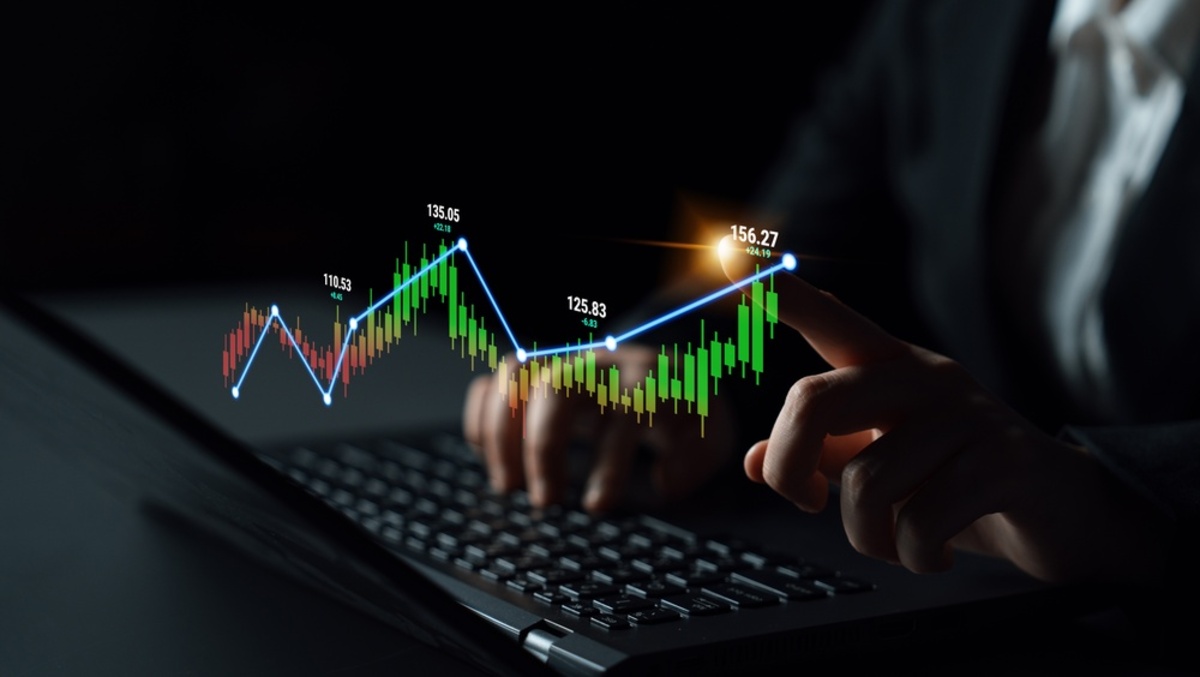
Modern trading technology has transformed the way investors interact with financial markets, making automation an essential part of many trading strategies. A stock market expert advisor helps traders automate trade execution, market analysis, and risk management based on predefined rules and algorithms. These automated systems are designed to reduce emotional decision-making while improving speed and consistency in trading activities. Whether used for short-term trading or long-term strategies, automated trading tools can help traders monitor market opportunities more efficiently. Understanding how these systems operate is important for anyone looking to integrate automation into their stock trading approach.
What is a Stock Market Expert Advisor?
A stock market expert advisor is a sophisticated software application designed to automate trading decisions in financial markets. Unlike traditional manual trading, where human emotions and biases can influence decisions, these advisors rely on predefined algorithms, mathematical models, and real-time data analysis to execute trades with precision. At its core, a stock market expert advisor acts as a digital trading assistant, capable of monitoring market conditions, identifying opportunities, and executing trades 24/7 without human intervention.
The concept of stock market expert advisors has evolved significantly with advancements in trading automation and artificial intelligence. Evest provide insights and tools to help traders leverage these systems effectively, offering educational resources and practical guidance for both beginners and experienced market participants. Whether you’re just starting or refining an existing strategy, understanding how these advisors function can transform your approach to stock trading fundamentally.
How Stock Market Expert Advisors Work?
A stock market expert advisor operates by combining technical analysis, statistical models, and predefined trading rules to generate signals and execute trades automatically. The process begins with data collection, where the advisor gathers real-time market data, including price movements, volume trends, and economic indicators. This data is then processed through algorithms that have been backtested and optimized for specific market conditions.
Key steps in how a stock market expert advisor functions:
- Data Collection: The advisor gathers market data from various sources such as stock exchanges, financial news feeds, and economic reports to build a comprehensive picture of current conditions.
- Signal Generation: Using technical indicators,s including moving averages, RSI, and MACD, the advisor identifies potential trading opportunities that meet its predefined criteria.
- Risk Assessment: Before executing a trade, the advisor evaluates risk parameters such as stop-loss levels and position sizing to ensure the trade aligns with the overall strategy.
- Trade Execution: Once a signal meets the predefined criteria, the advisor automatically places buy or sell orders without requiring human intervention.
- Performance Monitoring: The advisor continuously tracks the performance of open positions and adjusts strategies as needed based on evolving market conditions.
For traders using Evest, integrating a stock market expert advisor can streamline the trading process considerably, allowing users to focus on strategy refinement rather than constant market monitoring throughout the trading day.
Algorithmic Trading and Automation Explained
Algorithmic trading is the backbone of modern stock market expert advisors, enabling traders to execute orders at optimal speeds and with minimal human intervention. This form of trading automation relies on complex algorithms that analyze vast amounts of data in real time, making split-second decisions based on preset parameters. Unlike traditional trading, where emotions can cloud judgment, algorithmic systems operate purely on logic and data-driven insights.
The rise of algorithmic stock trading has democratized access to sophisticated trading strategies previously reserved for institutional investors. Today, retail traders can deploy stock trading bots and expert advisors to capitalize on market inefficiencies, arbitrage opportunities, and trend-based strategies. Evest regularly highlights through its educational content how these tools can be customized to fit individual trading styles and risk tolerances, making algorithmic trading accessible to a much broader audience than ever before.
One of the most significant advantages of algorithmic stock trading is its ability to backtest strategies against historical data. This ensures that a stock market expert advisor performs reliably under various market conditions before being deployed in live trading. Additionally, these systems can execute high-frequency trades, taking advantage of micro-trends that manual traders would inevitably miss.
Types of Stock Market Expert Advisors
Not all stock market expert advisors are created equal. Different strategies cater to various market conditions and trading styles. Below are the three most common types:
- Trend-Following Systems
- Mean Reversion Systems
- Breakout Systems
Trend-Following Systems
Trend-following stock market expert advisors are designed to identify and ride market trends, whether upward or downward. These systems rely on indicators such as moving averages, the average directional index (ADX), and price channels to determine the strength and direction of a trend. The core principle is straightforward: “The trend is your friend,” meaning traders should stay aligned with the prevailing market direction rather than fighting against it.
How a trend-following stock market expert advisor typically operates:
- Identifying Trends: The advisor uses moving averages such as the 50-day and 200-day to confirm the direction and strength of the prevailing trend.
- Entry Points: Trades are initiated when the price crosses above or below key moving averages, signaling a potential trend continuation in that direction.
- Exit Strategies: Stop-loss orders are placed to limit losses if the trend reverses, while take-profit levels are set to lock in gains as the trend extends.
- Position Sizing: The advisor adjusts position sizes based on current volatility and the trader’s overall risk tolerance.
For traders using Evest, a trend-following stock market expert advisor can be particularly useful in bullish or bearish markets where trends are well-defined and sustained over time. However, it’s crucial to backtest the strategy thoroughly to ensure it performs consistently across different market cycles and conditions.
Mean Reversion Systems
Mean reversion stock market expert advisors operate on the principle that asset prices tend to revert to their historical average over time. These systems are particularly effective in range-bound markets where prices oscillate between support and resistance levels. By identifying overbought or oversold conditions, mean reversion advisors aim to buy low and sell high, capitalizing on natural price corrections.
Key components of a mean reversion stock market expert advisor include:
- Bollinger Bands: These bands help identify when prices deviate too far from their mean, signaling potential reversals back toward the center of the range.
- Relative Strength Index (RSI): An RSI reading above 70 may indicate overbought conditions, while a reading below 30 suggests oversold conditions that could precede a reversal.
- Standard Deviation Channels: These channels measure volatility and help determine when prices are statistically likely to revert to the mean.
- Statistical Arbitrage: Some advanced advisors use statistical models to identify mispricings between related assets and execute trades accordingly.
While mean reversion strategies can be highly profitable in sideways markets, they may underperform significantly in strongly trending environments. Traders should consider using these advisors in conjunction with other tools such as stock signals to enhance overall accuracy and filter out false setups.
Breakout Systems
Breakout stock market expert advisors focus on identifying key levels of support and resistance. When the price breaks through these levels with significant volume, the advisor executes trades assuming the breakout will continue in the direction of the break. These systems are popular among traders looking to capitalize on momentum-driven moves that often follow periods of price consolidation.
How a breakout stock market expert advisor functions:
- Level Identification: The advisor scans for critical support and resistance levels using historical price data accumulated over meaningful time periods.
- Volume Confirmation: Breakouts are only confirmed if accompanied by high trading volume, reducing the likelihood of false signals that could lead to losing trades.
- Entry Execution: Once a breakout is confirmed, the advisor enters a trade in the direction of the break to capture the anticipated momentum move.
- Risk Management: Stop-loss orders are placed just beyond the breakout level to limit potential losses if the breakout fails and the price reverses.
Breakout strategies can be highly effective in trending markets but may generate false signals in choppy or sideways conditions. Traders using Evest often combine breakout systems with other indicators to filter out weak signals and improve overall accuracy before committing capital to a trade.
Key Features of a Good Expert Advisor
Not all stock market expert advisors are equally effective. A high-quality advisor should possess several key features to ensure reliability and profitability across varying market conditions. Here are the most critical attributes to look for when evaluating any automated trading system:
- Backtesting Capabilities: The advisor should have been rigorously backtested against historical data to validate its performance across multiple market environments and cycles.
- Customization Options: A good advisor allows traders to adjust parameters such as risk management rules, entry and exit criteria, and position sizing to match individual trading styles.
- Real-Time Data Integration: The advisor must be capable of processing live market data to make timely trading decisions that reflect current rather than outdated conditions.
- Risk Management Tools: Features like automatic stop-loss and take-profit orders are essential for protecting capital and ensuring losses are contained within acceptable limits.
- User-Friendly Interface: Even the most sophisticated advisor is of limited value if it’s difficult to set up, monitor, and adjust when market conditions change.
Evest emphasizes the importance of these features in its educational resources, helping traders understand what separates a reliable automated system from one that may underperform or expose capital to unnecessary risk.
Benefits of Using Stock Market Expert Advisors
The adoption of stock market expert advisors has revolutionized how traders approach financial markets, offering numerous advantages over manual trading. These benefits make automated trading an attractive option for both retail and institutional investors seeking consistency, efficiency, and scalability.
1. Elimination of Emotional Trading:
One of the most significant benefits of using a stock market expert advisor is the removal of emotional biases that often plague manual traders. Emotions such as fear, greed, and hesitation can lead to impulsive decisions resulting in missed opportunities or costly mistakes. An automated advisor executes trades based on predefined rules, ensuring consistency and discipline at all times.
- Reduces impulsive decisions by following a strategy without emotional interference.
- Maintains discipline by executing trades based on logic rather than market noise or psychological pressure.
- Prevents revenge trading, as the advisor does not attempt to recover losses by taking reckless positions.
- Ensures consistent execution by entering and exiting trades at optimal times regardless of external distractions.
For traders using Evest, this emotional detachment is a genuine game-changer, particularly in high-stress market conditions where human judgment is most susceptible to failure.
2. 24/7 Market Monitoring and Execution:
Financial markets operate globally with trading sessions overlapping across different time zones. A stock market expert advisor can monitor markets continuously even when the trader is asleep or otherwise occupied, a capability particularly valuable in forex and cryptocurrency markets, where significant price movements can occur at any hour.
- No missed opportunities, as the advisor can capitalize on trends or breakouts occurring outside standard trading hours.
- Faster execution, with algorithms placing and filling orders in milliseconds to reduce slippage in volatile markets.
- Global market coverage, with the ability to track multiple asset classes simultaneously,y from stocks to commodities.
- Adaptability to news events through real-time news integration that allows the advisor to react to economic announcements instantly.
3. Backtesting and Strategy Optimization:
Before deploying a stock market expert advisor, traders can backtest their strategies against historical data to evaluate performance. This process involves simulating trades over past market conditions to assess profitability, risk, and consistency before risking any real capital.
- Historical performance analysis identifies how the strategy would have performed across different market cycles.
- Parameter optimization allows traders to fine-tune indicators, entry and exit rules, and risk management settings for better results.
- Risk assessment helps determine maximum drawdown and expected return, providing a realistic picture of potential outcomes.
- Strategy validation confirms whether the advisor’s logic holds up under real-world conditions before live deployment.
Evest provides tools and guidance for backtesting, enabling traders to refine their strategies thoroughly before committing real capital to any automated system.
4. Diversification and Multi-Asset Trading:
A stock market expert advisor can simultaneously manage trades across multiple assets, sectors, or markets. This diversification reduces the impact of any single underperforming trade on the overall portfolio.
- Reduces portfolio volatility by spreading risk across assets, mitigating the impact of downturns in any single sector.
- Capitalizes on multiple opportunities by identifying and acting on trends in different markets simultaneously.
- Provides automated rebalancing to ensure the portfolio maintains its target asset allocation without manual intervention.
- Offers customizable allocation rules allowing traders to set specific weights for each asset class based on risk tolerance and investment goals.
5. Scalability and High-Frequency Trading:
For traders with larger capital or those interested in high-frequency trading, a stock market expert advisor can execute a high volume of trades with precision that is impossible to replicate manually.
- Microsecond-level execution allows algorithms to place and fill orders faster than any human trader.
- Arbitrage opportunities can be exploited as the advisor identifies and acts on price discrepancies across exchanges almost instantaneously.
- Reduced latency through direct market access integrations ensures minimal delay between signal generation and order execution.
FAQs
How can I test a stock market expert advisor strategy?
Testing a stock market expert advisor strategy usually involves backtesting it using historical market data to evaluate its past performance under different conditions. Traders often use demo accounts or strategy testing tools on platforms like MT5 to analyze profitability, drawdowns, and consistency. This process helps identify weaknesses in the strategy before applying it in live market conditions.
What is the best strategy for a stock market expert advisor?
The best strategy for a stock market expert advisor depends on the trader’s goals, risk tolerance, and market conditions. Many successful strategies combine trend-following techniques, risk management rules, and technical indicators to automate disciplined trading decisions. A reliable strategy should focus on consistency and long-term performance rather than unrealistic short-term profits.
Are AI-based stock market expert advisors reliable?
AI-based stock market expert advisors can be reliable when they are built on strong algorithms, quality data analysis, and proper risk management systems. These tools are designed to adapt to changing market conditions and process large amounts of data faster than manual traders. However, no automated system guarantees profits, so continuous monitoring and testing remain essential.