
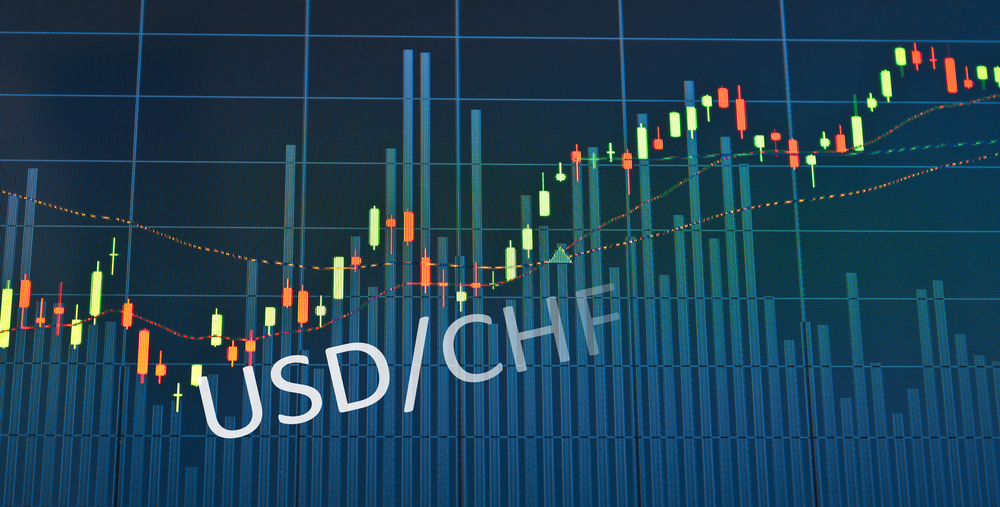
Understanding forex trading starts with knowing the major currency pairs and how their exchange rates operate. One such pair that draws attention among traders worldwide is the USD/CHF, representing the value of the US dollar against the Swiss franc. For traders, knowing what USD to CHF is is crucial, as this pair is widely used for hedging, speculation, and safe-haven investments.
The USD/CHF currency pair is highly liquid, offers consistent price movements, and provides a unique opportunity to analyze global economic dynamics. Platforms like Evest offer advanced tools, charts, and signals to help traders monitor USD CHF charts, track trends, and execute trades efficiently.
What Does USD CHF Mean?
USD/CHF refers to a commonly traded currency pair in the global foreign exchange market, representing the relationship between two major world currencies:
Definition of USD/CHF as a Forex Currency Pair
USD/CHF is a currency pair where the US dollar (USD) is the base currency and the Swiss franc (CHF) is the quote currency. The exchange rate represents how many Swiss francs are needed to purchase one US dollar. For example, if USD/CHF is 0.9250, it means 1 USD equals 0.9250 CHF.
Why the US Dollar and Swiss Franc Are Commonly Traded?
The US dollar is the most traded currency in the world due to its global acceptance, economic influence, and status as a reserve currency. The Swiss franc is considered a safe-haven currency due to Switzerland’s economic stability, low inflation, and strong banking system. The combination of these two currencies attracts traders who seek both liquidity and stability.
How Traders Interpret the Price of USD/CHF?
Traders use USD/CHF prices to gauge market sentiment. A rising USD/CHF rate indicates a stronger US dollar relative to the Swiss franc, while a declining rate shows franc strength. Understanding these movements, alongside economic and geopolitical factors, is essential for making informed trading decisions.
How Does USD/CHF Trading Work?
USD/CHF trading involves analyzing the price movement between two major currencies within the foreign exchange market.
Base Currency vs Quote Currency
In USD/CHF, the US dollar is the base currency and the Swiss franc is the quote currency. Buying USD/CHF means buying USD while selling CHF, and selling USD/CHF involves selling USD to buy CHF.
How to Read USD/CHF Price?
The price shows how much of the quote currency (CHF) is required to purchase one unit of the base currency (USD). Traders use this information to plan entries and exits in forex positions.
Liquidity and Volatility of the Pair
USD/CHF is moderately volatile compared to other major pairs, providing opportunities for both short-term traders and long-term investors. Its liquidity ensures tight spreads and efficient trade execution, which is crucial for effective risk management.
Factors That Influence the USD/CHF Exchange Rate
The USD/CHF exchange rate is shaped by a range of global and market-related factors that affect currency movements:
US Economic Data
Economic indicators like GDP, unemployment rates, and consumer spending affect the USD. Positive data strengthens the USD, whereas weaker data can lead to depreciation.
Swiss Economic Stability
Switzerland’s stable economy and prudent fiscal policies make the CHF a preferred safe-haven. Changes in Swiss economic conditions influence USD/CHF movements.
Safe-Haven Demand for the Swiss Franc
During global uncertainty, investors flock to CHF due to its reputation as a low-risk currency. This demand can strengthen CHF relative to USD, impacting the USD/CHF rate.
Interest Rates from the Federal Reserve & Swiss National Bank
Monetary policies, including interest rate adjustments, directly impact currency valuation. Higher US interest rates tend to strengthen the USD, while changes in Swiss rates affect the CHF demand.
How to Exchange USD to CHF?
Exchanging USD to CHF involves converting one currency into another through recognized financial channels:
Where and How to Exchange the Currency?
USD can be exchanged for CHF via banks, forex brokers, or online trading platforms like Evest. Each method has its own costs, spreads, and execution speeds.
Costs, Spreads, and Conversion Fees
Traders should consider the cost of transactions, including spreads (the difference between buying and selling prices) and additional fees. Lower costs improve profitability in forex trading.
Online Tools to Check Live Conversion
Platforms like Evest offer live USD CHF charts and conversion tools, making it easier for traders to monitor rates and execute trades efficiently.
USD CHF Chart: How to Read It?
A USD/CHF chart visually shows how the exchange rate moves over time in the financial markets. It helps users observe price changes and understand general market direction without focusing on detailed analysis.
Types of Charts
Line charts show overall trends, while candlestick charts provide detailed insights into price movements with open, high, low, and close data.
Price Movement Basics
Charts help traders identify bullish or bearish trends, detect volatility, and plan trade entries and exits.
Timeframes for Analysis
Traders analyze charts across different timeframes—short-term for scalping trading or day trading, long-term for swing or position trading—to align strategies with market behavior.
Understanding What Is USD to CHF Graph Is
Understanding a USD to CHF graph helps illustrate how the exchange rate between the two currencies changes over time.
Trend Analysis (Uptrend, Downtrend, Sideways)
The USD CHF graph helps identify prevailing trends. Uptrends indicate USD strength, downtrends indicate CHF strength, and sideways movements signal consolidation.
Support and Resistance
Support and resistance levels indicate price points where the market may reverse or stall, providing valuable signals for trading decisions.
What the Graph Reveals About Market Sentiment
Analyzing the graph shows trader behavior, investor confidence, and market expectations, helping traders anticipate potential price movements.
USD CHF Signals: Should You Use Them?
USD/CHF signals are tools used to highlight potential market movements based on general market activity. Traders often reference them to gain insight into possible trends without relying on detailed decision-making.
What are Trading Signals?
USD CHF signals are alerts generated based on technical indicators or market analysis, suggesting potential trade opportunities.
Technical Indicators Commonly Used for USD/CHF
Indicators such as moving averages, RSI, MACD, and Bollinger Bands help traders identify trends, momentum, and potential reversals.
Pros & Cons of Following Forex Signals
Signals can guide inexperienced traders, but relying solely on them without understanding the market can be risky. Combining signals with personal analysis improves decision-making.
Best Trading Strategies for USD/CHF
Choosing suitable trading strategy for USD/CHF focuses on understanding how this currency pair behaves in different market conditions. Traders often look at overall trends and market dynamics to guide their approach.
Trend-Following Strategies
Following the prevailing trend helps traders capture profits from sustained movements in USD/CHF.
Breakout Trading
Traders look for key support or resistance levels to anticipate breakout moves and take advantage of sharp price changes.
Safe-Haven Reaction Strategies
During global uncertainty, CHF tends to strengthen. Traders may use this knowledge to hedge positions or exploit volatility.
Risk Management for USD/CHF Traders
Setting stop-loss orders, managing lot sizes, and monitoring exposure help mitigate potential losses in USD/CHF trading.
Is USD/CHF a Good Pair for Beginners?
USD/CHF is often considered by many traders as a commonly followed currency pair in the forex market. Its regular activity and market presence make it a familiar option for those starting to explore currency trading.
Why Do Some Traders Prefer It?
Moderate volatility and high liquidity make USD/CHF attractive for beginners learning forex trading strategies.
Risk Level
Compared to other major pairs, USD/CHF has manageable risk when traders use proper position sizing and risk management.
Daily Price Ranges
Understanding average daily ranges helps beginners plan trades and avoid overexposure.
Conclusion
The USD/CHF pair offers a unique blend of stability and trading opportunities. By understanding what USD to CHF is, monitoring USD CHF charts and USD CHF signals, and applying disciplined strategies, traders can navigate this currency pair confidently. Platforms like Evest provide the tools, analytics, and educational resources to help both beginners and advanced traders make informed decisions. Using demo accounts initially and gradually transitioning to live trading ensures a safe and effective learning curve.
FAQs
What does USD to CHF mean in currency trading?
USD/CHF represents the exchange rate between the US dollar (USD) and the Swiss franc (CHF), showing how many CHF are needed to buy 1 USD.
How does the USD to CHF exchange rate work?
The exchange rate reflects supply and demand, economic data, interest rates, and global investor sentiment affecting the USD and CHF.
What factors influence the USD CHF price movement?
Factors include US and Swiss economic performance, interest rate policies, safe-haven demand, geopolitical events, and market sentiment.
How can I exchange USD to CHF safely and at the best rate?
Use reliable banks, regulated brokers, or online platforms like Evest that provide competitive spreads and secure transactions.
Is USD CHF a major forex pair?
Yes, USD/CHF is a major currency pair known for liquidity, moderate volatility, and widespread trading interest.