
In the world of investing, few numbers are as crucial to traders as the opening price and closing price of a stock. These two figures not only define a trading session but also serve as important indicators of market sentiment, volatility, and investor behaviour. Understanding the opening price and closing price is fundamental for anyone looking to trade effectively or interpret stock market data accurately.
When a new trading day begins, every stock starts at a specific value—its opening price—and when the day ends, it finishes with a closing price. These two values are not random; they result from the balance of buying and selling activities, economic news, and overall investor sentiment.
Why do traders monitor opening and closing prices?
Monitoring the opening price and closing price helps traders understand how the market reacts to new information, such as financial reports, geopolitical developments, or corporate announcements. These two prices represent key turning points that reflect investor psychology within a single trading day.
For instance, if a company releases strong earnings after the market closes, the next day’s opening price might surge as investors react positively. Conversely, disappointing news might push the open price lower. By the end of the trading day, the closing price will show where the market finally settled after the day’s fluctuations.
Professional traders and online trading platform like Evest analyze these values for multiple reasons:
- Market sentiment: Comparing the opening price and closing price reveals whether buyers or sellers dominated the session.
- Volatility tracking: Large differences between open and close prices indicate volatility, useful for day traders.
- Technical analysis: The open price and close price are key components of candlestick charts, which help traders predict future movements.
- Portfolio evaluation: The closing price determines a portfolio’s end-of-day value.
Ultimately, understanding why traders care about these numbers helps investors see the broader market narrative—who is winning the battle between optimism and caution.
What Is the Opening Price?
The opening price of a stock is the first price at which it trades when the market opens for the day. It is not a fixed or arbitrary value; rather, it’s determined by pre-market activity and the balance between demand and supply before official trading begins.
So, what is the stock opening price in practical terms? It represents the consensus between buyers and sellers when the market bell rings. For example, if many investors want to buy a particular stock overnight, the opening price may be higher than the previous day’s closing price.
Factors influencing the opening price
Several elements influence how the opening price is determined:
- After-hours trading: Investors often trade after the market closes, and these trades affect the next day’s opening price.
- Economic and company news: Announcements about earnings, interest rates, or major business decisions can cause significant pre-market demand changes.
- Market sentiment: Investor optimism or fear before market open sets the tone for how the opening price will behave.
- Global market trends: Events in international trading markets often ripple into local exchanges, affecting the initial stock valuation.
Understanding the open price meaning allows traders to interpret market conditions right at the start of trading. On Evest, traders can easily track pre-market data and prepare strategies accordingly.
What Is the Closing Price?
The closing price is the final price at which a stock is traded during regular market hours. This value represents the equilibrium point where buyers and sellers agree to transact before the market shuts down for the day.
While the opening price sets the tone, the closing price tells the day’s story—summarizing how investors responded to various influences throughout trading hours. For long-term investors, fund managers, and analysts, the closing price is often more important, as it’s used in portfolio valuation, chart analysis, and index calculations.
Factors influencing the closing price
- End-of-day trading activity: Many traders close their positions near market close, affecting the final price.
- Market orders: Institutional investors often execute large buy or sell orders that can shift the closing price.
- News released during the day: Developments that occur before market close influence last-minute investor sentiment.
- Market auctions: Some exchanges conduct closing auctions to determine the final price accurately.
The closing price is the benchmark for evaluating a stock’s performance that day. It’s the value most financial media report when they summarize market movements.
Difference Between Opening Price and Closing Price
The difference between the opening price and the closing price shows how the market has moved within a trading session. A higher closing price than the opening price indicates a bullish day (more buying interest), while a lower closing price reflects bearish sentiment (more selling pressure).
Traders use this difference to evaluate stock strength, momentum, and volatility.
Comparison of how each reflects market sentiment
- Opening price: Represents expectations and initial reactions to overnight developments.
- Closing price: Reflects actual investor confidence and settlement after a day of trading.
A stock that opens low but closes high shows recovery and positive momentum—something traders on Evest often look for when building daily strategies.
Examples using stock charts
Consider a hypothetical example: IBM stock opens at $150 and closes at $155. The 5-point increase between the opening price and closing price suggests bullish strength and investor optimism.
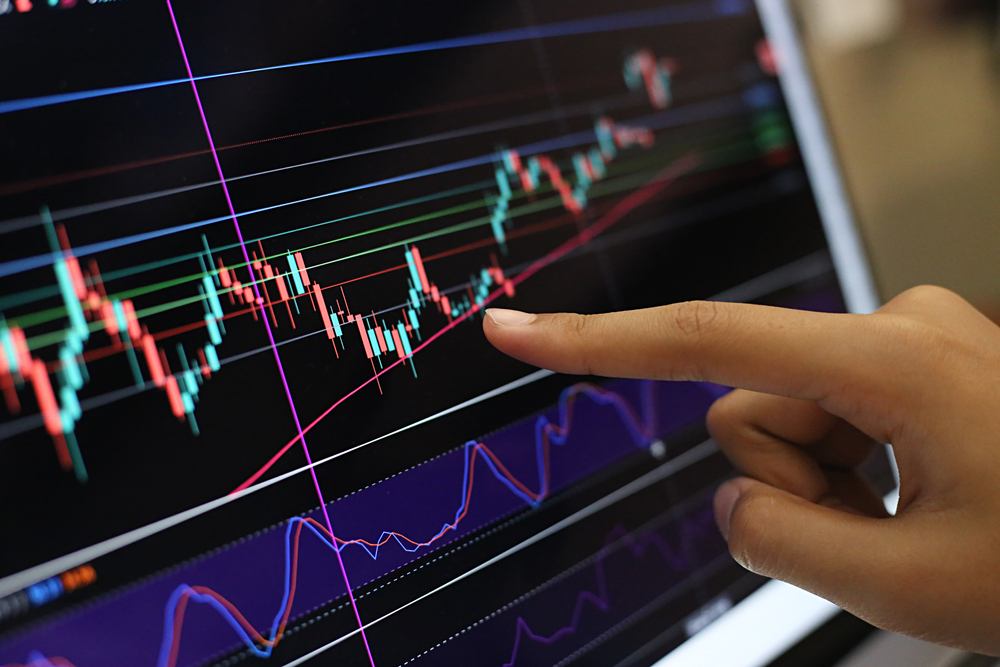
Technical charts—such as candlesticks—visually represent this difference, helping traders understand daily market psychology.
By analyzing such movements, traders identify trends, potential reversals, and optimal buy/sell points. Evest provides interactive charting tools that make such analysis straightforward and insightful.
How are Opening and Closing Prices Determined?
Real-time market forces determine both prices, but follow slightly different mechanisms.
Role of supply, demand, and pre-market trading
Before the market opens, traders and institutions place orders based on new information. This pre-market demand influences the opening price. When the number of buy orders exceeds sell orders, the open price increases. Conversely, excess selling lowers it.
Market closing auctions and end-of-day trades
At the end of trading hours, exchanges often conduct closing auctions to determine the closing price. These auctions match buy and sell orders in real time to establish a fair market value.
This mechanism ensures transparency and minimizes manipulation, providing a reliable reference point for investors using platforms like Evest.
How do traders use these prices in decision-making?
Traders rely heavily on the opening price and closing price for their strategies. These prices act as trading signals for potential entry and exit points, allowing traders to predict short-term trends.
- Trend analysis: If the closing price is higher than the opening price, traders may assume bullish momentum and prepare buy orders for the next session.
- Support and resistance levels: The open price and close price often act as benchmarks for technical analysis.
- Price gaps: A major difference between closing and next day’s opening prices may indicate upcoming volatility.
- Performance tracking: Day traders on Evest closely monitor daily opening and closing prices to evaluate strategy success.
By combining this data with other indicators like moving averages or RSI, traders develop precise trading plans.
Evest Services
Evest provides investors with a modern trading platform that combines technology, accessibility, and support. It enables seamless participation in global markets with confidence and ease.
Commission-Free Stock Trading
Evest allows clients to trade global stocks with zero commission, making it an attractive choice for investors who want to access international markets with minimum costs.
CFD Trading
The platform provides access to a wide range of financial assets through Contracts for Difference (cfd trading), including stocks, forex, indices, commodities, and cryptocurrencies. This gives traders great flexibility to diversify their strategies.
WebTrader Platform
Evest offers a WebTrader platform that works directly from the browser without the need to download extra software. It features a user-friendly interface with real-time charts and analysis tools to help investors make better trading decisions.
Copy Trading
With the copy trading service, beginners or passive investors can automatically copy the trades of professional traders. This allows users to benefit from the experience of experts and potentially generate steady profits.
Demo Account
Evest provides a free demo account where traders can practice with virtual funds. This service is beneficial for beginners to learn trading basics and test strategies without risking real money.
Islamic Trading Accounts
Evest offers Islamic (Swap-Free) accounts that are free from interest charges, making them compliant with Shariah law and suitable for Muslim traders.
Smart Analytics Tool (Evest Analytics)
The platform integrates AI-powered analytics tools that deliver accurate market insights and instant alerts, helping traders to identify investment opportunities at the right time.
Mobile Trading App
Evest provides a modern Mobile Trading application for iOS and Android, enabling users to trade anywhere, anytime, with the same tools and features available on the web platform.
Multiple Deposit & Withdrawal Options
Evest supports various payment methods for deposits and withdrawals, including:
- Credit and debit cards
- E-wallets
- Bank transfers
This ensures flexible and convenient financial transactions for traders worldwide.
In Conclusion
Understanding the opening price and closing price is essential for anyone involved in the stock market. These figures provide deep insights into daily market trends, investor psychology, and trading opportunities.
The opening price signals the market’s initial direction, shaped by overnight events, while the closing price confirms how investors actually reacted during the day. For traders using Evest, mastering these concepts is key to making smart investment decisions.
Whether you’re analyzing short-term fluctuations or planning long-term investments, knowing how to interpret the opening price and closing price gives you a decisive edge.
FAQs
What are the opening and closing prices in the stock market?
The opening price is the first trade price of a stock when the market opens, while the closing price is the last price at which it trades before the market closes.
What do open price and close price mean in stocks?
The open price and close price show where a stock starts and ends during a trading day, revealing whether it gained or lost value.
Is it better to buy stocks at opening or closing?
It depends on the strategy. The opening price can be volatile due to overnight news, while the closing price often reflects a more stable market consensus.
What is the closing price of stocks?
The closing price is the final price at which a stock is traded during regular market hours, and it’s used for valuation, charts, and performance tracking.